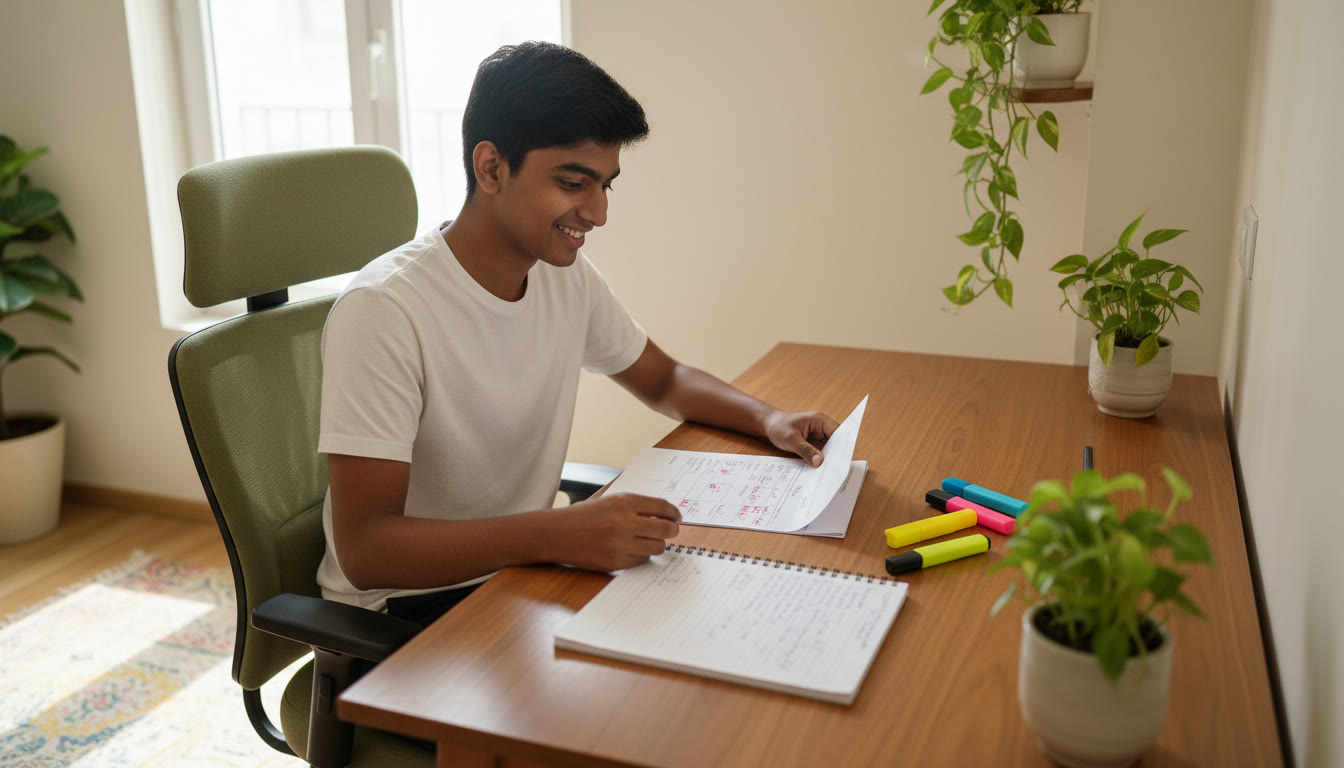

Mistakes Students Make in Class Tests — Spot Them, Fix Them, Learn Faster
Class tests are not a punishment; they are a compass. They point to what you actually know and — more importantly — what you think you know but don’t. For CBSE students, class tests are a steady rhythm in the learning year: short, high-frequency opportunities to practice, experiment and gain feedback. Yet the same test that could be a launching pad for better study often becomes a repeat of the same small mistakes that cost marks and confidence.
This guide is written for students who want to change that pattern. We’ll walk through the most common errors students make in class tests, why each one matters in the CBSE context, and practical, concrete fixes you can use immediately. You’ll get simple checklists, a ready-to-use error-log template, and realistic ways to practice so the next test shows real improvement.
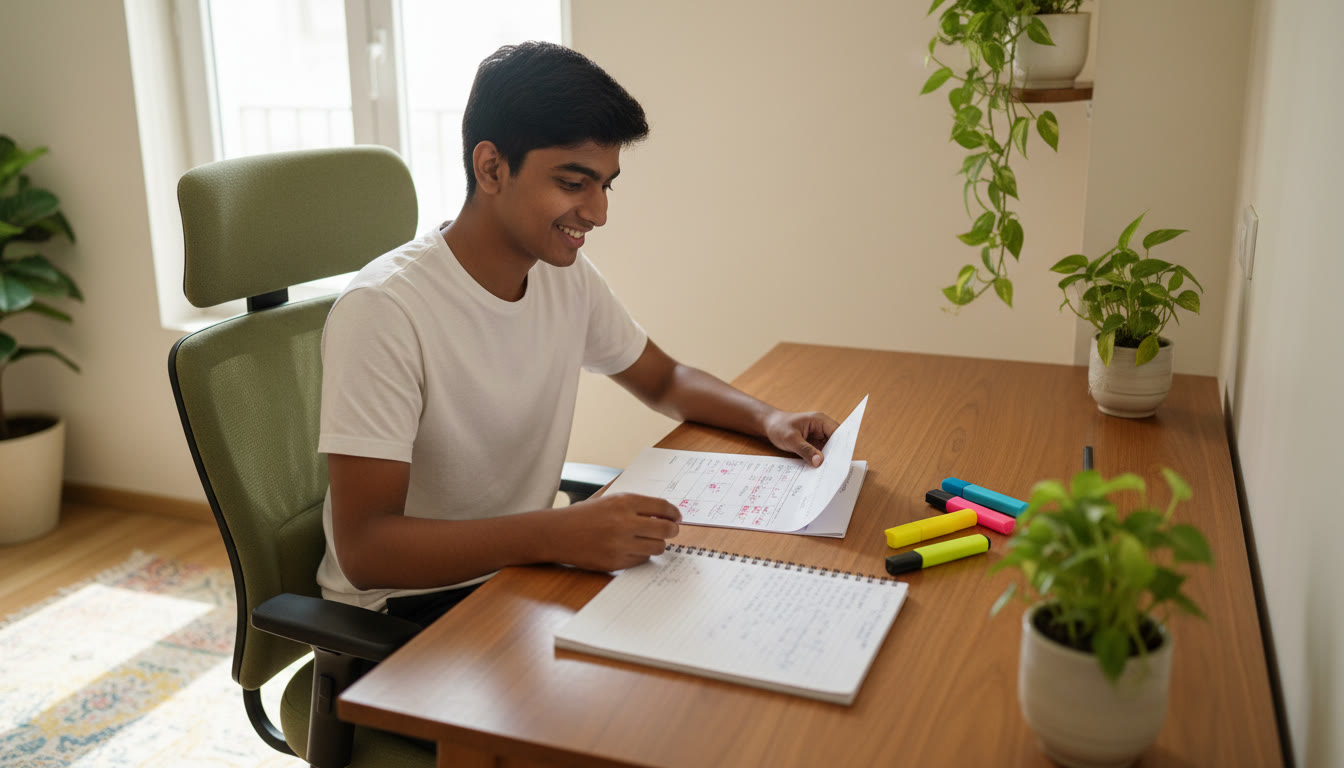
Why class tests matter (and how to treat them)
Think of a class test as a short experiment: you apply your study, you see what works, and you adjust. In the CBSE framework, class tests reflect syllabus alignment and help you practise the style of questions you will face in longer exams — objective and subjective, short answers and long-form explanations, diagrams, derivations and application-based problems. A smart approach to class tests is to treat them as low-stakes practice that yields high-value data, not as a one-off judgement on ability.
That means two things: first, be systematic about capturing what went wrong; second, convert that capture into a short action plan. Many students miss the second step. They get a paper returned, glance at the grade, and move on. The students who improve are the ones who treat mistakes as information.
Common mistakes and the fixes that actually work
1. Not reading the question carefully
One of the fastest ways to lose marks is misreading the question. Command words — like ‘explain’, ‘compare’, ‘define’, ‘justify’, ‘list’, ‘state’, ‘calculate’, ‘draw’ — matter. If a question asks for ‘two reasons’ and you write a long descriptive paragraph instead of concise, targeted reasons, you waste time and dilute your answer.
Fix: Pause for 15–30 seconds before you start writing. Underline the command word and rephrase the question in one sentence. Write a micro-outline: what the examiner expects (number of points, any diagram or calculation). This tiny routine reduces off-target answers dramatically.
2. Poor time management during the test
Some students spend too long on a single tricky question and end up rushing the rest. Others sprint through easy questions and have nothing left for the longer ones. In the CBSE style, tests reward both accuracy and scope — you need to cover the paper, not just a piece of it.
Fix: Do a quick paper scan at the start. Decide what you can answer fast and what will need more time. Use a simple allocation rule: dedicate a small fraction of time to reading and planning, most of your time to answering, and leave the final chunk for review. When you practise, try full-length tests with that time discipline until it becomes automatic.
3. Answers not aligned to the marks/expected structure
Marks are cues. If a question is worth four marks, aim to give a structured answer that addresses potentially four distinct points or steps. That doesn’t mean writing fluff — it means packaging your answer clearly so every markable point is visible to the examiner.
Fix: Use numbered points or short paragraphs. For calculation questions show key steps; for theory, list distinct reasons or arguments. When practicing, match the number of points to the marks and compare that to model answers so you develop a sense of scale.
4. Overreliance on rote learning and memorised answers
Rote can get you through certain short-answer questions, but CBSE-style assessments increasingly test understanding and application. If you memorise definitions without understanding, you’ll struggle when the context changes even slightly.
Fix: Convert definitions into spoken explanations. Ask ‘why’ and ‘how’ for each point. Practice applying the same concept to two or three different situations — that builds flexible knowledge and makes you less likely to be tripped up by a rephrased question.
5. Careless arithmetic and transcription errors
Small slips — a sign error, a missing unit, copying a number incorrectly — cost marks disproportionately. In a subject like mathematics or physics, a one-digit mistake early on can nullify an otherwise correct approach.
Fix: Use estimation as a sanity check. If your final answer is wildly different from a quick estimate, rework the steps. Write intermediate results legibly and box the final answer so it’s easy to find during review. If you can, leave five minutes at the end to re-check calculations quickly.
6. Poor presentation and messy structure
Neatness is not vanity — it’s functional. A well-structured answer helps the examiner follow your reasoning and award marks. Bulky paragraphs with no headings or numbered steps hide the main points.
Fix: Use headings, number your answers as per the question paper, keep sentences concise, and use bullets for lists. Even in language papers, short, clear paragraphs score better than long, wandering ones.
7. Neglecting diagrams, derivations and labelling
Diagrams and derivations are not optional extras in many CBSE questions; they are part of the answer. A labelled diagram or a clear derivation demonstrates understanding and often carries marks in itself.
Fix: Practise drawing neat, labeled diagrams with a ruler where appropriate. For derivations, write the main steps cleanly and annotate key transitions. Treat diagrams and derivations as learning tools: they help you check whether your reasoning is complete.
8. Skipping full-length mock practice
Short quizzes are useful, but nothing builds exam stamina like full-length, timed practice. Without it, students often struggle with pacing, concentration and the cumulative mental fatigue of a longer paper.
Fix: Schedule mock papers under test conditions on a regular cycle. Time them, mark them according to the marking scheme, and treat them as real. If you want tailored practice cycles, Sparkl‘s personalised tutoring can help build a mock-test schedule and feedback loop that fits your syllabus and pace.
9. Not analysing mistakes after the test
Getting a paper back without analysis is like running laps and never checking your lap times. Mistakes repeated without reflection are wasted opportunities for improvement.
Fix: Keep an error log. For each error, note the question, the mistake, the root cause (careless, conceptual, time-pressure), and a specific action to fix it. Use that log to prioritise practice: don’t treat all mistakes as equally urgent.
10. Test anxiety and overconfidence
Both ends of the emotional spectrum hurt performance. Panic causes blanking and rushed answers; overconfidence causes sloppy preparation and missed revision of weak topics.
Fix: Build low-stakes exposure — short, timed practice that desensitises anxiety — and develop a pre-test routine (stretch, 3–4 deep breaths, read the paper calmly). Balance confidence with evidence: keep a simple progress chart so you know where you’re improving and where you still need to work.
At-a-glance table: mistakes, impact and quick fixes
| Mistake | Why it hurts | Quick fix |
|---|---|---|
| Misreading the question | Leads to off-target answers and wasted time | Underline command words; rephrase before writing |
| Poor time allocation | Leaves sections unattempted or rushed | Scan the paper; set mini deadlines; practice pacing |
| Rote over understanding | Fails on application-based questions | Explain concepts aloud; solve varied problems |
| Careless calculation | Correct approach, wrong final mark | Estimate checks; box final answers; re-check |
| Messy presentation | Harder to award clear marks | Number answers; use bullets; label diagrams |
Practical checklists you can use (start today)
Before you begin answering
- Read the entire paper once — spot the easy questions first.
- Underline command words and allocate time mentally to sections.
- Mark questions you will return to on a second pass.
While answering
- Write the answer number clearly and follow the sequence asked.
- Use short headings and numbered points for clarity.
- Show key steps in calculations and box final answers.
- If a diagram is required, draw it and label parts neatly.
Before you submit
- Use any remaining time to re-check high-mark questions and calculations.
- Look for transcription errors and missing units/labels.
- Ensure you attempted all compulsory questions or parts.
How to analyse a returned paper — an error-log template
Open your returned paper with curiosity, not judgement. Use this simple table as a template; copy it into a notebook or a spreadsheet and update it after every class test.
| Q. No. | Mistake | Root cause | Action | Practice target |
|---|---|---|---|---|
| 1 | Misread ‘compare’ as ‘describe’ | Rushed reading | Slow down; underline command words | 5 quick reading drills |
| 2 | Sign error in final answer | Calculation hurried, no estimate | Estimate before finalising | 10 estimation problems |
Turning the error log into a short action plan
Once you have 6–10 logged mistakes, prioritise them: which errors cost the most marks? Fix those first. Your weekly plan could be as simple as:
- Two focused practice sessions on your top weakness (45–60 minutes each)
- One full-length mock under exam conditions
- One review session where you update the error log and test the fixes
If you find it hard to structure this cycle, Sparkl‘s personalised tutoring offers 1-on-1 guidance, tailored study plans, expert tutors and AI-driven insights to turn your error log into practice that actually improves scores.
Practice habits that reduce repeat mistakes
- Deliberate practice: target a single weakness for a focused session rather than switching topics mid-way.
- Spaced repetition: revisit difficult topics in short bursts over several days rather than one long session.
- Active recall: test yourself without notes; explaining a concept aloud reveals gaps faster than re-reading.
- Simulated pressure: practise full papers in the same time-block your real test will use to build concentration stamina.
Real-world comparison: why feedback loops matter
A sports team watches video replays to correct technique; a musician listens back to a recording to refine timing. Students improve the same way: class tests are the recordings of your learning. The difference between repeating mistakes and improving is simply the feedback loop — identify what went wrong, choose an exact correction, and practise the correction until it feels normal.
Teacher and peer roles — use them wisely
Teachers can clarify marking intent and point out where answers lost marks. Don’t wait to be called — ask for a short one-on-one clarification if something in the marking isn’t clear. Peers can help in two ways: study explanation groups (teach each other one tricky idea per session), and mutual mock marking — marking a classmate’s paper against the marking scheme teaches you what markers notice.
When you work with a tutor, ensure the focus is on your error log and practice cycles, not just more content. For students who prefer guided structure, Sparkl‘s personalised approach pairs targeted practice with feedback so each session fixes a specific mistake rather than repeating general advice.
Quick reference: what to do the night before and the morning of a class test
- Night before: review the error log for 20–30 minutes, sleep early — rest beats last-minute cramming.
- Morning of the test: a light review of key formulas or definitions, a healthy breakfast, and 5–10 minutes of calm breathing.
- At the start of the paper: read once fully, mark easy wins, and plan time.
Final academic takeaway
Class tests are diagnostic tools: the smarter you get at diagnosing the cause of each mistake, the faster your scores and understanding will improve. Keep a simple error log, practice intentionally against the marking style you are preparing for, and convert each returned paper into a short, targeted plan of practice.
Repeat that cycle consistently and your mistakes will stop being surprises and start becoming predictable steps on the path to mastery.
























No Comments
Leave a comment Cancel