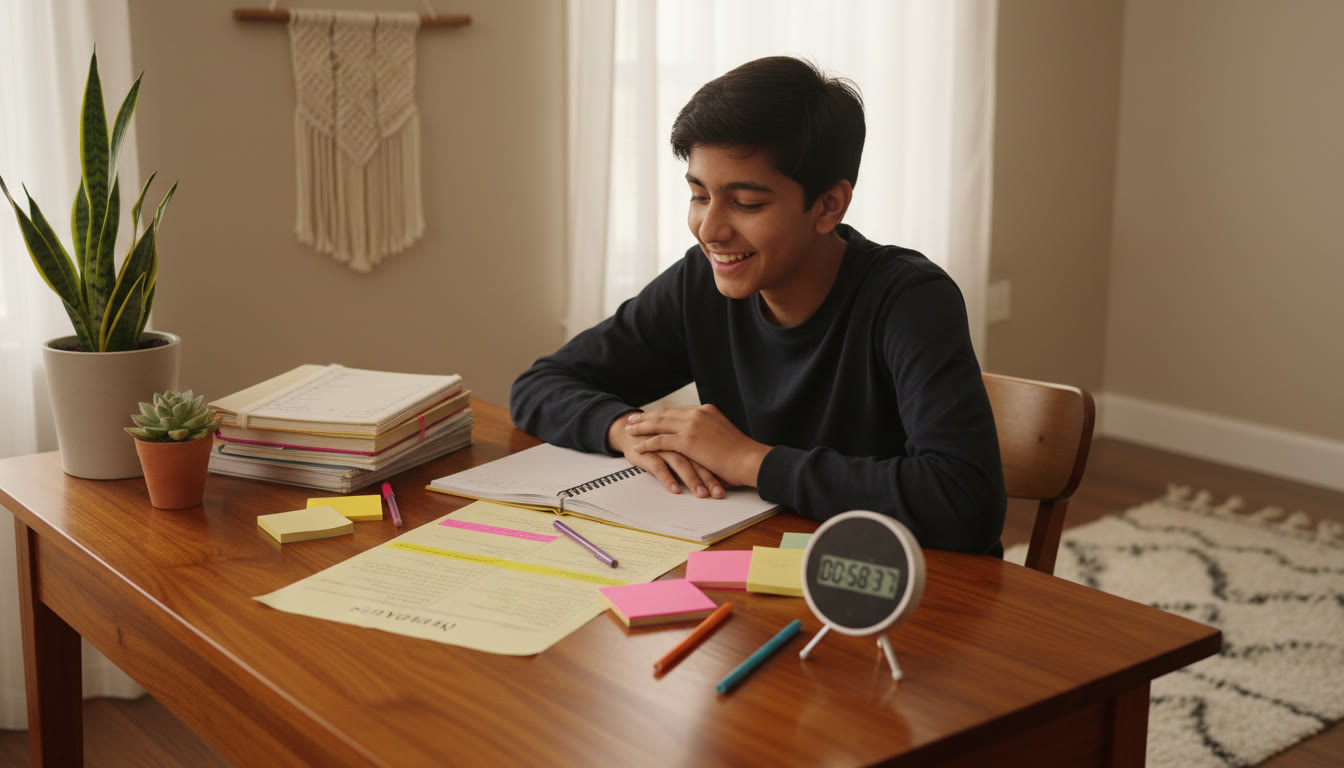

How to Prepare for CBSE Boards in the Last 30 Days
Thirty days before your board exams is a special kind of pressure cooker: short enough that panic can set in, long enough that smart, focused work will pay off in a big way. This guide is written for you—the student who wants realistic, exam-aligned steps to convert confusion into calm confidence. No miracle shortcuts, just a practical map: what to do each week, how to use full-length mocks, how to present answers for maximum credit, and how to keep your energy steady so you show your best during the actual test.
Start with a calm mind and a clear map
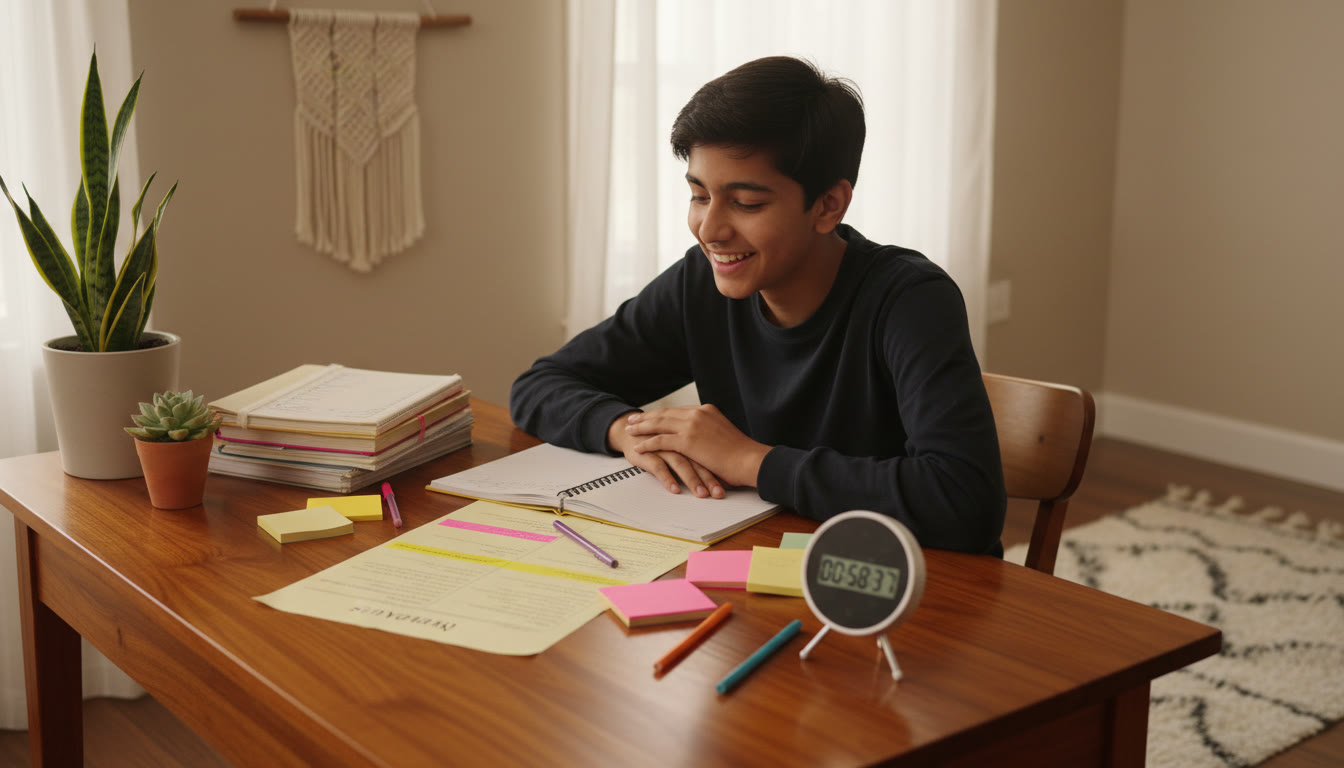
Begin by accepting two facts: first, the last 30 days are about consolidation, not learning every new topic from scratch; second, measurable improvement is possible with focused practice. Your first step today is not more notes—it’s clarity. Spend a quiet hour making a simple list: subjects, chapters you’ve covered, chapters you haven’t, and the topics where you routinely lose marks (concept mistakes, careless arithmetic, unclear diagrams, poor time management).
What to know about the exam pattern and marking
CBSE exams emphasise clarity of thought, structured answers and accuracy. Different subjects test different skills—calculation and derivation in maths and physics, explanation and application in social science and biology, and stepwise reasoning in chemistry. In these final days, centre your practice on how marks are awarded: number of marks per question, weightage of units in the syllabus, and the common formats (short answer, long answer, source-based, case-based). Use sample question papers and marking schemes as guides to the level of detail examiners expect. That will help you plan time per question and decide when to write a one-line answer versus when to expand with steps and diagrams.
30-day plan at a glance
Below is a compact, day-range plan you can adapt to your subjects and personal pace. The goal is to mix consolidation, targeted practice, timed mocks and quick revision.
| Days Remaining | Primary Focus | Key Actions |
|---|---|---|
| 30–22 (Week 1) | Consolidate fundamentals | Finish any unread core chapters; create one-page summaries; list formulas and definitions |
| 21–15 (Week 2) | Practice & application | Topic-wise practice, selective past-paper questions, correct mistakes in a dedicated error log |
| 14–8 (Week 3) | Full-length mocks & correction | 2–3 full timed mock tests; deep analysis and focused rework of weak topics |
| 7–1 (Final week) | Polish & calm confidence | Quick notes, one-page formula sheets, light revision, rest and exam routine practice |
Sample daily timetable (adapt to your routine)
A consistent day frees mental energy for real revision. Here’s a practical daily layout you can shrink or stretch depending on your commitments.
| Time | Activity | Purpose |
|---|---|---|
| 6:00–7:00 | Light revision (notes/formulas) | Use fresh brain for tricky recall |
| 7:30–10:00 | Focused study block 1 (subject A) | Deep work on important chapters |
| 10:30–12:30 | Focused study block 2 (subject B) | Problem solving & application |
| 1:30–3:00 | Practice (questions / short tests) | Active application under time pressure |
| 4:00–6:00 | Revision + one-page summary creation | Consolidation for later recall |
| 7:00–9:00 | Mock/Previous paper practice (short) | Simulate exam spirit for topics |
| 9:30 onwards | Light review & sleep | Recovery and memory consolidation |
Week-by-week breakdown: what to do and why
Week 1: Fix the foundations (Days 30–22)
- List the syllabus units for each subject and mark them as high/medium/low priority by expected weightage and your confidence level.
- Finish any partially studied chapters first—these eat time later if left incomplete.
- Create one-page summaries: key formulas, definitions, timelines, diagrams. These are your final-week revision sheets.
- Practice core problems that are frequently tested; don’t dive into obscure advanced problems now.
Example: For physics, ensure you can derive and explain one core equation from each unit and can solve the standard numerical in under the expected time. For history, make crisp timelines and 2–3 bullet points for each major event that capture causes, outcomes and significance.
Week 2: Build application and accuracy (Days 21–15)
- Tackle topic-wise question banks: pick 10–15 important questions per subject and practice with proper timing.
- Maintain an error log: write the mistake, the correct approach, and how to avoid it next time. This habit converts failure into durable learning.
- Begin timed sectional practice—e.g., solve the entire Section A of a paper in one go to train for sustained focus.
Week 3: Full-length mock exams and deep correction (Days 14–8)
This week is the engine room. The single most powerful activity here is full-length mock exams under strict timed conditions and then correcting them with the seriousness of an examiner.
- Schedule 2–3 full-length mocks spaced with a day of correction in between.
- When you correct, use the marking scheme style: assign marks to each step, note lost marks and categorize them—knowledge gaps, careless mistakes, time trouble, or poor presentation.
- Redesign study sessions around the categories of mistakes. If time management is the issue, practice sectional speed drills. If presentation costs marks, rewrite answers to emphasise structure and clarity.
Final days: polish, practise light, and rest (Days 7–1)
- Switch to quick-recall work: one-page notes, formula sheets, flashcards and light practice tests.
- Avoid cramming new topics—focus on strengthening recall and avoiding careless errors.
- Simulate the exam day once: sit one or two sections under exact time limits and follow your planned breaks, writing style and answer presentation.
Practice smart: mocks, error analysis and time management
Mock tests mimic exam pressure, but their value comes from correction. A full-mark mock that you don’t analyse is a wasted test. After each mock, do a detailed review:
- Mark using the official-style scheme: allocate marks to steps and calculate your scored marks honestly.
- Write a short plan to fix the top three recurring mistakes—this may be faster calculation practice, clearer diagrams, or shorter, punchier answers.
- Track time spent per question. If a 5-mark question takes far longer than its share, practise faster methods and learn to prioritise easier high-yield questions first.
Keep a simple mock-test sheet with: date, total marks, time taken, top 3 errors and top 3 wins. Over a few mocks you will see patterns that tell you exactly where to invest the remaining study time.
Answer-writing: how to maximise marks in limited space
Answer writing is as much about presentation as knowledge. Examiners reward clarity, structure and visible method. Follow these simple rules:
- Read questions fully: underline keywords and what is being asked (explain, list, calculate, describe).
- Allocate time proportional to marks. A practical rule: for a 5-mark question, plan for around twice the time of a 2-mark question.
- Show working and intermediate steps in numerical problems; label diagrams clearly; insert units and conclusions.
- Use short headings and bullet points for descriptive answers—this improves readability for the examiner and makes it easier to earn partial marks where applicable.
Remember: neatness helps. A clearly written, partially correct answer can score more than a messy, fully correct one.
Practical exams, projects and internal assessment: last-minute checklist
- Confirm your practical/project appointment times and required documents with your teacher.
- Make sure your lab records, experiment reports and project documentation are complete, signed and neat.
- Prepare a short oral summary of each practical and project—many practical evaluations include viva-style questions where clarity of concept matters more than memorised lines.
Stress, sleep and energy: how to stay sharp in the final month
Mental energy is part of the exam toolkit. In the last 30 days, high-quality rest and routine are non-negotiable.
- Prioritise consistent sleep; 7–8 hours is more valuable than a late-night cramming session followed by exhaustion.
- Eat balanced meals and stay hydrated. Avoid too much caffeine—temporary alertness often leads to sudden crashes.
- Short physical activity—20–30 minutes of walking or light exercise—boosts focus and reduces anxiety.
- Use short breathing or grounding exercises before study blocks or after a stressful mock test to reset concentration.
Quick revision techniques that actually work
- Active recall: quiz yourself rather than re-reading. Close your notes and try to write out a formula, proof or timeline from memory.
- Spaced repetition: revisit the same small list of high-yield items repeatedly across days rather than trying to memorise everything in one sitting.
- Feynman technique: explain a topic aloud in simple language as if teaching a junior student—this exposes weak understanding quickly.
- One-page summaries: condense each chapter to a single page of essentials—these become your last-week lifelines.
How to use guided help effectively in the last 30 days
If targeted, personalised support fits your learning style, use it to close specific gaps rather than to add new topics. Short, focused sessions are most valuable now: a single 1-on-1 session to clarify a recurring concept, or a mock correction review with an experienced tutor can save hours of blind practice. For example, tailored tutoring that focuses on your error log, offers a customised revision plan, and provides rapid feedback on mock answers can raise accuracy and confidence quickly.
If you choose guided help, look for these benefits: one-on-one guidance that addresses your specific errors, a tailored study schedule for the remaining days, expert tutors who explain marking expectations and model answer structure, and AI-driven insights that pinpoint patterns in your mock-test performance. These features turn practice into progress because they shrink the gap between what you do and what earns marks.
For students who want structured personalised support in this window, consider options that offer short intensive modules: a few sessions focused on your weakest units, immediate feedback on a mock, and a compact revision plan for the final week. These targeted inputs are more valuable than a long, unfocused course at this stage.
Note: when referring to such support, the name Sparkl appears as an option that provides 1-on-1 guidance, tailored study plans, expert tutors and AI-driven insights to speed up the last-mile preparation. Using a personalised approach wisely can be a smart addition to disciplined self-study.

Last 48 hours: checklist and calm routine
- Review only one-page summaries and key formula sheets—no heavy studying.
- Prepare your exam kit: stationery, admit card, water bottle and any permitted materials the night before.
- Go to bed early and allow your brain to consolidate knowledge; avoid new topics, caffeine and late-night social media binges.
- Plan travel time to the centre with buffer—arrive relaxed, not rushed.
On exam day: simple rules to maximise performance
- Start with a quick, calm read of the entire question paper to identify easy and high-scoring questions.
- Begin with the questions you can answer most confidently to build momentum and secure marks early.
- Keep time checks discreet and honest; assign minutes per question and aim to finish slightly early to allow quick revision.
- If stuck on a question, mark it and move on—return later with a fresh perspective. Don’t let one question steal the time for several others.
- Write clearly and structure answers: a short introduction, numbered steps or bullet points, a neat conclusion for long answers where relevant.
Final academic conclusion
The last 30 days are a time for disciplined focus: consolidate fundamentals, practice with purpose through full-length mocks, learn deliberately from every mistake, and maintain a stable routine of sleep and energy. Use marking schemes to shape how you answer, hone speed with sectional practice, and carry concise one-page summaries into the final week for quick recall. If you choose personalised help, focus it narrowly on closing the gaps the mock tests reveal. With a calm plan and consistent effort, these thirty days can convert potential into performance.



























No Comments
Leave a comment Cancel