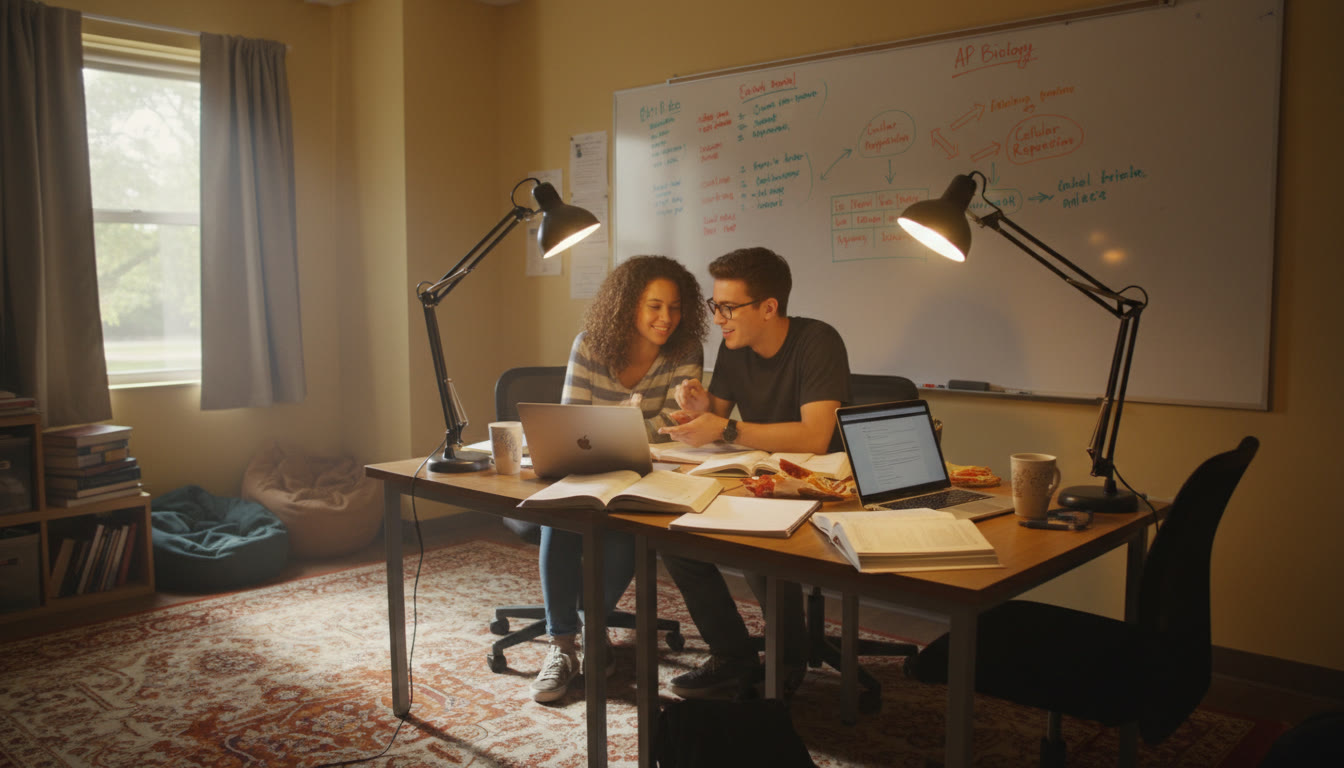

Why Study Halls Matter for AP Students at Boarding Schools
If you live on campus, study hall isn’t just a block of free time — it’s a strategic resource. For AP students, where every concept and point on the exam can affect college credit or placement, turning study hall from “quiet time” into targeted, high-value preparation makes a huge difference. This article walks through how boarding-school students (and their parents and dorm supervisors) can optimize study halls to boost learning, reduce stress, and improve AP outcomes.
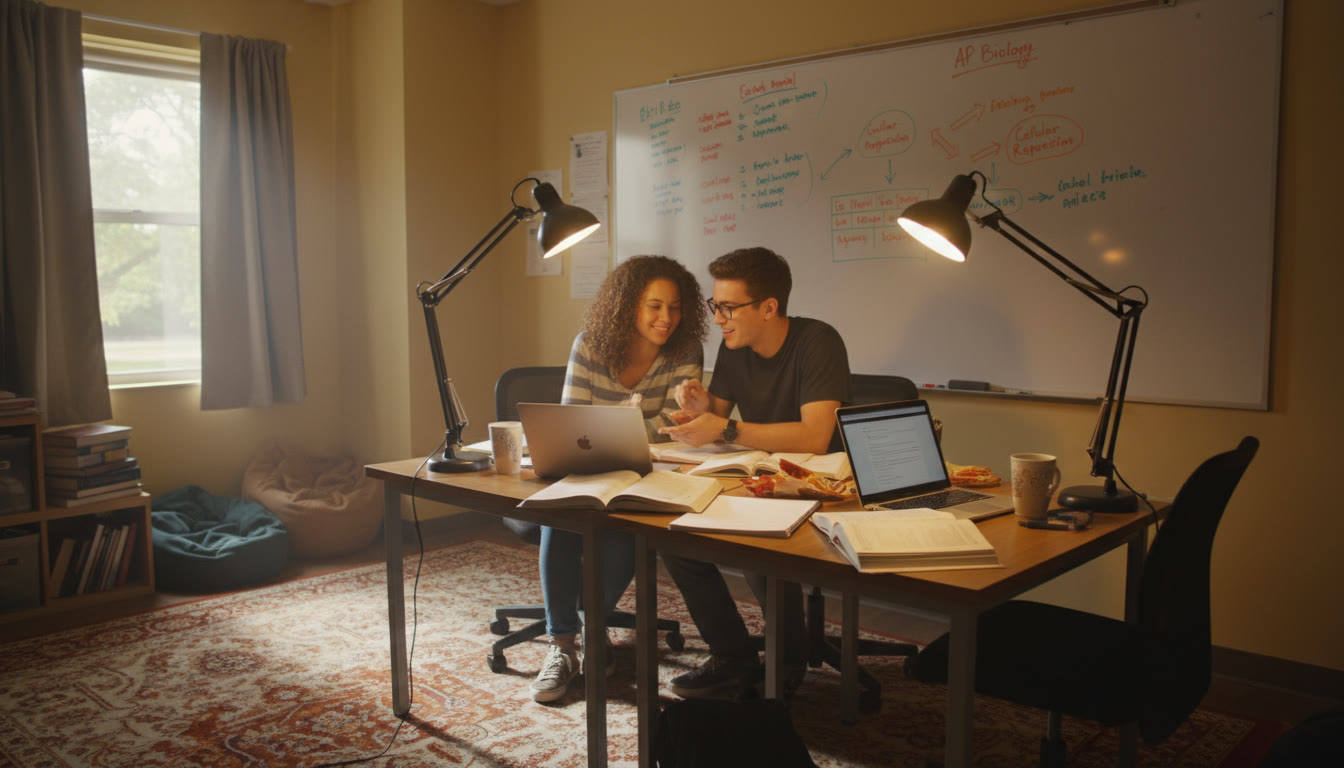
Start with a Simple Mindset Shift
Most students treat study hall like a recovery period — which is critical! But there’s a middle ground: recovery plus micro-focus. Think of study hall as a curated hour of intent: a time for short, focused practice (think 25–40 minutes), followed by a brief reflection or planning period. That small change in mindset — from passive to purposeful — turns more minutes into measurable progress.
Why micro-focus works
- Short bursts match attention spans and reduce procrastination.
- They make it easier to switch topics across multiple AP subjects without burning out.
- They create consistent, cumulative learning — the “little and often” approach.
Designing the Ideal Study Hall Routine
Not every AP subject needs the same approach. AP US History needs synthesis and essay practice. AP Calculus needs problem sets. AP Biology needs concept maps and cycles. A reliable routine balances structure with flexibility so each student can apply the method to their subjects.
Sample Weekly Study Hall Rotation (for a student taking 4 APs)
Rotate deep work among subjects so each subject gets two focused sessions per week plus one lighter review session.
| Day | Primary Focus (50–60 minutes) | Secondary Focus (20–30 minutes) | Reflection/Plan (5–10 minutes) |
|---|---|---|---|
| Monday | AP Calculus — problem set + timed practice | AP English — annotate a short passage | Plan next session; note tricky problems |
| Tuesday | AP US History — document analysis or essay outline | AP Biology — flashcards for key terms | Set targets for essay practice |
| Wednesday | AP Biology — concept mapping + practice questions | AP Calculus — quick review | Write 1–2 study goals |
| Thursday | AP English — timed essay practice or close reading | AP US History — timeline review | Identify 2 weak topics to tackle |
| Friday | Mixed practice — short sets from all APs | Peer review or tutor check-in | Weekly reflection |
How Boarding School Spaces Can Help (or Hurt)
Physical environment matters. Dorm study halls vary wildly — some are quiet, single-desktop rooms; others are large lounges with multiple students. The trick is to create zones, even within a shared space.
Zone ideas for study halls
- Silent Zone: For timed, focused work (AP practice tests, problem sets).
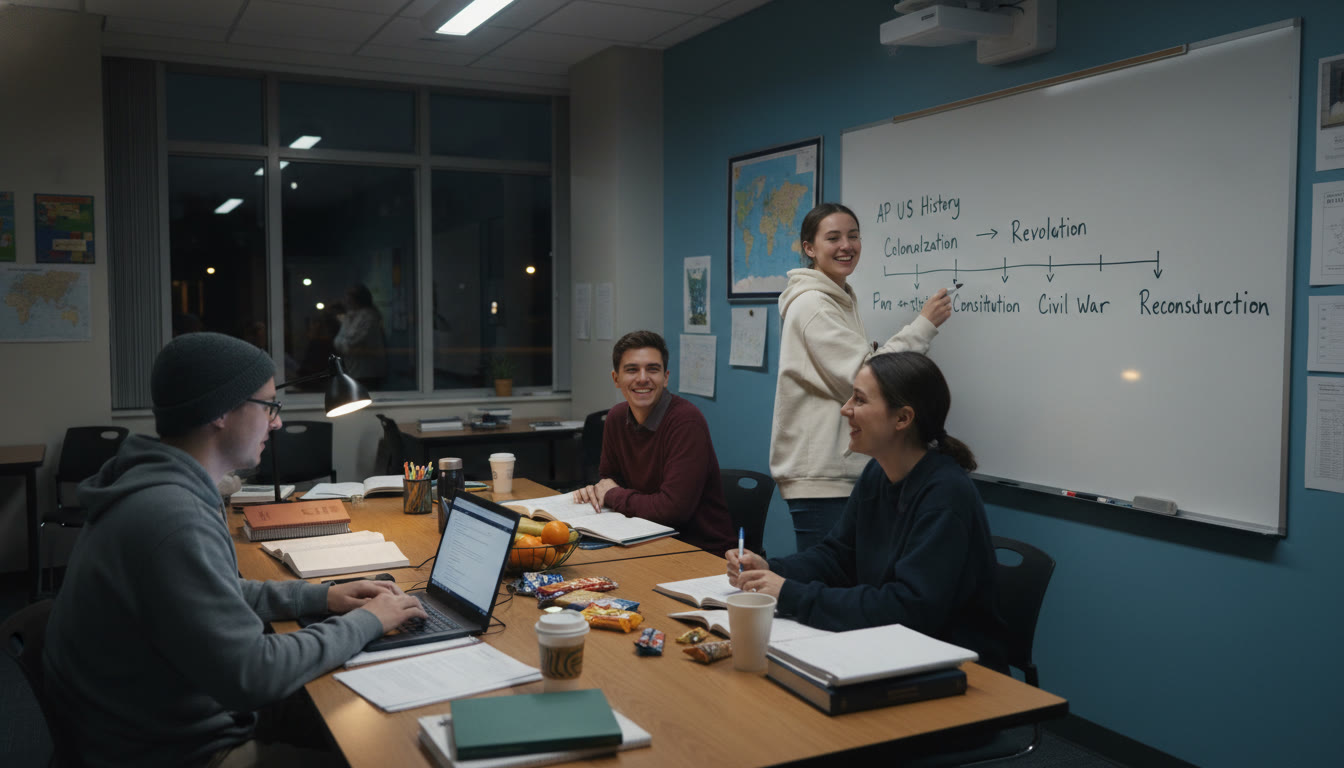
- Collaborative Zone: For group review, peer teaching, and essay workshops.
- Resource Zone: Lined up with textbooks, past AP prompts, calculators, and reference charts.
- Break / Reset Zone: Comfy chairs for a 10–15 minute mental reset between sessions.
Simple additions — noise-canceling headphones, task lamps, a communal whiteboard for formulas or timelines — change the quality of study dramatically. Supervisors can encourage students to claim a consistent desk or seat for routine and muscle-memory benefits.
Study Techniques That Shine in Study Hall
Study halls reward techniques that are portable, focused, and repeatable. Here are approaches that pair perfectly with short, intense sessions.
Active Recall and Spaced Review
- Use flashcards or self-quizzing for definitions, dates, and formulas.
- Create a quick “10-minute quiz” for yourself — then track accuracy over time.
Deliberate Practice
- Pick a narrow skill (e.g., free-response thesis statements, solving optimization problems) and practice it multiple times with feedback.
- In study hall, limit yourself to one element per session — precision beats breadth.
Interleaving
Rather than doing a block of ten similar problems, alternate problem types or subjects. Interleaving improves long-term retention and mimics the unpredictability of AP exams.
Peer Study: The Boarding-School Advantage
Boarding schools are micro-communities. Use the proximity. Peer study helps because explaining ideas reinforces them; plus, students often bring complementary strengths.
Practical peer-study formats
- Teach-Back: One student teaches a concept for 10 minutes, then answers questions.
- Timed Group Quizzes: Two teams race to solve a problem set; discuss different solutions.
- Feedback Pairs: Swap essays or solutions and give structured comments (two strengths, one improvement).
When to Bring Tutors Into the Study Hall
Some concepts need expert guidance, and study halls are a great place for targeted tutor visits. Short, regular check-ins beat infrequent marathon sessions. That’s where Sparkl’s personalized tutoring model fits naturally: 1-on-1 guidance during or after study halls, tailored study plans tied to AP exam goals, and tutors who help convert weak areas into a weekly action plan.
How to use tutoring efficiently
- Request focused sessions: e.g., “Help me break down AP Physics electricity problems in 30 minutes.”
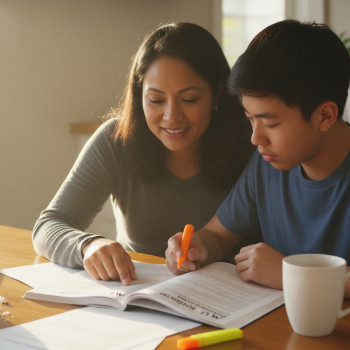
- Use tutors for feedback loops: attempt problems independently in study hall, then review with the tutor.
- Combine peer study and tutor review to solidify learning.
Tools and Materials to Keep in Study Hall
Keep the study hall lean but well-stocked. A cluttered space with the wrong resources kills efficiency.
- Subject-specific notebooks with a consistent layout (date, goal, outcome, reflection).
- Past AP free-response prompts and scoring rubrics for practice and self-assessment.
- Graphing calculators and spare batteries for math-heavy subjects.
- Index cards or a digital flashcard app for quick spaced-repetition review.
- A communal whiteboard or large sticky-notes for timelines, formula sheets, and quick group brainstorming.
Data-Driven Study: Small Checks That Yield Big Wins
Students often underestimate small metrics. Track them. Even simple tracking turns vague feelings of progress into concrete growth.
Quick Study Hall Dashboard
| Metric | How to Measure | Why It Matters |
|---|---|---|
| Time on Task | Timer or app, measured per session | Ensures focus and avoids passive reading |
| Accuracy | Percent correct on short question sets | Shows mastery vs. exposure |
| Response Quality | Rubric score for 1 FRQ per week | Improves writing and argument skills |
| Retention | Weekly mini-quizzes on past topics | Tracks long-term memory |
Use a notebook or a simple spreadsheet to log these metrics. Over a month you’ll see trends — and trends are actionable. If accuracy on algebra problems dips, rearrange next week’s study hall to fix that skill.
Overcoming Common Boarding-School Study Hall Challenges
Not everything will go smoothly. Here are practical fixes for recurring problems boarding students face.
Challenge: Noise and Distraction
Solution: Establish clear norms. Designate quiet hours for deep work and separate times for collaborative study. Noise-canceling headphones and white-noise machines help, but culture matters most — a few agreed-upon rules make the space sustainable.
Challenge: Procrastination and Social Pressure
Solution: Accountability systems — study partners, a short public plan written on the board, or a tutor check-in — reduce social friction and keep you honest. Small public commitments often increase follow-through.
Challenge: Unequal Skill Levels in Group Sessions
Solution: Use mixed formats. Start collaborative sessions with a brief warm-up at different difficulty levels, then split into skill-matched pairs. Rotate partners so everyone teaches and learns.
Parents and Dorm Supervisors: How You Can Help
Parents and supervisors are the scaffolding behind effective study halls. Your role is to create structure without micromanaging.
Actionable steps for adults
- Provide resources: current AP practice books, rubrics, and a set schedule that students can adapt.
- Promote consistency: regular study-hall hours that align with class load and extracurriculars.
- Encourage reflection: ask students to share weekly goals and outcomes. Small check-ins (5–10 minutes) go a long way.
- Support breaks and mental health: scheduling downtime boosts productivity later.
Real-World Examples and Tiny Experiments
Here are some bite-sized experiments students can try for three weeks and measure results.
Experiment 1: The 30/10 Split
Structure each study hall session as 30 minutes of focused work + 10 minutes of review/planning. After three weeks, compare test scores or problem accuracy on the targeted topics.
Experiment 2: Teach-Back Tuesday
Every Tuesday, each student explains one AP topic in 7 minutes. Track confidence and clarity improvement across four sessions.
Experiment 3: Tutor-Integration Week
Schedule three short tutor check-ins (20–30 minutes) across the week to resolve persistent errors. Measure progress on identical practice items before and after.
These experiments reveal what routines amplify learning in your boarding-school environment.
Exam Season: Intensifying Without Burning Out
As AP exams approach, intensify practice but protect sleep and mental health. Swap some study halls for timed full-section practice and focused feedback sessions. Shorten but increase frequency: two 40-minute sessions are better than one 3-hour slog.
Checklist for the Final Four Weeks
- Structured timed practice on exam-style questions at least twice weekly.
- Weekly full-length practice test or cumulative mid-length exam per subject.
- Tutor review sessions targeted at persistent errors (Sparkl’s personalized tutoring can help create a final 4-week study plan and provide targeted feedback).
- Daily light review (10–20 minutes) using flashcards or summary notes.
- Sleep hygiene, nutrition, and short movement breaks.
Measuring Success Beyond Scores
AP success isn’t only about a number. It’s about the skills you take forward: analytical writing, problem solving, evidence-based reasoning, and disciplined study habits. Those skills pay dividends in college and life.
Qualitative signs of progress
- Shorter time to solve previously difficult problems.
- Better ability to draft clear thesis statements and evidence-based arguments.
- Higher confidence in timed settings.
- More consistent study habits and improved balance with social life.
Putting It All Together: A Sustainable Template
Here’s a simple, repeatable template boarding schools can encourage for evening study halls. It balances focus, review, social learning, and wellbeing.
| Phase | Duration | What to Do |
|---|---|---|
| Warm-Up | 5–10 minutes | Set one clear goal and gather materials |
| Deep Work | 25–40 minutes | Timed practice or problem solving (silent) |
| Quick Review | 10–15 minutes | Self-quiz, correct mistakes, mark for tutor or peer follow-up |
| Reflection | 5 minutes | Record outcome and plan next steps |
Final Notes for Students and Parents
Boarding schools provide a unique platform for learning: proximity, structure, and community. Turning study hall from a passive chunk of time into a tactical, data-aware, and supportive practice will make AP prep less stressful and more effective. Use micro-focused routines, leverage peers and tutors, keep the environment intentional, and measure what matters. When integrated naturally, resources like Sparkl’s personalized tutoring can amplify progress — offering 1-on-1 guidance, tailored study plans, expert tutors who understand AP expectations, and AI-informed insights to prioritize high-impact topics.
Remember: AP exams reward consistent, deliberate effort. The version of you that studies with intention in the dorm hallway is the one who performs with confidence on exam day. Start small, iterate quickly, and celebrate the little wins — they add up.
Want a starter plan?
Try the weekly rotation in this article for three weeks. Track the metrics in the Quick Study Hall Dashboard and adjust based on which subjects show the least progress. If you need help turning those adjustments into a plan, consider scheduling a short, targeted tutoring session to troubleshoot persistent errors and build a tailored study strategy.
Good luck — and study smart. The boarding-school advantage is yours to shape.
























No Comments
Leave a comment Cancel