
CBSE Preparation Mistakes to Fix Early
If you’re reading this, you’re probably preparing for CBSE board-style exams and hoping to do better than “just okay.” Good news: most students who say “I wish I had started earlier” aren’t unlucky — they simply learned key habits too late. The trick isn’t studying harder; it’s studying smarter. That means spotting the preparation mistakes that quietly shave marks off your paper and fixing them early so they never become panic now problems.
This article is a friendly, practical guide—full of concrete fixes, sample schedules, and exam-smart actions you can implement from today. It keeps things aligned with CBSE-style expectations (syllabus focus, full-length mock practice, marking-smart answers and exam time management) while treating diagrams, derivations and notes as learning tools rather than answer crutches. You’ll also find how targeted, personalised help can fit naturally into your plan if you need it.
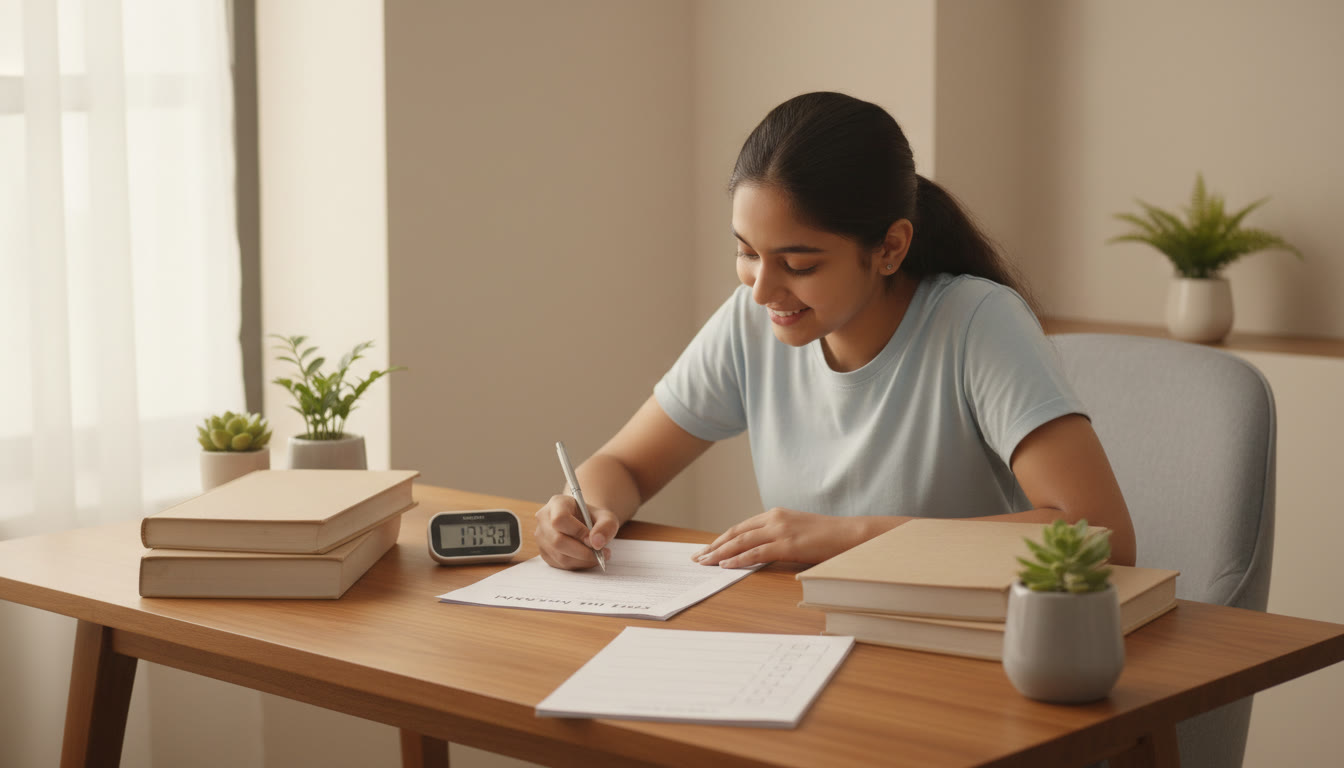
Why fixing mistakes early matters more than cramming
CBSE-style exams reward clarity, alignment with the syllabus and steady application of marking principles. A last-minute cram can sometimes help you remember facts, but it rarely fixes the structural mistakes that cost marks consistently — unclear steps in answers, skipping diagrams when they’re necessary, poor time allocation across sections, and weak revision of high-weightage topics.
Fixing mistakes early builds three things you actually need for board success: a reliable study rhythm, accurate self-evaluation (so mocks teach you something), and answer presentation that matches what markers expect. Think of each early fix as an investment: it costs less time now and saves marks later.
Quick checklist to run right away
- Get the official syllabus and mark distribution for your subjects and align your study plan to it.
- Start a simple mistake log — one page per subject to track recurring errors.
- Schedule regular full-length timed mocks (at least one every 7–14 days during revision phase).
- Use NCERT (or the prescribed textbooks) as the backbone, and then add targeted practice for problem-solving and application.
- Make one clear page per chapter with the most-tested formulas, definitions, and command words.
Top mistakes students make — and how to fix them early
Below are the high-impact mistakes I see again and again. For each, you’ll find why it costs marks and a concise, practical fix you can start this week.
Mistake 1: No syllabus-aligned plan (random study)
Why it costs marks: Studying randomly often means spending time on low-weightage topics and neglecting chapters that appear frequently in papers. Without alignment to the syllabus and mark distribution, revision becomes inefficient.
Fix: Create a plan mapped to the official syllabus and mark split. Rank chapters into high/medium/low weight and schedule them accordingly. Each week, include one high-weight chapter, one medium, and practice questions from low-weight areas. Use a short weekly review to reassign time based on mock results.
Mistake 2: Treating mocks as progress reports instead of practice labs
Why it costs marks: Sitting a mock without post-mock analysis is like taking a test and ignoring the report card. Mistakes repeat because they’re not diagnosed.
Fix: After every timed mock, spend 60–90 minutes marking it against the answer key and writing 3–5 actions to prevent each recurring error. Convert those actions into the next week’s tasks (e.g., rework 5 algebra questions, practice a past-year map). Do at least two full-length mocks under exam conditions each month in revision phase.
Mistake 3: Misreading or misapplying the marking scheme
Why it costs marks: CBSE marking schemes reward specific steps, formats and keywords in many subjects. Writing long paragraphs without structure or skipping required steps in numericals loses marks even if the final idea is correct.
Fix: Learn the typical marking rubric for each subject: where are the step marks, where do you get marks for diagram labeling, how many marks for one-liners vs detailed answers. Practice writing answers that clearly show the steps markers look for—numbered points, labeled diagrams, defined terms up front.
Mistake 4: Overreliance on rote memorisation
Why it costs marks: Rote recall helps with short factual questions but falls apart in application, case study, or higher-order questions that CBSE includes in modern cycles.
Fix: Turn facts into tools. For every concept, practice one applied question. Use flashcards for quick recall, but always add one worked example that shows how the concept applies. For languages and social sciences, practice structured answers that use facts as supporting evidence rather than the whole answer.
Mistake 5: Ignoring answer presentation and time management
Why it costs marks: Good content can get lost if presentation is chaotic or if you run out of time and leave parts unanswered.
Fix: In mocks, practise a time plan: first read the paper (5–8 minutes), answer easy/high-mark questions quickly, and keep strict time blocks per question. Use numbering, subheadings, and bullet points where appropriate. Practise handwriting legibility and spacing — these small presentation cues can make your answers easier to mark.
Mistake 6: Not treating diagrams and derivations as learning tools
Why it costs marks: Treating diagrams as optional or overly decorative loses marks in sciences and social sciences where labels and clear steps earn points.
Fix: Practise drawing and labeling diagrams neatly (set a 3–5 minute target during mocks). For derivations, practice writing each step clearly — markers award steps, not telepathy. Use diagrams in revision notes as memory aids.
Mistake 7: Poor note design (overlong or incomplete notes)
Why it costs marks: Notes that are either too verbose or too sparse become useless during last-stage revision.
Fix: Create a one-page chapter summary that contains definitions, formulae with units, a 2–3 line conceptual summary, and two sample questions with quick solutions. These are your rapid-revision pages.
Mistake 8: Neglecting internal assessment, practical files, and project components
Why it costs marks: Internal marks are usually predictable and avoidable — but if neglected, they become a source of unnecessary stress and lost marks.
Fix: Keep a simple checklist of internal tasks and due dates. Finish or draft practical files early, get teacher feedback, and iterate once. Treat internal assessment as a high-return task: small early effort, secure marks.
Mistake 9: Not using mistake logs and data from mocks
Why it costs marks: Without tracking, you can’t see patterns — the same careless error in algebra or the same conceptual gap in biology keeps costing you marks.
Fix: Keep a two-column mistake log (Error + Root Cause + Fix). After each mock or test, add 3 most costly errors and the precise practice action to stop them. Revisit errors weekly.
Mistake 10: Skipping question-format practice (long answers, map work, case studies)
Why it costs marks: CBSE papers mix question types. If you only practise short questions, long-answer and application formats will feel unfamiliar and time-consuming.
Fix: Build mixed practice into every revision week: one long-answer, one case study, and one application problem. Keep a bank of sample long-answer structures to adapt quickly in the exam.
Summary table: Mistake, why it costs marks, and a starter fix
| Mistake | Why it costs marks | Starter fix (this week) |
|---|---|---|
| No syllabus plan | Wastes time on low-weight topics | Map chapters to mark weight and make a 6-week focused plan |
| Skipping mock analysis | Mistakes repeat | Do a 90-minute post-mock correction session and log 5 fixes |
| Poor answer structure | Steps not visible to markers | Rewrite 3 past answers in marker-friendly format |
| Rote-only study | Fails applied questions | For every fact, practise one applied question |
How to structure full-length mock practice (what works)
Mocks are your most powerful tool if they’re treated like experiments — do them under exam conditions, and analyse them like research. Here’s a simple, repeatable mock workflow:
- Mock day: Mimic exam conditions exactly — same duration, silence, and a single answer booklet. No phones, no breaks beyond what’s allowed.
- Immediate check: After finishing, take 10–15 minutes to note how you felt: tough questions, time pressure points, pages you rushed.
- Marking session: Mark with the official marking approach or sample answers. Time this — don’t over-correct everything at once.
- Error log: Add the top 5 recurring errors to your mistake log and assign each a practice task for the coming week.
- Targeted practice: Replace one regular study block with focused practice on those errors (for example, 2 focused sessions on map skills or derivation steps).
Sample mock schedule (revision phase)
| Week | Focus | Tasks |
|---|---|---|
| Week 1 | High-weight chapters + first full mock | Timed mock; 90-min review; log 5 errors; practise two error types |
| Week 2 | Medium chapters + targeted practice | Two topic tests, diagram practice, 1-hour revision notes |
| Week 3 | Past questions + full mock | Timed mock; solve three previous-year questions in detail |
| Week 4 | Weakness correction | Focused practice on logged errors; teacher feedback |
Subject-specific quick fixes (practical examples)
Mathematics
Common loss: Skipping steps and losing method marks. Fix: Practice one full solved problem per day showing every intermediate step. Keep a formula sheet with units and typical sign traps. In mocks, write the intermediate operation lines even if they seem obvious; markers award steps.
Sciences (Physics, Chemistry, Biology)
Common loss: Unlabeled diagrams, missing units, or incomplete experimental descriptions. Fix: Practice neat, labeled diagrams with a 3-minute time-limit. For practical descriptions, use a three-part structure: objective — procedure — observation/conclusion. Carry a small checklist for lab reports: variables, controls, units, and safety notes.
Social Sciences
Common loss: Weak map work and chronological answers lacking context. Fix: Do one map question per week and practise structuring long answers with an introduction, 3–4 evidence-backed paragraphs, and a short conclusion. Develop timelines for historical topics on a single sheet for quick revision.
Languages
Common loss: Losing marks in comprehension due to poor time allocation for reading. Fix: Spend 10–12 minutes reading comprehension passages actively (underline keywords, jot quick notes in margins) and then attempt questions; practise summary writing using 60–80 words with a main idea and two supporting details.
How to use a mistake log effectively
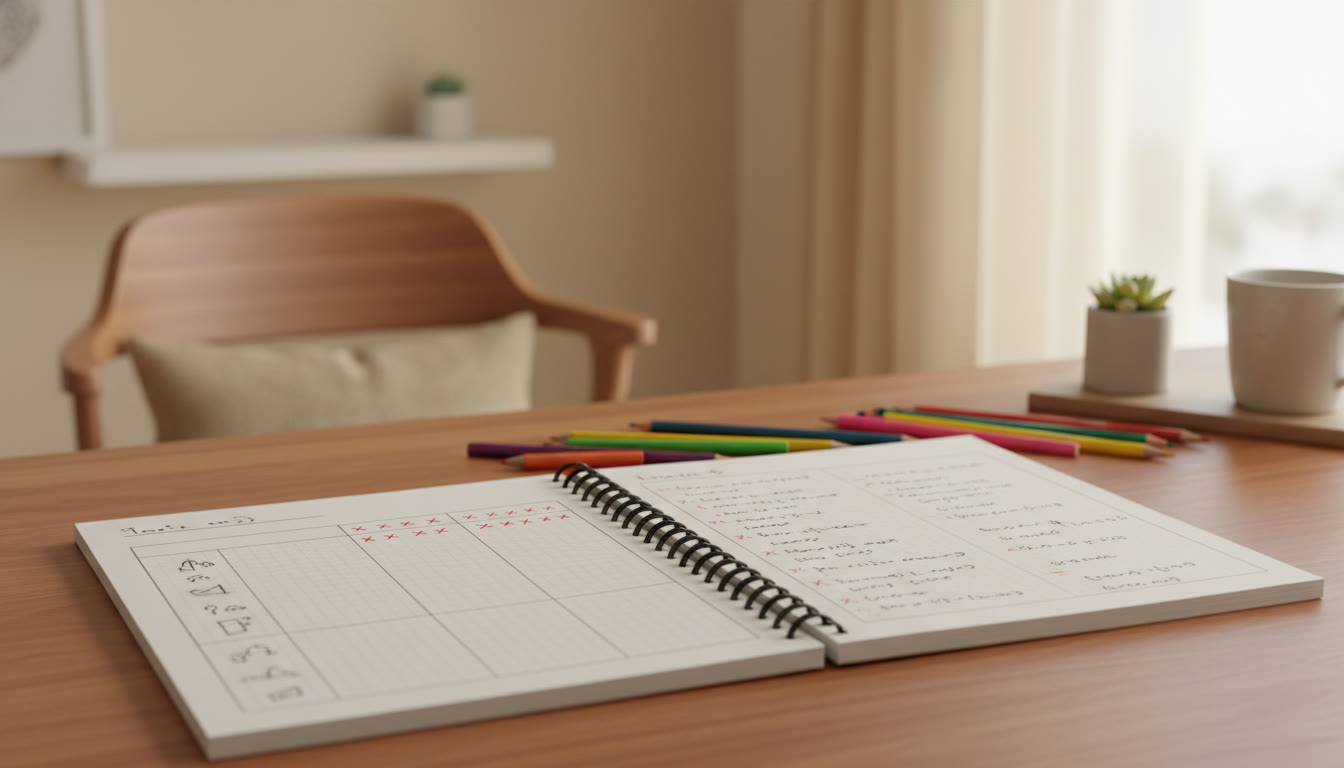
A mistake log is your personal cheat-sheet for continuous improvement. Keep a simple three-column table for each test:
- Error observed (short phrase)
- Root cause (conceptual gap, careless error, time pressure)
- Fix action (practice task, resource, or technique with a deadline)
Revisit the log weekly. If the same error appears twice, escalate the fix: move from 10 practice questions to 25, or ask for 1-on-1 feedback. Pattern recognition is where marks are gained quickly.
When personalised help fits — a natural place for one-on-one support
Some students solve the vast majority of problems by reorganising their plan and doing focused practice. Others hit a persistent conceptual snag or struggle with time management despite good effort. That’s the moment when personalised help can be time-efficient.
If you choose one-on-one support, look for tutors who help you build a marking-smart revision plan, simulate mocks with feedback, and provide clear, measurable actions after each test. Personalised plans should focus on your mistake log, strengthen weak chapters, and improve exam technique rather than simply adding more content. For example, Sparkl‘s 1-on-1 guidance and tailored study plans can slot into your schedule to replace general doubt sessions with targeted progress sessions that follow your mistake log and mock results.
Practical habits you can start today
- Set a weekly review block: 45 minutes every Sunday to check mocks, update your mistake log and adjust the plan.
- Use the “two-pass” exam strategy in practice: pass one for confident answers, pass two for attempts and harder questions, pass three for checking and corrections.
- Make “exam condition” practice sacrosanct: one full timed mock every 7–14 days in your revision zone.
- Keep one digital and one physical quick-review page per subject — the physical sheet is the last thing you read before a mock.
- Record and time yourself when practising diagrams or derivations to build speed and clarity.
Measuring progress without stress
Progress is not a single mock score. Track these numbers instead:
- Average marks in a subject over the last three mocks (trend, not single value).
- Number of recurring errors in the mistake log reduced month-on-month.
- Time taken per question type — has it reduced? (e.g., long answers: from 25 min to 18 min).
Small steady improvements are more reliable than a huge last-minute jump. If you need help identifying patterns or building a revision plan tailored to your strengths and gaps, targeted personalised tutoring that combines expert feedback and AI-driven insights can save time — for example, Sparkl‘s structured sessions link feedback directly to practice tasks and track improvements across mocks.
Final checklist before a full-length mock
- Print or prepare the exact number of answer sheets and one question paper copy.
- Set a timer and keep no digital distractions nearby.
- Keep a rough time plan: reading time — answer order — time-per-section.
- Have a pen, extra ink, ruler, and eraser ready; practise neat numbering and spacing.
- After the mock, immediately note down feelings and time bottlenecks before starting corrections.
Concluding note
Fixing CBSE preparation mistakes early is less about miracles and more about replacing one recurring error at a time with a small habit: a syllabus-aligned plan, disciplined mock analysis, a living mistake log, and clear answer presentation. Those changes compound into consistent marks, clearer confidence, and a calm, exam-smart approach that fits the CBSE style and marking expectations.
























No Comments
Leave a comment Cancel