
ISC vs CBSE: Which Board Gives You More Practical Learning?
It’s a question many students and parents ask when choosing a board: which one will actually help me build hands-on skills — ISC or CBSE? The short answer is: there isn’t a one-size-fits-all winner. The longer answer is what this article is for. I’ll walk you through what “practical learning” really means, how each board frames laboratory work and projects, and — most importantly — how you can design a study plan that turns any syllabus into a deeply practical experience.
What do we mean by “practical learning”?
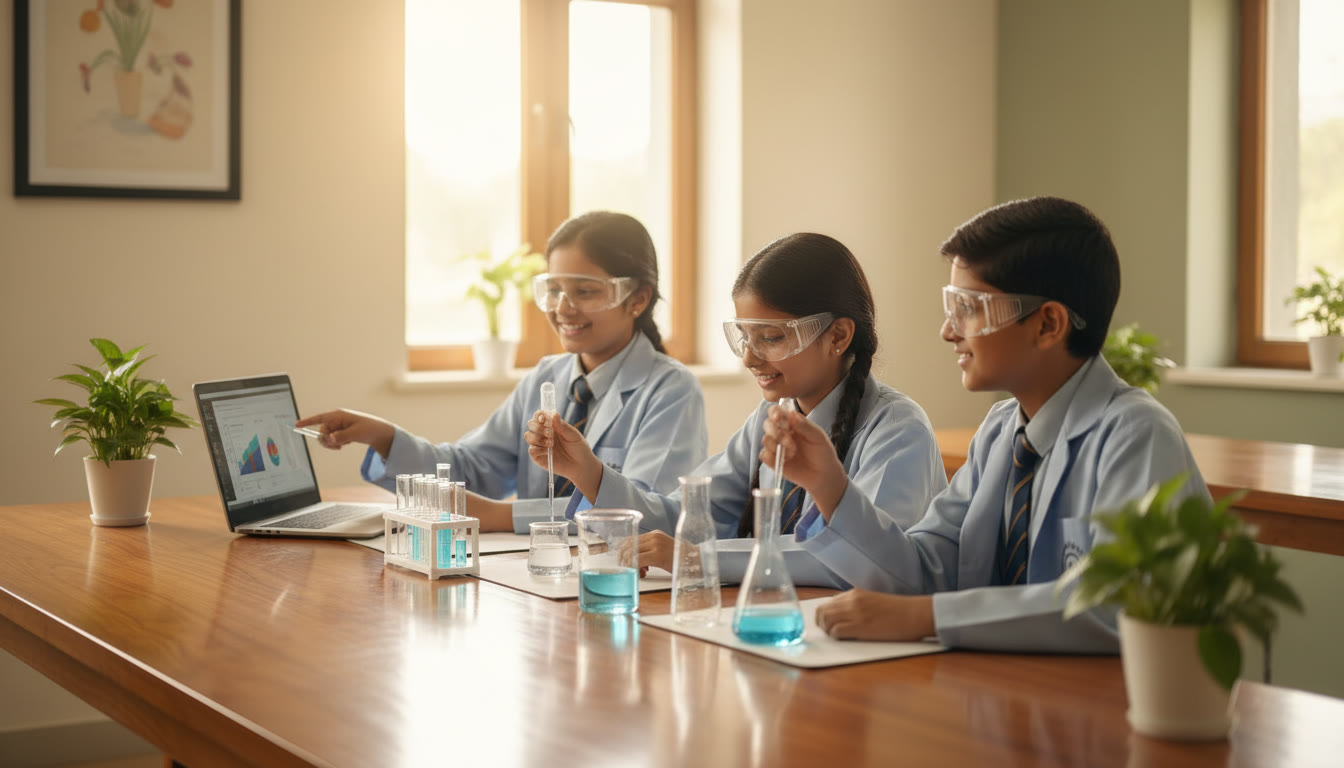
Practical learning goes beyond memorizing facts. It includes hands-on experiments, observations, designing and building projects, recording and interpreting data, conducting mini-research, and communicating results clearly — both in writing and verbally. Practicals also teach attitudes: curiosity, methodical thinking, careful observation, safety awareness, and troubleshooting.
When students talk about practical learning, they usually mean two complementary things:
- Skill-based activities: lab work, experiments, model building, coding assignments, and maker activities.
- Assessment-connected practice: writing lab reports, defending a viva voce, creating project portfolios, and taking mock practical exams that mimic board patterns.
How curriculum design shapes practical opportunities
The structure of a board’s curriculum plays a big role in shaping practical exposure. One board may define detailed experiments and assessments at the national level, while another may give schools more freedom to design richer or interdisciplinary practicals. In practice, both CBSE and ISC include practicals in sciences and project work in other subjects, but the emphasis and implementation style can vary.
Two important realities to keep in mind:
- Policy vs practice: Board-level instructions set the framework; actual learning depends on the school, teachers, and how well resources are used.
- Flexibility: Some schools use the board syllabus as a minimum and enrich it with additional hands-on modules, workshops, or community projects.
Assessment and marking: why practicals matter
Practical examinations and internal assessments are not just “easy marks” — they test different cognitive skills than written tests. Boards typically include:
- Hands-on exams (performing a prescribed experiment under supervision).
- Record/portfolio assessment (lab notebooks, project reports, sketches, and photos).
- Viva voce or oral questioning (explaining procedure, interpreting results, and reflecting on errors).
Good practice for students is to treat practicals with the same seriousness as theory papers: plan, rehearse, document, and take full-length mock practical tests that simulate timing and viva conditions.
Quick comparative snapshot
| Aspect | CBSE | ISC |
|---|---|---|
| Curriculum approach | Nationally standardized; prescriptive experiments and sample practicals. | Broader scope for depth and project-based exploration within the syllabus. |
| Assessment style | Combines practical exams with internal assessments and viva. | Emphasises projects and portfolios along with practical exams. |
| School autonomy | Moderate; schools follow central guidelines but may supplement. | Generally higher; schools often design richer, interdisciplinary tasks. |
| Best fit for | Students who prefer a clear, structured practical syllabus and alignment with national testing patterns. | Students who want deeper project work, creative application and broader practical exploration. |
| Variability | Practical exposure can vary widely by school resources and teacher capability. | Also varies, but the system often explicitly supports project-based outcomes. |
Lab infrastructure, teacher support and variability
Practical learning is as much about equipment and space as it is about pedagogy. A well-equipped lab with a teacher who encourages inquiry will create more learning than even the most flexible syllabus. Key ingredients are:
- Regular access to the lab for small groups rather than large, infrequent demonstrations.
- Teachers trained in practical pedagogy — how to scaffold experiments, ask probing questions and assess process as well as result.
- Safety protocols and basic apparatus that students can handle confidently.
Both boards emphasise lab work in their guidelines, but implementation comes down to each school. If practicals are your priority when choosing a school or board, inspect school laboratories, ask for sample practical schedules, and talk to current students about how much hands-on time they actually get.
Project-based and interdisciplinary practicums — where students shine
Project-based learning is a powerful place to build practical skills: it integrates observation, design, testing, iteration, documentation and presentation. Examples that work within most syllabi include:
- Environmental science project: measuring local water quality, analyzing data and proposing remedial measures.
- Physics-meets-design project: building a low-cost solar cooker and testing efficiency under controlled conditions.
- Biology field study: a checklist-based survey of local biodiversity and a report linking findings to conservation concepts.
- Computer science project: collecting real data, writing code to analyze it and presenting findings with visualizations.
These projects are valuable for both boards when aligned with the syllabus: they can become a showcase in your practical file, demonstrate transferable skills to admissions panels, and make concepts come alive.
Deciding which board fits your practical learning goals
Rather than assuming one board is categorically more practical, use this decision checklist:
- What kind of practical exposure do you want? Routine lab practice or open-ended projects?
- Does the school have a culture of hands-on learning — maker spaces, science clubs, or community projects?
- Are teachers given time and training to run small-group, inquiry-led sessions?
- How does the board’s assessment method align with your strengths — performance under observed conditions, or long-form project work?
- What are your future goals — professional courses that value lab experience or a path that prioritizes other skills?
Answering these will point you towards the best fit. A student who wants structured, repeatable lab assessments may find one board comfortable; a student drawn to research-style projects may prefer the other’s flexibility. But again: the school’s approach often matters more than the board name.
A practical study plan you can use (8-week cycle)
Here’s a practical, repeatable 8-week cycle that works whether you’re on either board. It focuses on building skills systematically, staying aligned with syllabi, and rehearsing under exam-like conditions.
- Week 1 — Foundation & pre-lab preparation
- Identify the experiments/projects listed in your board schedule for the cycle.
- Read theoretical background and safety notes; list apparatus and reagents.
- Create a pre-lab checklist: aims, materials, safety, expected observations.
- Week 2 — Demonstration & concept mapping
- Watch or attend a live demonstration; draw a flow diagram of the procedure.
- Note variables, controls, and possible sources of error.
- Week 3 — Hands-on small-group practice
- Run the experiment in small groups; rotate roles (operator, recorder, safety monitor).
- Write the first full draft of the lab report immediately after the session.
- Week 4 — Data analysis & viva prep
- Focus on interpreting the data: graphs, error estimation, and possible improvements.
- Practice short viva answers; prepare for why methods were chosen and what alternatives exist.
- Week 5 — Project integration
- If the practical links to a project, plan the longer-term steps, sourcing materials and defining milestones.
- Document everything in a project diary and photograph steps for the portfolio.
- Week 6 — Peer review and redraft
- Exchange reports with classmates; critique format, clarity, and data presentation.
- Revise reports and finalize the practical file entries.
- Week 7 — Mock practical exam
- Simulate a full practical exam: set a timed procedure, carry it out, write the report and face a short viva.
- Have a teacher or mentor give rubrics-based feedback.
- Week 8 — Reflection and consolidation
- Make a one-page summary of lessons learned, common errors, and improved procedures.
- Plan the next cycle: pick the next set of experiments or the next project phase.
Repeat this cycle across subjects. For subjects with fewer traditional labs (for example, interdisciplinary or applied subjects), adapt the “hands-on” element to field work, simulations, or maker tasks.

How tutoring and technology can boost practical skills
Targeted support speeds progress. One-on-one coaching helps in several ways: tailored feedback on technique, personalized mock vivas, and help structuring a compelling project portfolio. Tech tools — virtual labs, data-logging sensors, and simulation software — are excellent supplements where physical resources are limited.
For students seeking guided, personalised help, platforms that combine expert tutors with structured study plans and AI-driven progress checks can be a practical complement to school labs. For example, Sparkl offers one-on-one guidance, tailored study plans, and expert tutors who can help you rehearse practical exams and polish project reports.
When used responsibly, online tutoring and simulations reduce anxiety around unfamiliar apparatus and make the mock exam experience more realistic. They should supplement — not replace — actual hands-on sessions in a proper lab environment.
Common myths about practicals — busted
- Myth: “Practicals are easy marks.” Reality: Good practical performance requires planning, technical skill, clean documentation, and the ability to explain your method.
- Myth: “One board is strictly theoretical, the other is only practical.” Reality: Both boards require theory and practice; the difference is in emphasis and flexibility.
- Myth: “Lab reports are just copy-paste exercises.” Reality: Authentic reports show reasoning, data handling and reflection — these are valued in assessments and future studies.
- Myth: “If my school has fewer resources, I can’t get practical experience.” Reality: Creativity helps: use community spaces, science clubs, low-cost experiments and well-designed simulations to build competence.
Student’s final checklist before a practical exam
- Practical file: complete reports, dated entries, photographs and project logs.
- Pre-lab checklist: aims, apparatus list, safety precautions and expected observations.
- Viva notes: short, clear explanations for each experiment and common sources of error.
- Mock practicals: at least one full-length mock under timed conditions.
- Teacher feedback documented and incorporated into final drafts.
- Presentation materials for project and portfolio if required (charts, summary slides, photographs).
Wrapping up the comparison
Which board offers more practical learning? The honest and useful answer is: it depends. Both boards create opportunities for hands-on learning; the key drivers are school culture, teacher expertise, lab access, and the student’s own approach. A student who seeks out projects, practices full-length mocks and documents learning carefully will come away with strong practical skills under either board. Conversely, a board’s policy is only as effective as its implementation in a given school.
Choose a school and a learning routine that prioritise frequent, small-group hands-on sessions, clear documentation habits, and regular mock practicals. Supplement school work with focused tutoring or guided modules for targeted feedback and simulated vivas when needed. The board you pick is important, but what you build — your habits, your curiosity, and your willingness to tinker — is what ultimately determines how practical your learning becomes.
Practical learning is a skill set you carry beyond exams: it is the capacity to design, test, interpret and communicate — and that is the educational outcome to aim for.



















No Comments
Leave a comment Cancel