
IB DP Application Strategy: Preparing for Major-Specific Requirements (STEM, Business, Art)
Applying to university from the IB Diploma Programme feels a little like orchestrating a symphony: subjects, Extended Essay choices, CAS, internal assessments and extracurriculars all need to harmonize so your application sounds intentional, not accidental. The good news? The IB gives you a powerful platform to tell a coherent story — and with focused planning you can tailor that story to the expectations of STEM, Business, or Art programs.

This guide walks you through practical, major-specific strategies: how to choose HLs that align with your intended field, how to craft essays that reveal intellectual fit, how to assemble activities and portfolios that impress admissions, and how to plan a timeline so you’re never scrambling. There are concrete examples, sample interview prompts, and a side-by-side table so you can compare what matters most for each pathway. Where it fits naturally, I’ll mention how one-on-one tutoring and tailored study plans — like those offered by Sparkl‘s expert tutors — can sharpen your approach.
Why the IB is a Strength — and How to Turn It Into an Edge
Universities value IB students for a few key reasons: rigorous academic preparation, research experience through the Extended Essay (EE), and evidence of extracurricular engagement via CAS. But simply checking boxes isn’t enough. Admissions officers want to see intellectual curiosity, depth of engagement, and a clear match between what you’ve done in the IB and the demands of your chosen major.
- Depth over breadth: Select HL subjects that demonstrate subject mastery relevant to your major.
- Use the Extended Essay strategically: pick EE topics that align with your major to showcase research ability.
- Leverage Internal Assessments: treat them as mini-portfolio pieces or proof of practical skills.
- Make activities purposeful: quality and progression beat a long checklist of superficial items.
Mapping IB Choices to Major Expectations
Below are practical, major-specific roadmaps. Each section covers subject focus, EE and IA opportunities, extracurriculars that signal commitment, essay angles, and interview prep themes.
STEM (Engineering, Computer Science, Natural Sciences)
Admissions committees for STEM majors look for strong foundations in math and science, curiosity about real problems, and demonstrated experience with experimentation or coding.
- Subject strategy: Two HLs anchored in mathematics and a science (Mathematics: Analysis & Approaches HL or appropriate higher-level math, plus Physics or Chemistry HL when possible). Computer Science HL or SL can be a strong complement for CS/engineering applicants.
- Extended Essay ideas: Experimental physics investigations, computational modelling projects, or an EE analyzing data from an original experiment or simulation.
- Internal Assessments: Use lab reports or computational projects as clear evidence of methodical problem-solving. Keep polished versions to reference in essays or interviews.
- Activities: Research internships, science Olympiads, coding competitions, robotics clubs, or independent research supervised by a teacher or mentor.
- Essay themes: Focus on problem-solving narratives: a moment when you identified a technical challenge, learned a new method, and produced results (even if imperfect). Emphasize process, not just outcome.
- Interview prep: Be ready to explain an experiment or project clearly, discuss limitations of your methods, and show curiosity about open questions in your field.
Business and Economics
Business schools value analytical thinking, leadership experience, and evidence that you can apply theory to real-world problems.
- Subject strategy: Economics HL is highly persuasive; pair it with Mathematics HL if possible. Business Management HL is a good fit for practical knowledge, and a language HL can be persuasive for international-business angles.
- Extended Essay ideas: Market analysis case studies, econometric analysis using public data, or EE research on consumer behavior or microeconomic policy.
- Internal Assessments: Business Management IAs can be turned into mini-case studies you cite in essays; Economics IAs that use data lend analytical credibility.
- Activities: Entrepreneurship projects, investment clubs, internships at startups or NGOs, model UN focused on economic policy, or community initiatives that involve budgeting or impact measurement.
- Essay themes: Emphasize impact and learning: how you tested an idea, led a team, or measured outcomes. Admissions officers look for reflective leaders who can turn ambiguity into results.
- Interview prep: Expect behavioral questions about leadership and situational problems requiring clear analytical answers. Practice explaining basic economic concepts and applying them to a business scenario.
Art, Design & Creative Fields
Art programs evaluate both technical skill and creative thinking. A coherent visual language, a strong portfolio, and reflective writing about process are critical.
- Subject strategy: Visual Arts HL is often ideal; combine with another HL that supports conceptual thinking (History, Literature, or a science, depending on your approach).
- Extended Essay ideas: A research essay on a movement or practice that informs your art, or a practice-led investigation where the EE documents process and contextual research.
- Internal Assessments: Use comparative studies or studio work as portfolio pieces. Document the process meticulously — admissions panels want to see evolution.
- Activities: Exhibitions, galleries, commissioned work, arts residencies, community art projects, or interdisciplinary collaborations that include design thinking.
- Essay themes: Use narrative to explain your creative questions, influences, and how you iterate. Reflective language about risk-taking and failure resonates strongly in arts applications.
- Portfolio & interview prep: Curate a concise portfolio that shows range and process. Prepare a short artist statement and be ready to discuss individual pieces — choices, materials, and what you’d do next.
Quick Comparison Table: STEM vs Business vs Art
| Area | STEM | Business | Art |
|---|---|---|---|
| Key HL focus | Math HL + Science HL (Physics/Chemistry) | Economics HL or Business Management HL + Math HL | Visual Arts HL + complementary HL (History/Literature) |
| Extended Essay | Experimental or computational project | Data-driven market/economics analysis | Practice-led investigation or art history research |
| Best extracurriculars | Research, competitions, internships | Entrepreneurship, investment/consulting prep, internships | Exhibitions, residencies, community projects |
| Essay focus | Process: hypothesis, method, iteration | Impact: strategy, leadership, measurable results | Voice: process, concept, evolution |
| Interview themes | Technical explanation, problem-solving | Behavioral leadership, case scenarios | Creative intent, process and critique |
Writing Essays That Prove Fit — Not Just Passion
Essays are where your IB record becomes a narrative. Rather than listing achievements, pick one or two meaningful episodes that reveal how you think and how the IB shaped that thinking.
- Structure: Start with a compact scene that shows you in action, then zoom out to analyze what you learned and how it shaped your academic direction.
- Evidence: Reference a specific HL project, an EE insight, or an IA result to anchor claims about skill and interest.
- Reflection: Admissions care about metacognition — show how you adapted methods or changed hypotheses when data or critique pushed you to revise.
- Conciseness: Use clear language. For STEM, technical clarity; for Business, concise impact metrics; for Art, precise language about process and intention.
Short Examples of Essay Openers
- STEM: “I first learned to debug models on the school’s weather data when a sensor drifted halfway through my experiment — fixing it taught me to treat messy data as part of discovery, not an obstacle.”
- Business: “When our team’s micro-enterprise lost customers after a price change, I ran a small-market survey and redesigned the offering — that pivot taught me which metrics actually matter.”
- Art: “I painted over a week’s work after realizing it echoed a previous piece; the act of erasure became the subject of my next series.”
Activities, CAS and Demonstrable Impact
Quality, progression and reflection are the three pillars of meaningful activities. Admissions panels want you to show growth: more responsibility, deeper technical skill, or clearer artistic voice over time.
- Design multi-year projects: start small, iterate, scale scope in later years, and document outcomes.
- Link CAS to academics: a CAS project that ties to your EE or IA creates a stronger narrative thread.
- Record evidence early: photos, presentations, feedback, and measured outcomes are gold for applications and interviews.
Portfolios and Practical Submissions for Art/Design
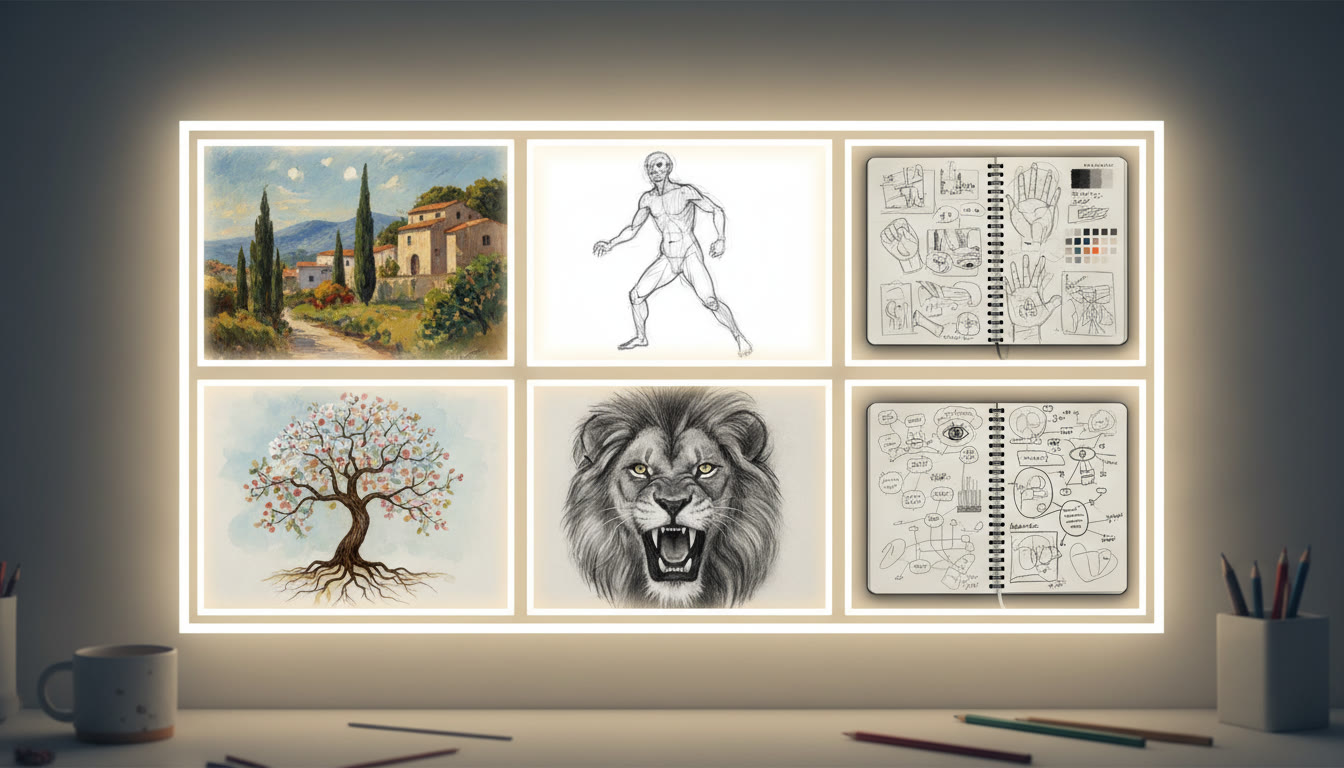
Portfolios are judged for both skill and thinking. Curate, don’t hoard: a concise collection with process documentation tends to impress more than an abundance of unfocused pieces.
- Include process: preliminary sketches, mental maps, and materials experiments explain how ideas evolved.
- Annotate selectively: one or two sentences per piece explaining intent, challenge, and what you learned.
- Balance range and depth: show diversity of media, but also a sequence that demonstrates development.
- Digital formatting: high-quality images, consistent resolution, and short captions make portfolios easy to view.
Interview Prep: Practice That Feels Real
Interviews are your chance to be conversationally lucid about academic choices. The best preparation is practice that mirrors the real format: short clear answers, a few technical examples, and a reflective takeaway.
- Prepare two micro-stories: one technical/academic and one personal leadership or creative moment.
- Practice explaining one complex idea simply — from an IA, EE, or portfolio piece — in two minutes.
- Mock interviews with a teacher, mentor, or tutor help normalize pressure and reveal gaps in explanation.
- Expect follow-ups: “Why did you choose that method?” or “What would you do differently next time?” are common.
One-on-one coaching can transform interview nerves into clarity. Sparkl‘s tailored practice sessions and feedback loops are useful for rehearsing both technical explanations and presentation of creative work.
Realistic Timeline: From Planning to Submission
Avoid last-minute sprints. Below is a relative timeline you can adapt to your own deadlines. Think in months before your application deadlines.
| Time before deadline | STEM Action Items | Business Action Items | Art Action Items |
|---|---|---|---|
| 12–18 months | Lock HL choices; begin EE topic ideation; join research group or start an independent project. | Refine HLs; start a small enterprise or data project; draft potential EE topics. | Build a habit of creating; gather process photos; choose portfolio focus. |
| 6–12 months | Complete IA drafts; run experiments; present results internally; gather supervisor feedback. | Run pilot tests for business ideas; gather metrics; start networking for internships. | Curate works; complete high-quality pieces; start artist statements. |
| 3–6 months | Polish EE; secure recommendation letters; practice technical interview questions. | Draft essays focusing on impact; finalize recommendation choices; rehearse case scenarios. | Finalize portfolio; create a polished PDF/website; rehearse talking about process. |
| 1 month | Proofread materials; practice explaining projects concisely; ensure all test scores/transcripts are ready. | Finalize personal statements; prepare concise leadership stories for interviews. | Ensure portfolio formatting, captions and artist statements are clear and error-free. |
Practical Tips That Make a Big Difference
- Document everything now: lab notes, process photos, meeting minutes, feedback from mentors — months later this documentation is invaluable.
- Choose recommenders who can speak to discipline-specific strengths; teachers in your intended HL subjects are best for academic recommendations.
- Make your EE and IA choices part of a coherent narrative: they should strengthen, not contradict, your application story.
- Quality over quantity for activities: one substantial project with measurable growth is more convincing than a long list of small involvements.
- Practice succinctness: the ability to explain complex work simply is prized across STEM, Business and Art.
How Personalized Support Fits In
A tailored plan can accelerate progress: targeted feedback on essays, mock interviews that mimic real panels, and one-on-one coaching for portfolio curation all shorten the trial-and-error process. For students who want structured accountability and subject-specific preparation, working with an experienced tutor can help translate IB work into a compelling university application narrative. For example, the combination of subject expertise, tailored study plans and iterative feedback helps polish essays, rehearse technical explanations and curate portfolios more efficiently.
Final Checklist Before You Submit
- Do your essays tell a clear, discipline-specific story?
- Are your HLs and EE aligned with your intended major?
- Have you documented and reflected on CAS and activity impact?
- Is your portfolio curated with process and annotations where applicable?
- Have you practiced interview explanations for one or two signature projects?
- Are recommendations chosen from teachers who can vouch for your academic fit?
Conclusion
Preparing a major-specific IB application is about crafting coherence: choose HLs that reveal your academic priorities, treat the Extended Essay and Internal Assessments as demonstrable evidence of skill, and let your activities and portfolio show progression and reflection. With careful planning, clear documentation and focused practice, your IB experience can be positioned to match what STEM, Business or Art programs seek — a thoughtful, capable student ready for the next level of study.





















No Comments
Leave a comment Cancel