

IB DP CAS Portfolio Strategy: How to Build a CAS Portfolio That Tells a Story (Not a Logbook)
CAS is more than a list of activities and hours. It’s an opportunity to show how you learn, grow, and contribute. A standout CAS portfolio reads like a story: it has intent, a sequence of choices, meaningful action, setbacks and learning, and thoughtful reflection that connects experience to broader personal and community impact. This guide walks you through a practical strategy to turn scattered entries into a coherent narrative that examiners, university admissions teams, and — most importantly — you will see as purposeful growth.

Why a CAS Portfolio Should Tell a Story
When CAS is approached as a logbook, entries become checkbox items: event, hours, brief note. That technically meets requirements, but it misses the point. The IB cares about learning, initiative, creativity, collaboration, service and a deeper understanding of ethical and global issues — and a portfolio that tells a story makes those threads obvious. A narrative brings together motivation (why you chose something), process (what you did), challenge (what you struggled with), outcome (what changed), and reflection (what you learned and what you will do next).
What examiners and readers are really looking for
- Clear evidence of learning outcomes — not just hours.
- Personal growth that goes beyond technical skill: self-awareness, ethical reasoning, leadership, resilience.
- Thoughtful reflection that links action to impact.
- Evidence presented with clarity: images, artifacts, logs, and concise commentary.
The Narrative Framework: Beginning, Middle, End
Think of each CAS project like a short story. The framework below helps your portfolio feel cohesive.
Beginning — Purpose and Intention
Start every main project with a short statement of purpose: what drew you to this activity, what you hoped to explore, and which CAS learning outcomes you intended to pursue. This orients the reader and sets up the narrative arc.
Middle — The Work, Challenges, and Adaptation
Detail the process: how you planned, who you worked with, the main actions you took, obstacles you faced, and how you adapted. Concrete examples (a particular rehearsal that taught you team leadership, or a tutoring session that forced you to explain a concept differently) bring the middle to life.
End — Impact and Reflection
End with impact: what changed for you, your peers, or the community? Then move to reflective depth: what evidence shows your development, how did you meet learning outcomes, and what will you do next? This is where the story resolves into learning.
Five-Step Strategy to Build a Story-Driven CAS Portfolio
Use this repeatable five-step method for each major activity or project to keep your portfolio tight and meaningful.
- Choose with intent. Start with a short project brief that answers: Why this? Which learning outcomes are you targeting? What would success look like?
- Plan milestones, not just dates. Break projects into 3–5 clear milestones: planning, mid-point challenge, adaptation, conclusion. Milestones create natural reflection trigger points.
- Collect meaningful evidence. Photos, short videos, feedback emails, lesson plans, designs, and participant testimonials are richer than raw hour logs. Tag each piece of evidence with the milestone it supports.
- Reflect using depth and purpose. Go beyond ‘I enjoyed it.’ Use a structured reflection: Situation → Action → Result → Learning → Next step. Link explicitly to CAS learning outcomes.
- Present as a narrative. Use an opening summary, chronological timeline with milestones, and a closing reflection that ties back to your original intent.
Template: What a Single Project Entry Can Look Like
Here’s a concise template you can reuse. Keep each section short and evidence-linked.
- Title: Clear and descriptive.
- Category: Creativity / Activity / Service (or combination).
- Intent: One paragraph explaining motivation and targeted learning outcomes.
- Plan & Milestones: Bullet list of 3–5 checkpoints.
- Evidence: Photo, short video, testimonial, or document (tagged to milestones).
- Reflection: Structured reflection that links to outcomes and next steps.
Sample Project Timeline and Evidence Table
Use a simple table to show progress at a glance. This helps assessors quickly see intent, action, and impact across your portfolio.

| Project | Category | Aim | Key Actions | Evidence | Learning Outcomes |
|---|---|---|---|---|---|
| Community Tutoring Hub | Service / Activity | Increase access to math support for local middle school students | Recruit volunteers, run weekly sessions, design worksheets, collect feedback | Photos, volunteer roster, student testimonials, pre/post quizzes | Initiative, Collaboration, New Skills, Engagement |
| Original One-Act Play | Creativity | Write and stage a play exploring identity in your community | Scriptwriting, rehearsals, set design, community performance | Script excerpts, rehearsal log, performance video, audience feedback | Perseverance, Planning, Collaboration, Ethical Awareness |
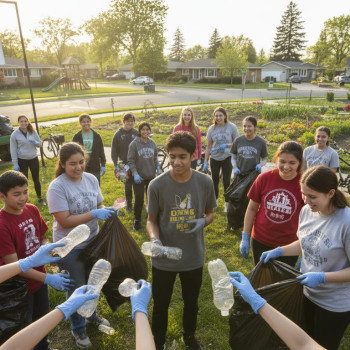
| Local River Clean Initiative | Service | Reduce local pollution and raise awareness about waste | Organize cleanup days, partner with local groups, run awareness workshops | Before/after photos, partnership emails, workshop materials | Service, Global Engagement, Planning, Reflection |
Reflection Prompts That Go Beyond ‘I Enjoyed It’
Effective reflections are specific, evidence-based, and oriented toward learning. Rotate these prompts as you write weekly or milestone reflections.
- What was the original goal, and how did your understanding of that goal change?
- Describe a moment that challenged you. What did you do and why? What did you learn about yourself?
- Which CAS learning outcomes did this experience help you develop? Provide specific evidence.
- What would you change if you did this again? What’s the next step?
- How did your actions affect others? Give an example from someone who experienced the change.
Short reflection example (strong)
“During week three of tutoring, a student who had been silent for two sessions solved a problems series I had broken into visual steps. I realized my initial approach wasn’t accessible. I redesigned the next worksheet using diagrams and saw immediate improvement in her confidence. Evidence: pre/post quiz results and the student’s comment. Learning: adapting teaching methods increases accessibility; next step: create a toolkit of visual-first resources for new tutors.”
Short reflection example (weak)
“I helped with tutoring and it went well. Students improved and I enjoyed it.”
How to Make Learning Outcomes Visible
There are commonly seven CAS learning outcomes; make them explicit in each project entry. Don’t just state that an outcome was met — show it. Tag reflections, artifacts, and milestones with the outcome they illustrate. Here’s how to do that in practice:
- Identify strengths & areas for growth: Use a short self-assessment and one concrete example from the project.
- Demonstrate challenges undertaken: Describe a difficult moment and the constructive risk you took.
- Demonstrate planning & initiative: Show planning documents or the timeline you followed.
- Show collaboration: Include peer feedback, role descriptions, or letters from collaborators.
- Show perseverance & commitment: Use attendance records or a mid-project reflection that records setbacks and recovery.
- Engage with global issues: Connect local work to broader themes and include research or community responses.
- Develop new skills: Use before/after artifacts showing skill progression.
Digital vs Paper: Choose Clarity Over Complexity
Digital portfolios are flexible: embed photos, short clips, scanned documents, and hyperlinks between evidence and reflections. But complexity can hide the story. Use a clean structure: Project summary, timeline (or milestones), evidence list, and final reflection. If using paper, keep strong labeling and include a contents page.
Presentation checklist
- Readable font or clear handwriting for paper portfolios.
- Each piece of evidence labeled with date and milestone.
- Short captions that link evidence to a reflection — one sentence is often enough.
- Include a short executive summary page listing major projects and the headline learning for each.
Balancing CAS with the Diploma Workload
CAS should complement your academic life, not compete destructively with it. Integrate learning where possible: if your TOK topic touches on ethics, reflect on CAS work with that lens. If Extended Essay skills overlap with a CAS research project, note transferable skills. Planning is your best ally: schedule regular, shorter reflection sessions after milestones. Weekly 15–20 minute reflections will produce better evidence and reduce end-of-cycle panic.
Tools and Support: When to Seek Help
Templates, peer feedback, and occasional mentor guidance make a big difference. If you want tailored help with reflection depth, project planning, or tying evidence to outcomes, consider expert tutoring that offers one-on-one guidance, tailored study plans, and feedback on reflection drafts. For example, Sparkl‘s personalized tutoring can offer 1-on-1 guidance, tailored study plans, expert tutors, and AI-driven insights to help you refine reflections and structure your portfolio.
Common Pitfalls and How to Avoid Them
- Pitfall: A logbook approach. Avoid entries that are purely transactional. Always include at least one deep reflection per milestone.
- Pitfall: Generic reflections. Use specifics, evidence, and links to outcomes.
- Pitfall: Evidence without context. A photo is only useful if the caption explains why it matters.
- Pitfall: Waiting to reflect at the end. Build reflection into your timeline so learning is captured in the moment.
- Pitfall: Overloading with irrelevant items. Curate — select evidence that supports your narrative and learning claims.
Sample Portfolio Outline (one-page quick view)
Use a single-page outline at the front of your portfolio that highlights three to five major projects and a one-line learning takeaway for each. This helps the reader understand the arc of your CAS journey immediately.
| Section | What to include | Why it matters |
|---|---|---|
| Executive Summary | 3–5 major projects, one-line takeaway per project | Quick orientation for assessors |
| Project Entries | Intent, milestones, evidence, reflection | Full narrative for each key project |
| Evidence Archive | Photos, documents, testimonials, short videos | Support for claims made in reflections |
| Final Reflection | Overall learning and future plans | Shows long-term perspective and transferability |
Practical Workflow to Finish Strong
Try this practical weekly rhythm during a project cycle:
- Week 1: Project brief and milestones (30–45 minutes).
- Each meeting: Capture one photo and a 3–5 sentence reflection (10–15 minutes).
- Mid-project: A longer reflection focused on challenge and adaptation (30 minutes).
- End of project: Final reflective synthesis linking evidence and learning outcomes (45–60 minutes).
Final Notes on Authenticity and Ethical Practice
CAS is built on authentic engagement. Never fabricate hours or evidence. If an activity didn’t go as planned, that can still be powerful material: setbacks and how you responded are often the most illuminating parts of a portfolio. Always obtain consent before using photos or testimonials from others, and be mindful of privacy when posting or sharing your portfolio publicly.
Conclusion
Approach CAS as an intentional learning journey and your portfolio will naturally shift from a logbook to a story. Use clear intent statements, milestone-based planning, purposeful evidence, and structured reflections that explicitly map to CAS learning outcomes. Curate with care, present with clarity, and let the narrative of your growth be the thread that ties everything together.




















No Comments
Leave a comment Cancel