

IB DP CAS Portfolio Strategy: How to Choose CAS Experiences That Align With Your Major
CAS can feel like a side task beside demanding subjects, but when you treat it as a deliberate portfolio-building opportunity it becomes one of the most persuasive parts of your IB profile. Choosing CAS experiences that align with your intended major helps you develop real skills, gather concrete evidence, and tell a coherent story to admissions tutors and scholarship panels. This guide walks you through a practical, student-friendly strategy for picking experiences that feel authentic, show progression, and play to your academic direction.
Think of CAS as three things in one: a laboratory for skill-building, a stage for leadership and initiative, and a journal for reflection. The best CAS entries don’t simply list hours; they show learning arcs — how an idea moved from curiosity to commitment to impact. Below you’ll find frameworks, concrete ideas for a range of majors, sample reflection prompts, a table that maps majors to CAS activities and evidence types, and planning tools to help you be intentional rather than accidental with your CAS choices.

Why aligning CAS with your major matters (and how admissions read it)
Universities and scholarship committees often look for coherence: a snapshot of who you are and where you’re headed. When CAS experiences speak the same language as your major, they do three powerful things at once.
- They provide evidence of genuine interest: hands-on projects, consistent volunteering, or leadership roles tell a stronger story than a generic activity list.
- They build and demonstrate transferable skills—research habits, teamwork, communication, perseverance—that are valuable in higher education regardless of subject matter.
- They offer material for meaningful reflection and application in personal statements, interviews, and scholarship essays.
Remember: alignment is not about staging activities to “look good.” It’s about choosing opportunities that genuinely help you grow toward the kind of academic and professional life you want to build.
Get clear about your major and the competencies it values
Start by clarifying what your intended major usually values. Many programs emphasize domain knowledge, but they also value certain modes of thinking or practical skills. For example:
- Engineering: problem solving, design thinking, prototyping, teamwork under constraints.
- Biological sciences/Medicine: laboratory technique familiarity, research curiosity, ethical decision-making, community health awareness.
- Computer science: coding projects, collaborative version control, algorithmic thinking, software project cycles.
- Economics/Business: data literacy, community-facing initiatives, leadership in projects, ethical reasoning about markets.
- Arts & Humanities: creative production, critical analysis, public presentation, cultural engagement.
Make a short list (3–5 bullet skills) for your major. These will be your compass when choosing or designing CAS experiences.
Map skills to CAS strands
CAS is built around creativity, activity and service. One helpful method is to map the skills you want to grow onto those three strands so you can design balanced experiences that reinforce each other. For instance, a biology-focused student could:
- Creativity: design an illustrated community guide explaining local ecosystems.
- Activity: organize habitat restoration days that involve physical labor and measurement tasks.
- Service: run educational workshops for schools on biodiversity and conservation.
Major-to-CAS activity mapping: a practical table
The table below gives concise, transferable examples you can adapt. Use it as a starting point—your context and interests should shape the final project.
| Intended Major | CAS Experience Ideas | Skills Demonstrated | Evidence to Include |
|---|---|---|---|
| Engineering | Design-build project (e.g., solar charger), robotics club outreach | Design thinking, prototyping, teamwork, problem solving | Project journal, design sketches, photos, mentor report, prototype video |
| Biological Sciences / Medicine | Community health workshops, citizen science biodiversity monitoring | Research methods, ethics, data collection, public communication | Data logs, workshop materials, reflection on ethics, supervisor letter |
| Computer Science | Open-source project contribution, coding club teaching | Version control, collaboration, algorithmic thinking, mentoring | Repo links, commit history, lesson plans, peer feedback |
| Economics / Business | Social enterprise pilot, market-research for a local NGO | Data analysis, stakeholder engagement, project planning, ethics | Research report, financial model, impact metrics, supervisor note |
| Psychology / Social Sciences | Peer-mentoring program, community surveys on wellbeing | Survey design, ethics, interpersonal skills, qualitative analysis | Survey instruments, consent forms, reflections, testimonials |
| Architecture / Design | Pop-up community installations, collaborative design workshops | Spatial reasoning, client communication, iterative design | Design portfolio, client feedback, time-lapse photos, site plans |
| Arts (Visual / Performing) | Community arts festival, collaborative multimedia project | Creative process, public presentation, curation, leadership | Exhibition catalog, rehearsal notes, audience feedback, recordings |
| Environmental Science | Restoration project leader, policy-advocacy campaign | Field methods, advocacy, systems thinking, data-driven outreach | Before/after data, campaign materials, stakeholder letters |
Choosing experiences: depth vs breadth (how to strike the right balance)
It’s tempting to collect many short experiences across categories. That gives breadth but often lacks convincing evidence of growth. Admissions officers and IB supervisors respond better to a mix: consistent depth in two or three related projects plus a few varied activities that showcase personality.
- Depth: Pick one substantive project that runs over months. Demonstrate planning, setbacks, improvements, measurable outcomes, and sustained reflection.
- Breadth: Add complementary activities that show versatility—public speaking, fitness, or creative outlets—that round out your profile.
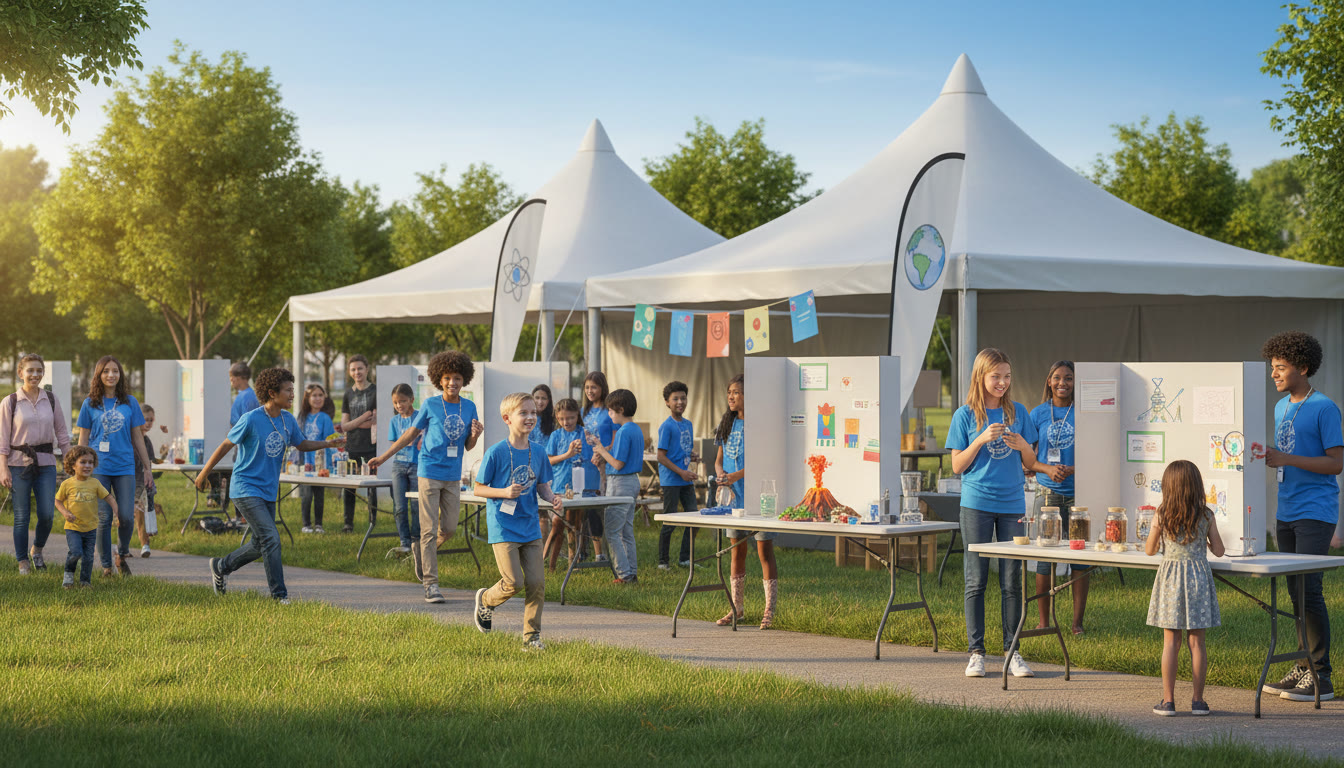
- Cross-strand projects: Design experiences that naturally cross creativity, activity and service (e.g., building a community garden that involves design, physical labor, and local teaching).
Document both the process and the outcomes. Admissions love a clear arc: intent → action → refinement → impact.
How to make a CAS idea academically credible
Lean on research methods, measurable goals, supervisory structure, and reflection. Even creative projects can show rigor: set benchmarks, collect data (attendance, surveys, performance metrics), and include external validation (teacher or community supervisor comments).
Designing powerful project entries and reflections
Your reflections are where alignment becomes visible. A smart reflection connects the experience to your academic trajectory. Follow an evidence-based structure:
- Context: Briefly state the problem or opportunity you addressed.
- Goals: What did you set out to learn or change?
- Actions: Concrete steps you took, including obstacles and adaptations.
- Outcomes: What measurable result or personal growth occurred?
- Connection: Explicitly tie the learning to skills needed in your major.
Short example for an engineering applicant: “I led a three-month build of a portable water-filter prototype. We iterated through three designs after testing turbidity reductions; I learned to apply the engineering design cycle, manage a small team, and present design trade-offs. This experience sharpened my approach to experimental design and clarified my interest in environmental engineering.”
Reflection prompts that reveal academic alignment
- Which technical or intellectual tools did I need to acquire, and how did I learn them?
- Where did my hypotheses fail, and what did that teach me about redesign?
- How does this activity change the way I think about problems in my intended major?
- Which ethical considerations arose, and how did my team respond?
Practical portfolio tips: artifacts, structure, and storytelling
Your portfolio should make it easy for a reader to understand the arc of each project quickly. Use consistent sections for each entry: title, timeline, objectives, actions, measurable outcomes, evidence items (photos, documents, videos), supervisor verification, and reflection. Keep filenames and captions tidy so that when a reader opens a folder, the story unfolds in order.
- Time-stamped artifacts: Photos and videos with dates, code commits with messages, or scanned sign-in sheets help validate timelines.
- Supervisor verification: A short, objective note from a community partner or teacher endorsing your role and impact is powerful.
- Quantify where possible: hours, participants, funds raised, performance metrics.
Tools and support (including tutoring and mentoring)
It’s normal to seek support when designing an ambitious CAS project. Mentors can help with project design, ethical frameworks, or data analysis. If you prefer structured academic support that includes one-on-one guidance, tailored study plans, expert tutors, and AI-driven insights, consider Sparkl‘s personalized tutoring and benefits—used sparingly, external tutoring can strengthen research methods and reflection skills without taking away your ownership of the project.
Timeline examples and milestones
Think in phases: ideation, pilot, build, refine, and showcase. Here’s a simple milestone schedule you can adapt to any major:
- Phase 1 — Ideation (1–4 weeks): Clarify goals, stakeholders, and feasibility.
- Phase 2 — Pilot (4–8 weeks): Run a small-scale version to test assumptions.
- Phase 3 — Build (8–16 weeks): Scale up, collect data, refine processes.
- Phase 4 — Evaluate & Reflect (2–4 weeks): Analyze impact and write reflections.
- Phase 5 — Showcase (ongoing): Present at school events, community spaces, or online portfolios.
Keeping a short, dated log at each phase makes it easy to produce credible reflections later.
When obstacles happen (and how to adapt)
Projects rarely follow a straight line. If you lose a venue, a supervisor, or access to materials, pivot with small, evidence-rich alternatives: switch to virtual workshops, focus on data analysis rather than hands-on components, or partner with a different community group. Document each pivot—what changed, why you changed it, and what you learned.
How to shape CAS content for university applications
Admissions want to see initiative and transferable skills. When you describe CAS in personal statements or interviews, lead with impact and learning. Use action-focused lines that connect to your major’s language. Examples:
- Engineering: “I led a cross-disciplinary team to design and test a low-cost solar cooker; we measured efficiency improvements and iterated based on thermodynamic principles.”
- Psychology: “I designed and ran a well-being survey for peers, analyzed trends, and proposed interventions based on evidence.”
- Arts: “I curated a community arts night and coordinated interdisciplinary collaborations to explore identity through multimedia.”
Keep descriptions concise but specific; admissions readers scan quickly and are drawn to tangible outcomes and evidence of growth.
Sample short reflection excerpts
Here are two compact reflections you can adapt (aim for honesty and specificity rather than embellishment):
- “Running weekly coding workshops taught me how to break complex problems into teachable steps. Preparing lesson plans improved my clarity of thought and my ability to mentor—skills I plan to use in collaborative research in computer science.”
- “Leading a small-scale habitat restoration project changed my assumptions about scale: small community actions can produce measurable biodiversity gains, and coordinating volunteers taught me logistical planning and resilience under unpredictable weather.”
Checklist for an aligned CAS portfolio
Before you finalize entries, run this quick checklist:
- Does each major CAS project show a clear learning arc (intent → action → outcome)?
- Are skills learned tied back to the competencies your major values?
- Do you have dated artifacts and a supervisor statement for each major project?
- Is there a balance between depth (long-term projects) and breadth (diverse short experiences)?
- Have you reflected on ethics, community impact, and personal growth?
A small rubric to self-assess an entry
| Criterion | Strong (3) | Fair (2) | Weak (1) |
|---|---|---|---|
| Learning Arc | Clear, documented progression with reflection | Some progression, limited reflection | No clear progression or reflection |
| Major Alignment | Explicitly connected to skills for the major | Implied connection | No clear connection |
| Evidence | Multiple dated artifacts + supervisor note | 1–2 artifacts or informal verification | No artifacts or verification |
Final notes on authenticity and sustainability
The most persuasive portfolios are grounded in curiosity rather than strategy alone. Admissions panels can usually sense when activities are performed solely to impress. Choose projects you care about; care will show in consistent commitments, thoughtful reflections, and genuine impact. If you’re stretching beyond your comfort zone—great. That tension is where growth happens. Use your CAS portfolio to document that growth honestly and clearly.
When planning, keep in mind that high-quality CAS evidence often comes from modest projects done well rather than grand plans executed poorly. A well-documented local initiative with measurable outcomes and strong reflection will typically outshine a lofty project with weak follow-through.
Conclusion
Building a standout CAS portfolio that aligns with your major is about purposeful selection, careful documentation, and reflective storytelling. Choose experiences that help you acquire the core competencies of your intended field, invest time in at least one sustained project, collect dated evidence and supervisor verification, and write reflections that explicitly connect learning to academic goals. Done thoughtfully, CAS becomes a bridge between classroom study and the practical, ethical, and collaborative skills universities value.


























No Comments
Leave a comment Cancel