

IB DP “How to” Series: How to Build a Weekly IB DP Study Plan That Works
If you’re in the International Baccalaureate Diploma Programme (IB DP), you already know it’s a marathon dressed in sprints: extended essays, internal assessments, TOK thinking, CAS commitments, and six subject syllabuses all demanding steady attention. The weekly study plan is your strongest ally—less about harsh discipline and more about designing a sustainable rhythm that fits your life, keeps you curious, and gradually builds real mastery.
This guide walks you through a practical, two-year-friendly weekly planning approach: how to distribute hours between Higher Level (HL) and Standard Level (SL), slot in research and assessments, use active learning techniques, and adapt when your workload spikes. Think of it as a living document—one you tweak each week until it becomes second nature.

Why a structured weekly plan matters
A lot of IB stress comes from last-minute panic and the sense that everything is urgent. A good weekly plan does three things: it turns the vague mountain of tasks into small, concrete steps; it builds momentum through consistent, focused practice; and it protects your well-being by making room for breaks and reflection. Over time, a steady schedule reduces cognitive overload and makes deep learning possible.
Students who plan weekly can also respond to the IB’s rhythm—internal assessment deadlines, mock exams, and CAS commitments—without sacrificing sleep or balance. When you can see the week at a glance, you stop reacting and start choosing where to spend your energy.
The mindset: plan with compassion
This isn’t about squeezing every minute. The most durable plans are realistic: they respect how you study best, your extracurricular load, and the unpredictable weeks when a subject needs more time. Treat your plan like a hypothesis you test and revise each week.
Core principles of an effective weekly IB DP plan
- Backward design: Start with major deadlines (IA drafts, EE checkpoints, mock exams) and work backward to create weekly milestones.
- Prioritization over equality: Not every subject needs the same hours every week—allocate by need, difficulty, and assessment deadlines.
- Spaced repetition: Build short, repeated review sessions for each subject rather than one long cram session.
- Active learning: Prioritize past-paper practice, problem solving, and explaining concepts aloud over passive rereading.
- Buffer time: Leave flexible slots for unexpected IA work, teacher feedback, or a heavier CAS week.
- Health and recovery: Schedule sleep, exercise, and social time—mental stamina is part of academic performance.
How these principles map onto a week
Imagine your week as repeating units of focused work (50–90 minutes), micro-reviews (10–20 minutes), and one longer block for bigger projects like the Extended Essay or full practice papers. Rotate subjects so each gets multiple touchpoints across the week; a single afternoon is rarely enough to create durable understanding.
Step-by-step: build your weekly IB DP study plan
Follow this process at the start of each week—spend 20–30 minutes on planning and you’ll save hours later.
- Step 1 — Map the fixed commitments: Write down school hours, extracurriculars, CAS events, family time, and sleep. These are non-negotiable anchors.
- Step 2 — List academic targets: Note all immediate deliverables (IA drafts, EE milestones, quizzes, test dates). Order them by deadline and weight.
- Step 3 — Allocate subject blocks: Assign 2–3 subject touchpoints per weekday plus a longer weekend block for the toughest HL issues or assessments.
- Step 4 — Add skill work: Slot in TOK planning, EE research, and IA revisions across several short sessions to avoid bunching.
- Step 5 — Build reviews and retrieval practice: Put small review sessions after school or before bedtime for previously learned material—10–20 minutes is effective.
- Step 6 — Plan for checking and reflection: Reserve 15 minutes at the end of the week to mark what worked, what didn’t, and what moves to next week.
Practical time allocations (starting point)
These are starting guidelines; adjust based on how close you are to deadlines, subject difficulty, and your own stamina.
| Subject Type | Typical Weekly Hours (starting point) | Notes |
|---|---|---|
| Higher Level (per HL subject) | 6–9 hours | More practice and deeper reading; allow longer blocks for problem solving or essay planning. |
| Standard Level (per SL subject) | 3–5 hours | Focus on core content and past-paper questions. |
| Extended Essay / Major IA weeks | 4–8 hours | Spread across several days with short research or writing tasks each day. |
| TOK / EE / CAS combined maintenance | 2–4 hours | Smaller, consistent sessions keep momentum and avoid last-minute rushes. |
Sample weekly timetable (student-friendly)
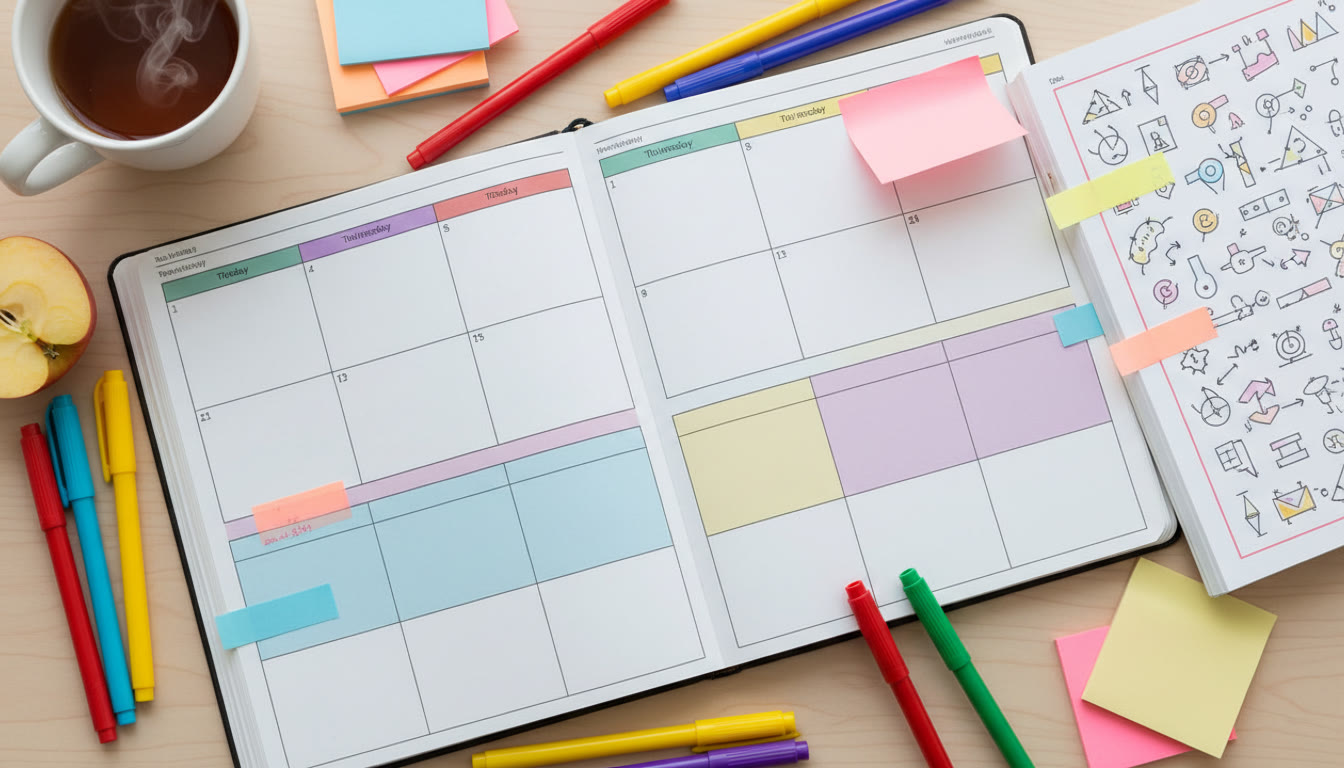
Below is a simple visual to adapt. Replace subject names and hour counts to reflect your personal course load and exam timeline.
| Time | Monday | Tuesday | Wednesday | Thursday | Friday | Saturday | Sunday |
|---|---|---|---|---|---|---|---|
| 7:00–8:00 | Review (20 min) / Breakfast | Review (20) | Review (20) | Review (20) | Review (20) | Sleep in / Light review | Long review / Planning |
| 16:00–18:00 | HL Maths (90) | SL Language (60) | HL Science (90) | EE research (60) | HL Maths (90) | Full practice paper (120) | IA edits / CAS reflection (90) |
| 19:00–21:00 | Homework / IA work | Group study / Tutor session | Homework / TOK notes | Practice problems | Free / Social | Rest / Recovery | Plan next week |
Tips for using the timetable
- Color-code subjects so your brain recognizes patterns (e.g., blue for sciences, green for languages).
- Block your toughest work when you’re most alert; keep lighter tasks for low-energy slots.
- Set two priority tasks each day—when those are done, the day is a success.
How to balance HL and SL subjects
A common trap is treating all subjects equally. HL subjects generally demand more depth and therefore more weekly hours, but that doesn’t mean SL subjects get only surface attention. The right balance depends on your confidence and upcoming assessments. When a mock or IA deadline is near for any subject, temporarily re-balance your hours to reflect the immediate need.
One practical rule: allocate the bulk of your focused, longer blocks (60–90 minutes) to HL topics that require problem-solving or extended writing. Use 20–40 minute sessions to maintain SL content and for spaced retrieval practice.
Integrating Extended Essay, Internal Assessments, TOK and CAS
These components are often the “other work” that clutters a weekly plan. The trick is to fragment them into micro-tasks.
- Extended Essay: replace one HL study block per week with EE research or drafting. Break tasks into tiny items: read one article, write 200 words, format citations, send to supervisor.
- Internal Assessments: schedule checkpoints—data collection one week, analysis the next, writing the following week.
- TOK: keep a running notebook of claims, examples, and counterclaims and dedicate a short weekly slot to connect TOK ideas to your subjects.
- CAS: treat documentation like an assignment—plan CAS sessions and a weekly 30–60 minute time slot for reflection entries.
Small, consistent progress beats last-minute marathon sessions. If you have several concurrent project deadlines, arrange a “project week” where you temporarily shift focus away from content review to complete those deliverables.
Study techniques that fit into weekly planning
Match technique to the task. Not all study is equal; some time should be spent on learning new material, some on practicing, and some on retrieval and reflection.
- Active recall: Use flashcards, self-quizzing, or explain concepts to a peer or a recorder.
- Past-paper practice: Schedule timed past papers during weekend long blocks and treat them like real exams—simulate conditions and mark critically.
- Interleaving: Mix related topics or subjects in one study session to improve problem-solving flexibility.
- Pomodoro style blocks: 25–50 minute focused work, 5–15 minute breaks—ideal for maintaining concentration across a week.
- Reflection and feedback: After each week, note two wins and one area for improvement; discuss these with teachers where possible.
| Small Session | Duration | Purpose |
|---|---|---|
| Micro-review | 10–20 minutes | Flashcard practice; quick retrieval |
| Focused study | 25–50 minutes | New concept learning or problem solving |
| Deep block | 90–180 minutes | Practice paper, lab work, EE drafting |
Tools, trackers and when to seek coaching
Trackers turn vague intentions into measurable habits. A simple weekly spreadsheet with boxes for each subject and task can be more powerful than an elaborate app—tick boxes build momentum. Use a calendar for fixed commitments and a separate list for weekly academic priorities.
If you’re struggling to translate a plan into progress, targeted tutoring can help you build more efficient study sessions and hold you accountable. Sparkl offers 1-on-1 guidance and tailored study plans that can slot into the weekly schedule you create. When your plan needs personalization—specific exam technique, feedback on EE drafts, or a corrected approach to internal assessments—working with an expert tutor can accelerate your learning and refine your weekly priorities.
Sample six-week cycle: from learning to exam readiness
Design cycles rather than isolated weeks. A six-week cycle might look like: weeks 1–3 focused on content and skills, week 4 a consolidation week, week 5 a mock exam or timed practice, and week 6 a focused review of mistakes and targeted remediation. This gives you momentum and a predictable pattern to follow.
| Week | Focus | Goal |
|---|---|---|
| 1–3 | Build and practice | Cover topic blocks; weekly practice questions |
| 4 | Consolidate | Mixed review and problem sets |
| 5 | Mock/Timed papers | Simulate exam conditions |
| 6 | Targeted remediation | Fix misconceptions and re-practice |
Troubleshooting common planning problems
- Problem: Your plan is ignored by week two. Fix: Make it achievable. Drop a task or shorten blocks—small wins matter.
- Problem: You study a lot but don’t improve. Fix: Swap passive reading for retrieval and past-paper practice and seek specific feedback on mistakes.
- Problem: Unexpected project surge derails everything. Fix: Activate the buffer: move lower-priority tasks to the next cycle and focus on the deliverable with clear micro-tasks.
- Problem: Burnout. Fix: Rebalance: cut study by 10–20% for a week, prioritize sleep and short exercise sessions, and return with targeted rather than marathon study.
Reflection prompts for weekly review
- Which two study sessions this week felt most productive and why?
- What was the single biggest distraction and how can it be reduced next week?
- Which assessment needs a larger time allocation next week?
- What one experiment will you try next week to study smarter (not longer)?
Final checklist to carry forward
- Map fixed commitments first; then add academic priorities.
- Allocate more focused blocks to HL subjects and shorter, frequent touches for SL.
- Integrate EE, IA and TOK as recurring short tasks—avoid last-minute marathons.
- Use active learning techniques and weekly mock practice to build exam readiness.
- Reflect weekly, adjust experiments, and protect sleep and recovery.
Building a weekly IB DP study plan is less about perfection and more about creating a repeatable, flexible rhythm that reliably moves work forward. With measured time allocations, deliberate practice techniques, and a habit of weekly reflection, you’ll convert stress into steady progress—one week at a time.























No Comments
Leave a comment Cancel