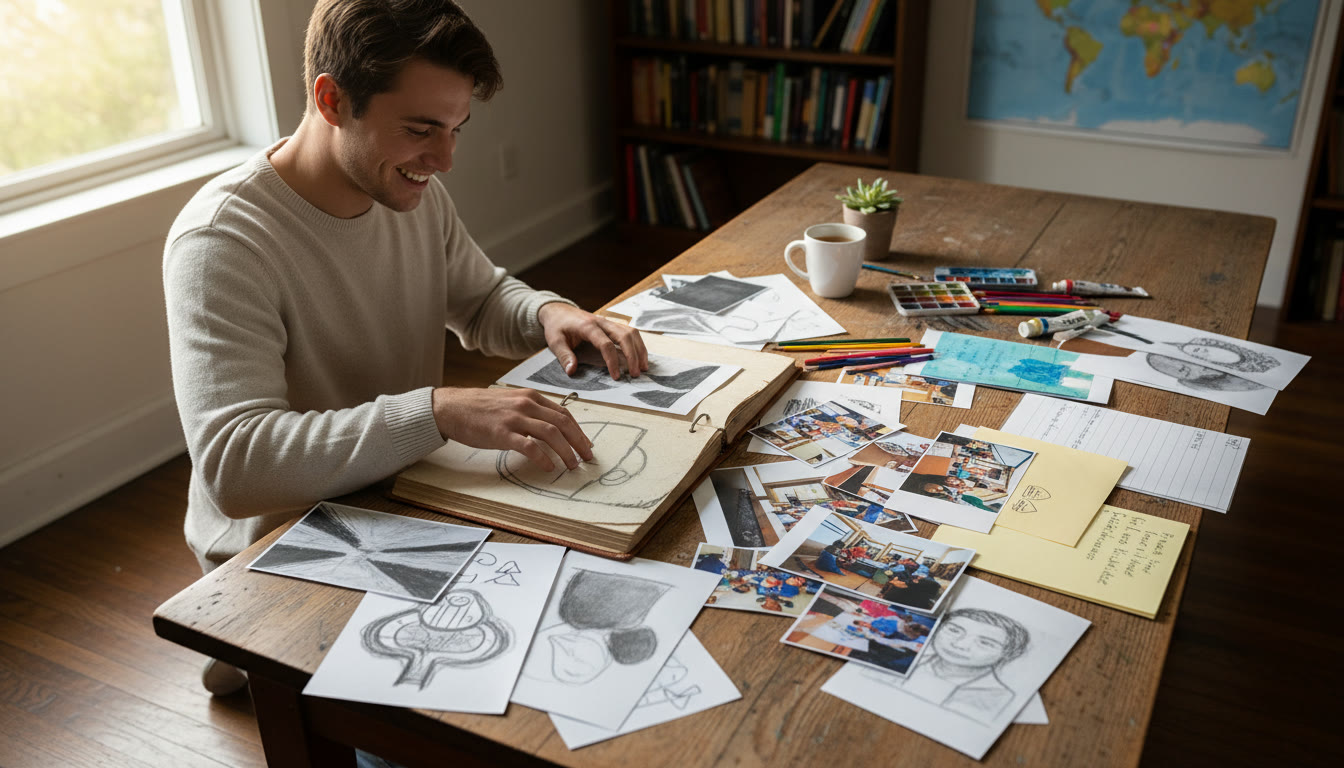

IB DP Scholarship Strategy: Creativity Scholarship Essay — The Portfolio Angle
There’s a particular spark that lights up a scholarship reader’s attention: a clear creative through-line that shows not only what you made, but how you learned, adapted, and grew. For IB Diploma students, the portfolio you already carry — your CAS projects, studio pieces, research prototypes, performances, or digital creations — is a goldmine. The trick is turning that pile of strong work into a focused, persuasive creativity scholarship essay that complements the artifacts, explains the process, and proves readiness for the rigors of university study.
Why committees care about the portfolio angle
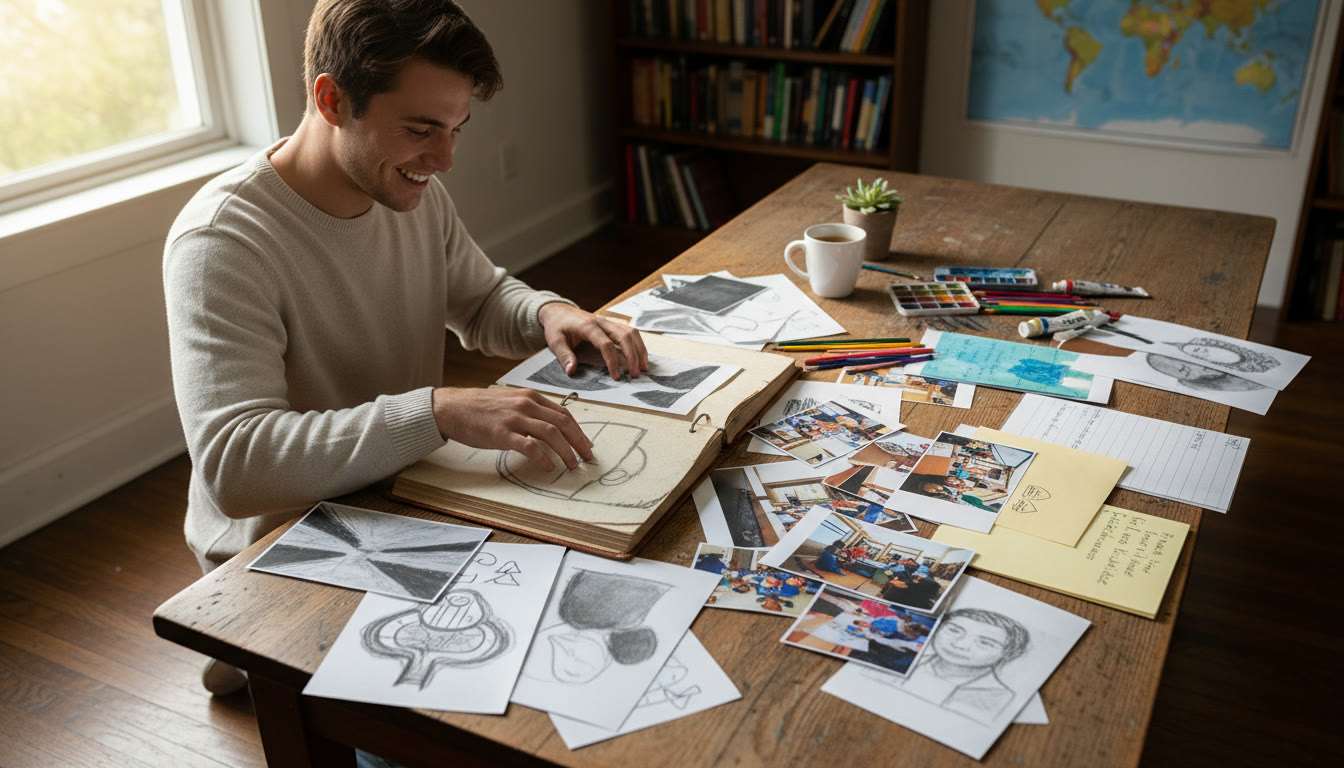
Selection panels are trying to answer two questions simultaneously: 1) Do you have creative potential or demonstrated achievement? and 2) Will you thrive in their program? A portfolio gives them evidence—visuals, recordings, project traces. Your essay is the translation into narrative: it frames the evidence, explains choices, and connects the work to intellectual curiosity, resilience, and future plans.
- Portfolio = proof. The visual or documented artifacts show skill and commitment.
- Essay = interpretation. The essay makes the artifacts meaningful by explaining process and impact.
- Interview = voice. It’s where you make the pieces come alive in conversation.
What admissions readers are listening for (briefly)
When committees evaluate creativity-focused applications, they often look for a combination of these elements. Think of these as checkpoints you should address in essay and portfolio alignment:
- Sustained engagement: not just a single flash-in-the-pan project.
- Evidence of craft: technique, refinement, iteration.
- Originality and curiosity: personal perspective or novel combination of ideas.
- Reflection and learning: what the process taught you and how you changed.
- Impact and collaboration: how your work affected others or connected disciplines.
- Fit with intended study: clear reasons why your creative path maps onto the program.
Turn portfolio pieces into a persuasive essay: a step-by-step structure
One effective approach is a five-part structure that mirrors the creative process: Hook → Context → Challenge → Process → Reflection & Forward Fit. Below is a compact layout you can adapt for different essay lengths and scholarship prompts.
| Section | Purpose | Approx. word allocation (scholarship essay) |
|---|---|---|
| Hook | Open with a vivid moment or a striking image from a portfolio piece. | 60–100 |
| Context | Explain the project’s origin and your role. | 100–150 |
| Challenge | Show the key obstacles (technical, conceptual, logistical). | 120–200 |
| Process | Describe iterative steps, tools, collaborators, and key decisions. | 200–300 |
| Reflection & Forward Fit | Reflect on learning and show how the project points toward your academic goals. | 150–250 |
This structure keeps your essay anchored to specific portfolio pieces while ensuring the narrative emphasizes growth and academic relevance. If you have space, briefly reference a second piece to show range; otherwise, focus deeply on one signature project and briefly situate it among others in your portfolio.
Selecting signature pieces: quality over quantity
Admissions teams rarely want every single artifact. They want a curated set of 2–5 signature pieces that together tell a coherent story. Use these filters:
- Choose pieces that show progression (early attempt vs. refined outcome).
- Include at least one piece with measurable impact (exhibition, community project, publication, large audience).
- Pick items that demonstrate cross-curricular thinking—where an idea from physics, literature, or design influenced your creative choices.
- Favor projects you can talk about confidently in an interview—those where your voice explains a clear decision.
Documenting process: evidence that strengthens reflection
Good portfolios document iterations: sketches, mid-stage photos, lab notes, rehearsal logs, or code commits. In the essay, reference those artifacts to anchor claims about technique or insight. For example, rather than saying “I learned about composition,” point to a preparatory sketch or a rehearsal note that forced a compositional change, and explain the learning that followed.
Language that deepens reflection
Reflection that moves beyond “I learned” will persuade. Try pairing concrete detail with intellectual verbs and consequences: “Facing a structural failure in the installation, I redesigned the armature using a parametric model (detail), which taught me to prioritize constraints as creative prompts (insight), and led me to propose a cross-disciplinary elective focused on materials (forward fit).” Short, precise technical details reassure readers that you know your craft; the interpretive clause shows humility and intellectual curiosity.
Mapping a practical timeline
Start early and turn preparation into manageable milestones. Below is a compact timeline you can adapt to your application calendar. Use it to schedule selection, documentation, revisions, and mock interviews.
| When (relative) | Task | Visible output |
|---|---|---|
| 8–12 months before deadline | Audit your portfolio, pick 4–6 candidate pieces, begin documenting process. | Raw artifacts, process photos, notes |
| 4–6 months before deadline | Refine signature pieces, gather evidence of impact, draft essay framework. | Draft essay outline, curated portfolio folder |
| 6–8 weeks before deadline | Complete full essay drafts, seek feedback, prepare short presentation or portfolio pitch. | Polished essay, presentation slides or physical portfolio |
| 2–3 weeks before deadline | Finalize edits, practice interview answers, finalize portfolio formatting. | Final essay, practiced pitch, organized artifacts |
| Days before deadline | Proofread, ensure all files meet specifications, rest and rehearse. | Submission-ready packet |
Interview prep: bringing the portfolio to life
Interviews often probe the process. Practice short, vivid anecdotes tied to artifacts. Use a creative version of the STAR method: Situation → Task → Action (process detail) → Result → Reflection. Keep answers about the project concise, then move to what you discovered and how it shaped your academic intentions.
- Practice a one-minute “project pitch” that starts with a striking image and ends with a clear learning point.
- Anticipate technical questions and prepare a simple, honest explanation of your choices.
- Bring physical or digital artifacts if allowed; a quick visual will anchor the conversation.
- Avoid rehearsed monologues—aim for practiced spontaneity that lets your curiosity shine.
Common pitfalls and how to avoid them
- Too many projects, not enough depth: curate tightly and show progression.
- Overly technical language without context: translate jargon into meaning for a general reader.
- Reflection as an afterthought: make learning outcomes central, not incidental.
- Failing to connect to academic fit: explicitly show how creative work prepares you for study.
- Submitting poorly documented artifacts: include dates, short captions, and context notes.
How targeted support can accelerate your preparation
One-on-one guidance can help you identify signature pieces, tighten narrative arcs, and rehearse interview responses until they sound like you. For students who want tailored feedback, working with an experienced tutor can compress months of trial-and-error into a few focused sessions. For example, a tutor can help you outline your essay, prioritize portfolio artifacts, and design a rehearsal schedule that builds confidence without draining creativity. If you choose to bring external support into your process, look for mentors who understand both the IB Diploma ecosystem and university-level creative programs.
For practical prep—organizing your CAS reflections, drafting essay paragraphs, and simulating interviews—structured tutoring that offers personalized plans and subject-expert feedback can be very effective. Sparkl‘s approach to one-on-one guidance and tailored study plans often helps students turn scattered evidence into a coherent narrative.
Two short case sketches (how this looks in practice)
Case sketch A — The Community Mural: A student turned a local beautification project into an academic narrative. The essay opens with a sensory image of paint smells and late-night planning, explains logistical barriers (permissions, fundraising), details collaborative techniques and iterative design sketches, then reflects on civic engagement and visual rhetoric. The student’s portfolio included a sequence of draft sketches, photos of public engagement, and a short reflective log linking the mural’s themes to intended study in visual communication.
Case sketch B — The Interactive Sound Installation: Another student combined music composition with coding to build an installation. The essay explains the problem (creating responsive soundscapes), details tools used (sensors, Python patches), and highlights a surprising constraint that became an asset (limited speaker placement forced compositional innovation). The portfolio showed audio clips, code snippets annotated with comments, and reviews from the installation’s audience, and the essay linked these to the applicant’s interest in sound design courses.
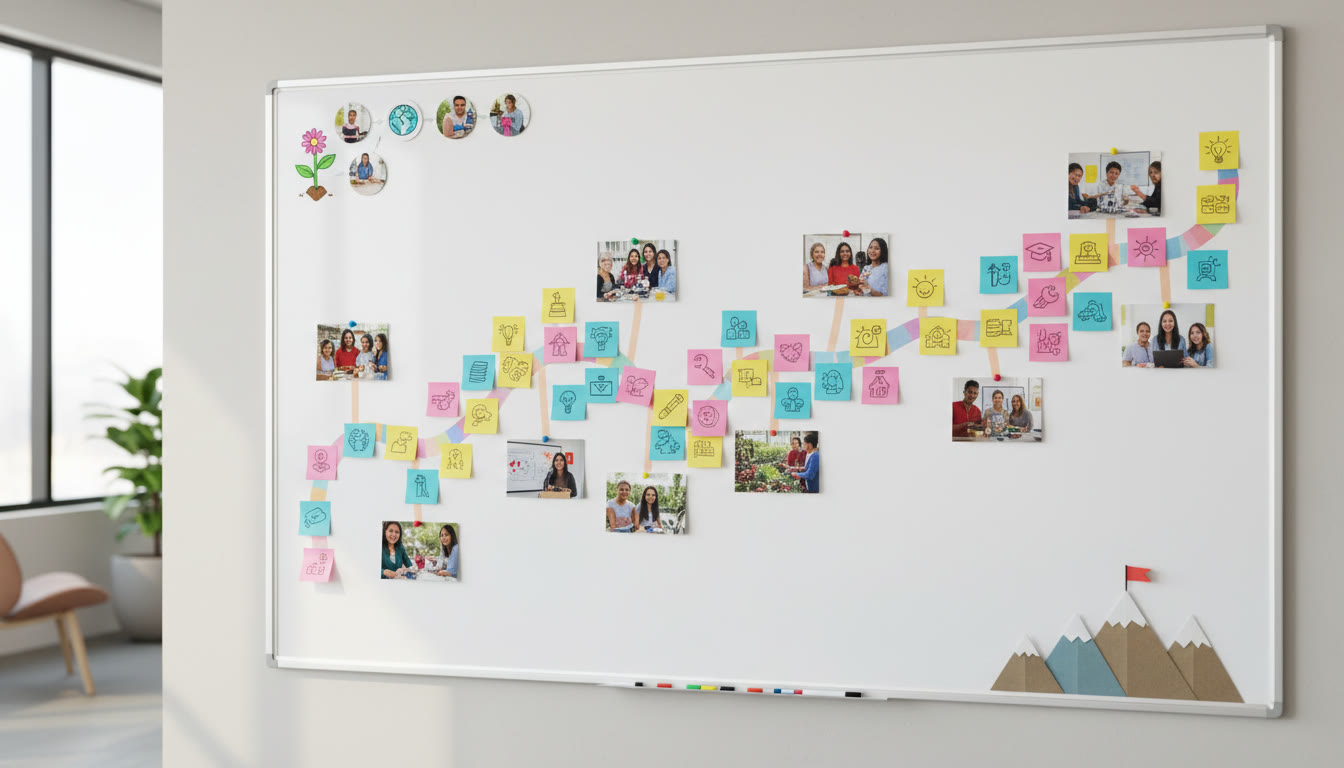
Polishing your final draft: a quick revision checklist
- Does the first paragraph hook and orient the reader to a concrete image or moment?
- Do you clearly identify your role in collaborative projects?
- Have you used at least one specific artifact or process detail to anchor a claim?
- Does each paragraph move toward reflection and academic fit rather than description alone?
- Is language precise, active, and free of clichés? Replace broad claims with concrete outcomes.
- Have you proofread for grammar and clarity, and had at least two trusted readers give feedback?
Translating CAS reflections into scholarship-ready reflection
CAS reflections are a great starting point, but scholarship essays demand a different register. Move from diary-style notes to analytical reflection: explain why a creative decision mattered, what constraints forced learning, and how the experience connects to intellectual aims. Where CAS might record “we painted a mural,” a scholarship essay should show how design constraints shaped ideological choices and how that work informs future study.
Final note on authenticity and audience
Universities hope to meet curious, self-aware students. Authenticity matters more than polished-sounding claims. Your essay and portfolio should make it clear you’re not only capable of producing creative work, but also able to learn from it, explain it, and build on it in rigorous academic settings. When you prepare, prioritize pieces and phrases that honestly reflect your process and that are easily defended in conversation.
In applying the portfolio angle to your scholarship essay, remember that every artifact is an argument; your job is to choose the best evidence, frame it clearly, and tie it to meaningful learning and future study. A well-curated portfolio plus a reflective, process-focused essay gives reviewers both the proof and the interpretation they need to see you as a promising scholar-practitioner.
Conclusion
Approach your creativity scholarship essay as both a curator and a storyteller: select a small set of signature works, document the iterative process, write with concrete technical detail linked to reflective insight, and map those insights to the academic program you seek. The result should be a readable, defensible narrative that makes a reviewer confident in your preparation, your intellectual curiosity, and your capacity to grow within a university creative program.


























No Comments
Leave a comment Cancel