
IB DP Summer Between DP1 and DP2: How to Start DP2 Ahead Without Burnout
That summer between DP1 and DP2 feels strange: part relief, part pressure. You want to protect the rest you earned, but you also know DP2 is the heavy lift—college applications, final assessments, and the last push on things you’ve been building for two years. The secret is not to cram or to start everything at once; it’s to shape a gentle but purposeful plan that carries momentum into the year ahead without draining your energy.
This guide is written for you: the student who wants a smart, sustainable summer strategy. I’ll walk you through mindset, practical scheduling, subject-specific priorities, sample week-by-week planning, study techniques that actually stick, and simple self-care habits that prevent burnout. You’ll also see where one-on-one help can fit naturally into your plan—the kind of tailored support that keeps you accountable and focused. Read this like a conversation with an older student who’s learned what helps—and what doesn’t.

Why this summer matters (and why rest is part of the plan)
The months between DP1 and DP2 are a unique window: you’ve covered a lot of content, met exam-style expectations for the first year, and now you can choose what to consolidate, what to accelerate, and what to postpone. A thoughtful summer makes DP2 feel less like a surprise and more like a continuation you control.
Key mindset here: think of the summer as momentum maintenance, not an academic bootcamp. You don’t need to finish every assignment early. Instead, scaffold the major tasks—Extended Essay (EE) groundwork, Internal Assessments (IAs) planning, TOK case collection, and exam practice—so DP2 is organized and purposeful from day one.
Take a breath, then set intentions
Start with two simple questions: What would make your first month of DP2 feel calm and productive? And what would make it feel overwhelming? Your answers help you prioritize. Maybe a calm month means your EE topic is chosen and your supervisor is looped in. Maybe calm means you’ve done some targeted practice on the hardest topic in HL maths. The key is to convert that “calm” into 3–5 concrete, achievable goals for the summer.
Summer goal blueprint
- Choose or refine your EE topic and list three possible research questions.
- Create a rough timeline for every IA, with at least one data-collection or experiment slot locked in.
- Identify two weak subtopics per subject for deliberate revision.
- Build a weekly routine that balances focused work and restorative downtime.
Map your two-year roadmap backwards
A practical habit of successful DP students is backward planning: identify the final outcomes you want for DP2, then work backward to this summer. Final outcomes might include your target grade band in each subject, a completed EE draft, or a polished TOK presentation. With outcomes in view, split the work into milestones that belong to DP2 term one, term two, and the summer.
Why backward planning helps: it prevents you from wasting energy on low-impact tasks and shows which summer activities give the biggest payoff. If your IA is a lab-based project, the summer is a great time for experiments. If your EE needs primary sources, the summer is the time to interview, archive-search, or conduct fieldwork.
Prioritising assessments: EE, IAs, TOK, and exams
Use this rough priority ladder to choose what to do now versus later:
- High priority now: EE topic selection, IA data collection that requires time or seasons, TOK evidence collection tied to specific events or experiences.
- Medium priority now: practising hard problem sets for HL subjects, drafting EE literature review or annotated bibliography.
- Lower priority now: polishing final IA write-ups and full-mock exam runs—those often benefit from being placed closer to the assessment window.
A practical summer plan: steady starts and focused sprints
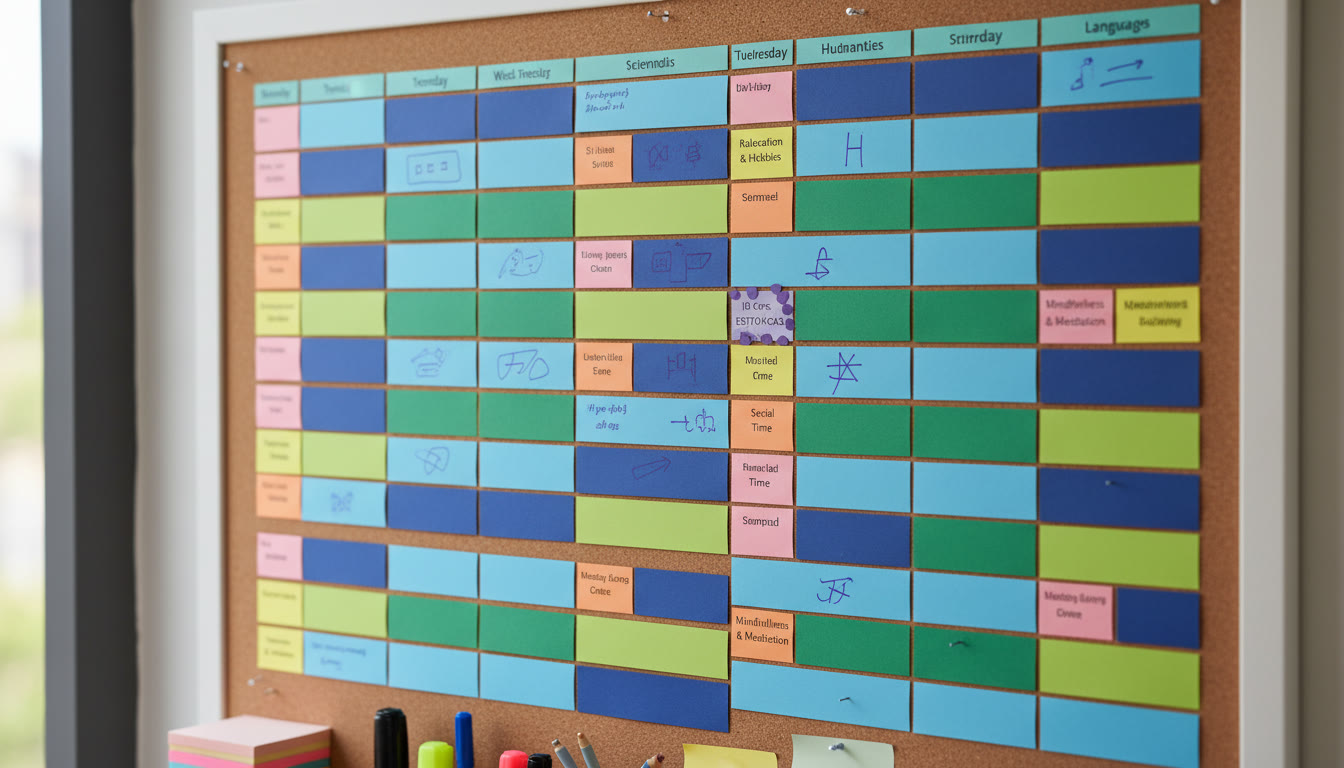
Below is a sample 10-week summer plan. Tailor it to your calendar (vacations, family commitments, work). The idea is small, repeated wins rather than a single heroic sprint.
| Week | Main Focus | Weekly Hours (suggested) | Key Deliverable |
|---|---|---|---|
| 1 | Rest + reflection; set goals | 3–5 | Summer goals list and calendar |
| 2 | EE topic research; speak with potential supervisors | 5–8 | Topic chosen and supervisor contacted |
| 3 | IA planning (logistics, materials, ethics) | 6–9 | IA timelines and data-collection plan |
| 4 | Deliberate revision on toughest subtopic | 6–10 | Mastered one subtopic and practice set complete |
| 5 | Work on EE literature review / annotated bibliography | 6–8 | First 1–2 pages of EE notes |
| 6 | IA data collection / lab work | 8–12 | Raw data and lab notes |
| 7 | Practice exams: timed practice on weak areas | 6–10 | Two timed sections completed |
| 8 | CAS planning and TOK example collection | 4–6 | CAS project outline and TOK evidence bank |
| 9 | Draft EE outline and supervisor feedback | 6–9 | EE outline and meeting notes |
| 10 | Consolidate routine, rest, and prep first-week DP2 plan | 3–6 | Final summer summary and first-week schedule |
This schedule assumes you mix focused study days with full rest days. Notice the pattern: early weeks focus on planning and logistics; middle weeks are for data collection and deliberate practice; the final weeks are for consolidation and low-pressure rehearsals. That pattern translates well into DP2’s first term.
Subject-specific summer starters
Every subject has its own rhythm. Below are quick, actionable summer starts grouped by broad subject types.
Sciences (Biology, Chemistry, Physics)
- Plan IAs early—some measurements depend on seasons or equipment booking.
- Revisit core practical techniques and lab safety; keep a clean lab notebook habit now so it’s second nature later.
- Do focused problem sets on the subtopics you found hardest in DP1.
Mathematics (SL and HL)
- Create a short error log from DP1—categories of mistakes are usually repeatable. Practice those regularly.
- Use interleaved practice: mix algebra, calculus, and stats problems rather than blocking them to build flexible thinking.
Humanities (History, Economics, Geography)
- Build a timeline or concept map for the syllabus themes; visual scaffolds speed revision.
- Start source collection and practice short evidence-based paragraphs; aim for clarity rather than breadth at first.
Languages & Literature
- Read strategically: pick texts that align with your IB syllabus and annotate for themes and language use.
- Practice oral responses aloud and record them to notice fluency and argument flow.
Arts and Performance
- Use the summer to experiment—sketch, rehearse, draft, or prototype without the pressure of marks.
- Document process; CAS logs and EE visuals often benefit from early drafts and photos.
Key study techniques that don’t waste time
Smart work beats long hours. Here are reliable techniques students use to retain information without burning out:
- Active recall: Test yourself before you reread notes.
- Spaced repetition: Schedule multiple, short review sessions rather than one long cram.
- Interleaving: Mix problem types and subjects to build transfer skills.
- Pomodoro cycles: 25–50 minute focused sessions with short breaks—adjust length for your concentration span.
- Past-paper habit: Practice short, timed sections and review answer rubrics to understand examiner expectations.
These techniques are not mutually exclusive—combine them. For example, use a Pomodoro to run a spaced-repetition flashcard set, then spend a cycle doing active recall with a past-paper question.
Balancing rest, routine, and the social life
Burnout often starts with a tiny permission we keep denying ourselves: “Just one more hour.” The antidote is a predictable routine where rest is a scheduled commitment equal to study. Think of rest as studying your brain so it performs better later.
Sample weekly balance: three focused study days with 6–10 hours spread across tasks, two light study or practice days with 3–5 hours, and two true rest days. True rest days mean low-cognitive activities: exercise, friends, outdoor time, or creative hobbies. These actively rebuild mental energy.
Simple rules to avoid sliding into burnout
- Keep start and stop times—no late-night grind sessions that reset your sleep cycle.
- Monitor mood and motivation—if you’re repeatedly dreading a task, break it into 15-minute pieces.
- Rotate high-cognitive tasks and low-cognitive tasks within the same day to maintain energy.
When to bring in extra support
Some problems are solved faster with help—confusing feedback from a supervisor, a stubborn subtopic that won’t click, or a looming IA with unclear methods. That’s when tailored support can add efficiency and reduce stress.
If you’re thinking of tutoring, look for help that offers: 1-on-1 guidance, tailored study plans, expert tutors who understand IB assessment criteria, and tools that give data-backed insights into where to focus next. For many students, a few structured sessions over the summer remove big uncertainties and make DP2 feel manageable rather than daunting. For example, Sparkl can provide one-on-one guidance, tailored study plans, expert tutors, and AI-driven insights to help you prioritise the highest-impact tasks.
Practical checklists to carry through the summer
Keep these short checklists where you can see them. They’re small anchors of progress.
EE checklist
- Confirm a research question or narrowed topic.
- Contact potential supervisors and schedule a first meeting.
- Gather 5–10 key sources and write short annotations.
- Make a simple timeline for research, writing, and revision milestones.
IA checklist
- Write a plan for each IA (aims, methods, required materials, timeline).
- Book lab time or equipment if needed.
- Keep detailed raw data and dated notes.
TOK and CAS checklist
- Collect real-world examples for TOK; file them by theme and case.
- Sketch CAS project ideas and identify supervisors or community partners.
Sample daily routine for a productive summer day
- 08:30 — Morning routine (breakfast, 10–15 min light exercise)
- 09:15 — Focus block 1 (Pomodoro cycles on EE research or IA work)
- 11:00 — Short break, then active recall practice for a subject
- 12:30 — Lunch and rest
- 14:00 — Focus block 2 (problem practice or lab work)
- 16:00 — Light activity or hobby
- 18:00 — Short review of what you achieved; plan tomorrow
- Evening — Social time and a screen-free wind-down
Measuring progress without pressure
Progress is not always an essay draft; sometimes it is a meeting scheduled, a dataset collected, or a concept finally explained to a friend. Create a weekly progress log with three lines: what I did, what I learned, what I will do next. That log makes small wins visible and saves energy on deciding what to do each day.
Closing academic note
Your summer between DP1 and DP2 should be a sustained, gentle acceleration—enough structure to reduce uncertainty and enough flexibility to rebuild your reserves. Prioritise assessments that require lead time, focus practice on the highest-impact weaknesses, and protect real rest as a non-negotiable part of preparation. With a small set of clear goals, backward planning, and a routine that alternates focus and recovery, you can enter DP2 ahead of the curve without sacrificing wellbeing.

























No Comments
Leave a comment Cancel