

Complete Guide to ISC Practical Exam Strategy
If you’re preparing for your ISC internal practical, this guide is written with one goal: to turn nervous moments into confident performance. Practical exams reward calm planning, clear records, steady hands and the ability to explain what you did. Read this as a friendly roadmap — part checklist, part strategy playbook — that you can adapt to your subject (Physics, Chemistry, Biology, Computer Science or Applied Science streams) and your school’s expectations.

Why practicals matter — and how to think about them
Practical exams are not a separate little world. They are an opportunity to show your understanding of scientific thinking: how you plan, measure, record and reason. Examiners look for clarity of method, accuracy of observation, thoughtful handling of data, sound conclusions and the ability to answer questions about what you did and why. In short, theory gives you the why; the practical proves you can do the how.
- Skill demonstration: setting up apparatus, following safe procedures, controlling variables.
- Data handling: recording observations, processing them correctly, and presenting results neatly.
- Reasoning: explaining sources of error, choice of technique, and the meaning of results.
- Communication: clear handwriting, labelled diagrams, and coherent viva answers.
What ISC practicals typically assess
Across subjects the core things tend to be similar. Expect the exam to check:
- Planning and method (did you follow a logical procedure?).
- Setup and safety (neat, correct arrangement and safe practice).
- Observations and accuracy (careful readings, correct units, consistent notation).
- Calculations and presentation (show working, use correct significant figures where relevant).
- Record book or practical file (neat, dated, complete entries; diagrams and labeled tables).
- Viva voce (short, conceptual questions; justification of steps; improvements and error analysis).
Understanding the structure: components you’ll likely face
Different schools and subjects use slightly different rubrics for internal practicals. The following table is illustrative — a practical checklist and suggested focus areas that many ISC-style practical assessments reward. Always confirm exact weighting with your teacher or school coordinator.
| Component | What examiners look for | How to prepare | Suggested focus during practice |
|---|---|---|---|
| Experiment / Performance | Correct setup, following procedure, safe handling, clean execution | Practice common experiments until setup is automatic; time yourself | Practice replicates (repeat readings), clear labelling |
| Record Book / Practical File | Completeness, dated entries, labeled diagrams and tables | Keep a standard template for each experiment; keep the file tidy and signed | Neatness, headings and corrected mistakes with dates |
| Data Handling & Calculations | Correct use of formulas, units, significant figures, and error estimate | Do sample calculations and write them step-by-step in your file | Show working clearly and circle final answers |
| Viva Voce | Understanding of principles, reasons for steps, error discussion | Practice short, clear answers and reason aloud while doing experiments | Keep explanations short and to the point |
Before the practical: a preparation plan that actually works
Preparation starts well before the exam day. Divide your practice into concept, technique, record-keeping and timed mock runs. Here’s a flexible plan you can adapt to your schedule — whether you have several weeks or only a short run-up.
A flexible four-phase plan
- Phase 1 — Build the map: Go through the syllabus and list every practical you are expected to complete. For each, note the key concept, the apparatus you must know, and the critical step(s) where mistakes commonly happen.
- Phase 2 — Technique and repetition: Focus on handling apparatus and steps. For physics and chemistry, practice measurements and repeats. For biology, practice staining, mounting and identification. For computer practicals, practise code runs and debugging until you can explain each step.
- Phase 3 — File and calculations: Spend time writing up neatly. For each experiment, include aim, apparatus, procedure (numbered), observation table, calculations with units, result, and a short conclusion. Prepare labeled diagrams where relevant.
- Phase 4 — Full-length mocks and viva practice: Simulate the exam environment: time yourself, follow an instruction sheet, complete the experiment and write the report under timed conditions, then do a short viva with a teacher or peer.
Daily practice routine — quality over quantity
- Pick one experiment each day to practice end-to-end: setup, observations, calculation, file write-up and a short viva recap.
- Always correct your practical file with dates and short notes about what went wrong and how you fixed it — showing improvement matters.
- Keep a short log of common errors you encounter and the fix for each — this builds a quick revision sheet for the viva.
If you want structured one-on-one guidance as you follow this plan, Sparkl‘s personalized tutors can help with tailored study plans, live feedback on file presentation, and practice viva sessions that mirror exam conditions.
Record book and practical file: make it examiner-friendly
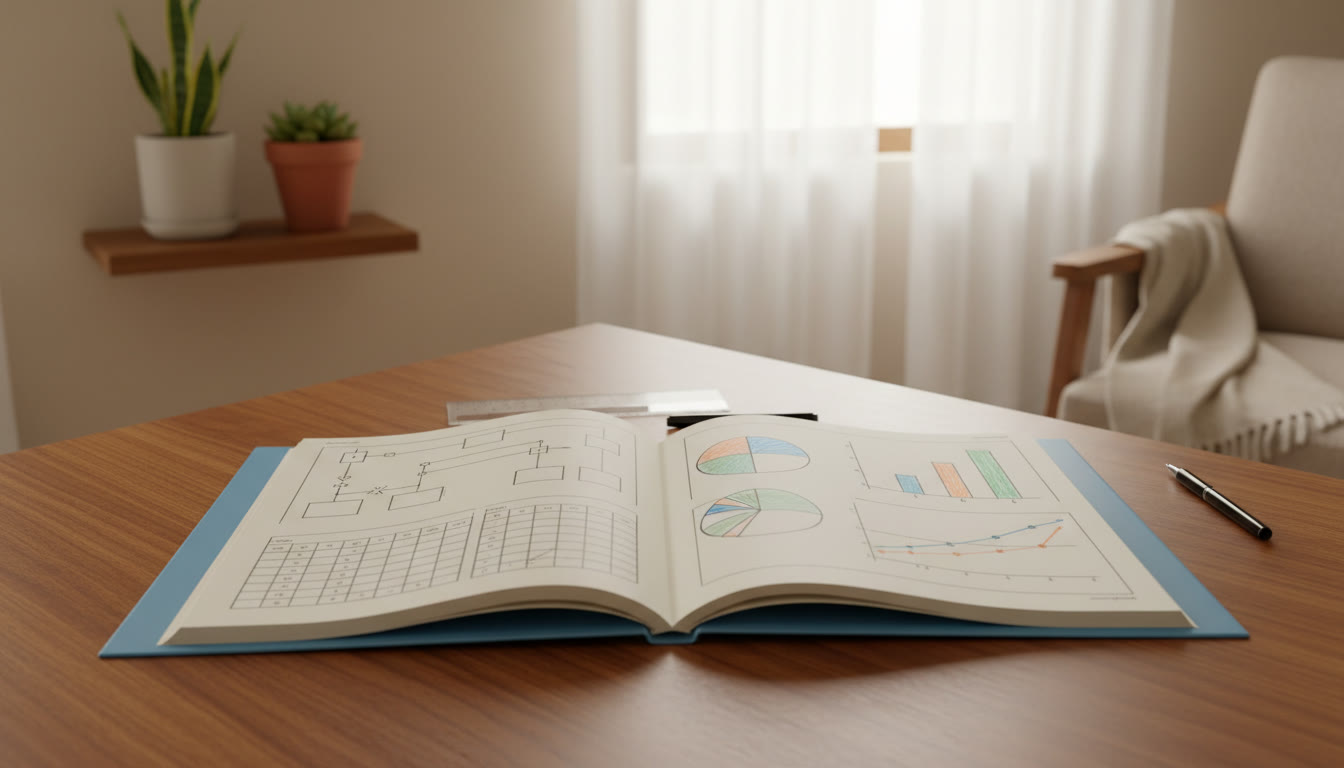
A practical file is the single piece of evidence you can polish to make a strong impression. Examiners appreciate a consistent format that lets them find information quickly. Use ruled or printed tables, numbered procedures, and labelled diagrams.
| Section | Example content | Why it matters |
|---|---|---|
| Title & Date | Experiment name; class & date; page numbers | Shows organisation and allows sign-off tracking |
| Aim | One-line clear statement of what you will find/measure | Sets focus and shows you understand the objective |
| Apparatus & Chemicals / Software | List items and concentrations or versions | Demonstrates preparedness and accuracy |
| Procedure (numbered) | Short numbered steps; mention safety precautions | Makes it easy to follow your method and pinpoint where an error occurred |
| Observations & Raw Data | Tables with units, repeated readings, averaged value | Clear evidence of data collection and reproducibility |
| Calculations | Show formula used, substitution, final value boxed | Shows your reasoning and earns method marks |
| Result & Conclusion | Final numeric result and one-line conclusion | Helps the examiner see your answer at a glance |
| Sources of Error & Improvement | List main uncertainties and simple steps to improve | Demonstrates analytical thinking |
Practical presentation tips
- Use a consistent heading style and date every entry; if an experiment is revised, add a small note about the revision.
- Label diagrams neatly; ruler-drawn axes and clear scales in graphs score points for readability.
- Keep extra copies of raw data sheets; staple or clip them to your file so the examiner can verify original readings.
During the practical: steady execution under pressure
Once you enter the practical room you have limited time and the examiner’s attention. Use these strategies to stay calm and efficient.
- First five minutes: read the instruction sheet fully. Identify tricky steps and safety notes before you touch equipment.
- Set up methodically: collect all apparatus and chemicals, label containers, and check calibrations (if required).
- Prioritise accuracy over speed. If you need to repeat a reading, do it — a careful set of readings often beats hurried numbers.
- Write while you work: put raw numbers in tables as soon as you read them; delaying this invites transcription errors.
- If something goes wrong, narrate it to the examiner calmly: acknowledge what happened, what you will change, and then carry on. Clear communication is better than silent panic.
Handling mistakes gracefully
- Don’t hide an error. Cross out neatly, write the corrected value and add a short note like “misread at 12:34 — retaken.”
- If time permits, do a quick repeat of the affected step; if not, note the reason you could not repeat and explain it in the viva.
- Be honest about uncertainties — examiners prefer a thoughtful comment to a defensively perfect-looking but impossible result.
Viva voce: short, sharp, honest explanations
Viva questions are usually brief and aimed at checking conceptual understanding and your reasoning about the experiment. Practice answering in 20–60 seconds: clear, accurate and factual.
| Common Question | What the examiner wants | Example concise answer |
|---|---|---|
| Why did you choose this method? | Reasoning about method choice and pros/cons | “This method minimises random error by averaging multiple readings and uses equipment with lower least count.” |
| What are the main sources of error? | Awareness of uncertainty and its effect | “Parallax during readings and instrument calibration; repeating measurements reduces random error.” |
| How would you improve accuracy? | Practical thinking for improvement | “Use finer least-count instruments, take additional trials and maintain constant temperature during reaction.” |
Keep answers factual and avoid overlong theory unless asked. If you don’t know something, it’s better to say you aren’t sure and explain how you would find out, rather than guess incorrectly.
Full-length mock practice: simulate the test, then learn
The single most powerful exercise is a full-length mock under exam conditions: setup, timed performance, file write-up and a viva session immediately after. Treat it like the real exam: wear what you will wear, use the same allowed tools, and stick strictly to the time limit.
- After the mock, mark yourself or ask a teacher to use a checklist: setup correctness, data accuracy, completeness of file, clarity of calculations and viva clarity.
- Keep a feedback log: one column for what you did well, one for what to fix. Focus the next mock on correcting one or two of those issues.
Peer review is particularly helpful: Swap files and vivas with a classmate and give concise feedback on clarity and method. If you want structured mock sessions or targeted viva coaching, Sparkl offers one-on-one practice and AI-driven insights that help prioritise what to improve next.
Common pitfalls and how to avoid them
- Messy or incomplete records: adopt one neat template and stick to it.
- Skipping units or failing to show working: always show one clear line of working and box your final answer with units.
- Overloading answers with irrelevant theory: keep the practical write-up focused on method, data and result; theory can be a short supporting sentence if asked.
- Poor time management: practice timed runs until your setup, measurement and write-up consistently fit the allotted time.
- Viva panic: practice short, rehearsed responses and keep a crib sheet of key points you must be able to say aloud.
Day-of checklist and quick reminders
| Item | Tip |
|---|---|
| Practical file | All experiments dated and numbered; extra blank pages and a pen with different ink colour for corrections. |
| Writing materials | Blue/black pens, pencil, eraser, calculator if allowed — check rules beforehand. |
| Identification | School ID or any required document as per school instructions. |
| Dress & Safety | Appropriate clothing, closed shoes if in a lab, and follow safety instructions (goggles, lab coat if required). |
| Mental check | Arrive early, breathe deeply, read instructions first and sketch the setup before you begin. |
After the practical: reflect, record and improve
Once the practical is over, take time within 24–48 hours to note what went well and what didn’t. Update your practical file with a short reflection: a page that lists three strengths and three improvements for the next session. That habit of reflection is what turns each attempt into lasting competence.
- Save one clean copy of every important data sheet and staple it into your file with a note about repeats.
- Use mock feedback to prioritise a short drill list for your next week: e.g., “practice titration end-point detection” or “repeat pendulum length control”.
- Keep your viva notes — a one-page crib sheet of probable questions and concise bullet answers.
Final thoughts
Practical exams reward calm preparation, neat presentation and clear thinking. Build a steady routine of technique practice, neat file work and full-length timed mocks; practise short viva answers and learn to correct mistakes openly. With organised preparation and thoughtful reflection, practicals are an opportunity to show real laboratory skill and scientific reasoning rather than a moment to worry.





















No Comments
Leave a comment Cancel