
ISC Practical Exam Tips for Physics & Chemistry
Internal practicals in Physics and Chemistry are less about rote recall and more about demonstrating scientific thinking, steady hands, clear records and confident explanations. Whether you feel calm in the lab or a little shaky, this guide walks you through practical preparations that actually work: how to organize your record, run experiments cleanly, present calculations and graphs, and handle the viva without panic — all while staying aligned to the current cycle and the syllabus expectations your school follows.
Think of the practical as an opportunity to show methodical habits: careful measurement, sensible error handling, clear presentation and honest answers during viva. The goal here is not to memorize lines but to build routines so that, on the day, your work speaks for itself.
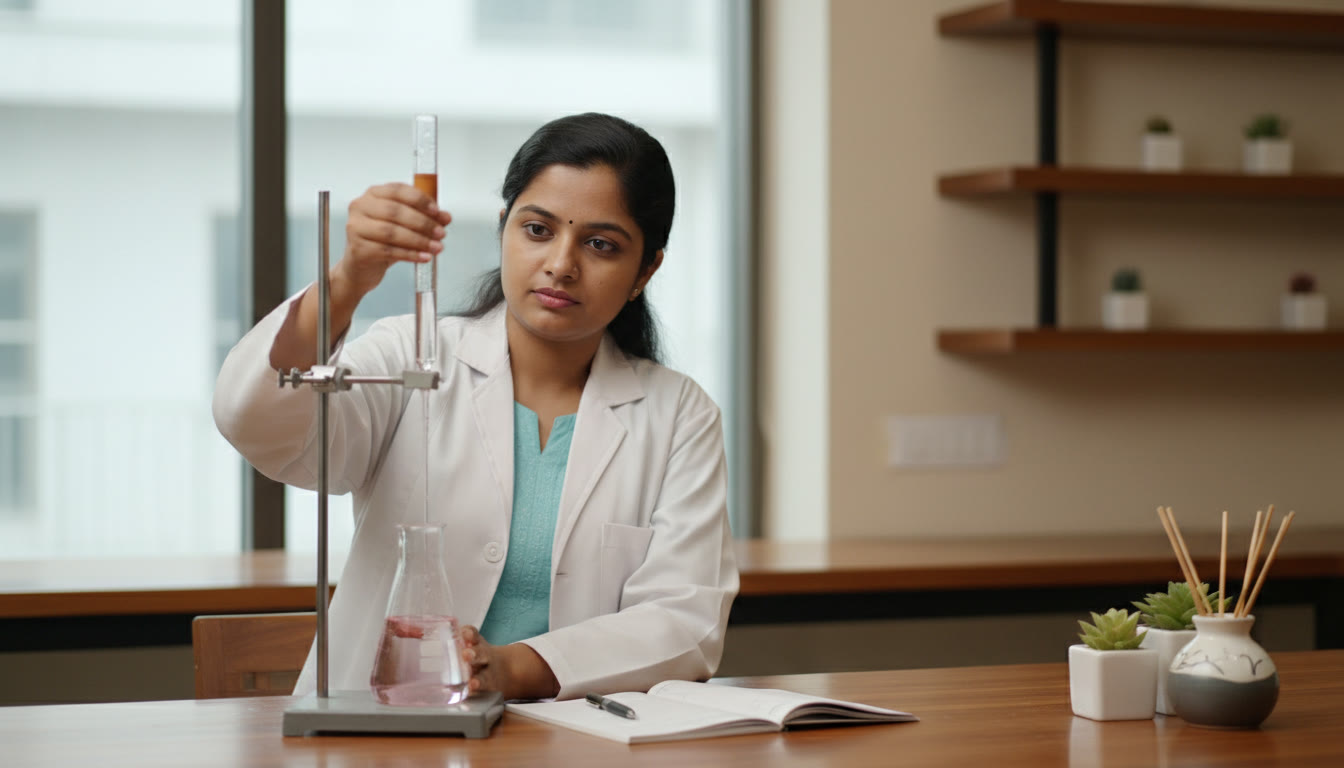
Understand the Structure and Syllabus Alignment
Different schools handle internal practicals with slightly different formats, but the elements that matter are generally the same: the experiment itself, the practical record (your lab book), calculations and presentation (including graphs), and the viva voce. Check the latest updates from your teacher or lab-in-charge so you know which experiments are in focus and what instrumentation you’ll be expected to use. Aligning every hour of practice to the syllabus list will save you time and reduce surprises.
What examiners typically assess
- Clarity and completeness of the practical record and observations.
- Technique: correct use of apparatus, care with measurements, and safe working practices.
- Accuracy in calculations, correct units and appropriate significant figures.
- Graphing and data presentation: proper axes, scale, best-fit line and interpretation.
- Understanding: short, clear answers in viva about purpose, principle, errors and improvements.
Before the Practical: Preparation that actually works
Preparation starts days — even weeks — ahead. Spread tasks across study sessions so that nothing is left to last-minute panic. A repeated, calm rehearsal of a procedure does more for confidence than a single frantic cram.
- List the experiments and split them into categories: measurement-heavy, observation/qualitative, preparative or demonstration. Prioritize based on the syllabus and teacher guidance.
- Make a short, one-page checklist for each experiment: objective, apparatus, stepwise method to follow in the lab, expected observations and a short note on common errors.
- Practice the hands-on technique: pipetting, using a micrometer/ Vernier caliper, setting up optics, or carrying out a titration until the motions feel natural and repeatable.
- Time yourself during a full run-through: setup, observations, calculations and neat write-up. Include an extra 10–15 minutes for a short viva prep at the end.
Study smart — not just hard
Build small, focused practice sessions: thirty to forty minutes on a single skill (e.g., plotting graphs or calculating percentage error) is usually more effective than a scattered four-hour study marathon. Use short checklists and keep one clear objective per session.
Practical Record: Your visible evidence
For internal practicums, your lab record is the most durable piece of evidence of your work. Make it readable, complete and accurate. Neatness matters — examiners value clarity as much as accuracy.
| Section | What to include | Why it matters |
|---|---|---|
| Title & Objective | Clear experiment title, concise purpose. | Shows you understand what you’re trying to achieve. |
| Apparatus & Reagents | List of instruments and chemicals with concentrations. | Helps the examiner verify setup and safety awareness. |
| Procedure | Stepwise, numbered method — short but precise. | Demonstrates logical approach and reproducibility. |
| Observations & Raw Data | Tables with headings, units, and repeated readings. | Allows error analysis and shows care in measurement. |
| Calculations & Graphs | Sample worked calculation, correct units, labeled graph. | Shows numerical reasoning and interpretation skills. |
| Conclusion & Error Analysis | Short conclusion + brief note on sources of error and improvements. | Reflects critical thinking about the experiment. |
Quick tips for a record that stands out
- Use a clear index page and number your pages — examiners appreciate easy navigation.
- Label every table and diagram. Use a ruler for tables and straight lines for axes.
- Show one worked sample calculation step-by-step; then give final answers for repeats, with units and appropriate significant figures.
- Write a short, honest error analysis — identify one or two main sources and a practical way to reduce them.
During the Practical: Execution, Not Panic
Once you’re in the lab, slow down for the first five minutes. Read the instructions carefully, set up cleanly and communicate with your partner (if the exam allows partners). A calm start prevents small mistakes from multiplying.
Practical execution checklist
- Check apparatus before starting: clean glassware, zero the instrument, ensure correct calibration of meters.
- Record raw measurements immediately in a neat table — do not rely on memory.
- Repeat critical readings where appropriate and calculate averages; note any outliers and why they were excluded.
- Keep track of units at every step and convert before calculations if needed.
- If something goes wrong, note it clearly in the record rather than trying to hide it; honesty in lab work is expected and respected.

Common Experiment Categories and Smart Approaches
Rather than listing every possible practical, think in terms of categories and the skills they test. This helps you transfer technique from one experiment to another.
- Measurement-focused experiments (e.g., using micrometers, resistivity, specific heat) — practice careful alignment, least-count reading and multiple trials.
- Graph-heavy experiments (e.g., plotting I–V characteristics, verifying relationships) — practice choosing appropriate scales, plotting points accurately and drawing best-fit lines.
- Chemical titrations and quantitative analyses — practice endpoint detection, consistent dropwise additions and preparing standard solutions carefully.
- Qualitative tests and preparations — rehearse observation descriptions and safe handling; make sure your preparation steps are reproducible and well-recorded.
Calculations, Graphs and Error Handling
Calculations and graphs are where marks come together: correct numerical work, tidy presentation and reasoned interpretation. Treat graphs as arguments — they should lead the reader from data to conclusion.
Graphing best practices
- Give the graph a short title and label both axes with quantity and unit. Choose a scale that fills most of the graph paper without distorting data.
- Plot points neatly and use a ruler only for the best-fit line (not for connecting scattered points).
- When calculating slope, show the two points used, the delta values and include units for the slope.
- Discuss the trend briefly: does it match the expected relationship? If not, identify a plausible experimental reason.
Viva Voce: Speak Clearly and Be Honest
The viva is a conversation about what you’ve done. Clear, direct answers score far better than long-winded memorised speeches. Listen carefully to the question, take a breath, and answer confidently.
Typical viva strategies
- If asked about an apparatus part, point to it (if permitted) and describe its function concisely.
- When asked about errors, name the most likely source and give one realistic step to reduce it — examiners prefer practical improvements over abstract statements.
- If you don’t know an answer, say so honestly and offer what you think might be relevant; speculative answers should be clearly labelled as such.
Full-Length Mock Practicals — The Rehearsal That Counts
Mock practicals are where preparation meets reality. Run at least a few full-length mocks that mimic the exam environment: time limits, record writing, calculations and a short viva. Have a teacher or peer act as an examiner to ask viva-style questions at the end.
Structure your mock like the real thing: 5–10 minutes setup, the required experiment time, 20–30 minutes for calculations and write-up, and 5–10 minutes of viva. Repeat and track where you lose time — that’s the place to improve.
For students seeking guided, personalized practice, structured mentoring that focuses on weak points can accelerate improvement. Sparkl‘s 1-on-1 guidance and tailored study plans can help identify specific skills to prioritize and provide AI-driven insights to track progress.
Exam-Day Checklist: What to Bring and How to Act
- Original practical record or lab book, neatly indexed and signed where required by your school.
- Safety gear: lab coat, goggles (if required), and any school-mandated equipment.
- Spare pens, pencil, eraser, a clean calculator (if allowed), and a watch to track time.
- Arrive slightly early to mentally rehearse your steps and set up without rushing.
- Keep your workspace tidy; clean glassware and neat tables leave a positive impression.
Common Mistakes and How to Avoid Them
- Messy records: use headings, ruled tables and one clear sample calculation instead of many half-written attempts.
- Incorrect or missing units: write units with every numerical answer and during intermediate calculations where needed.
- Rushed graphs: take the time to set a good scale and label axes — a clear graph can recover marks even when raw numbers are slightly off.
- Overreliance on memory for viva: revise key principles and the purpose of each step, rather than memorising long text.
- Ignoring safety: simple precautions prevent accidents and show examiners you are responsible in the lab.
Mindset, Stress Management and Small Routines
Management of stress is as practical as a pipette: small, repeatable routines reduce error. Good sleep, short revision bursts, and breathing exercises before entering the lab help steady your hands and focus your mind.
- Keep a short warm-up checklist you run just before the experiment: apparatus check, reagent readiness, table layout and timeframe.
- Use positive cues: a small phrase like “steady hands, clear eyes” can reset focus if nerves spike.
- If anxiety threatens accuracy, pause for ten seconds, refocus on the current measurement and continue — rushing increases mistakes.
How Targeted Help Can Fit into Your Plan
When time is limited, targeted tutoring can help clarify weak spots quickly. Focused sessions that work through a few experiments end-to-end — setup, data collection, calculations, graphing and viva — build a repeatable cycle of competence. If you choose extra support, aim for short, practical sessions that produce measurable improvements in the specific skills you need.
For example, a small set of 1-on-1 practice sessions that concentrate on instrument technique, common error sources and viva-answer framing can give high returns on effort. Sparkl‘s tutors can help tailor such sessions and recommend targeted practice drills based on your current performance.
Final Practical Tips — Quick Reference
- Read instructions twice: once for orientation, once before acting.
- Record raw data immediately and clearly; don’t reconstruct readings later from memory.
- Show one clear worked calculation and attach final rounded answers with proper units.
- Label graphs and include units; write a one-line interpretation below each graph.
- During viva, answer directly, back statements with simple reasoning and keep explanations short and specific.
Approach practicals as a demonstration of how you think and work scientifically. Solid preparation, clear records, calm execution and honest viva responses will make your practical performance reliable and repeatable. Finish every experiment with a short error note and an idea for improvement — that reflection often signals the difference between average and excellent practical work.
Conclusion
Practical exams reward steady technique, clarity of presentation and the ability to explain what you did and why. Focus practice on the skills that transfer across experiments — careful measurement, tidy records, clear graphs and concise viva responses — and build confidence by rehearsing full-length practicals under timed conditions.





















No Comments
Leave a comment Cancel