

Best Study Material for JEE Main Self-Study Students
If you’re preparing for the JEE Main on your own, the single biggest decision is not how many books you buy but which ones actually help you learn, practice, and perform under exam conditions. Choosing study material feels overwhelming because every recommendation seems loud and confident. This article is written like a conversation with a friend who’s been in that exact place: practical, honest, and focused on what works for self-study students.
I’ll walk you through how to pick and sequence resources for Physics, Chemistry, and Mathematics, how to structure practice for MCQ-based testing and 3-hour full-length mocks, what to expect from negative-marking scenarios, and how to build a lean, powerful stack of study material that fits a self-driven schedule.

Start by defining what a resource must do
Before listing types of material, decide what you need from any book or digital resource. Every good resource should satisfy at least one clear need: build core concepts, provide stepwise solved examples, offer varied practice problems, or simulate the exact exam environment. For JEE Main preparation, these needs map directly to how the exam is set up: multiple-choice questions, strict time limits in a 3-hour full-length paper, and penalty for wrong answers. Because of that, every resource you use should help you do one or more of the following very well:
- Explain concepts clearly and simply so you can solve unseen problems.
- Show worked examples that reveal common problem-solving paths and tricks.
- Provide a steady diet of MCQs of varying difficulty, with full solutions.
- Offer timed full-length tests that mimic test-day pressure and negative marking.
- Give analytics or self-check mechanisms to track errors and progress.
How to judge a book or digital tool quickly
When you open a resource, scan for: a short, clear theory section; several worked examples that aren’t just answer keys but show reasoning; a wide range of problems (basic, application, and challenge); and complete solutions. If the resource has mock tests, make sure the mocks include full solutions and, ideally, an explanation of common traps. If a digital tool provides time tracking or topic-wise analytics, that’s a big bonus for self-study students who need objective feedback.
Subject-wise blueprint: what to collect and how to use it
The JEE Main syllabus centers on Physics, Chemistry, and Mathematics. Each subject asks for a slightly different mix of study material. Below are subject-specific blueprints designed for self-learners.
Physics: understand, visualize, then practice
Physics is a conceptual subject that rewards visual thinking and clear derivations. For self-study, your stack should include:
- A concise concept guide that explains the fundamentals in plain language and uses diagrams liberally.
- A worked-example collection that demonstrates how to apply equations step by step.
- A set of graded practice problems — start with routine numerical problems, then move to multi-concept integrative questions.
- Topic-wise MCQ sets to sharpen quick application and elimination skills.
- Timed full-length physics practice (as part of full mocks) to build stamina and time management.
Tip: treat derivations and diagrams as rehearsal for problem-solving. You don’t need to write long derivations in an exam — you must be able to reconstruct the core steps quickly and use the result to solve an MCQ.
Chemistry: compartmentalize and practice smartly
Chemistry splits into physical, organic, and inorganic streams, and each benefits from a different study focus. For self-study:
- Use a concise conceptual primer for each stream—physical chemistry needs numerical practice; organic needs reaction-mapping and mechanism understanding; inorganic needs systematic revision and pattern recognition.
- Keep a reaction map and a one-page formula/constant sheet for quick revision.
- Practice many topic-wise MCQs; inorganic MCQs often test simple recall or pattern recognition, while organic and physical need reasoning.
- Work through previous official questions and timed sectional tests to internalize common question patterns.
Tip: for self-study, convert organic reaction sequences into flashcards or short flowcharts; for physical chemistry, prioritize problem sets that force you to manage units and approximations under time pressure.
Mathematics: technique, pattern recognition, and speed
Mathematics is practice-heavy. For a self-learner, a strong stack includes:
- A concept-and-method guide that shows multiple ways to approach typical problems (algebraic manipulation, geometry intuition, calculus shortcuts).
- An extensive set of graded problems: routine drills for accuracy, followed by medium and hard problems for speed and deeper thinking.
- Topic-wise MCQs and mixed-topic drills to force strategy switching during an exam.
- Timed full-length mock tests to develop the habit of selecting questions and managing time across sections.
Tip: for problem solving, practice the habit of trying a quick approach first, then a fallback method. During mock tests, deliberately practice skipping and returning to avoid time traps.

One-page resource comparison table
| Resource Type | What it offers | How to use | When to pick |
|---|---|---|---|
| Foundational concept guide | Clear theory, diagrams, short derivations | Read, rephrase in your own words, solve 3–5 worked examples | At the start of any new topic |
| Worked-example collection | Stepwise solutions revealing techniques | Study 1 example, then solve a similar problem | After first concept pass |
| Problem book / MCQ bank | Practice problems graded by difficulty | Do topic-wise sets; time yourself on MCQs | Once basic clarity is achieved |
| Previous years’ official papers | Real exam vibe and question pattern | Attempt under timed conditions and review thoroughly | Regularly, increasing frequency closer to test date |
| Timed full-length mocks | Simulates exam day: 3 hours, negative marking | Simulate strict test conditions; analyze mistakes deeply | Weekly or biweekly depending on timeline |
| Revision cheat-sheets | Compact formulas, reaction maps, diagrams | Use for last-minute reviews and weekly quick revision | Continuous |
How to build your personal resource stack (the lean approach)
Too many students buy a mountain of books and never finish any. Instead, assemble a small, complementary stack that covers all needs without overlap. A balanced self-study stack looks like this:
- A single concise concept guide per subject for clarity and revision.
- A worked-example resource for method teaching.
- A problem book or MCQ bank with graded difficulty and full solutions.
- A source of timed full-length mocks (digital or printed) with analytics.
- A personal formula sheet and a running error log.
This stack keeps learning efficient: each item has a role and you don’t waste time jumping between contradictory styles or duplicated content.
Sample weekly rhythm for steady progress
Below is a sample weekly template that balances learning, practice, and testing for a self-studier. Tailor the hours to your availability.
| Day | Primary Focus | Time Allocation | Goal |
|---|---|---|---|
| Monday | New concept (Physics) | 3–4 hours | Understand + solve 4 worked examples |
| Tuesday | Practice (Maths) | 3–4 hours | Topic-wise problem set: 15–20 questions |
| Wednesday | Revision (Chemistry) | 2–3 hours | Memorize reaction maps + solve 10 MCQs |
| Thursday | Mixed practice | 3 hours | 15 MCQs across subjects under timed conditions |
| Friday | Deep problem-solving (Maths/Physics) | 3–4 hours | Work on medium-to-hard problems |
| Saturday | Full-length mock (3 hours) | 3 hours + 1–2 hours analysis | Mimic exam day; analyze mistakes |
| Sunday | Weakness repair & light revision | 2–3 hours | Rework error log; revise formula sheet |
How to practice mocks the smart way
Mistakes on mock tests are your greatest asset—if you analyze them. Use these rules for mock practice so the 3-hour full-length test becomes a step toward higher scores instead of a stress ritual:
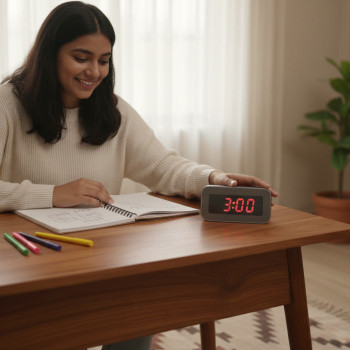
- Simulate the exam environment: quiet room, strict three-hour timer, no interruptions.
- Simulate negative marking exactly: do not guess blindly; practice intelligent elimination.
- Practice answer-marking discipline. While the current exam cycles use computer-based tests, training yourself to mark answers carefully prevents careless errors and helps when you practice on paper or in hybrid mocks.
- After every mock, spend at least as much time analyzing as you spent taking the test: identify careless mistakes, concept gaps, and time sinks.
- Keep an error log: record question topic, mistake reason (conceptual, calculation, careless), and a corrective action.
Active study techniques that improve retention
Self-study rewards smart techniques more than long hours. Some habits that produce big gains:
- Explain aloud: teach a topic to an imaginary student; this reveals gaps fast.
- Use short, frequent timed drills instead of giant problem marathons when fatigued.
- Spaced repetition for formulae and inorganic facts keeps memory crisp without last-minute cramming.
- Maintain a one-page formula sheet per subject and revise it weekly.
- Use an error-log ritual: after each practice session, update the log and schedule a short rework session within 2–3 days.
When to bring guided help into self-study
Self-study is powerful, but targeted guidance accelerates progress when you’re stuck in a plateau. Look for help that gives:
- One-on-one guidance tailored to your weak topics rather than generic classes.
- Actionable study plans that fit your current rhythm and deadline.
- Expert explanations for tricky problems and mock-test analysis that identifies patterns in your mistakes.
For many self-learners, pairing disciplined independent study with occasional expert review is the sweet spot. If you choose to add guided help, make sure it complements your resource stack and respects your learning pace. For example, Sparkl‘s personalized tutoring offers one-on-one guidance, tailored study plans, and analytics-driven insights which many students find helpful to break plateaus without abandoning independent learning. Similarly, if you opt for an occasional mentor session, use it to refine your mock-analysis and fix stubborn conceptual gaps.
Common pitfalls and how to avoid them
Self-study mistakes are predictable if you know them. Avoid these traps:
- Collecting too many books. Better to master a small stack thoroughly.
- Practicing without analysis. If you don’t review mistakes, you repeat them.
- Ignoring timed practice. Speed and accuracy under time pressure must be trained, not assumed.
- Relying solely on unsolved question banks. Always pair practice with worked solutions to learn methods.
- Skipping previous official papers. They are the single best source to understand exam framing and repeated topics.
How to phase your preparation as the exam cycle progresses
Think in three phases: build, strengthen, and sharpen. Each phase has a different focus for your study-material mix:
- Build phase: focus on concept guides and worked examples; do low-stakes problems to build confidence.
- Strengthen phase: shift to problem books and topic-wise MCQs; introduce timed sections and analyze mistakes rigorously.
- Sharpen phase: prioritize full-length timed mocks with strict negative-marking simulation, review error logs daily, and use formula sheets for quick refreshers.
Final checklist for choosing any study material
- Does it clarify concepts quickly and concisely?
- Are worked examples explained, not just given as answers?
- Does it offer MCQs that match the style and difficulty of the exam?
- Are there timed full-length tests with realistic negative-marking rules?
- Can you measure progress with analytics, or will you build an error log yourself?
Closing note
For self-study students, the smartest resource strategy is a lean, intentional stack: clear concept guides, worked examples, graded MCQ practice, previous official papers, and realistic 3-hour full-length mocks with negative-marking simulation. Combine that stack with active study habits—error logging, spaced repetition, and timed practice—and you turn scattered effort into dependable progress. If you bring in targeted, personalized support, make sure it complements your plan, focuses on weak spots, and helps you analyze mocks with precision.
Mastery is less about owning every possible book and more about repeatedly practicing exam-like questions, learning from mistakes, and building a disciplined test-day routine.
End of article.




















No Comments
Leave a comment Cancel