

Why the right test series changes the game
If you are serious about cracking JEE, mock tests are not a side dish — they are the main course. A well-designed test series takes raw study time and channels it into usable exam performance: it builds stamina for 3-hour full-length mock practice, teaches you how to handle MCQ-based testing under pressure, and forces attention to the two things that ultimately decide rank — speed and accuracy.
But not all series are equal. Some give lots of questions with little structure; others simulate the real pressure and return insights that actually change the way you study. This guide is for the student who wants to choose wisely, practice smartly, and convert mock results into higher, repeatable scores.

What a top-tier JEE test series should deliver
- Realistic full-length mocks that mimic exam duration and interface (3-hour full-length mock practice, sectional pattern, and time distributions).
- Accurate difficulty calibration — a mix of easy, medium, and hard questions that reflect the current cycle’s complexity.
- Clear negative-marking rules and exam discipline, so you learn to balance risk and reward.
- Detailed, concept-driven solutions and alternate methods; step-by-step learning rather than only the final answer.
- Reliable analytics: topic-wise strengths, time-per-question, attempt patterns, and error logs that help you prioritize revision.
- Options for both computer-based test simulation and pen-and-paper/OMR-style practice so you master both modes of discipline.
Core qualities that separate ‘good’ from ‘best’
When you compare test series, look past marketing. Ask these plain questions and insist on honest answers:
- Does it simulate the exact exam conditions (timing, interface, question type) for serious 3-hour practice?
- Are negative-marking rules explicit and consistent with the current pattern of the exam?
- Do the solutions teach multiple approaches — conceptual, shortcut, and rigorous derivation — rather than a single trick?
- Is the syllabus coverage complete for Physics, Chemistry, and Mathematics, and can you filter tests by topics?
- Are analytics actionable — can you convert a weak-topic report into a targeted revision plan?
How to evaluate a mock-test series: a practical checklist
Below is a compact checklist you can use while assessing any test series. Tick the items you care about most and weight them according to your needs.
- Full-length mock realism (3-hour timed practice)
- Sectional and topic tests availability
- Clarity about negative marking and scoring
- Detailed solutions with alternate methods
- Robust analytics and error-log features
- Adaptive difficulty or progressive levels
- Integration with one-on-one guidance or mentoring
Why analytics matter: metrics that actually help
Raw marks are comfortable to look at, but they rarely tell the whole story. Use the following metrics to convert test results into action:
- Accuracy (correct attempts ÷ attempted questions)
- Net score factoring negative marking
- Time spent per question and per section
- Topic-wise success rate and omissions
- Error categories — conceptual, careless, calculation, or time-runout
| Metric | Why it matters | Target for improvement |
|---|---|---|
| Accuracy | Shows reliability under pressure; guards against guessing penalties | Increase steadily; aim to prioritize correct over many attempts |
| Average time per question | Helps map pacing — where you’re wasting seconds | Lower for straightforward questions; allocate buffer to hard ones |
| Topic coverage | Ensures you’re not leaving entire topics untested | Complete coverage with higher success rate in core topics |
| Error pattern | Tells whether mistakes are conceptual or careless | Convert conceptual errors into solved-notes; reduce careless ones via mock-routine |
Practical mock schedule: sample 8-week plan for serious aspirants
A plan wins when it is realistic and repeatable. Below is a sample cadence for an eight-week window focused on measurable improvement. Adapt intensity based on how close you are to the target exam window.
| Week | Focus | Mocks | Practice & Revision |
|---|---|---|---|
| 1 | Baseline and time-management | 1 full-length (timed) | Topic revision: 2 weak topics, short practice sheets |
| 2 | Targeted correction | 1 full-length; 2 sectional tests | Error-log review; concept consolidation |
| 3 | Speed building | 1 full-length | Timed drills, shortcut practice |
| 4 | Deeper concept work | 1 full-length; 3 topic tests | Revise derivations and formula sheets |
| 5 | Stamina and strategy | 2 full-length (weekend + midweek) | Simulate exam day routine; nutrition and sleep tracking |
| 6 | Weak-topic elimination | 1 full-length; sectional mocks | Focused practice on remaining weak chapters |
| 7 | Adaptive testing | 1 adaptive full-length | Fine-tune time allocation; mixed revision |
| 8 | Polish & performance | 2 full-length mimicking exam day | Light revision, sleep and exam simulation |
Notes on this schedule
- Start with honest baseline tests; they tell you whether you must prioritize concepts or strategy.
- As mocks increase, quality beats quantity: analyze every full-length test, especially the reasons behind wrong answers.
- Simulate the exact exam timing and conditions for at least the last 3–4 full-length mocks.
How to simulate the exam environment correctly
True simulation includes more than timing. It includes the mental and physical conditions of exam day:
- Practice without phone distractions; replicate exam seating and lighting.
- Wear the clothes you’ll wear on the day; small comforts reduce cognitive load.
- Simulate OMR discipline if your practice includes pen-and-paper tests: bubble-filling accuracy, neatness, and time management. Even though the official exam is primarily computer-based, OMR-style discipline helps with accuracy for paper mocks and when paperwork is required.
- Train for 3-hour full-length mock practice so physical fatigue doesn’t erode the final 30 minutes.
Detailing exam-mode behaviors
During a real exam, two avoidable errors cost the most: careless mistakes and poor time allocation. Use these micro-routines while taking a mock:
- First 10–15 minutes: scan the paper quickly and mark question categories (easy/medium/hard).
- Set sectional targets: number of good attempts and acceptable number of educated guesses.
- Mid-test checkpoint (after 90 minutes): check raw score and time; adjust strategy if you are over-aggressive or too cautious.
- Final 15 minutes: recheck only high-value questions you left; avoid random guessing that hurts with negative marking.
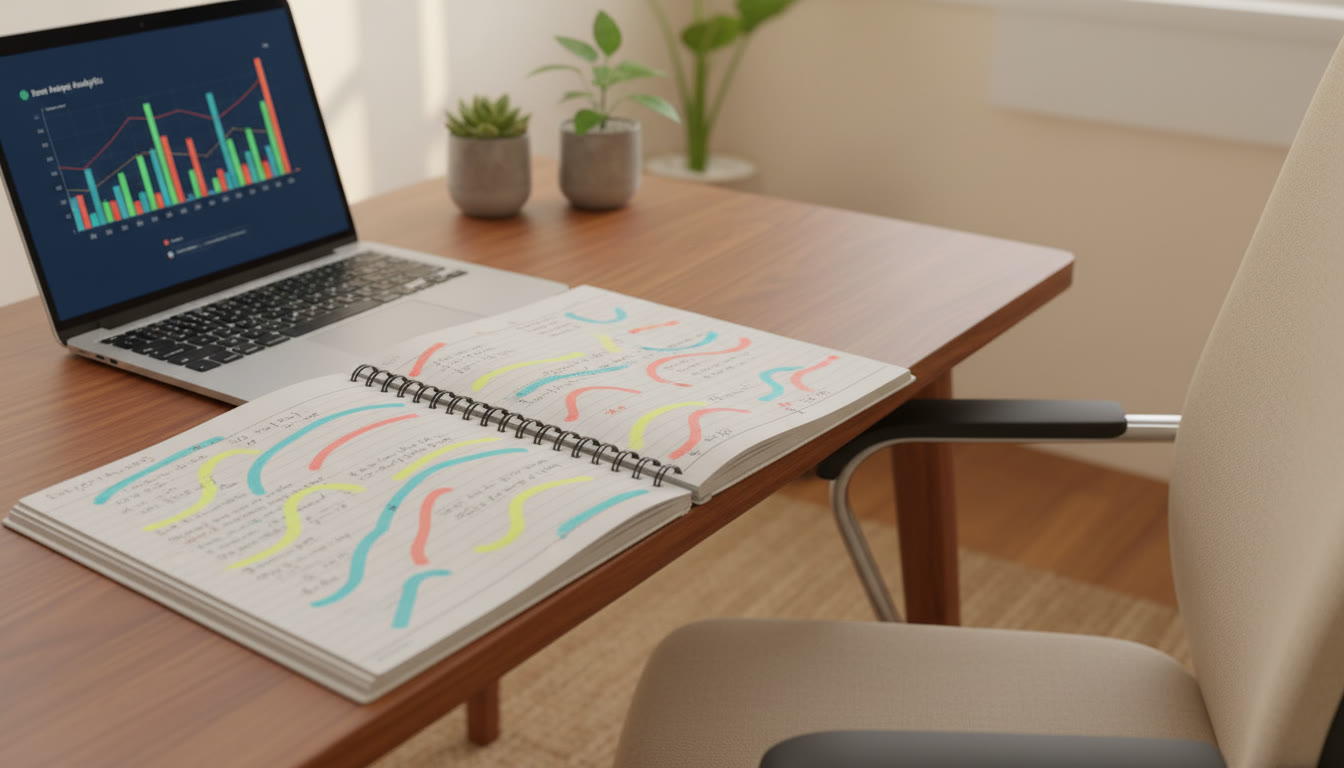
Turning mock results into action
Test results are only useful when they change your study plan. Here’s a simple loop that converts each mock into measurable growth:
- Take the mock under strict exam conditions.
- Immediately record feelings: which section felt slow, where you panicked, which question types took too long.
- Open analytics: separate conceptual mistakes from careless errors.
- Create a 48-hour micro-plan: one idea to fix each recurring mistake (e.g., redo 5 related problems, re-derive a formula, timed practice for that question type).
- Log each corrected mistake in a personal error diary so the same mistake does not repeat.
Error log: your most valuable study asset
A small, well-maintained error log does more than a hundred solved papers photocopied. Each entry should include:
- Question reference and reason for error (conceptual/careless/calculation/guess).
- Correct solution with one-line conceptual takeaway.
- Drill plan: 5–10 similar practice questions to remove the root cause.
Common mistakes aspirants make with test series (and how to fix them)
- Taking too many mocks without analysis: Fix by pairing every mock with a one-day analysis plan.
- Focusing only on score, not on pattern: Fix by tracking persistent errors, not just totals.
- Ignoring the negative-marking rule: Fix by training on calculated guessing and leaving questions where probability doesn’t justify risk.
- Copying solutions without understanding: Fix by forcing yourself to write your own short solution before reading the official one.
- Over-emphasis on shortcuts: Fix by ensuring you can still do the rigorous derivation; shortcuts are tools, not substitutes for concepts.
Sample analysis timeline after a full-length mock
- 0–1 hour post-test: Relax briefly, then note first impressions while fresh.
- 1–6 hours: Review every wrong answer and unanswered question; classify the error.
- 24–48 hours: Do targeted drills for weak topics identified in the mock analytics.
- 1 week: Re-test those topics in sectional or topic-wise mocks.
How personalized support enhances mock-test gains
Individualized feedback accelerates progress. If you pair mock practice with one-on-one guidance, you get two compounding benefits: tailored strategy adjustments and focused concept repair. Whether you need a weekly mentor to review error logs or short coaching sessions to fix a conceptual blind spot, personalized support keeps you accountable and laser-focused.
For students who opt for guided help, Sparkl‘s one-on-one tutors can align mock feedback with a study plan that fits your pace and weaknesses. Combining mock analytics and mentor-led correction speeds recovery from recurring mistakes.
When mentioning AI-driven insights, it’s helpful to use them as an additional lens — automated pattern recognition can flag trends across dozens of mocks that your eye might miss. Pair AI analytics with human tutoring to convert patterns into study steps effectively; for example, Sparkl‘s’ AI-driven reports can highlight persistent concept gaps and suggest focused exercises while a tutor explains the underlying ideas.
Quality over quantity: why selective mocks win
Many aspirants believe that more is always better when it comes to mock tests. In reality, the marginal benefit of extra low-quality mocks is low. A high-quality mock with a solid analysis session and targeted correction will typically move your score more than two or three shallow attempts without review.
Prioritize depth: complete analysis, error logging, and corrective drills for each full-length mock before moving on to the next one.
Mini checklist before you start a mock
- Set the clock and remove all non-essential devices.
- Prepare a quiet space with the required stationery or computer setup.
- Keep your error log, formula sheet, and rough notebook ready for post-test analysis.
- Decide your strategy for the test (first pass quick, second pass tackle medium-hard, third pass attempt only high-yield remaining).
When to shift gears: recognizing plateaus and how to break them
Plateaus are part of the process. If your mock scores stop improving, it’s time to change something: vary the test difficulty, increase the analysis intensity, or bring in focused tutoring for stubborn topics. The trick is to make a single strategic change at a time and measure its effect over 2–3 mocks.
Quick interventions to break a plateau
- Swap one regular full-length mock for an adaptive test that targets weaknesses.
- Introduce daily 30–40 minute focused drills on the weakest topic.
- Work with a mentor for a session on exam strategy or a stubborn concept.
Checklist: Is this test series right for your JEE goal?
- Does it provide realistic 3-hour full-length mocks with clear negative-marking rules?
- Are solutions concept-focused, with alternative approaches and derivations?
- Do analytics show topic-wise breakdowns and an error-log feature you can export?
- Does it let you simulate both CBT and OMR scenarios if you practice both formats?
- Can you pair the series with one-on-one mentorship or targeted tutoring when needed?
Final tips: small habits that compound
- Make analysis non-negotiable: a mock without review is practice without learning.
- Keep the error log short and actionable — a one-line fix for every mistake.
- Practice negative-marking control: leave questions where expected value is negative.
- Prioritize sleep and nutrition on mock days to build true exam stamina.
- Treat diagrams, derivations, and notes as study scaffolding — they train understanding but are not substitutes for crisp answer selection in MCQ formats.
Concluding academic note
A best-in-class test series pairs realistic 3-hour full-length mock practice with clear negative-marking rules, meaningful analytics, disciplined exam simulations, and a cycle of targeted correction. By treating each mock as an experiment — measure, analyze, and adjust — you convert practice into reliable performance gains and build the habits that deliver results under actual exam conditions.























No Comments
Leave a comment Cancel