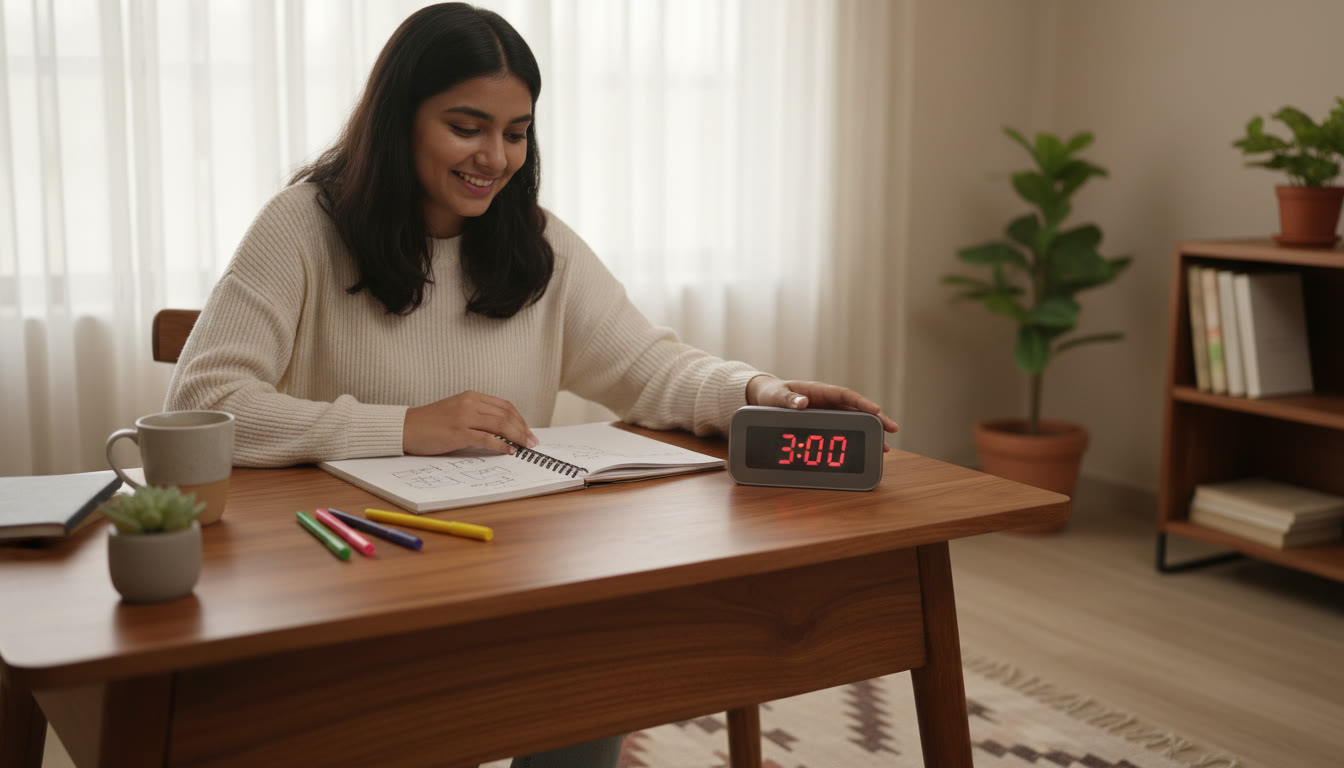

Why Most Students Waste Time After JEE Main
There’s a strange hush that follows the adrenaline of an exam like JEE Main. One moment you’re locked into physics problems and chemistry equations; the next, a calendar page turns and the momentum thins. It’s normal to breathe out—celebrate a little, rest the brain—but what turns that healthy pause into wasted weeks is almost always a set of predictable mistakes. This article is a friendly, practical wake-up call: why those days evaporate, what the real costs are (in mock-test performance and confidence), and how to convert every hour after Main into forward motion.
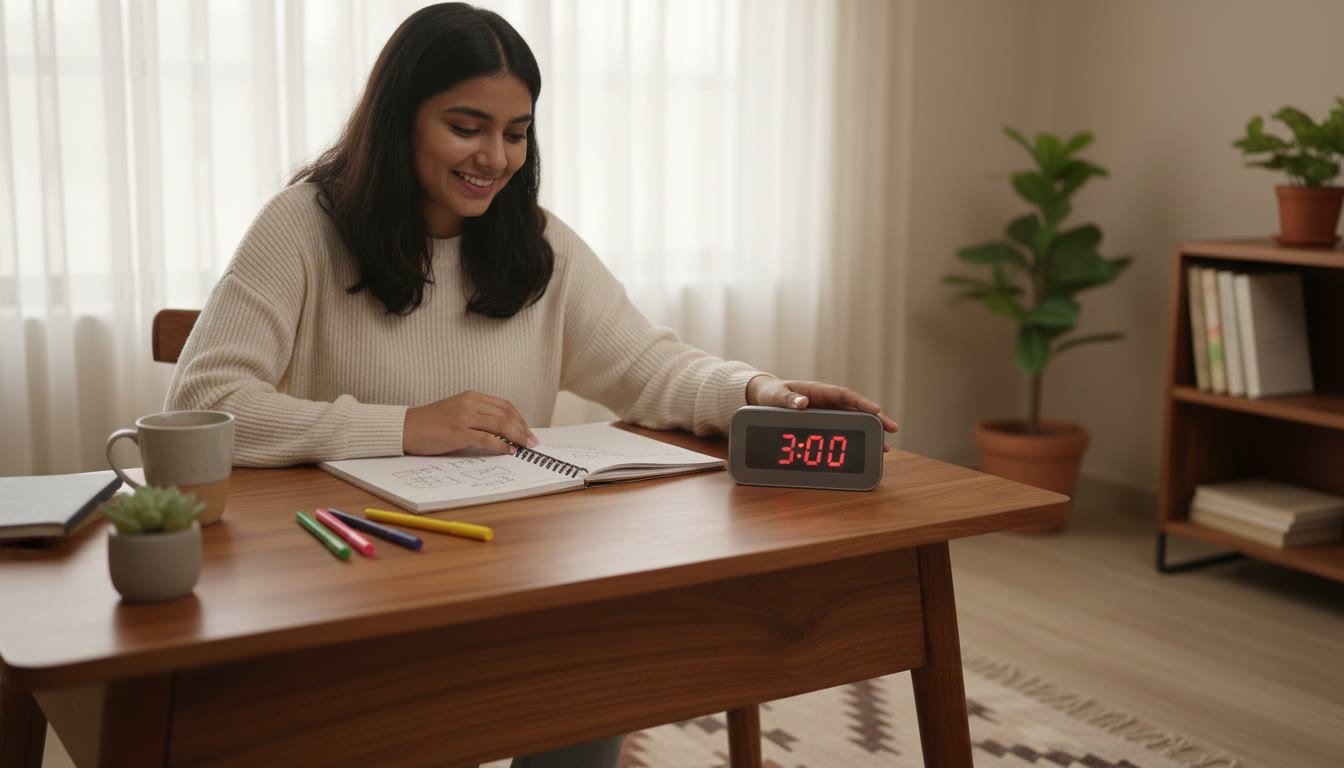
The post‑Main lull: it’s more than laziness
First, let’s be kind. The post-exam lull isn’t just laziness. It’s a cocktail of fatigue, decision friction, unclear goals, and a false sense of security. Students who were sprinting for months suddenly face choices: keep sharpening for an advanced attempt, pivot to college admissions, or spend time with family and decompress. That uncertainty combined with exhaustion often produces a stretched break that swallows prime preparation weeks.
Top reasons students lose time (and what to do instead)
- False victory lap: Celebrations are deserved, but an unscheduled month of idleness is not. Replace a long hiatus with a structured micro-break: two days of genuine rest, then a gentle restart with light revision and organization.
- Decision paralysis: Not knowing whether to focus on JEE Advanced, college counselling, or other paths shuts you down. Make a fast decision window: two days of clear pros/cons, then lock your target and make a 90‑day plan aligned to it.
- Misreading the exam format: JEE-style guidance relies on MCQ-based testing, timed three-hour full-length mock practice, strict negative marking, and disciplined answer marking (OMR or CBT). Students who treat the period as a time for casual reading rather than mock-driven sharpen-up undercut their edge. Prioritize practice that mirrors the exam format.
- Revising the wrong way: Spending weeks re-reading notes passively feels productive but isn’t. Swap passive review for active recall: solve problems, write derivations from memory, and attempt mixed-topic quizzes that mimic the unpredictable MCQ mix.
- Ignoring mock integration: Taking a mock once in a while won’t fix timing, elimination skills, or negative-mark handling. Integrate weekly full-length mocks early and often—simulate the exact three-hour test conditions.
- Burnout and social distractions: Phones, parties, and the ‘I’ll catch up later’ mindset sneak away days. Build short, high-quality study blocks and protect them fiercely.
Why timing, format, and discipline matter more than cramming
It’s tempting to think a few extra chapters added after Main will solve everything—but modern exam realities punish soft preparation. The JEE-style environment is centered on concise, multiple-choice questions with penalties for guesses. Whether your practice is on paper or computer, the skills that win are not only conceptual clarity but also timing judgment, quick elimination tactics, and calm OMR/CBT handling.
Two points to emphasize for clarity: the exam is best practiced as a three-hour, full-length mock that you respect like the real thing; and because marking systems don’t give descriptive partial marks for half-solutions, the technique you deploy must convert understanding into rapid, reliable answers under pressure. Treat diagrams, derivations, and your neatly kept notes as learning tools to get that reliability—not as a script you’ll try to reproduce under test stress.
Psychological traps that kill productive time
- All-or-nothing thinking: “I’ve missed a week, so I’ll start fresh next month.” Better: a small, immediate restart (two hours today, three tomorrow) rebuilds momentum quickly.
- Perfection paralysis: Trying to ‘perfect’ every weak topic before moving on leads to diminishing returns. Use the 80/20 rule: fix the common, high-frequency mistakes first.
- Comparison fog: Watching others’ posts or hearing peer plans can create paralysis. Keep your baseline—benchmarks from past mocks—and measure only against those.
A practical time‑management blueprint you can start tonight
Below is a compact, realistic blueprint you can adapt. It honors recovery, respects the test format (MCQ-driven and three-hour mock cadence), and forces measurable progress.
| Phase | Duration | Primary Focus | Daily Hours | Mock/Checkpoints |
|---|---|---|---|---|
| Reset & Decide | 3–7 days | Rest, goal clarity, quick diagnostics | 1–3 (light) | 1 short timed test, set baseline |
| Sharpen Fundamentals | 2–4 weeks | Targeted revision of high-yield topics | 5–7 | 1 full-length mock per week |
| Mock-Focused Sprint | 4–8 weeks | Full mocks, error logs, timed problem sets | 6–8 | 2 full-length mocks per week (one simulated, one review) |
| Polish & Exam Discipline | Final 2–4 weeks | Speed, elimination tactics, OMR/CBT practice | 4–6 (quality over quantity) | Frequent short mocks, last 3 full-length under strict conditions |
How to use the table—short explainer
- Reset: Two things matter—sleep and decision. If you’re undecided about the next step, list outcomes and pick one. A clear target directs every hour.
- Sharpen: Focus on subjects that give the biggest score-lift. Use active recall and mixed-topic problem sets to train retrieval, not re-reading.
- Mock sprint: Treat every full-length mock as a competition. Do the exam in three hours with realistic breaks and keep an error log.
- Polish: Practice OMR discipline (or CBT answer entry) and time-backed elimination techniques. This phase is about reducing avoidable mistakes.
Daily and weekly routines that actually work
Consistency beats marathon sessions. Here’s a flexible daily skeleton for a high-impact day:
- Morning (2–3 hours): Fresh problem-solving (physics/mechanics or a high-concentration topic).
- Midday (1–2 hours): Quick revision—flashcards, formula checks, derivations from memory.
- Afternoon (2 hours): Mixed-topic practice tests or chapter problems (timed).
- Evening (1–2 hours): Light review, error-log analysis, plan for next day.
- Night (30–60 mins): Relaxed reading, conceptual mapping—no heavy problem stress.
Use a Pomodoro rhythm (25–50 minute focused blocks) and protect your highest-quality study time—usually morning—for the hardest topics. Track your productive hours, not just time in the chair.
Mock-test mastery: how to make each three-hour test a ladder, not a lottery
- Simulate conditions: Do the full three-hour mock in one continuous block with no phone and a timer. If the real test uses OMR-style marking or CBT entry, practice that mode specifically.
- Timeboxing: Break the three hours into manageable segments mentally (for example, two focused blocks with a short strategy checkpoint between them). You decide the split based on your strengths—some students favor section-by-section, others choose mixed-topic phases.
- Negative marking strategy: When negative marking exists, avoid blind guessing. Use elimination: if you can exclude one or more options confidently, the expected value may justify an attempt. Train this in low-stakes quizzes first so the skill becomes intuitive on test day.
- OMR/CBT discipline: Practice accurate marking. For OMR-like tests, practice clean shading, no stray marks, and tracking your sheet against your rough work. For CBT, practice answer entry speed and verification—know how to flag and review.
- Error log: After each mock, immediately classify mistakes: careless slips, concept gaps, time trouble, or elimination failure. Spend the next two days fixing the highest-frequency categories.
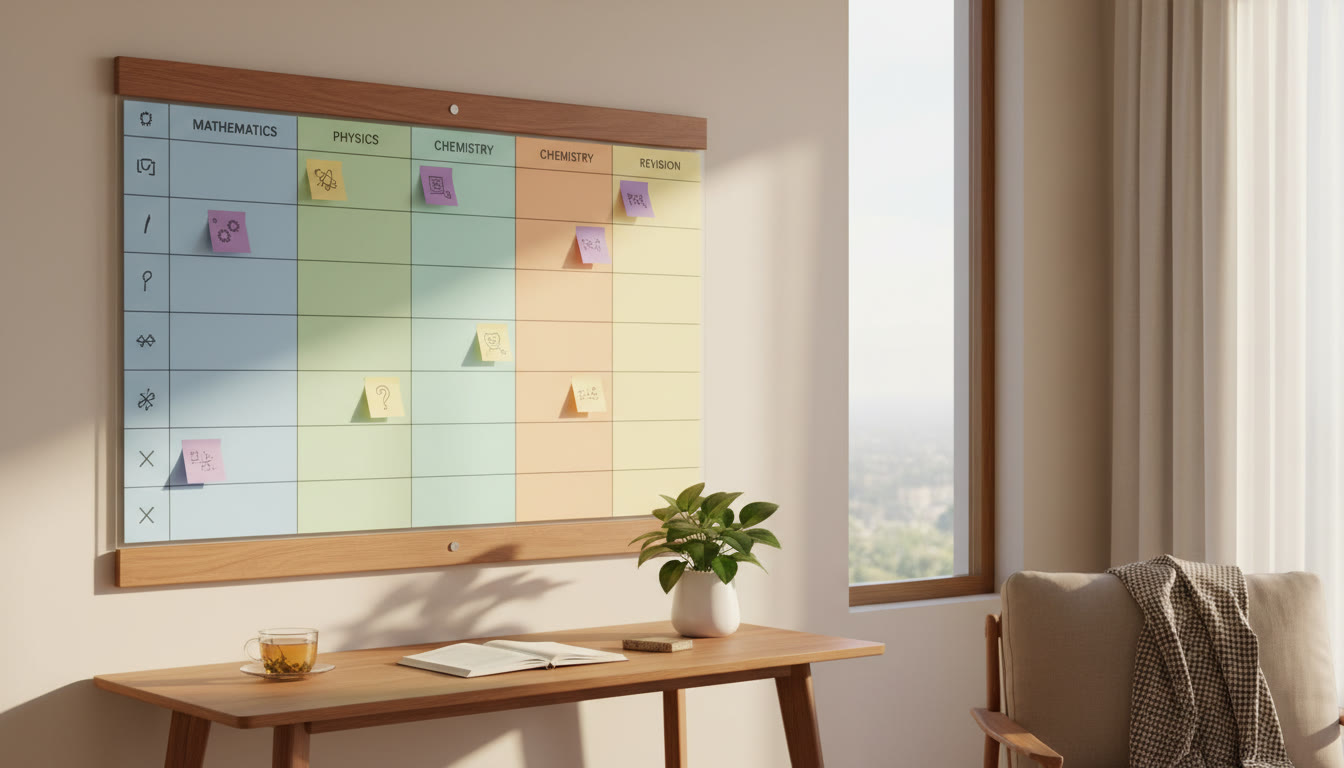
Smart tactics to stop wasting time and start capitalizing on every hour
Here are tactics that separate students who drift from those who improve measurably in weeks:
- Two-hour recovery rule: If you miss a day, do a two-hour recovery session the next day. Small consistent recovery beats sporadic all-nighters.
- Backward planning: Start from your next full-length mock score target and work backward to weekly micro-goals. This keeps practice tied to measurable outcomes.
- High-yield first: Identify the 20% topics that contribute to 80% of common MCQs in each subject. Invest first-time daily focus there before exotic topics.
- Active over passive: Replace passive re-reading with problem reproduction—write derivations, solve without looking, and teach a concept in 5 minutes to an imaginary peer.
- Accountability loop: Log daily wins and mistakes. A simple checklist—topics completed, mocks taken, errors fixed—keeps the progress visible and stops vague procrastination.
When personalized help speeds up progress
Some students benefit hugely from a short, focused period of guided work: one-on-one mentoring that sets a daily plan, corrects recurring mistakes, and provides tailored mock analysis. If you choose this route, pick a program that offers targeted 1-on-1 guidance, tailored study plans, expert tutors, and tools that surface the right next-step—like AI-driven insights that highlight weak areas in mock performance. Sparkl‘s personalized tutoring can fit naturally into such a plan, helping to translate mock data into precise daily actions without adding noise.
How to measure progress every week (simple but unforgiving metrics)
Good metrics are simple. Pick three and stick to them for the week:
- Mock score or percentile change: The headline number—are you improving under timed conditions?
- Error-type distribution: Are your mistakes shifting from concept gaps to speed/careless errors?
- Recovery rate: How many previously weak topics have you restored to ‘safe’ status (able to solve 8/10 problems correctly)?
If your mock scores aren’t moving after two weeks, the problem is rarely more hours—it’s usually practice quality or strategy. Use the error log to diagnose.
Examples: three short case studies (fictional but typical)
- Arjun—lost momentum from celebration: Spent three weeks socializing after Main. Recovered by applying the two-week restart plan: two light mocks in week one and a focused 30-day topic map. Result: regained baseline and improved time management within three weeks.
- Neha—uncertain target: Couldn’t choose between test retake and admissions. She set a two-day decision sprint and committed to the Advanced track; aligned daily hours accordingly and began weekly full-length mocks—removing paralysis and improving confidence.
- Ravi—practiced without exam format: He solved many problems but rarely under timed conditions. Once he switched to weekly 3-hour mocks, studied OMR/CBT practice, and trained elimination techniques, his real-test accuracy rose sharply.
Common pitfalls to avoid (quick checklist)
- Don’t confuse more hours with better hours.
- Don’t wait for “perfect” study conditions—start with what you have and tighten quality.
- Don’t skip mock reviews. The review is where learning compounds.
- Don’t assume descriptive-style partial credit exists—convert understanding into clean, final answers.
Final academic takeaway
Hours after JEE Main are not just empty calendar cells—they’re opportunities to convert effort into measurable exam skills: timing, elimination, mock resilience, and disciplined answer marking. Replace vague breaks with short, structured resets; anchor every week to full-length three-hour mock practice; log and fix errors; and prioritize active recall and mixed-topic practice over passive reading. When you build this cycle—simulate the exam, learn from it, and fix the weak links—you stop “losing time” and start turning each hour into clear, test-ready gains.






















No Comments
Leave a comment Cancel