
Why a timetable is your compass (not a cage)
Let’s be honest: a timetable isn’t a rigid punishment; it’s a compass that points your daily effort in the direction of big goals. For JEE Main preparation that compass has to respect how the exam works — multiple-choice questions, a full-length test of roughly three hours, strict OMR discipline and negative marking for incorrect answers — and it has to match the syllabus: Physics, Chemistry and Mathematics. When you treat the timetable as a living tool instead of an unbreakable rule, you build momentum, avoid burnout and get far better at converting study time into exam performance.

Start with a reality check: diagnose before you design
Before you draft your dream routine, find out where you actually stand. A realistic timetable starts from real data: how long you can study without losing focus, which topics take you an hour and which take a week, and how many conceptual problems you can solve in a practice slot. Take one full-length diagnostic under exam-like conditions: three hours, OMR-style answering (or mock-platform behavior), strict timing and a full MCQ set. The goal is less about your raw score and more about the patterns you see — time-eating topics, careless mistakes under pressure, and the subject where speed is your weakest link.
How to simulate a proper diagnostic
- Choose a 3-hour block with no interruptions and switch off your phone or keep it out of reach.
- Practice filling answer sheets or using the mock interface; treat OMR discipline seriously — neat filling, no stray marks.
- Note timing per section and flagged questions; track how long you spend on each question type.
- Immediately after, review mistakes but don’t dive too deep — record the root cause (concept gap, calculation error, misreading the question, or negative-marking risk).
Set exam-aligned goals: clarity beats vagueness
Goals translate a timetable from a list of tasks into measurable progress. Break goals into three layers: outcome (target score range or rank band for this study cycle), subject goals (concepts and topic coverage), and tactical daily goals (number of problems, pages of theory, or hours of revision). Keep goals specific: instead of “improve Physics,” try “finish and practice all electrostatics problems in two weeks” or “raise accuracy in coordinate geometry to 85% in four full-length mocks.”
Make goals flexible and reviewable
- Weekly checkpoints: small enough to be actionable; use them to nudge the timetable.
- Monthly milestones: larger targets for topic coverage and test performance.
- Allow buffer time for unpredictable slowdowns and quick wins for motivation.
Designing a weekly timetable: balance learning, practice and rest
A week is a great unit: long enough to accomplish meaningful work and short enough to iterate. A simple rule of thumb is to rotate focus while keeping daily micro-goals. Early in a cycle, more time goes to learning new concepts; later, practice and full-length mocks take center stage. Below is a sample daily template that you can adapt to your school and personal rhythm.
| Time Slot | Activity | Purpose |
|---|---|---|
| 05:30 – 07:00 | Quick revision + problem warm-up (30–45 min) | Strengthen memory and activate focus |
| 07:30 – 09:30 | Deep learning session (new theory / school topics) | Undisturbed conceptual study |
| 10:30 – 12:30 | Practice problems (topic-based) | Apply concepts and build speed |
| 15:00 – 17:00 | Mixed problem set / previous-day doubt resolution | Consolidation and accuracy work |
| 18:00 – 20:00 | Mock section / timed practice or coaching session | Exam simulation and time management |
| 21:00 – 22:00 | Light revision + plan next day | Memory reinforcement and micro-planning |
How to distribute subjects across the week
- Rotate heavy subjects so your brain gets variety: for many students, alternating Physics and Mathematics intensive days keeps energy steady.
- Chemistry often benefits from shorter, frequent sessions (organic reactions, inorganic facts, and physical chemistry problems suit different rhythms).
- Reserve one or two slots per week for a full-length timed practice or sectional mock to stay battle-ready.
Daily micro-plan: convert hours into focused tasks
A big timetable looks promising, but small wins build consistency. Divide each study block into 25–50 minute focused slots with 5–15 minute breaks — the exact rhythm depends on your concentration span. At the start of each slot write a concrete task: “Solve 12 mechanics problems,” “Finish one organic reaction-set and make a 1-page summary,” or “Revise three solved examples from integrals.” End each slot by noting one takeaway and one correction for the next attempt.
Checklist to run each day
- One focused learning session: new concept + short notes.
- One problem-solving session: 8–15 targeted questions.
- Short revision of previously learned material (active recall, not rereading).
- Light physical activity and at least one social or relaxation break.
Month-wise and cycle planning: shift gears intentionally
Think in cycles: early-cycle (concept build), mid-cycle (skill building + incremental mocks), and final-cycle (high-frequency full-length mocks with targeted revision). As you move from learning to practice, reallocate hours: decrease raw learning time and increase timed practice and error analysis. Track coverage: by the end of each cycle you should have completed a full pass of the syllabus and a prioritized list of weak topics.
Example milestone map (for a study cycle)
- Cycle start (Weeks 1–4): finish the first pass of priority chapters; weekly sectional tests to check concept absorption.
- Mid-cycle (Weeks 5–10): problem-heavy practice, weekly full-length mock every 7–10 days, begin error logs.
- Final cycle (last 3–4 weeks before the test window): high-frequency full-length mocks (simulate exam day), consolidation notes and light revision, strict OMR discipline practice.
Mocks, marking strategy and OMR discipline
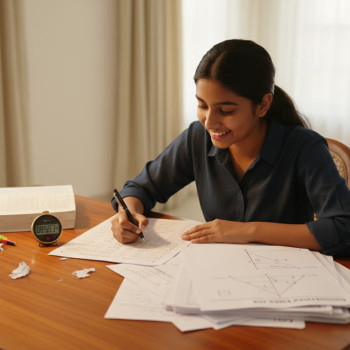
Mocks are the mileage you need to succeed. Regular full-length, timed mock tests (three-hour simulations) teach pacing, stress management and how negative marking affects choices. Practice with OMR-style answering — learn to fill bubbles cleanly and manage time so you don’t rush the last 15–20 minutes. Remember: MCQ format means no partial credit — focus on accuracy and calculated risk taking.
Smart mock-test routine
- Before the mock: review only high-yield formulas; avoid learning new topics on the same day.
- During the mock: stick to a plan (time per subject/section) and flag questions to revisit.
- After the mock (same day): do a fast pass to fix glaring mistakes; within 48 hours, do a deep error analysis and update your timetable to address recurring gaps.
Time allocation tactics for the exam day
On exam day you don’t need a perfect plan, you need a reliable one. Allocate time based on the number of questions and your personal strengths. A common approach: attempt higher-confidence questions first to secure marks quickly, leave time for medium-difficulty items, and finally re-visit flagged questions. Use the last 10–15 minutes for a calm recheck of marked answers and to fix any stray OMR errors. Never assume partial marks for multi-step reasoning; MCQ scoring rewards correct final choices only.
Attempt strategy (practical tips)
- Scan the full paper briefly in the first 8–10 minutes to tag easy and sure-shot questions.
- Attempt easy questions first to build momentum and avoid penalty-prone guesses.
- If negative marking hurts your strategy, prioritize accuracy over random attempts; use elimination to increase the probability when you guess.
Study habits, tools and active techniques
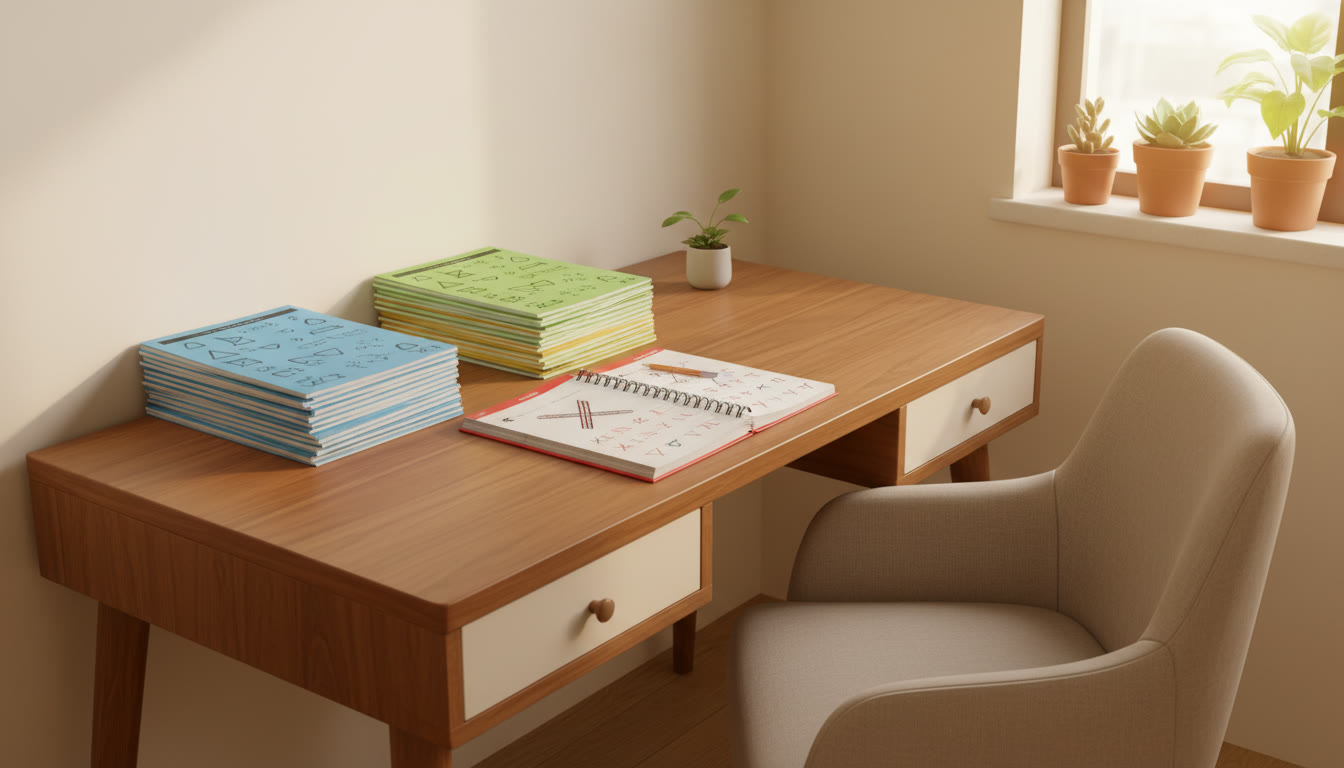
Quality of study beats quantity. Use active recall (test yourself), spaced repetition (review at increasing intervals), and interleaving (mix problem types) to strengthen memory and transfer. Keep short, hand-written formula sheets and one consolidated error log for each subject. For problem practice, time yourself and then immediately check solutions — delayed feedback slows learning. Treat diagrams and derivations as tools to build understanding and speed, not as exam-answer crutches.
Useful routines to adopt
- End each study day with a 10-minute review and plan for the next day.
- Keep a weekly performance sheet: time studied, topics completed, accuracy in practice tests.
- Rotate subjects to avoid fatigue and to encourage cross-topic problem solving.
How to fix slippage: adjust without panic
No timetable survives contact with real life perfectly — missed study days, illness, or school workload happen. When you fall behind, don’t double the hours aggressively; instead, re-prioritize. Convert low-impact tasks into daily micro-reviews, cut passive activities (aimless reading), and focus the reclaimed time on the top three weak topics. Use a two-week sprint to recover momentum, then return to the usual rhythm. The key is to be honest with metrics — time logged and mock-test accuracy — not wishful thinking.
Tracking progress: simple metrics that matter
Don’t track everything. Track what tells you whether you are getting closer to exam-readiness: time on focused study, mock-test scores (and trends), topic-wise accuracy, and the size of your active error log. Below is a compact tracking table you can keep and update weekly.
| Metric | What to record | Weekly target |
|---|---|---|
| Focused study hours | Hours of concentrated study (not counting passive reading) | Set based on your schedule; aim for consistency |
| Mock accuracy | Average accuracy across full-length mocks | Improving trend is more important than absolute number |
| Topic completion | Number of priority topics completed and practiced | Complete planned topics for the cycle |
| Error log size | Repeat mistakes flagged and resolved | Decrease over time |
When to get help — and how to make it focused
Struggling with a persistent gap? Targeted, 1-on-1 guidance can speed recovery, especially for tricky subjects like Mathematics where tailored problem sequences help. If you explore tutoring options, prefer solutions that offer tailored study plans, expert tutors who explain step-by-step reasoning, and tools that give data-driven insights on your weaknesses. For example, Sparkl‘s personalized tutoring can provide one-on-one guidance, tailored study plans, expert tutors and AI-driven insights to help your timetable adapt as you improve.
Sample micro-week to try next week
Here’s a compact example you can copy and adapt for a busy week: three focused study blocks a day (early morning, late morning, evening), one sectional timed practice mid-week, and one full-length mock on the weekend. Keep one evening completely free for relaxation and a weekly 30–45 minute review to plan the next week.
Final tips — tiny habits that yield big results
- Make the first 30 minutes of each day count: quick revision of yesterday’s corrections keeps memory fresh.
- Use pen-and-paper for problem practice to mirror exam conditions; digital practice is great but physical OMR habit matters.
- Keep an “error-first” approach: solving a mistake properly is more valuable than solving a new, similar problem.
- Respect sleep and short exercise; energy management is a secret multiplier for concentration and retention.
Following a timetable for JEE Main is not about copying someone else’s schedule; it is about building a repeatable, exam-aligned rhythm that fits your life and evolves with your progress. Use diagnostics to start, make clear goals, practice under real exam conditions, and iterate weekly. With steady tracking, focused mock practice, and small, sustainable habits, timetables become powerful tools — reliable guides that keep you consistently moving toward your target.
Conclusion
A well-built timetable translates broad ambition into daily, measurable action: diagnose honestly, prioritize with exam alignment for Physics, Chemistry and Mathematics, practice under three-hour mock conditions with OMR discipline and awareness of negative marking, track a few meaningful metrics, and adjust the plan based on data. This disciplined, flexible approach trains both skill and timing — the two critical ingredients for success on the JEE Main stage.




















No Comments
Leave a comment Cancel