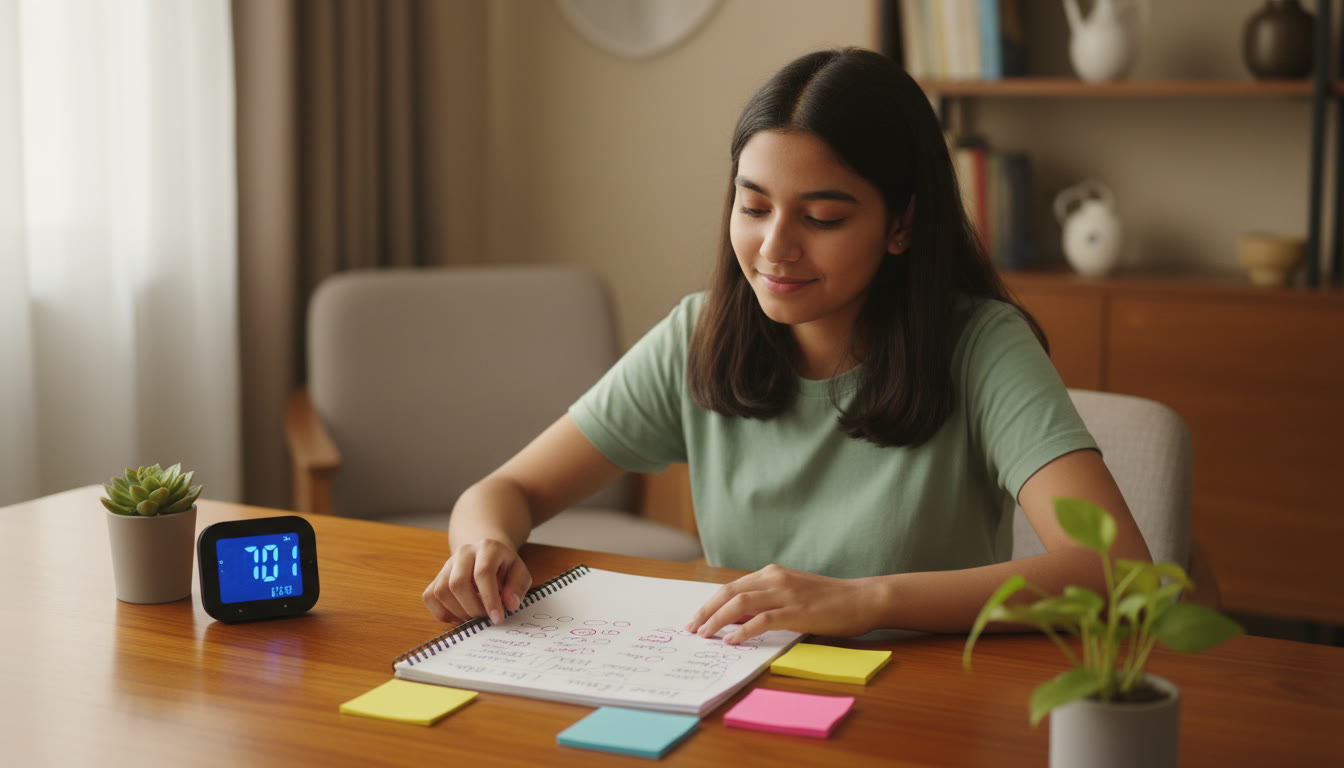

Last-Week Playbook: How to Target a 99 Percentile in JEE Main
This final seven-day stretch isn’t a sprint to learn new chapters — it’s a precision operation. Think of it as tuning an engine: you don’t rebuild it now; you check the fuel, the spark plugs, and the tyre pressure. In JEE Main’s exam format — objective questions with negative marking, three-hour full-length testing, and a strict answer-entry discipline — your aim for the last week is to sharpen accuracy, speed, and calm. This post lays out a practical, human plan you can actually follow without turning into a revision machine.
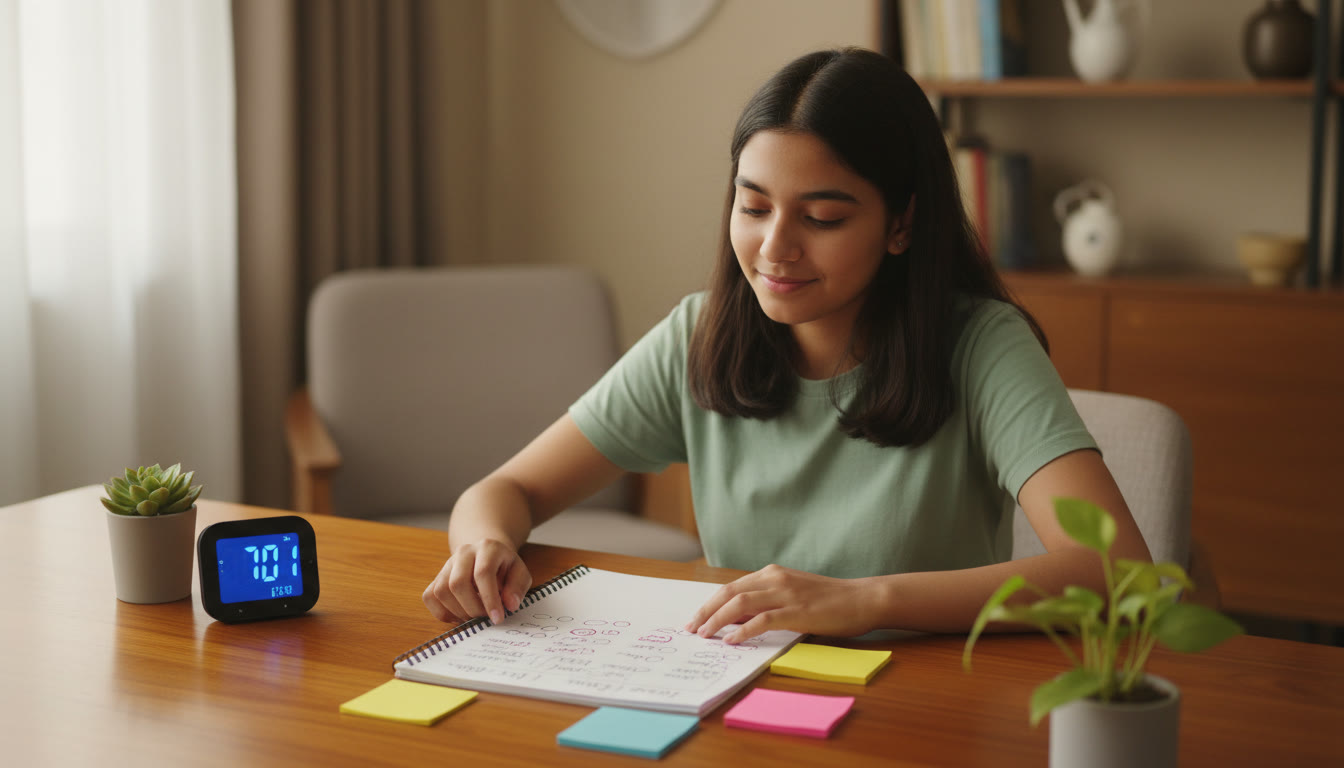
What the last week is — and what it is not
The last week is the consolidation phase. It’s not the time to chase entire new chapters or dramatize every tiny weak point. Your brain needs predictable, repeatable patterns now: short focused practice, careful mock-taking, pinpointed doubt-clearing, and restful recovery. Treat diagrams and derivations as learning tools — quick visual hooks to recall concepts — not as items to be rewritten from scratch during the final days.
Core principles to carry into the week
- Prioritize accuracy over quantity: With negative marking in MCQs and numerical-answer tasks, a small number of careless mistakes can cost you far more than leaving a question unanswered.
- Simulate exam conditions: Do at least one full three-hour mock under strict timing; treat it like the real paper — no phone peeking, no notes, and follow the exact breaks and rules you’ll have on exam day.
- Iterate quickly: For each mock, spend as much time analyzing mistakes as you spent taking the test. Identify whether errors are conceptual, careless, or strategic (time allocation, question selection).
- One-topic micro-revisions: Short, sharp sessions on specific formulae or problem-typologies (like projectile problems, limiting reagents, or definite integrals) beat unfocused re-reading.
- Sleep and routine matter: Cognitive sharpness comes from good sleep, hydration, and food that keeps energy stable.
How to distribute focus: the seven-day blueprint
Below is a compact day-by-day plan you can adapt according to strengths and weaknesses. The table emphasizes mock practice, focused revisions, and active error-correction.
| Day | Primary Focus | Practice | Time Allocation (approx.) | Mindset Task |
|---|---|---|---|---|
| Day -7 | Full-length mock + complete review | One 3-hour full mock (exam-like conditions) | Mock: 3 hrs; Review: 3–4 hrs | Diagnose error types: careless/concept/time |
| Day -6 | Weak-subject focus (major gap) | Targeted practice sets + quick formula sheet | 3–4 hrs focused practice; 2 hrs mixed problems | One-page summary for that subject |
| Day -5 | Second full mock + focused review | Another 3-hour mock; deep review of wrongs | Mock: 3 hrs; Review: 3 hrs; Light practice: 1 hr | Convert concept errors into 1–2 solved examples |
| Day -4 | Speed and accuracy drills | Timed sectional practice (45–60 min blocks) | 2–3 hrs drills; 1–2 hrs revision | Practice ‘first-pass’ quick wins |
| Day -3 | Third full mock (or strong sectional mock) | 3-hour mock OR 3 shorter mocks focused by subject | Mock: 3 hrs; Review: 2–3 hrs | Polish mark-selection habits and time splits |
| Day -2 | Light revision + error consolidation | One short mock (90–120 min) or selective question sets | 2–3 hrs light practice; 2 hrs formula review | Restorative routines, short walks, breathing |
| Day -1 | Minimal practice; logistics & calm | 30–60 min light revision of key formulas | 1–2 hrs total; early sleep | Pack documents, plan commute, mental rehearsal |
Mock tests: how to take them and how to review them
Treat each mock like a laboratory experiment. The value is in analysis, not in the score alone. After every mock, do the following in this order:
- Immediate cooldown: Take a 20–30 minute break after the mock. Don’t start marking immediately when adrenaline is high.
- Score and categorize: Mark right/wrong/skipped, then tag every wrong answer as careless, concept, or tactical (time/choice). This helps you prioritize the fix.
- Fix one example per conceptual error: For each concept-type mistake, solve one representative problem slowly and write a two-line action note you can review quickly later.
- Limit review time: Don’t spend 8 hours on one mock. Aim for balanced analysis: equal time on mistakes, and ten minutes to record quick wins and a 1-page cheat sheet.
In-exam tempo and question selection strategy
Your goal is to maximize accurate attempts while minimizing risky guesses. A simple three-pass approach works well:
- First pass (60 minutes): Answer the very easy, direct questions you can solve in under 2–3 minutes. This secures high-confidence marks and calms you down.
- Second pass (70–80 minutes): Tackle moderate-difficulty problems. Spend a bit more time here but avoid traps; if a question becomes messy in the first 7–8 minutes, flag and move on.
- Third pass (remaining time): Attempt hard problems or revisit flagged ones. Use any remaining minutes to check arithmetic and confirm marked answers.
Remember: negative marking makes wild guessing costly. Favor selective attempts and corrections. For numerical-answer questions, double-check units and significant digits when relevant. For objective MCQs, be cautious with elimination methods that leave you unsure — a clear deduction is safer than a risky guess.
CBT and OMR discipline — what to practice now
JEE Main-style exams emphasize correct answer entry and time management. Even if your practice is mostly on paper, simulate the exam interface where possible. Key habits to build:
- Follow on-screen workflows in a computer mock: move through sections exactly as the real interface allows, mark for review reliably, and practice changing answers quickly.
- If you ever practice OMR-style past papers, maintain strict pencil/pen discipline: no stray marks, erase cleanly, and darken marks fully so scanning is unambiguous.
- Practice filling the candidate details and test navigation under time pressure so that the first few minutes of the real exam aren’t spent fumbling the interface.
Subject-specific last-week tips (Physics, Chemistry, Mathematics)
Keep revision compact and action-oriented: one-page formula sheets, one solved example per tricky topic, and one common quick trick for speed.
- Physics: Focus on conceptual clarity — mechanics, electricity, optics — and solve 5–10 representative problems in each area. Use dimensional checks to catch silly mistakes.
- Chemistry: Keep inorganic recall crisp (tables and reactions), practice stoichiometry and equilibrium numerical problems, and for organic, rehearse mechanism-recognition shortcuts and reaction patterns.
- Mathematics: Keep theorems and standard integrals at your fingertips. Practice application problems that appear often (limits, derivatives, integrals, coordinate geometry), and do short timed sets to preserve speed.
How to use targeted help in the final stretch
If you’re resolving doubts in the last week, preference goes to quick, high-impact interventions: a 30–60 minute doubt-clearing session on a stubborn topic, a one-page summary prepared by an expert, or a guided mock-review where someone helps you classify errors. Personalized 1-on-1 guidance can save hours because it quickly identifies the root of repeated mistakes; tailored study plans and AI-driven insight into your mock patterns can highlight where small changes yield big score improvements. For many students this kind of focused support right now is the most efficient use of time — for example, Sparkl‘s approach to one-on-one doubt resolution and tailored plans helps convert mock mistakes into durable gains.
Quick, practical checklists (do these each day)
- Morning: 30–45 minutes of a ‘power warm-up’ — 5 quick MCQs per subject and one formula review.
- After a mock: 20–30 minute physical break, then structured analysis for 2–3 hours.
- Evening: 30–60 minutes of light review (one-page notes, formulas, and error flashcards).
- Night: Wind-down routine; avoid heavy screens for an hour before sleep.
Nutrition, sleep and mental rehearsal
Simple and practical wins matter: avoid drastic diet or sleep changes. Eat balanced meals that avoid sugar crashes, hydrate steadily, and keep caffeine stable — last-minute spikes can disturb sleep. Practice two-minute breathing exercises before study sessions and visualise the exam flow: entering the center, logging in, scanning the paper, and calmly doing the first five questions. These short mental rehearsals reduce anxiety because they replace uncertainty with routine.
Common last-week pitfalls and fixes
- Pitfall: Obsessing over low-frequency topics. Fix: Prioritize topics that carry predictable weight and patterns; tuck rare edge-cases into a compact note for later.
- Pitfall: Over-practicing one subject at the expense of overall balance. Fix: Keep at least a daily touch on all three subjects—even if brief—to avoid cold-start losses on exam day.
- Pitfall: Endless, unstructured note-taking. Fix: Convert long notes into 1–2 page cheat sheets per subject; these are your only papers to glance at during short revision slots.
Example — turning a mock mistake into a durable fix
Suppose you missed 3 projectile motion problems in a mock. Instead of redoing 30 random problems, do this:
- Classify the errors: were they sign mistakes, forgetting component resolution, or misreading data?
- Rewrite one canonical solution slowly, annotating each step with the physical idea (why we take horizontal and vertical separately, assumptions used).
- Create a 3-point trigger list (for projectile: resolve components, check time symmetry, confirm sign of vertical displacement) and rehearse this trigger list on the next 5 similar problems under 10 minutes total.
This micro-loop (diagnose → one slow solution → trigger list → timed repetition) is far more effective in the last week than broad re-practice.
Simple scoring targets and what they mean
Rather than chasing an exact raw score — which can fluctuate between sessions — set process goals for each mock:
- Accuracy target: Aim for clean accuracy on the first pass (e.g., 90% of first-pass attempts correct).
- Attempt target: Aim for a steady number of attempts that reflect your practice norms rather than pushing attempts higher artificially.
- Error reduction target: Reduce careless errors by half across two mocks by using a single corrective habit (e.g., always rewrite numbers before final entry).
Final-day logistics and exam-hour choreography
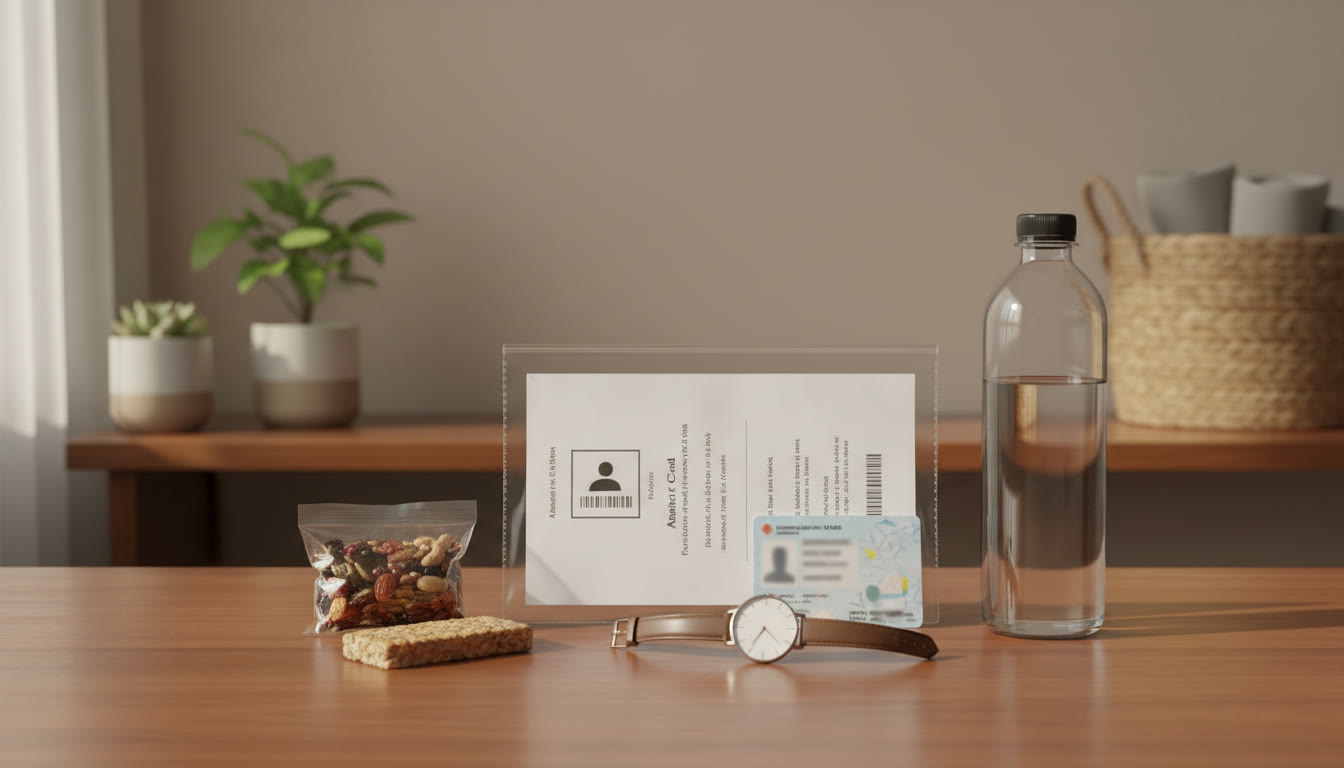
- Pack essentials the night before: admit card, valid ID, comfortable clothes, simple watch, snack and water (as allowed), and any permitted stationery.
- Leave early: account for traffic and a quiet buffer so you arrive calm. Use the waiting time to read a clean one-page summary of key formulae rather than attempting new problems.
- First ten minutes in the exam: breathe, skim the entire paper to pick clear first-pass questions, and note time checkpoints on the margin (for example: 60/120/180 minutes).
Closing perspective — how small changes move percentiles
At high percentiles, gains are marginal but powerful: one fewer careless mistake, a single improved time split, or a clearer method for a recurring concept can swing your position. Think in terms of fixing repeating errors, not adding vast new knowledge. Short, intentional practice loops, disciplined mock simulation, and calm routines are the multiplier that turns your final week into performance, not panic.
Use the structure above as a scaffold: adapt it to your strengths, keep your review material compact, and keep practicing under the same constraints you’ll face on exam day. The last week is about converting preparation into precision — clear habits, sharp analysis, and steady rest produce the best outcomes.
Conclusion
Focus on accurate, timed practice; learn from each mock with a short, action-oriented review; keep formulas and high-yield fixes on one-page summaries; prioritize sleep and routine; and manage on-test tempo through a disciplined three-pass approach. These concrete habits in the final seven days translate practice into the kind of consistency that underlies a 99 percentile performance.























No Comments
Leave a comment Cancel