

Slow Speed, Smart Rank: Why being slow doesn’t mean you can’t climb ranks
If you read every line twice, check every sign carefully, and take the scenic route to answers, you’re not broken — you’re careful. That carefulness is a strength for competitive exams like the JEE when it’s combined with deliberate speed work. This guide treats your careful approach as an advantage and gives practical, exam-oriented ways to convert accuracy into faster performance. We’ll walk through how to set baseline numbers with a full-length 3-hour mock, how to build micro-skills that shave minutes off problems, how to handle MCQ negative marking and answer-sheet discipline, and how to use data from mocks to improve week by week.

The JEE context you should keep in mind
Treat every mock as a close cousin of the actual test: most JEE-style papers are primarily MCQ-based, run in a roughly 3-hour window, include negative marking for incorrect choices, and reward clean answer marking and interface discipline (OMR-style accuracy for paper mocks; careful use of the CBT navigator for online mocks). Syllabus alignment centers on Physics, Chemistry and Mathematics. Importantly, these papers typically do not award partial credit for an incomplete calculation in an MCQ — accuracy in final choice, plus speed, wins ranks.
Why slow solvers have a secret edge
Slow solvers usually have deeper conceptual foundations and a lower error rate. They catch subtleties, avoid careless mistakes, and often arrive at elegant solutions. The missing piece is speed. Instead of rewriting who you are, we’ll add tools and habits so your accuracy remains while your time per question falls steadily.
Start with a realistic diagnostic: measure where time goes
A meaningful plan starts with data. Take one full-length, timed mock in real conditions (3 hours, no phone, mock interface or OMR sheet as appropriate). Track these numbers:
- Total questions attempted
- Correct / incorrect count (accuracy %)
- Average time per attempted question (overall and by subject)
- Number of questions left unanswered intentionally
- Type of error: conceptual, calculation, silly, reading-misread
Record them immediately after the test. Without accurate baseline numbers you’ll chase vague improvements instead of measurable ones.
Sample baseline-to-target table (example to adapt to your numbers)
| Metric | Baseline (your mock) | 4-week target | 8-week target | Exam-day aim |
|---|---|---|---|---|
| Total attempted (out of 90) | 48 | 55 | 62 | 70+ |
| Accuracy | 72% | 76% | 80% | 85%+ |
| Avg time / question | 3’40” | 3’10” | 2’40” | ~2’20” |
| Subject-wise steady time (P/C/M) | ~80/70/90 min | 75/65/80 | 70/60/70 | ~65/55/60 |
Concrete speed-building strategies you can use daily
1. Micro-sprints: small bets, big wins
Do focused, timed drills of 15–30 minutes daily instead of only long sessions. Examples:
- 15 minutes: 8 quick algebra questions — focus purely on speed, not perfection.
- 20 minutes: 6 physics numericals where you practice one-step approximations.
- 30 minutes: organic reaction recognition drill — identify products only.
Micro-sprints teach your brain to start fast and trust the first structured approach rather than overthinking every detail.
2. Templates and a personal ‘shortcut bank’
Create one-page templates for recurring problem types (e.g., projectile motion template, common integrals, standard thermodynamics shortcuts, coordinate geometry forms). When you see a problem during a test, match it to a template and apply the sequence — this saves time compared to deriving the approach from scratch.
3. The triage routine: read, decide, execute
Adopt a three-pass strategy in the exam:
- First pass (30–40 minutes): scan all questions and solve the clear, fast ones immediately — aim to secure the low-hanging marks.
- Second pass (next 90 minutes): handle medium-difficulty problems you can solve reliably with reasonable time.
- Final pass (remaining time): attempt tough or time-consuming problems only if you have a clear plan and the time allowance.
Flagging questions to return to and strict time limits per pass prevent deep dives into single problems early on.
Exam mechanics you must master
OMR/answer-sheet discipline and CBT fluency
If you practice on paper or use paper mocks, replicate OMR marking: fill bubbles cleanly with the recommended pen, avoid stray marks, and practice filling candidate details quickly and without error. If your mock is computer-based, get fluent with the on-screen navigator: learn how to mark for review, change answers quickly, use built-in timers if available, and manage the rough area. Small slips in marking or navigation cost avoidable time.
Negative marking tactics
For MCQs with penalty for wrong answers, avoid random guessing. Use elimination: cross out options that are impossible, then if you can reduce choices to two, weigh the expected value. When you’re slow but accurate, your strength is elimination — cultivate it. If you can eliminate two options reliably, guessing between the remaining two can be a calculated decision, not a gamble.
Subject-by-subject speed hacks for slow solvers
Physics: sketch, simplify, and estimate
- Always draw a tiny diagram — it reduces misreading and makes equations visible immediately.
- Use dimensional checks to eliminate incorrect options fast.
- When algebra gets heavy, check for symmetry, limiting cases or plug a simple numeric example to test options.
Chemistry: patterns and memory pockets
- Organic: recognize reagents and product patterns; keep reaction maps ready.
- Inorganic: flashcard quick-recall for group trends and common exceptions.
- Physical: memorize core formulae and practice common numerical types so that the arithmetic becomes routine.
Mathematics: answer-checking and option-play
- When options are numeric, plug choices in reverse — sometimes faster than algebraic work.
- Use standard factorization patterns and small-value checks to eliminate several choices quickly.
- Train with timed problem-sets so standard solution steps become muscle memory.
Reviewing mocks: turn mistakes into time gains
Review every mock like a detective. Don’t only mark what was wrong — log how long you spent on each question and why. Create an error log with these columns: Question ID, Topic, Time spent, Mistake type, Correct approach, Time-saving tweak next time.
| Question ID | Topic | Mistake Type | Time Spent | Fix for next time |
|---|---|---|---|---|
| Phy-23 | Rotational dynamics | Algebra slip | 12 min | Use moment-of-inertia template, recheck sign at step 2 |
| Math-45 | Integration | Picked long route | 18 min | Try substitution or option-plugging first |
| Chem-11 | Organic reaction | Misread reagent | 8 min | Circle reagents in the question and map to reaction bank |
Categorize and correct
Group errors into three buckets: conceptual (you didn’t know the idea), procedural (you knew but applied it wrong), and time-management (you ran out of time or chose a long route). Fix them differently: re-learn concepts, create procedural templates, and add timed drills for time problems.
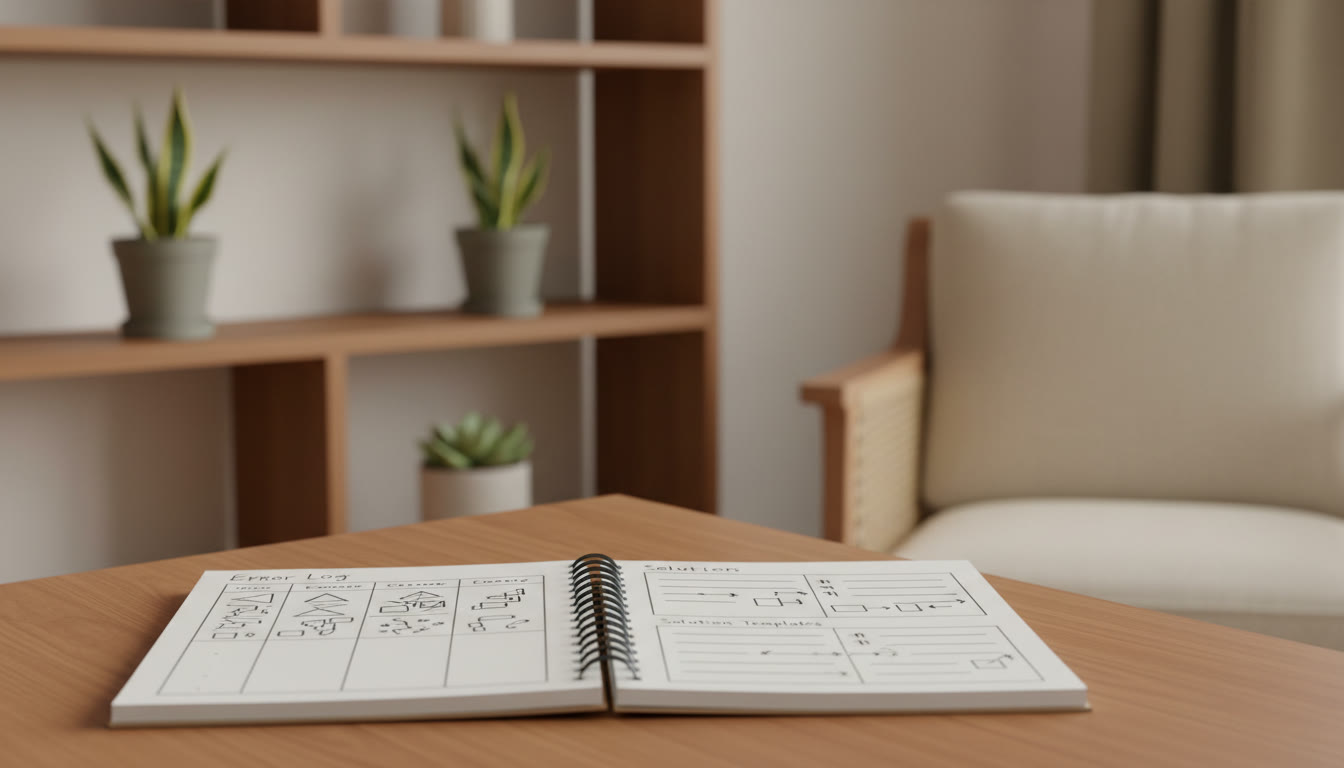
Sample weekly plan for steady speed gains
Consistency beats sprinting. Here’s a flexible week to adapt — change durations to match your stamina and school hours.
| Day | Primary Focus | Example Sessions |
|---|---|---|
| Sunday | Full mock + analysis | 3-hour mock; 60–90 min immediate review |
| Monday | Targeted concept repair | 2 micro-sprints (one math, one physics), 30 min error-log corrections |
| Tuesday | Speed drills | 4×15 min math sprints; 20 min formula flashcards |
| Wednesday | Practice & revision | Timed chemistry numericals; organic recognition drill |
| Thursday | Mixed problem set | 60–90 min mixed-topic timed set; mark review items |
| Friday | Weak-topic focus | Deep-dive on one weak area with micro-sprints |
| Saturday | Half mock + quick review | 90-minute half-sim; quick error log |
How targeted guidance can accelerate improvements
When a student is slow but accurate, one-on-one guidance helps convert carefulness into reliable speed without ruining accuracy. Personalized help focuses on the exact moments you pause: decision checkpoints, algebraic shortcuts you haven’t tried, or recognition cues you haven’t stored. For students who need tailored pacing and data-driven practice, Sparkl‘s personalized tutoring offers one-on-one guidance, tailored study plans, expert tutors, and AI-driven insights that highlight where you waste time and how to reclaim it. That kind of feedback can shorten the learning curve from months to weeks by making practice intentional rather than random.
Daily habits and micro-routines that compound
- Warm-up: 10-minute numerical warm-up before every study session to sharpen arithmetic and algebra speed.
- Error-review ritual: Review yesterday’s mistakes for 20 minutes; rewrite the corrected steps on a single card.
- Timed mini-tests: 2–3 short timed sets per week on standard problem types to develop pattern recognition.
- Sleep and breaks: quality sleep and short breaks help consolidate quick recall; rushing practice without rest is counterproductive.
When speed training stalls
If improvements plateau, audit the audit: are you practicing the right problems? Are you re-solving the same problems instead of new ones? Are calculation errors recurring? Plateaus often mean practice is repetitive rather than targeted. Introduce new problem types, change the time limits, or get a tutor to spot hidden inefficiencies in your approach.
A final pragmatic checklist before your next full mock
- Simulate the exam: 3-hour run in exam-like conditions, using OMR or the mock CBT interface you’ll see on test day.
- Time-box tasks: set goals for first-pass attempts and enforce them strictly.
- Bring an error log to the review: each mistake must have a fix and a drill attached to it.
- Practice marking answers cleanly: avoid avoidable deductions from sloppy marking or navigation.
- Reward small wins: a new personal best in attempted questions or reduced time on a problem type is progress.
Speed is a trained skill, not a fixed trait. If you are methodical by nature, use that method to build speed step by step: practice deliberate micro-sprints, create templates to skip repetitive setup work, triage confidently in tests, and use mock analytics to focus practice on the exact seconds you lose. With the right routine and targeted feedback, careful students routinely convert accuracy into higher ranks without giving up their natural strengths.
Make mocks your laboratory: measure honestly, experiment with one change at a time, and let data tell you which adjustment worked. Over time those saved minutes stack into extra attempts, higher raw scores, and better rank outcomes.
This guide is meant to be a practical companion you return to as you practice — implement one or two changes each week, record the effect, and keep the momentum steady.























No Comments
Leave a comment Cancel