
What Changes After JEE Main for Advanced Preparation
The moment of truth—and what to do next
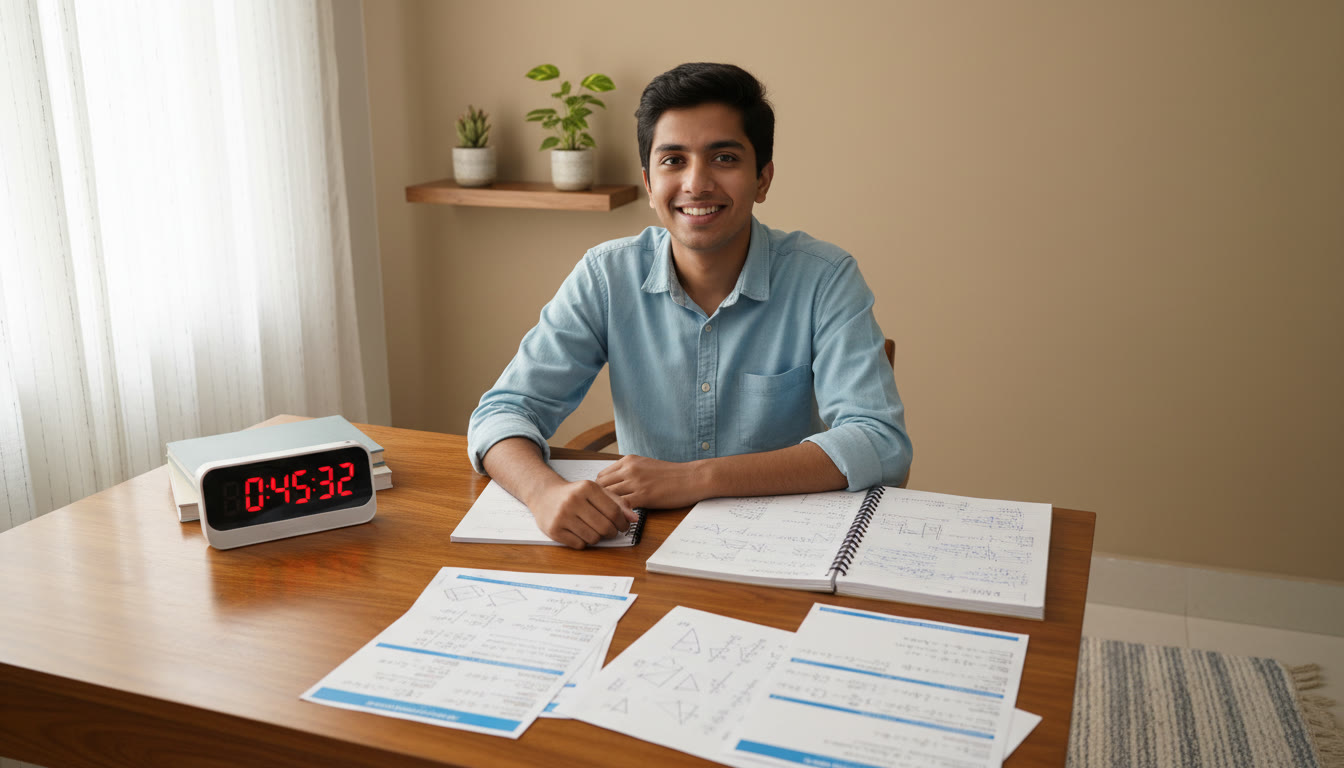
The hours and weeks after JEE Main are less about panic and more about pivot. Whether your Main score matched expectations or not, the real task now is to interpret what the paper taught you and convert that into an Advanced-ready plan. This phase is about smarter rehearsal: deeper conceptual work, surgical correction of weaknesses, and introducing a test-hardened routine that mirrors the Advanced experience.
Read the result, then read yourself: analysis before action
Quick mental checklist
- Take a brief emotional pause—celebrate small wins and accept gaps without drama.
- Identify subject-wise strengths and weaknesses from Main (topics where you lost easy marks vs topics where you struggled conceptually).
- Separate mistakes into categories: silly errors, speed/time-management errors, conceptual gaps, and question-format unfamiliarity.
That last bullet is important: JEE Advanced tends to reward conceptual depth and multi-step reasoning. If many errors in Main were “careless” or “time,” the immediate fix is habit and simulation. If errors were “didn’t know the concept,” you must change study habits.
From breadth to depth: the strategic shift
What actually changes in your day-to-day preparation
- Focus narrows, rigor deepens: Before Main you balanced coverage across many topics; after Main you must spend more time on high-yield but high-difficulty topics where Advanced often concentrates its weight.
- Problem-selection changes: Replace low-challenge practice with harder, multi-concept problems that require synthesis—never confuse volume with useful practice.
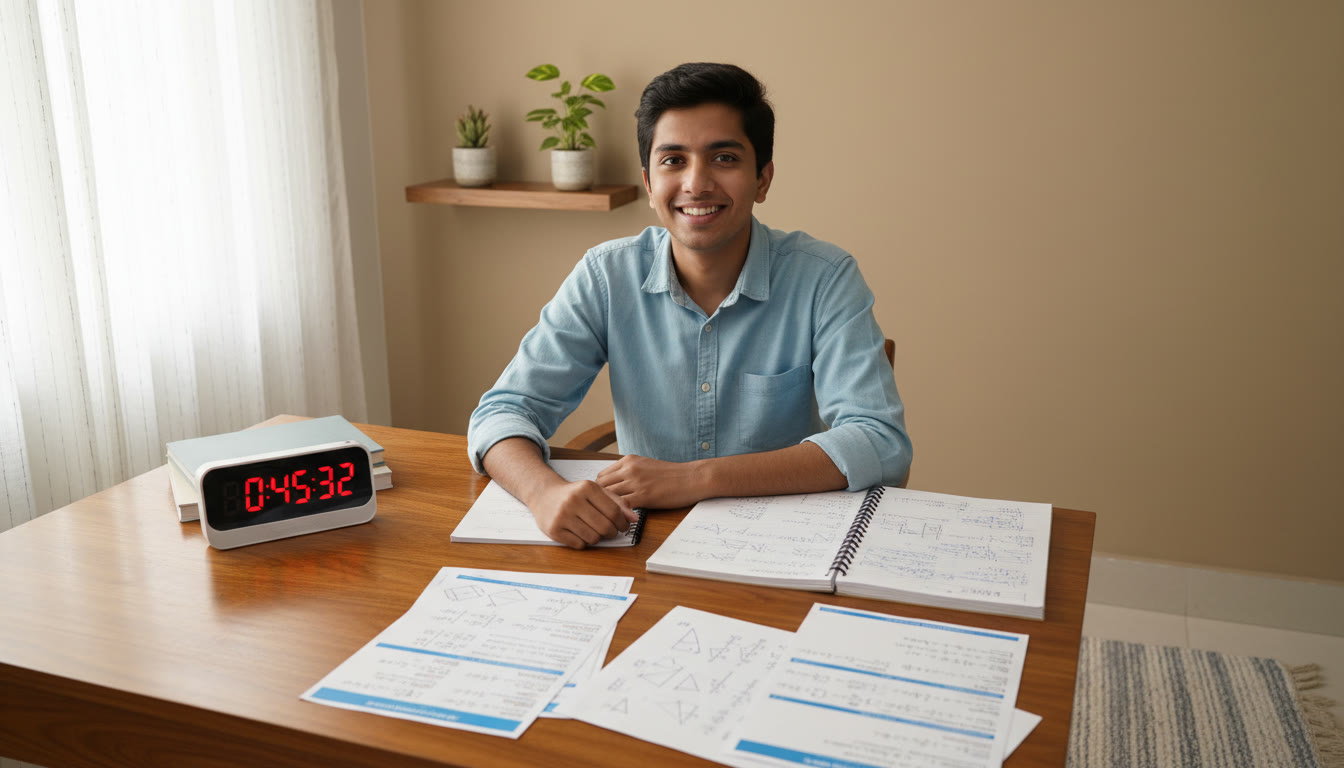
- Mock quality over quantity: Continue regular mocks, but ensure each is a full 3-hour simulation under exam conditions, graded strictly, and followed by an analytical review.
- Time-management becomes surgical: You will refine time allocation per section or problem type based on Main learnings and Advanced expectations.
Pattern reality check (evergreen)
Keep in mind the Advanced paper emphasizes multi-layered problems, creative combinations of topics, and precision. The exam is computer-based with strict time limits—so your practice must mirror the testing interface and timing. Negative marking is a real cost; blind guessing is rarely optimal unless you’ve ruled out options with high confidence. There are no descriptive partial-marking assumptions—answers are either awarded according to the marking scheme or not, so clarity and accuracy matter.
Subject-wise windows of opportunity
Physics: convert intuition into problem-solving routines
Physics in Advanced rewards physical intuition plus clean mathematics. After Main, stop collecting derivations without using them; start applying laws across varied contexts. The sequence should be:
- Identify core mechanics, electromagnetism, and modern physics gaps from Main.
- Practice 2–3 conceptually heavy problems daily that mix topics (e.g., mechanics + thermodynamics, or E&M + circuits).
- Focus on diagramming physical situations and turning diagrams into equations quickly—the faster you model, the more time you leave for calculation.
Chemistry: memory that breathes + deeper physical-chemical practice
Chemistry divides neatly: inorganic (memory + logical grouping), organic (reaction logic and mechanism intuition), and physical (mathematical practice). After Main:
- Convert inorganic lists into logic maps so you can deduce rather than memorize.
- Use mechanism trees in organic—practice transforming reagents step-by-step rather than memorizing end products.
- For physical chemistry, emphasize multi-step numerical practice under timed conditions.
Mathematics: precision, proofs, and the non-routine
Mathematics for Advanced is often the decider. Post-Main work should emphasize:
- Mastery of fundamentals (algebraic manipulation, inequalities, limits), because complex Advanced problems build on them.
- Practice multi-stage problems (e.g., an algebraic reduction followed by calculus), and explain each step in a short note during practice to mimic exam clarity.
- Work on alternate solution paths: if the first approach stalls, a second path should be rehearsed mentally.
Concrete, actionable changes in practice
Shift your practice mix
Instead of spending 70% of practice time on routine problems and 30% on deep problems, aim to reverse that proportion gradually: 60% deep, 30% targeted quick-practice, 10% revision flashbacks. This helps you internalize thinking patterns needed for Advanced.
Make mocks mirror the exam
- Run full, uninterrupted 3-hour mock tests in real conditions (quiet room, exam interface if possible, no phone).
- Time-box every problem attempt: if you spend more than the target time, mark and move on—train the habit of triage and return.
- Replicate answer-entry behavior of the actual exam so you don’t lose marks due to interface mistakes or mis-clicks.
Use an error-log the right way
Table: Error types, causes, and corrective actions
| Error Type | Typical Cause | Corrective Action |
|---|---|---|
| Silly/Calculation | Rushing or lack of checking | Slow down slightly; incorporate a 60–90 second check for arithmetic and signs |
| Conceptual | Incomplete concept or forgotten derivation | Revise concept, do 5 related problems, teach the concept aloud |
| Time-management | Poor pacing, inefficient selection of problems | Triage practice in mocks; practice skipping quickly and returning later |
| Format/Interface | Unfamiliar with CBT features or answer-entry | Practice on the same interface or simulate entry; rehearse submission steps |
Designing the next 6–10 weeks: a sample roadmap
Weekly priorities (evergreen template)
Below is a compact, repeatable weekly plan you can adapt to your available time and personal weaknesses. The goal is to rotate between consolidation, targeted depth, mock simulation, and recovery.
| Week | Primary Focus | Mock & Review | Daily Routine (example) |
|---|---|---|---|
| 1 | Topic gap-filling (highest-impact topics) | One 3-hour mock at end; full review next day | 2 hrs deep practice + 1 hr revision + 1 mock section |
| 2 | Advanced multi-concept problem sets | One timed mock; error-log analysis | 2 hrs mixed problem sets + 1 hr theory refresh |
| 3 | Subject rotation & speed drills | Full mock + focused rework of missed problems | Speed drills + concept pauses + one full mock |
| 4 | Consolidation and targeted recall | Mock under exam-like conditions | Flash revision + mixed difficulty problem sets |
Repeat the cycle, tightening time per problem and increasing difficulty. Practice quality always beats quantity—two high-value hours can trump five unfocused ones.
Mock-test analysis: how to make every test teach you
Structured post-mock review
- Within 24 hours of each mock, categorize every mistake with the error-log table above.
- Create a micro-plan: pick the top two error categories and assign daily 30–45 minute practices for a week to eliminate them.
- Keep an eye on trendlines: if a silly error persists across multiple mocks, treat it as an urgency rather than a nuisance.
Daily micro-habits that compound
Small routines that lead to big gains
- Start each day with a 20–30 minute concept warm-up—light derivations or flash revision.
- Set a 90-minute deep-work block for your hardest subject of the day; protect it from interruption.
- End each day with a 30-minute review of mistakes and a one-line plan for the next day.
- Weekly, do one extended session replicating the exact three-hour Advanced pattern.
Health, sleep and stress: non-negotiables
Why rest is part of preparation
Sharpening focus is not only about more hours—it’s about the right hours with the right rest. Short, consistent sleep, active breaks, light exercise, and a predictable routine reduce cognitive friction. On high-pressure days, a 20-minute nap after a heavy study block can improve recall more than three extra hours of exhausted study.
How personalized guidance can accelerate recovery after Main
Tailored plans and expert feedback
At this stage, tailored interventions are most effective. One-on-one mentoring helps in diagnosing nuanced patterns—why you panic on a certain problem type, or why a topic keeps recurring as weak. Personalized tutors can assign the exact problem sets that correct the error-pattern rather than generic practice.
Adaptive tools that track your error types and suggest focused drills—plus expert tutors who translate those drills into targeted practice—compress the time it takes to convert a weakness into a strength. For students who prefer guided acceleration, Sparkl‘s approach to 1-on-1 guidance, tailored study plans, expert tutors, and AI-driven insights can be a way to make corrections more surgical and less scattershot.
Common pitfalls and a short troubleshooting guide
Don’t start new big topics too late
The post-Main window is for consolidation and correction. Avoid starting vast new topic areas unless they are absolutely high-return and you can reach basic competency quickly.
Don’t confuse busyness with progress
More hours of unfocused practice often amplify errors rather than fix them. Use the error-log-driven micro-plans to ensure every hour has a measurable objective.
Don’t neglect simulation of exam conditions
Interface errors, time wastage, or poor triage happen when students practice casually. Accurate, timed, and interface-faithful mocks reduce these risks.
Exam day readiness and interface discipline
Final operational checklist
- Sleep pattern: maintain steady hours; avoid a drastic all-nighter before the exam day.
- Practice the final few mocks on the same device type you’ll use for the exam if possible to avoid interface surprises.
- Enter answers carefully; treat each entry like filling an OMR—precision first, speed second.
- During the exam, triage: solve high-confidence questions first, mark others for review, and avoid time traps.
Closing academic note
Transitioning from JEE Main to Advanced preparation requires a deliberate shift from broad coverage to targeted depth: use rigorous full-length 3-hour mocks, maintain strict post-test analysis, prioritize multi-concept problem practice across Physics, Chemistry, and Mathematics, apply surgical revision using an error log, and protect recovery through sleep and short breaks. Structured, focused practice—combined with precise time management and an emphasis on correct answer-entry and interface familiarity—produces measurable improvements in problem selection, accuracy, and exam temperament. Focus your effort on correcting recurring error types, rehearsing exam-like conditions, and consolidating high-yield Advanced-style problem patterns so that your preparation translates into calm, confident, and accurate performance on test day.






















No Comments
Leave a comment Cancel