

ICSE vs NEET: Why the gap feels bigger than it is
If you study under the ICSE board and are gearing up for the medical entrance path, you probably feel two strong pulls at once: the comfort of board-focused study and the pressure of NEET-style competitive testing. That tension is real—but entirely manageable. This guide takes a friendly, practical tour through what changes, what stays the same, and exactly how to close the syllabus and style gap without burning out.

Quick reality check: format and priorities
NEET is an MCQ-based, single-window test where accuracy, time management, and the ability to eliminate wrong options matter as much as raw knowledge. You’ll face timed, full-length practice sessions (three hours), strict OMR discipline, and negative markings that make guesswork costly unless it’s educated. Meanwhile, ICSE strengths—structured theory, lab skills, and disciplined note-taking—are valuable assets. The trick is converting them into speed, testwise reasoning, and recall under pressure.
Where ICSE and NEET align — and where they diverge
Big-picture alignment
- Core concepts in Biology, Chemistry and Physics overlap heavily: fundamentals are transferable.
- Laboratory exposure and written clarity from ICSE help with understanding experiments and diagrams.
- Strong language skills aid comprehension of MCQ stems and complex options.
Common divergence points to watch
- Speed and volume: NEET rewards swift recall across a large set of MCQs—ICSE practice may be slower and explanation-heavy.
- Question style: NEET tests application and elimination; some ICSE questions are descriptive or open-ended and don’t train rapid option-elimination.
- Exam discipline: OMR filling, time-sliced strategy, and negative marking require specific practice.
Subject-by-subject bridge map: practical targets for ICSE students
Biology — convert detailed understanding into quick recall
Biology is often the bridge advantage for ICSE students because of lab work and descriptive study. To adapt:
- Build concise one-page summaries for each unit (physiology, genetics, ecology, evolution): diagrams, flowcharts, and a high-yield fact list.
- Practice MCQs after every chapter. Start with untimed accuracy, then move to timed 15–30 minute sets to build speed.
- Memorize commonly tested facts (terminologies, life cycles, hormone functions) with active recall—flashcards or spaced-repetition apps help.
Physics — move from derivations to problem patterns
ICSE often emphasizes conceptual derivations; NEET needs quick application of those concepts under time pressure. Make this shift by:
- Listing core formulae and conditions on a single sheet per chapter; practice applying them to 5–10 representative MCQs each.
- Prioritizing problem types that appear frequently in MCQs (mechanics numerical tricks, electricity circuits basics, basic optics diagrams).
- Turning derivations into memory cues—understand one clean derivation, then reduce it to a checklist of steps for quick recall.
Chemistry — firm up basics and reaction logic
Chemistry’s three faces (physical, organic, inorganic) each demand a slightly different approach:
- Physical chemistry: practice numerical shortcuts and units; keep a ‘formula practice’ schedule.
- Organic chemistry: focus on reaction mechanisms as patterns—recognition beats rote memorization for MCQs.
- Inorganic chemistry: build a table of trends and exceptions for quick scanning during revision.
Sample weekly bridge plan — a practical table
Use the table below as a template for a focused four-week bridge cycle that you can repeat and adapt. Each week balances learning, consolidation, and mock practice.
| Week | Focus | Hours/week | Key actions |
|---|---|---|---|
| 1 | Gap mapping & concept patching | 20–24 | Identify missing NEET topics in each subject; create one-page concept notes; begin chapterwise MCQs. |
| 2 | Application practice | 20–24 | Timed MCQ sets, focus on weak chapters, formula sheets, 1 full-length timed practice (3-hour) at week end. |
| 3 | Consolidation & durability | 18–22 | Spaced repetition for tricky facts, error-log maintenance, 2 sectional timed mocks (biology + chemistry/physics). |
| 4 | Test simulation & refinement | 20–25 | Full-length mock under real exam rules, OMR practice, analyze weak areas, adjust weekly plan for next cycle. |
How to turn ICSE study habits into NEET-ready habits
From descriptive notes to single-sheet mastery
ICSE notes are often beautifully detailed. Convert them into NEET power tools by creating one-page versions: formulas on one side, quick diagrams, and a 10-point ‘must-recall’ list. The discipline to compress information helps both memory and speed during a timed paper.
Practice with purpose—structured MCQ drills
Aim for layered practice: learn the concept, solve 10 straightforward MCQs, then 10 mixed timed MCQs. Keep an error log where each mistake gets a one-sentence explanation and corrective action. Over time you’ll see patterns—this is where you gain rapid scoring advantage.
Make OMR and negative-marking part of practice
- Always simulate OMR filling and timing at least once a week using full-length tests.
- Adopt a guessing policy: avoid blind guessing. If you can eliminate one or two options, a carefully considered guess may be statistically favorable under a typical +4/–1 marking rule.
Tools and techniques that work for ICSE learners
Active recall and spaced repetition
Don’t just reread—quiz yourself. Create small question banks from your own notes and review them on a spaced schedule. This method turns ICSE depth into long-term recall that’s robust under exam stress.
Visualization and diagram mastery
ICSE lab diagrams give you a head start. Redraw key diagrams quickly and label them from memory. Convert detailed diagrams into label-and-explain checklists for rapid revision.
Timed problem blocks (Pomodoro with a twist)
Use focused 25–40 minute blocks for problem practice (one chapter or one MCQ set), followed by a 10–15 minute review of errors. Small blocks reduce fatigue and increase retention—perfect for busy board-prep periods.
When personalized guidance helps: targeted tutoring and AI insights
Some gaps are best closed with tailored help—especially when you need to convert a descriptive understanding into exam-speed thinking. Personalized tutoring can fast-track that conversion by diagnosing misconceptions and building a study rhythm tuned to your strengths.
For example, a program that offers 1-on-1 guidance, tailored study plans, expert tutors, and AI-driven insights can:
- Identify which ICSE topics map directly to high-yield NEET items and which need extra practice.
- Create targeted practice blocks and adjust pacing based on your mock-test performance.
- Provide disciplined OMR practice and test-analysis techniques to cut down silly errors.
Many students who start with structured one-on-one help find that it accelerates the conversion from board-style answers to confident MCQ performance. If you try such a service, look for features that explicitly address MCQ strategy, timed simulations, and bespoke review plans—those are the levers that close the gap fastest.
Smart time management during boards and NEET prep
Integrate instead of splitting
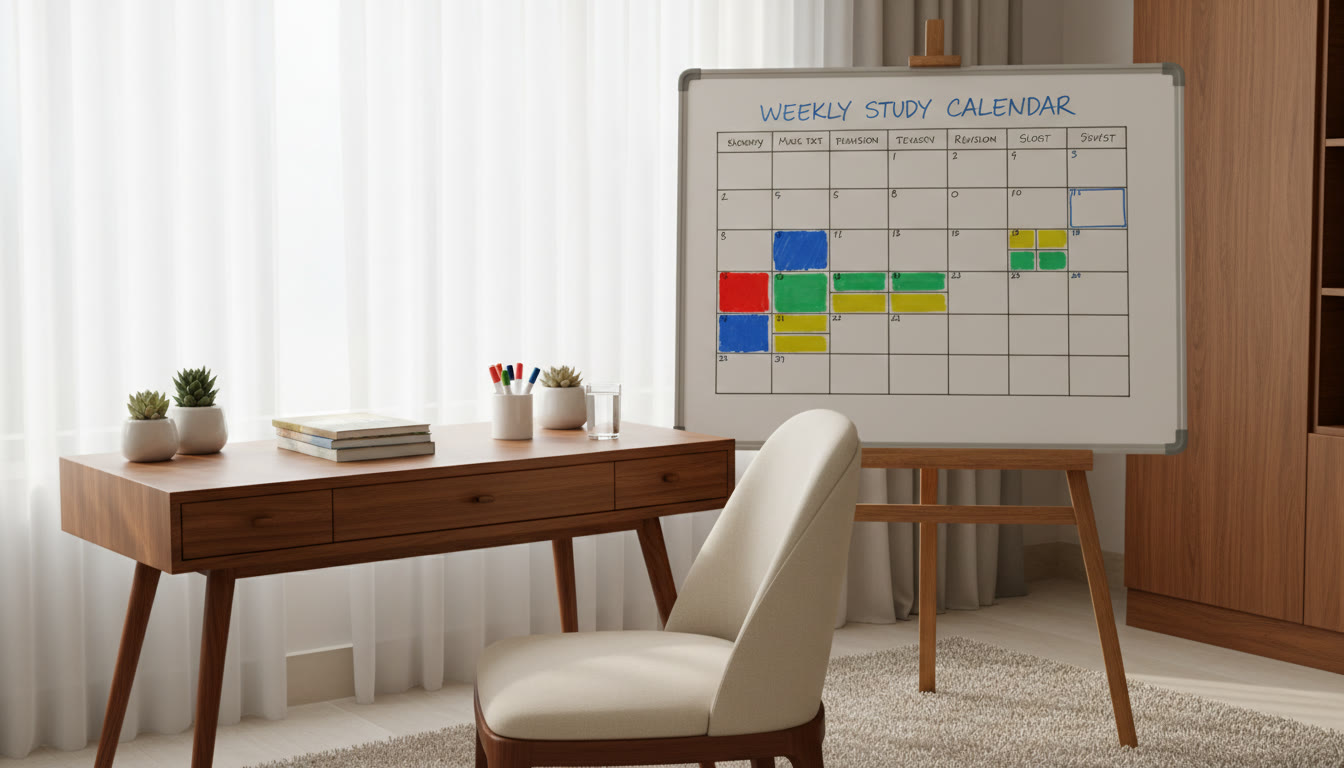
Rather than treating board exams and NEET prep as separate universes, build an integrated calendar. Use board-syllabus chapters as opportunities to generate NEET-style MCQs and 15–30 minute practice blocks. Where ICSE demands longer answers, extract the key facts and convert them into quick-recall cues.
Prioritization matrix
Rank topics by two axes—’frequency in NEET’ and ‘current confidence’. High-frequency & low-confidence topics get top priority. Medium-frequency & medium-confidence topics come next. This ensures your limited time produces the largest score gains.
Mock-test routine and analyzing performance
Three-hour full-length practice: make it sacred
Take at least one full-length mock each week in the months leading up to the exam. Treat it like the real thing: same start time, identical breaks, OMR-like answer marking, and strict timing. The goal is not perfection—it’s familiarity with stamina, time allocation, and error patterns.
Post-mock analysis: the 30-minute rule
- Within 30 minutes of finishing a mock, jot down how you felt: where you got stuck, which questions consumed time, and which topics surprised you.
- Within 24–48 hours do a detailed error-log entry and plan targeted drills for those weak points.
Example: Turning a weak chapter into exam strength
Suppose you find ‘Electrostatics’ slow and error-prone. Convert it into strength by doing this mini-cycle:
- Day 1: Create a one-page formula sheet and quick derivation checklist.
- Day 2–3: Solve 30 focused MCQs (untimed then timed), logging every error.
- Day 4: Do a 30-minute revision with flashcards for units and common pitfalls.
- Day 5: Take a short sectional mock and aim to finish with correct OMR marking.
Repeat this cycle for other weak chapters. The tempo—learn, practice, log, revise, simulate—turns slow topics into quick wins.
Practical exam-day rules adapted for ICSE students
- Practice filling an OMR sheet confidently; many slip-ups come from avoidable errors in marking.
- Answer the paper in rounds: first, quick attempts at your strongest questions; second, tackle medium questions; third, attempt risky ones after elimination.
- When negative marking is in play, do not make blind guesses. Use elimination: if you can rule out two options, the risk-reward often favors an attempt.
- Keep a calm buffer: don’t spend more than the planned time on any one question—move on and return if time allows.
Common mistakes ICSE students make and quick fixes
- Mistake: Studying boards-only content in depth, then cramming NEET MCQs at the last minute. Fix: Integrate MCQs from day one of revision cycles.
- Mistake: Treating descriptive answers as the primary measure of readiness. Fix: Practice converting definitions into three-line memory cues suitable for quick MCQ recall.
- Mistake: Ignoring OMR practice. Fix: Simulate OMR weekly and make it part of every full-length mock.
Checklist: 30 actions you can start today
- Create one-page concept sheets for your weakest 10 chapters.
- Begin a daily 30-minute MCQ habit—mixed subjects.
- Keep an error log and update it after every mock.
- Schedule one full-length timed mock each week.
- Convert one ICSE lab experiment into a one-paragraph conceptual summary and 5 MCQs.
- Establish a morning quick-recall routine: 15 minutes of flashcards before study starts.
- Practice OMR filling once weekly.
- Use a 3-tier study plan: learn → practice → simulate.
- Review formula sheets every third study day.
- Reserve one day a week for rest and light revision to avoid burnout.
Final academic note: turning strengths into scores
ICSE students bring many strengths to NEET preparation: clarity of language, good lab grounding, and disciplined note-taking. The goal is not to discard those strengths, but to translate them into fast recall, strategic elimination, and exam-tested stamina. Build compact notes, practice layered MCQs, do regular three-hour simulations, maintain an error log, and apply targeted drills for your weakest topics. Personalized 1-on-1 guidance that combines expert tutoring with adaptive, data-driven insights can accelerate this conversion when you need it most, by keeping your plan tightly focused on the highest-yield changes.
With a steady routine that respects both board responsibilities and NEET demands—compressing details into power notes, building speed through timed practice, and simulating real OMR conditions—you convert thorough ICSE understanding into reliable NEET performance. Stay systematic, measure your progress, and keep your revision active and test-focused.
This concludes the academic guidance on aligning ICSE preparation with NEET requirements and strategies.

























No Comments
Leave a comment Cancel