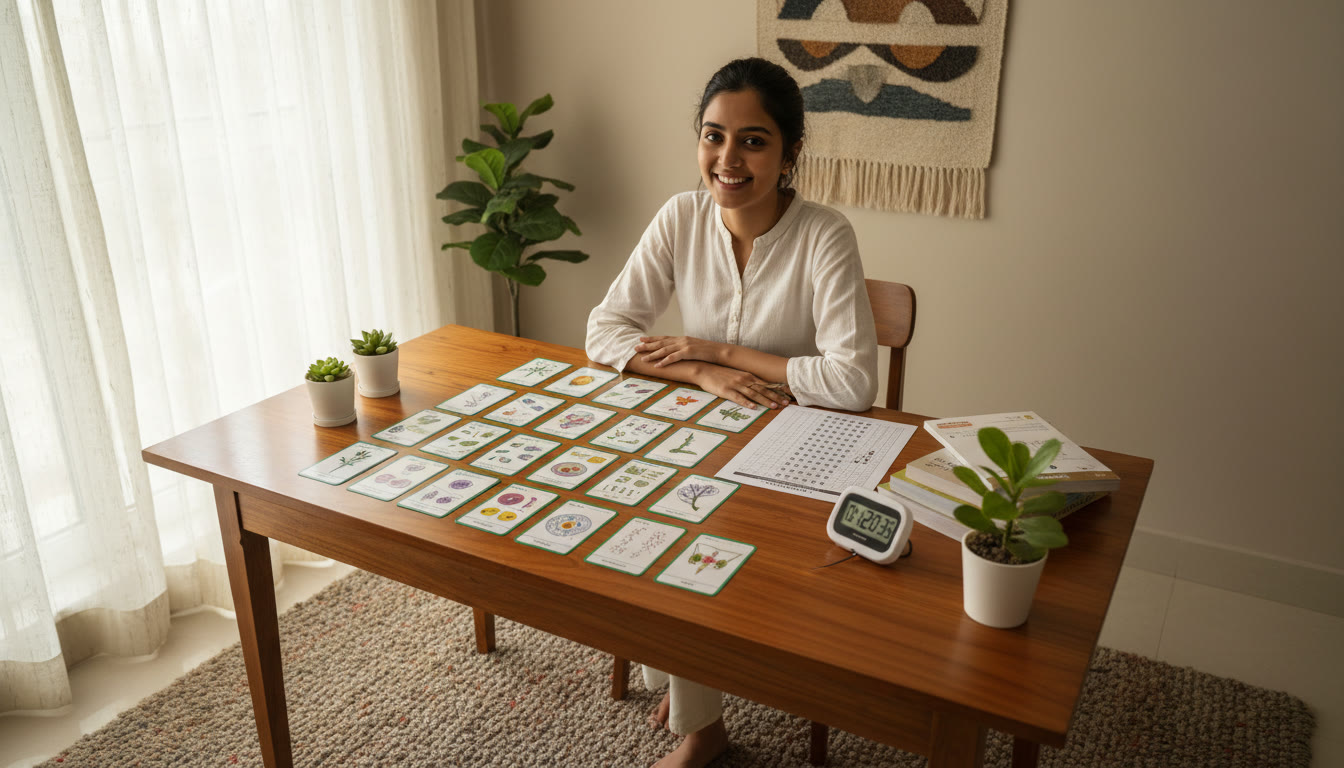

Transition Strategy for NEET/JEE Aspirants: A Focused Roadmap
Switching gears from a JEE-dominant study plan to a NEET-focused approach — or balancing both — is a common crossroads for many aspirants. The good news: the foundation you built for one exam can be shaped into a high-yield strategy for the other. This guide walks you through a clear, practical transition path so you can convert strengths, close gaps, and practise the exact skills NEET demands: multiple-choice precision, three-hour exam stamina, disciplined OMR technique, and masterful coverage of Physics, Chemistry, and — above all — Biology.
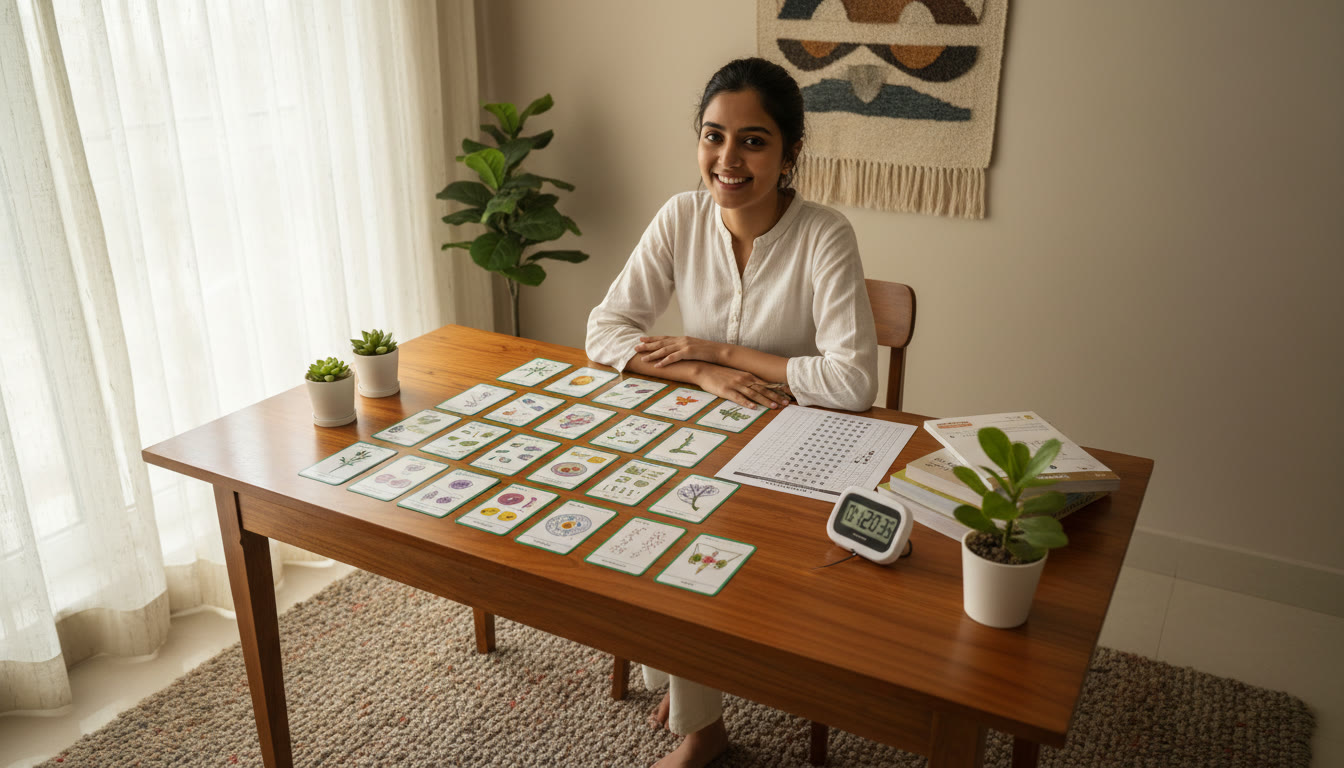
Why a deliberate transition matters
It’s easy to assume that doing well in one competitive test automatically transfers to another. In reality, each exam rewards different habits. JEE often trains intense problem-solving and extended derivations; NEET prizes fact-rich recall, accurate diagram interpretation, and fast, error-free MCQ performance. If you don’t realign your daily routine, question approach, and revision style, small mismatches — like overemphasizing long derivations or under-practising OMR discipline — can cost precious marks.
Begin with a clear diagnostic
Before changing study materials or schedules, take a two-step diagnostic:
- Full-length diagnostic mock: Sit a timed, three-hour full-length NEET-style mock to judge endurance, pacing, and OMR behaviour.
- Subject gap mapping: For each of Physics, Chemistry, and Biology write down topics you’re comfortable with, topics needing practice, and topics requiring complete learning. Don’t guess—use test data and timed quizzes.
Collect real metrics: accuracy per topic, average time per question, and the number of careless marking errors on OMR practice. These numbers will steer the transition plan.
Understand the exam style and how it changes your approach
NEET is MCQ-based and rewards speed without careless mistakes. A few tactical reminders to internalize:
- Exam structure: Three-hour sessions that demand steady concentration for long stretches — replicate this in practice.
- Negative marking: Wrong choices typically penalize you; practice selective answering and confident elimination skills.
- OMR discipline: Accurate filling, steady handwriting for codes, and clear bubble-filling are basic skills that must be practised under pressure.
- Syllabus alignment: Biology is a major scoring area; Chemistry and Physics require targeted NEET-style practice rather than extended JEE explorations.
Subject-by-subject transition checklist
Biology: Convert reading into recall and diagrams
Biology is the biggest single opportunity when moving toward NEET. If you were JEE-focused, you may have downplayed memorization-heavy biology. To switch effectively:
- Create layered notes: short flashcards (definitions and keywords), medium notes (process steps, cycles, and diagrams), and long notes (concept maps and explanations).
- Draw and redraw diagrams — label them without looking. NEET often tests visual recognition and labeling under time pressure.
- Use active recall: test yourself repeatedly instead of rereading. Turn headings into MCQs and simulate exam-style phrasing.
Chemistry: Rebalance problem types
Chemistry in NEET rewards accuracy across organic, inorganic, and physical sections. If your JEE routine focused heavily on deep physical chemistry problem sets, rebalance:
- Inorganic chemistry: emphasize reactions, periodic trends, and exceptions. Make quick revision tables and reaction maps.
- Organic chemistry: mechanism intuition is useful but prioritize reaction recognition and name-reaction recall relevant to MCQs.
- Physical chemistry: practise quick numerical techniques and approximation methods; accuracy counts more than long derivations.
Physics: Keep concepts, adjust the math depth
Physics remains conceptual in NEET, but problems tend to be shorter and more direct than typical JEE questions. Steps to adapt:
- Retain the conceptual rigor but practise shorter NEET-style numerical questions for speed.
- Make a list of frequently tested formulae and the conditions they apply to — practise identifying which formula to use in one or two lines.
- Work on estimation and dimensional-checking habits to avoid calculation traps under time pressure.
Design a practical weekly schedule (sample)
Below is a sample template for a focused week during your transition phase. Tailor the hours depending on school, boards, or other commitments.
| Day | Primary Focus | Secondary Practice | Mock/Revision |
|---|---|---|---|
| Monday | Biology (Anatomy & Physiology) — 3 hours | Chemistry (Inorganic tables) — 1.5 hours | 30 min flashcard review |
| Tuesday | Physics (Mechanics quick MCQs) — 2.5 hours | Biology (Plant physiology) — 1.5 hours | 30 min OMR practice |
| Wednesday | Chemistry (Organic reactions recognition) — 3 hours | Physics problem set (short numericals) — 1 hour | 30 min concept revision |
| Thursday | Biology (Genetics & Evolution) — 3 hours | Chemistry (Physical short numericals) — 1 hour | Full topic revision — 30 min |
| Friday | Mixed MCQ practice (All subjects) — 3 hours timed | Weak-topic drilling — 1 hour | OMR simulation — 30 min |
| Saturday | Full-length NEET-style mock (3-hour) — simulate exam | Detailed analysis of errors — 2 hours | Rest and light revision — 30 min |
| Sunday | Active revision: flashcards, diagrams — 2 hours | Problem solving or school work — 2 hours | Mindset & planning for next week — 30 min |
How to practice mocks so they actually change your score
A full three-hour mock should be treated as a sacred experiment. It’s not only about the number you score — it’s about identifying consistent leak points and plugging them. Follow this mock-test cycle:
- Simulate exam conditions exactly: three hours, no phone, timed OMR practice. This conditions your brain to focus for the same length and rhythm as the real test.
- Post-mock debrief: within 24 hours, log every incorrect question and the reason: knowledge gap, careless mistake, time pressure, or misreading the question.
- Convert errors into micro-tasks: 10 minutes of flashcards for rote facts you missed, sketching diagrams for visual errors, targeted numericals for calculation mistakes.
- Re-test the same topics after one week to confirm retention. Track trends across 4–6 mocks to see if the same topic keeps recurring — if it does, it becomes a top-priority repair area.

OMR discipline and negative-marking tactics
Two small changes in routine can produce outsized returns:
- OMR drills: practise coding roll numbers, question numbers, and filling bubbles precisely. Mistakes here are administrative but costly.
- Strategic answering: learn to eliminate wrong options fast. If two options remain and you’re not confident, weigh the risk of negative marking. Build a personal risk threshold — for instance, answer only when you can eliminate at least one option or have a reasoned hunch.
These are skills you can train with short daily drills — 10 minutes before bed where you solve ten rapid MCQs and mark answers on a mock OMR sheet.
Transition timeline: first 30 / 90 / 180 days
Break the transition into time-boxed phases so you don’t get overwhelmed:
- First 30 days: Diagnostic, prioritized notes, begin daily Biology flashcards, and weekly timed practice sessions. Aim for clarity on the top 10 weak topics.
- Next 90 days: Strengthen high-yield topics, take weekly full-length mocks, refine OMR technique, and start maintaining an error log. Increase Biology weight in study hours gradually.
- Up to 180 days: Consolidate, shift to revision cycles, do multiple mock series, and practice mixed-subject timed sections to build stamina and pace.
Sample micro-strategies that convert study time into marks
- Active recall over passive reading: after every reading session, close the book and write five MCQs you think could be asked about that topic.
- Two-pass revision: first pass for understanding, second pass for MCQ phrasing practice and speed-building.
- Spaced repetition for facts: use a simple paper box or digital flashcards to revisit items at controlled intervals.
- Error clustering: if mistakes cluster in a chapter or concept, create a micro-module to fix it — a 3-day drill focused on that chapter only.
When personalized tutoring helps — and how to use it well
Personalized support can accelerate a smart transition when you use it strategically. Benefits to look for include targeted 1-on-1 guidance on weak topics, tailored study plans that respect your school timetable, and data-driven insights that show what practice yields the best score improvement. If you consider external help, evaluate how the sessions will plug your specific gaps rather than only adding more content hours.
If you want a tailored approach that pairs a human tutor with data-backed insights, consider Sparkl’s personalized tutoring options: one-on-one guidance, customized study plans, expert tutors, and AI-driven performance analytics that measure your progress across mocks and micro-drills.
Practical note-taking and revision artifacts
Your notes should be usable under timed conditions. Make three kinds of artifacts:
- Quick reference sheets: one-page summaries for each chapter with keywords, tricky exceptions, and diagrams.
- Problem cards: one side contains the question (MCQ or short numerical), the other side contains the concise solution and traps to avoid.
- Error log: chronological list of mistakes with cause, correction, and date of re-test — this is the most underused but highest-return tool.
Common pitfalls and how to avoid them
- Pitfall: Thinking JEE-style depth is always better. Fix: Translate deep understanding into quick recall and short-answer strategies for NEET practice.
- Pitfall: Ignoring Biology early. Fix: Start a daily biology habit — even 30 focused minutes matters more than occasional marathon sessions.
- Pitfall: Poor mock analysis. Fix: Treat each mock as a feedstock for an actionable micro-plan — don’t just look at scores; map causes.
- Pitfall: Skipping OMR practice. Fix: Add OMR drills into weekly routine until bubble-filling is muscle memory.
Keeping motivation and energy aligned
Transitioning between competitive exam mindsets is as much psychological as it is tactical. Keep these in mind:
- Small daily wins: celebrate a week with improved accuracy or fewer careless mistakes rather than only large score jumps.
- Rest and recovery: consistent sleep, short exercise, and light breaks during study blocks preserve cognitive bandwidth for long three-hour mocks.
- Peer accountability: study partners can help with disciplined mock testing and sharing quick quizzing duties.
Putting it together: a 7-step action plan
- Take a timed, three-hour NEET-style mock to set the baseline.
- Create a prioritized topic map from your results (A/B/C categories).
- Shift daily hours to cover Biology heavier, while keeping short, timed Physics and Chemistry drills.
- Implement OMR and negative-marking drills into weekly practice.
- Use error logs and spaced repetition to convert errors into durable knowledge.
- Take weekly full-length mocks, and analyze trends every two weeks to re-prioritize.
- If gaps persist, use targeted personalized tutoring to accelerate repair and refine exam technique; consider options that pair human coaching with performance analytics like the ones from Sparkl.
Example: converting a JEE advantage into NEET rank gains
Imagine you’re very strong in Physics problem-solving from a JEE track but struggle in Biology recall. Converting that advantage means reallocating about 30–40% of study time to high-yield Biology chapters and turning Physics knowledge into quick-answer format practice. Use your problem-solving skills for Physics numericals that often appear in NEET but spend extra time on Biology MCQ phrasing and diagram labeling. With disciplined mock practice and error correction, you often gain more marks in Biology per hour of focused study than by doubling down on Physics.
Final academic conclusion
A deliberate transition plan recognizes that NEET rewards precise MCQ tactics, steady three-hour stamina, careful OMR technique, and comprehensive Biology mastery alongside targeted Physics and Chemistry practice. Start with measured diagnostics, reshape your study hours toward high-yield topics, build a mock-driven improvement loop, and use focused remediation when gaps persist. By turning errors into structured micro-tasks, practicing under exam-like conditions, and prioritizing retention over rote depth, you create a resilient preparation rhythm that aligns directly with NEET’s demands.























No Comments
Leave a comment Cancel