
IB DP Activities Strategy: Building a Medicine-Oriented Profile (Ethical + Realistic)
Thinking about medicine while you’re deep in the IB Diploma can feel like juggling with one hand tied behind your back: demanding academics, CAS commitments, and the slow work of building a believable story for university applications. The good news is that IB offers a uniquely strong platform to craft a genuine and competitive medical school profile—if you plan with precision, ethical intent, and sustainable pacing.
This guide is written for IB students who want practical strategies (not glamorous shortcuts) for essays, activities, interviews, and timelines. You’ll find concrete examples, sample timelines, and templates for decisions that make your application both honest and compelling. Along the way I’ll point out realistic alternatives when access to hospitals or research is limited, and where targeted support can accelerate progress.

Start with a clear profile: capability + character
Medical schools look for a combination of academic readiness, long-term motivation for medicine, evidence of teamwork and leadership, and the kind of ethical maturity that says you understand responsibility. In IB terms, that map translates into subject choices and achievement; an Extended Essay and TOK reflections that show intellectual curiosity; CAS projects that demonstrate service with reflection; and a set of sustained experiences that you can honestly discuss in an essay or interview.
Before you sign up for everything that looks good, sketch a short profile statement: one paragraph describing who you are academically, which medical pathway you’re targeting (clinical, research, public health), and two strengths you want your application to highlight (for example, problem-solving in lab settings and community service leadership). Revisit and sharpen that paragraph halfway through DP1 and again before final applications.
Academic backbone: subject choices, HL balance, and the Extended Essay
Your academic choices are the backbone of a medicine-oriented profile. Many applicants include a science heavy-hitting HL like Chemistry or Biology, often paired with Mathematics and a humanities HL that supports communication skills. That said, there is no single “must-take” formula—medical programs prize demonstrated mastery and logical thinking.
- Prioritize strength: Choose HL subjects you can excel in, not only what looks most medical on paper.
- Complement with communication: A higher-level language or a humanities subject helps with empathy, ethics, and patient-facing communication.
- Use SL strategically: If a subject is required for certain curricula but you aren’t strong in it, consider SL plus extra support rather than taking a subject at HL where you might underperform.
The Extended Essay (EE) is a golden opportunity. An EE in Biology, Chemistry, or Psychology that genuinely investigates a question, shows methodological thinking, and records careful reflection will add weight to your application. If lab access is limited, a well-designed literature-based or data-analysis EE can be equally strong—what matters is intellectual rigor and clear appraisal of limitations.
CAS that matters: depth, reflection, and ethical service
CAS is not a checklist. Admissions committees notice, and they read between the lines: was the student reflective, did the project grow beyond a single event, and did it show leadership or collaborative change? For medicine, aim for sustained projects (nine months or more of regular contact) that demonstrate direct benefit and reflective learning.
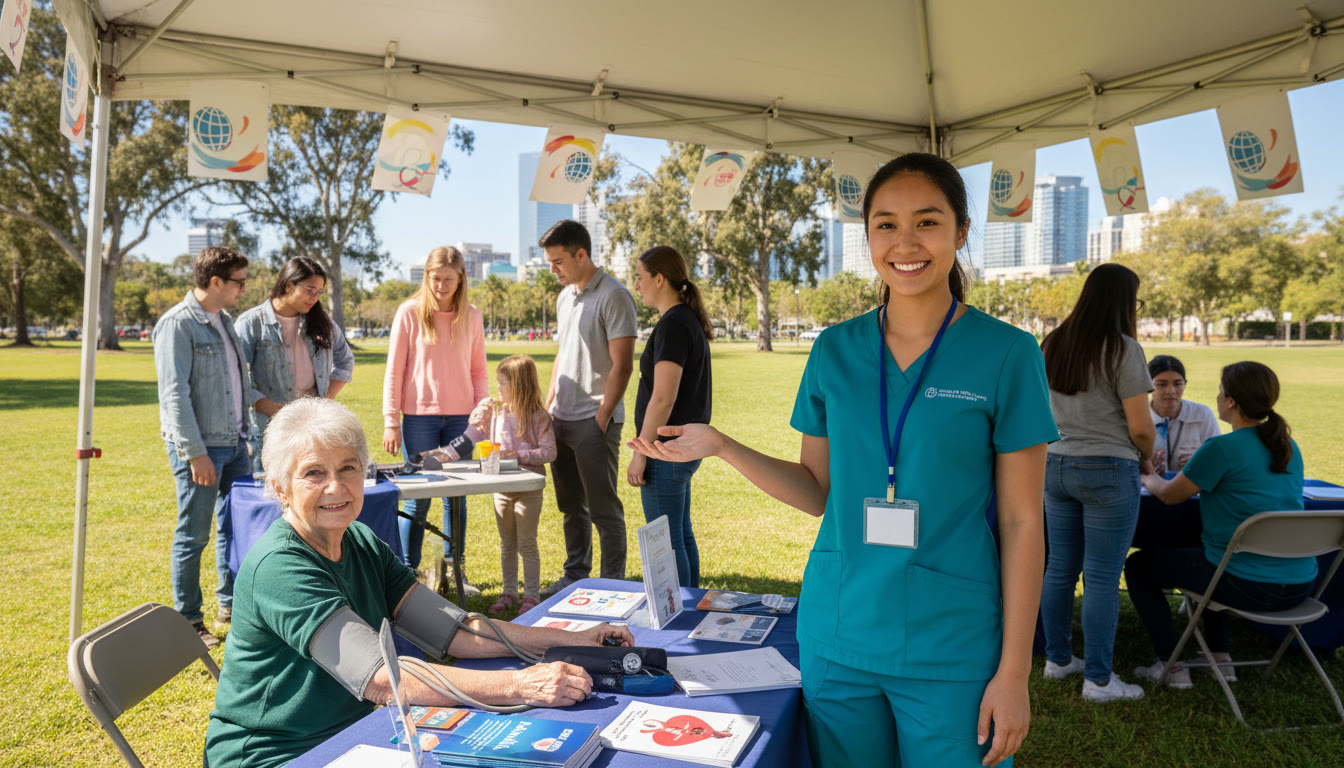
- Community health initiative: Design a repeatable project—e.g., vaccination awareness in local neighborhoods, safe-handwashing workshops for schools, or diabetes-awareness sessions run in collaboration with a local clinic.
- Patient-centered volunteering: Regular time at a hospice, long-term care facility, or patient-support group can show consistent empathy. If patient contact is restricted, consider administrative roles that improve patient flow or support services.
- Peer mentoring and teaching: Leading a biology tutoring circle or running exam-prep sessions showcases communication and mentorship—both valuable for doctors.
Reflection matters as much as action. Use CAS journals to record ethical dilemmas, what you learned from setbacks, and how your thinking evolved—these reflections often become the most convincing paragraphs in personal statements and interviews.
Clinical exposure: ethical approaches and alternatives
Genuine clinical experience is powerful, but access varies widely. Wherever and however you gain exposure, keep two principles front and center: respect for patient privacy, and an honest report of your role. You’re not expected to perform clinical tasks beyond your training—what matters is what you observed, what you learned, and how it shaped your motivations.
If in-person shadowing is limited, consider these realistic alternatives:
- Structured volunteering in community health organizations or telehealth support lines.
- Online shadowing programs and recorded ward rounds—use these critically, reflecting on differences from real-life clinical interactions.
- Simulation labs, first-aid certification courses, and public-health internships that build transferable skills.
Research and the Extended Essay: feasible projects that teach method
Research experience strengthens an application, but the goal is not to produce publishable work—it’s to learn how to form hypotheses, gather data responsibly, and reason about uncertainty. Small, supervised projects can be gold, especially when paired with a clear write-up or poster.
- School-based lab projects: Partner with a science teacher to design a methodologically sound experiment you can complete within school resources.
- Literature or data-driven projects: Use public datasets or systematic literature review methods when lab access is impossible.
- Clinical research volunteering: Assist ethically with data handling or patient recruitment under supervision—always respecting confidentiality.
Your EE can double as research evidence. Choose a question narrow enough to answer in the EE scope and show your learning process. Admissions committees appreciate a clear methods section in an EE that ties directly to how you think about science.
Leadership, teamwork, and the value of non-medical pursuits
Medicine is collaborative. Sports, performing arts, debate, Model UN, and community projects reveal leadership and teamwork in ways laboratories do not. The key is sustained engagement and, where possible, impact: founding a club, building a community resource, or improving school processes demonstrates initiative.
- Keep a story arc: For each activity, be ready to describe a challenge you faced, what you did, and what changed.
- Avoid meaningless titles: “President” only matters if you can point to specific outcomes you led.
Crafting essays and personal statements: reflection over recitation
Admissions officers can smell a list. Essays that read like a CV expansion fail to show self-awareness. Instead, use vivid micro-stories that illustrate a truth about you—then tie that truth to medicine. For instance, a single meaningful interaction with a patient during volunteering that changed how you see communication is more persuasive than a paragraph listing clinics you visited.
Useful structure for a paragraph in an essay:
- Set the scene briefly (one or two lines).
- Describe the gap or ethical/personal dilemma you observed.
- Explain your action or reflection and what you learned.
- Tie the learning to the skills you will bring to medical training.
Admit limitations. Saying “I didn’t know how to respond when…” followed by a thoughtful reflection signals maturity. Interviewers and essay readers value candidates who can honestly evaluate their own growth.
Interview preparation: types, tactics, and authentic practice
Interview formats vary—traditional panel interviews, multiple mini-interviews (MMIs), or situational judgment rounds. Preparation is less about scripting answers and more about practicing structured thinking, clear communication, and ethical reasoning.
- MMI practice: Work on concise structure—state the problem, outline principles you’d weigh, propose a balanced response, and acknowledge trade-offs.
- Panel interview prep: Prepare a short, honest narrative about your motivation, and rehearse common clinical ethics topics with peers or teachers.
- Mock interviews: Simulate realistic conditions. Time your answers and practice follow-up questioning to avoid rote responses.
Targeted, personalized coaching can help polish interview skills—especially in areas like medical ethics and communication under pressure. Many students combine school support with focused sessions to sharpen delivery and receive realistic feedback. You might find external 1-on-1 help useful; for example, some services offer tailored mock interviews, structured feedback, and practice stations that mimic real interview environments. If you choose external help, confirm it focuses on reflective practice, ethical thinking, and authenticity rather than canned answers. One option many students use is Sparkl‘s personalized tutoring for 1-on-1 guidance, tailored study plans, expert tutors and AI-driven insights to structure interview drills and essay feedback.
Recommendations and referees: how to get meaningful references
Strong references come from teachers who know you beyond grades. Choose referees who have seen you work on sustained projects, who can comment on your intellectual curiosity and character, and who are prepared to give specific examples.
- Brief your referees: Provide a one-page summary of your activities, a short profile statement, and reminders of moments you’d appreciate them mentioning.
- Choose variety: One science teacher, one teacher who can speak to communication/ethics or leadership, and, where allowed, a supervisor from meaningful clinical or community work.
- Ask early: Good referees are busy. Give them time and a clear deadline.
Timeline: realistic milestones across the DP
Good timelines are concrete but flexible. The table below shows a sample activity roadmap that balances academics, CAS, EE, research, and application prep. Use it as a template and adapt to your school calendar and the application cycles you target.
| Stage | Focus | Concrete actions | Weekly time |
|---|---|---|---|
| Early DP1 | Explore & experiment | Try volunteering options, join clubs, read into possible EE topics, choose HL subjects | 3–6 hrs |
| Mid DP1 | Commit to 2–3 sustained activities | Start CAS project, seek small research tasks, secure a mentor for EE | 5–8 hrs |
| Late DP1 | Build depth | Lead an initiative, collect data for EE or research, get first mock interviews | 6–10 hrs |
| Early DP2 | Intensify evidence | Finalize EE, increase clinical exposure, start focused personal statement drafts | 8–12 hrs |
| Mid DP2 | Refine & polish | Submit applications (where applicable), complete recommendation requests, interview prep | 10–15 hrs |
| Late DP2 | Maintain balance | Finish assessments, keep CAS documentation current, follow up on offers | Varies |
This table is a flexible guide; adapt the weekly hours to your personal capacity and school demands. The important rule: fewer sustained activities with deep reflection beat a long list of shallow experiences.
Do’s and don’ts: practical ethics for the whole process
- Do be truthful about roles and time commitments—fabrication is easily detected and extremely damaging.
- Do reflect: admissions panels prize mature students who can learn from setbacks.
- Don’t inflate responsibilities or claim clinical competencies you don’t have.
- Don’t treat every activity as merely a résumé bullet—look for learning and impact.
Wellbeing, workload, and sustainability
Ambition is necessary, but sustainability is essential. Burnout can derail even the most promising applicant. Build routines that protect sleep, physical activity, and social connections. Use realistic time blocks for activities and academic work, and keep one or two low-pressure hobbies that recharge you.
When pressure peaks—mock exams, EE deadlines, interviews—scale back new commitments. Being able to say you prioritized depth and finished major responsibilities responsibly is a stronger signal than claiming constant hyperactivity.
Putting it together: narrative coherence
At every stage, ask: does this activity fit the story I want to tell? Narrative coherence isn’t about cherry-picking experiences to create a false arc; it’s about choosing a set of activities that genuinely reflect your interests, building them steadily, and reflecting honestly on their meaning. That coherence will emerge in essays, interviews, and recommendation letters if you keep a clear profile statement and return to it often.
Some students supplement school guidance with targeted external support for interviews and essay structure. If you try outside tutoring, look for providers that emphasize personalized feedback, evidence-based practice, and ethical guidance. For example, many students pair school work with Sparkl‘s 1-on-1 guidance to structure mock interviews and refine personal statements, benefitting from tailored study plans, expert tutors and AI-driven insights that highlight improvement areas without replacing authentic reflection.
Final thoughts
Building a medicine-oriented profile in the IB Diploma is a marathon of steady choices more than a sprint of impressive one-offs. Choose subjects that showcase your academic strength, commit to sustained CAS and research where possible, practice ethical reflection in essays and interviews, and keep your workload humane. A clear, honest narrative—well-documented and thoughtfully reflected upon—will serve you better than a flashy but shallow résumé. Plan deliberately, reflect consistently, and let your authentic interest in medicine guide what you keep and what you let go.
This concludes the academic guidance on building a medicine-oriented IB DP profile—focused on ethics, realism, and sustained preparation.




















No Comments
Leave a comment Cancel