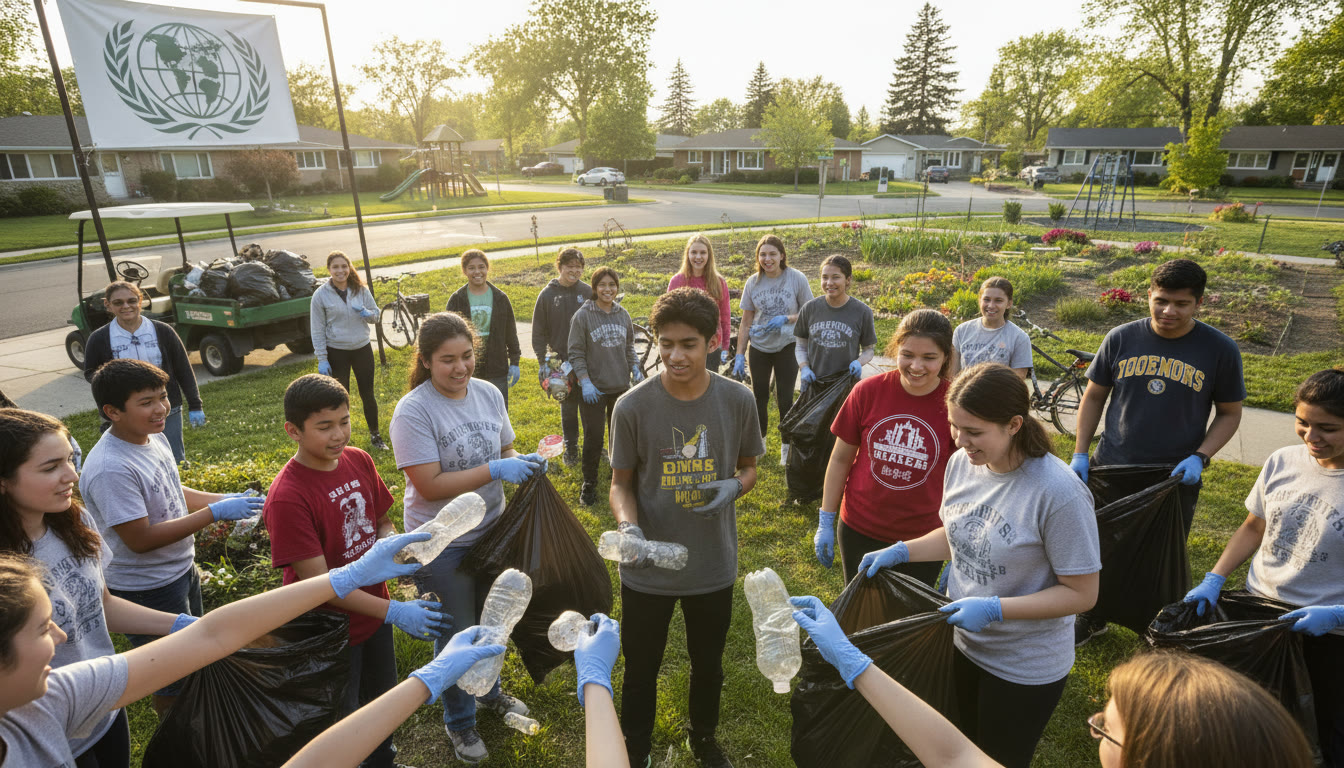

IB DP Activities Strategy: Presenting Community Service Without a Savior Narrative
Community service is one of the richest learning spaces in the IB Diploma Programme: it stretches empathy, teaches ethics, and asks you to think beyond your immediate classroom. Yet when students describe those experiences in university essays, activities lists, or interviews, they sometimes fall into the “savior narrative” — a tone that unintentionally puts the student at the center as the rescuer and the community as passive. That framing weakens the real learning. This guide gives clear, practical strategies for IB DP students to present their service honestly, respectfully, and compellingly across applications, essays, interviews, and CAS documentation.
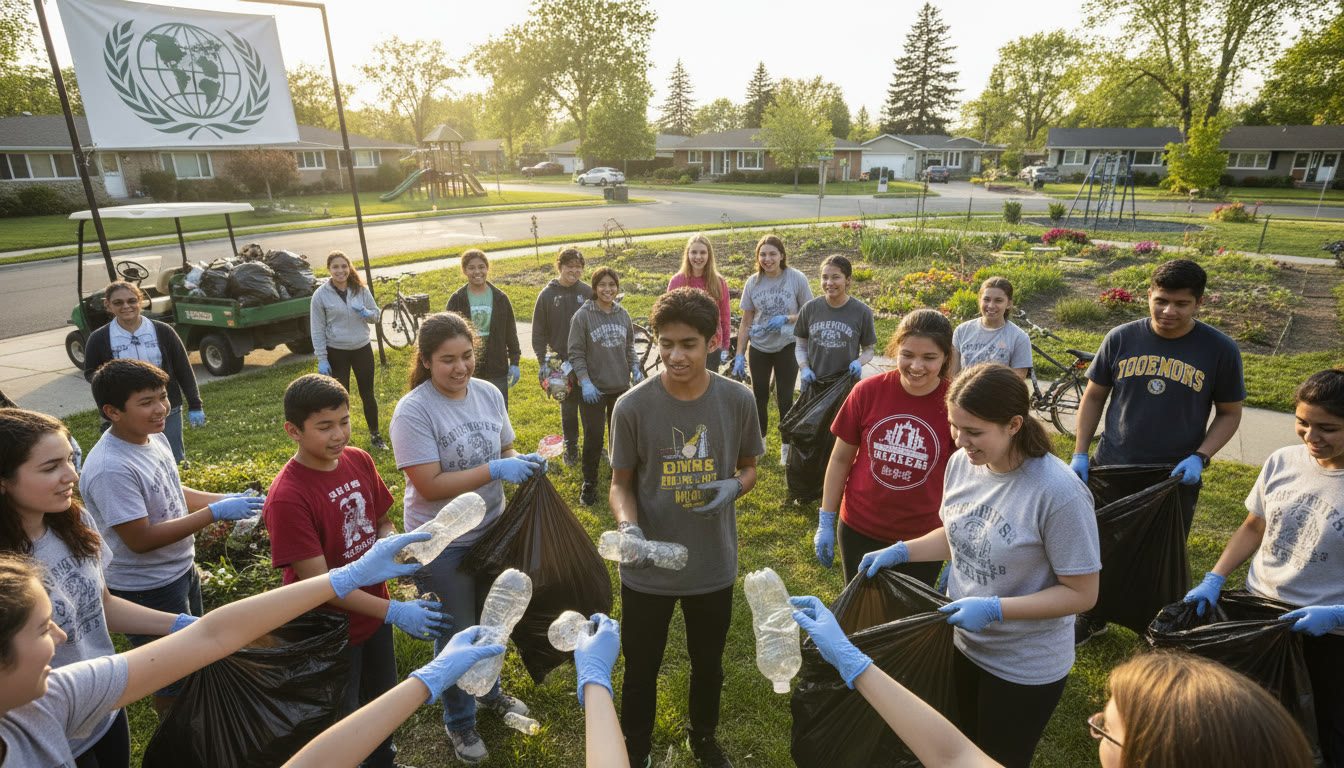
Why the savior narrative matters (and why admissions readers notice)
Admissions readers and CAS supervisors are looking for evidence of growth, ethical reasoning, collaboration, and sustainability. When service descriptions read like a hero story — vague on partnership and heavy on unilateral “helping” — they obscure the student’s learning and the project’s context. The savior narrative can also unintentionally erase the agency of the people you served, making impact claims seem shallow or performative.
What a strong service narrative communicates
- Awareness of context and power dynamics.
- Partnerships and mutual learning rather than one-way aid.
- Specific roles, responsibilities, and measurable outcomes.
- Reflection on challenges, mistakes, and ethical decisions.
- Evidence of sustained commitment and follow-through.
Core principles to avoid a savior narrative
Think of these principles as a checklist whenever you write about service: they translate directly into stronger CAS reflections, clearer activity descriptions, and more convincing application essays.
1. Center context and collaboration
Rather than beginning with what you “did for” people, start with who your partners were and what the local priorities seemed to be. Use verbs like partnered, collaborated, co-designed, or supported. Give one short sentence about the community’s goals so the reader understands the need from their perspective.
2. Be specific about your role and decisions
Admissions officers value clarity. Did you coordinate volunteers, run fundraising logistics, design a syllabus, or collect data? Say so. Share decisions you made and why — including trade-offs and constraints — rather than simply listing outcomes.
3. Emphasize learning and reflection
Service is evaluated in the IB when it leads to student learning. Describe what you learned about power, privilege, cultural differences, or project management. Admissions teams want evidence that you reflected critically on the work.
4. Show continuity and sustainability
One-off events can be meaningful, but long-term engagement or planning for handover signals responsibility and thinking beyond a single snapshot. If your project evolved or scaled, explain how and why.
5. Use evidence and voices
Numbers help: hours logged, people reached, resources mobilized. But also preserve qualitative evidence: feedback from partners, quotes from participants, or short outcomes that show reciprocal impact.
Practical language swaps: from savior to collaborative
Here are concrete rewrites you can use when polishing activity entries or essay passages. Short, specific changes can shift tone without losing pride in your work.
- Instead of “I helped the community by giving food,” write “I worked with the local food bank to coordinate a weekly distribution system and trained three new volunteers to serve 120 families per month.”
- Instead of “I rescued stranded animals,” write “I partnered with the municipal shelter to improve intake procedures and co-led a volunteer drive that increased adoption follow-ups by 30%.”
- Instead of “I taught kids English,” write “I co-designed a conversational English curriculum with local teachers that focused on daily tasks; I ran weekly sessions and adjusted materials based on teacher feedback.”
How to present service across application components
Different parts of an application require different levels of detail. Below is what to emphasize in four common contexts.
Essays
- Choose a focused anecdote that reveals complexity and growth rather than a summary of activities.
- Show conflict or ambiguity — admissions teams reward ethical sophistication.
- Weave in a concise portrait of the community’s perspective and how your actions responded to real needs.
- End with a reflection on how the experience reshaped your aspirations or values, not with a list of accomplishments.
Activities list and CAS entries
- Keep entries short but specific: role, partners, hours, key outcome, and a one-line reflection.
- Use action verbs and quantify when possible (e.g., “Led 12 weekly workshops; recruited 8 volunteers; improved attendance by 25%”).
- For CAS, include links to artifacts and short reflections that track growth across time.
Interviews
- Prepare a two-minute story that explains context, your role, a challenge, and what you learned.
- Be ready to discuss unintended consequences and how you adapted; this shows maturity.
- Frame successes as shared wins and acknowledge mentors, community leaders, or co-organizers.
Timelines and portfolios
Admissions teams appreciate evidence of planning and iteration. A compact timeline communicates commitment and evolution.
| Stage | Typical Activities | Evidence to Collect |
|---|---|---|
| Research & Partnership | Meetings with community leaders; needs assessment | Meeting notes, emails, community statements |
| Design & Pilot | Run a small pilot, solicit feedback | Lesson plans, survey results, photos |
| Scale & Reflect | Adjust based on feedback; recruit/train volunteers | Volunteer rosters, attendance records, reflections |
| Handover & Sustainability | Set up a local lead; document processes | Handover notes, timelines, follow-up plans |
Examples: before-and-after activity descriptions
These short examples show how a few words can change tone and meaning.
- Before: “I helped homeless people by giving blankets.”
- After: “I collaborated with a neighborhood outreach group to design a donation drive focused on weather-appropriate gear; I coordinated logistics and collected feedback from recipients to improve distribution timing.”
- Before: “I started a tutoring club to help underperforming students.”
- After: “I co-founded a peer tutoring program with the school counselor to support students seeking extra academic support; I trained tutors, developed a needs-based matching system, and gathered progress reports to evaluate effectiveness.”
Words and phrases: avoid vs. prefer
| Avoid | Prefer |
|---|---|
| Saved, rescued, fixed | Supported, partnered with, co-created |
| Victims, needy, deprived | Community members, partners, participants |
| One-time impact claims without context | Measured outcomes with context and limitations |
Preparing for interview questions about service
Interviews are an opportunity to show critical thinking and humility. Use a short structure when answering: Context → Role → Challenge → Learning. Keep answers human, concrete, and short enough to invite a follow-up.
Sample interview prompts and strong responses (structure)
- Q: “Tell me about a time you helped in your community.”
Answer structure: Brief context, describe your specific role, mention one unexpected challenge, and share what you learned about cooperation or power dynamics.
- Q: “How did you measure whether your work mattered?”
Answer structure: Describe both quantitative and qualitative measures you used, discuss what the data showed, and explain changes you made because of the results.
- Q: “How did you listen to the community?”
Answer structure: Name the people you consulted, the questions you asked, and how their feedback shaped your plan.
Timelines: an example roadmap for a meaningful CAS service project
This compact roadmap helps you plan a balanced project that changes with feedback and leaves a traceable impact.
| Phase | Goal | Timeframe | Key Evidence |
|---|---|---|---|
| Listen & Research | Understand needs and partners | 2–4 weeks | Interview notes, stakeholder mapping |
| Pilot | Test a small-scale intervention | 4–8 weeks | Pilot plan, feedback forms, photos |
| Iterate | Adapt based on results | 4–12 weeks | Revised materials, attendance, reflections |
| Handover & Sustain | Equip local leaders and document process | 2–6 weeks | Handover notes, contact lists, training records |
Reflective writing prompts to deepen CAS entries and essays
Use these prompts to push beyond surface-level descriptions and into analytical reflection that admissions officers and examiners value.
- What assumptions did I bring to this project? How were they challenged?
- Who led this work locally and how did I support their leadership?
- What were unintended consequences and what did I learn from them?
- How did this experience change the way I think about service, power, or solidarity?
Getting help: coaching, feedback, and revision
High-quality feedback can sharpen tone and highlight subtle issues like inadvertent paternalism. Tutors or mentors who understand both IB expectations and university applications can help you shape authentic narratives that still read strongly in admissions contexts. For tailored 1-on-1 guidance that focuses on wording, reflection prompts, and interview rehearsal, consider working with Sparkl‘s personalized tutoring, which offers tailored study plans, expert tutors, and AI-driven insights that can help you refine your service narrative.
When looking for support, ask reviewers to flag places where the community’s voice is missing, where outcomes aren’t substantiated, or where the tone feels more performative than reflective. Revision cycles that prioritize feedback from community partners and neutral readers will produce the most authentic descriptions.
Small habits that make descriptions stronger
- Keep a short field notebook or digital file with dates, decisions, and quotes from partners — these micro-evidences make reflections richer.
- When you report outcomes, include context and limitations (e.g., “attendance rose 20% during the pilot, though weather and exam season were confounding factors”).
- Ask community leaders for a short statement or feedback — a one-line partner quote can anchor your reflections.
- Practice summarizing your service in 30, 60, and 120 seconds for interviews — different audiences need different levels of detail.
Putting it all together: a model activity entry
Below is a compact model that you can adapt for an activities list, CAS record, or a short application entry. It balances clarity, humility, and measurable outcomes.
Role: Co-coordinator, Community Learning Hub; Partners: Local community center and three volunteer tutors; Time: 80 hours over two semesters; Key actions: co-designed weekly language workshops with local teachers, trained volunteers, and collected pre/post feedback; Outcomes: improved conversational confidence reported by 70% of participants, plan handed over to local coordinator. Reflection: I learned that my role was often to listen and adapt rather than lead; co-design led to higher attendance and more culturally relevant materials.
Final notes on ethics and language
Language shapes how your actions are perceived. Small shifts in tone — centering partners, using precise verbs, acknowledging complexity — signal intellectual maturity. The IB values learning that is principled and reflective; framing your service in terms of mutual growth and documented outcomes will align your story with those values. If you seek personalized feedback on phrasing, reflections, or interview rehearsal, targeted sessions with a tutor can help refine nuance, and Sparkl‘s tutors can support one-on-one revision and mock interviews to strengthen delivery.
Community service described without a savior narrative is not about minimizing what you contributed; it’s about honoring context, showing ethical awareness, and proving that your actions generated reciprocal learning and sustainable change. That is the academic and reflective quality that the IB and university admissions value most.




























No Comments
Leave a comment Cancel