
IB DP Workload: How to Build a Buffer Week in IB DP (And Why You Need One)
Welcome — you, a busy IB Diploma student, are probably juggling Higher Level problems, Internal Assessments, the Extended Essay, Theory of Knowledge, CAS commitments, and the simple human need to sleep. The IB is beautiful and demanding in equal measure, and one of the best skills you can learn is not how to study harder every hour, but how to design breathing room into your two-year roadmap. That breathing room is the buffer week: a deliberately scheduled zone of reduced high-pressure work so you can catch up, consolidate, recover, and reset.
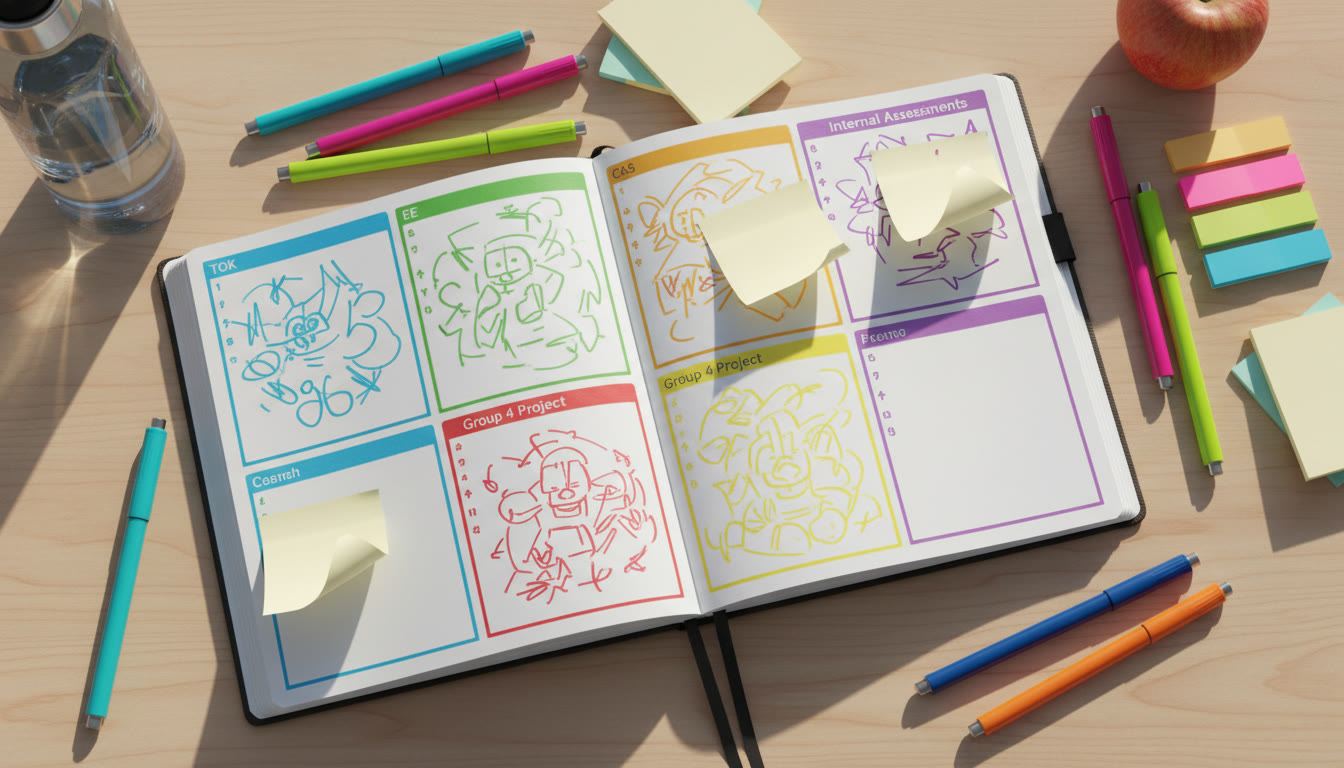
What exactly is a buffer week?
A buffer week is an intentional, low-stakes week built into your study calendar. It is not a break where everything is ignored, nor is it a crammed week of last-minute revision. Think of it as a maintenance pause: a scheduled moment to close open loops, finish marked tasks, revise tricky topics, attend to missed IB requirements, and—perhaps most importantly—restore mental energy so your next high-focus stretch is sharper and more efficient.
Buffer weeks can be “micro” (a long weekend or an extended study weekend) or “macro” (a full seven-day week). They sit between intense assessment cycles so that pressure peaks stay sustainable instead of becoming a relentless climb.
Why every IB student needs one
- Protects learning quality: fatigue turns productive study into busywork. A buffer week restores cognitive bandwidth so revision actually sticks.
- Manages deadlines: IAs, labs, CAS records and drafts pile up. A buffer week is the scheduled time to finalize and cross things off the list.
- Reduces burnout: the predictable rhythm of push, pause, and reset is far kinder to long-term motivation.
- Improves assessment performance: arriving at assessments with consolidated notes and refreshed energy tends to produce better work than last-minute panics.
- Provides contingency for life events: illness, family obligations, or unexpected school events happen. A buffer week absorbs some of that disruption so your roadmap stays intact.
Types of buffer weeks and when to use them
Not every buffer week looks the same. Design them based on what you need at a given point in the two-year cycle.
- Catch-up buffer: Immediately after a busy assessment window. Focus on unfinished IAs, missed labs, or feedback revisions.
- Consolidation buffer: After a long block of teaching — use this to organize notes, make concept maps, and practice exam-style questions.
- Recovery buffer: A softer week with more rest and light review to recharge after sustained pressure.
- Pre-exam buffer: Short, focused week before mock exams or final assessments to smooth knowledge gaps.
Strategic placements across the two-year roadmap
There is no single correct frequency, but a solid rule of thumb that balances momentum and rest is to schedule one full buffer week after every 6–10 weeks of concentrated work, and to add short micro-buffer weekends after intense weeks. That translates to roughly four to six full buffer weeks across the two-year diploma depending on the rhythm of your school and assessment calendar.
Here is a clear sample cycle to visualize how a buffer week fits in:
| Week | Focus | Intensity | Buffer? | Primary Tasks |
|---|---|---|---|---|
| 1–6 | Teaching + Assignments | High | No | Core lessons, weekly homework |
| 7 | Assessment Window | Very High | No | Tests, IA milestones |
| 8 | Buffer Week | Low–Medium | Yes | Finish IAs, revise, rest, CAS catch-up |
| 9–16 | New Unit + Practice | High | No | Concept work, labs, essays |
Designing a practical 7-day buffer week blueprint
Here is a simple day-by-day scaffold you can adapt for any buffer week. The goal is to be intentional: set small daily priorities, protect rest, and leave the week with clear wins.
| Day | Morning | Afternoon | Evening |
|---|---|---|---|
| Monday | Light review of hardest topic for 60–90 mins | Finish one IA section or lab write-up | Reflection and plan 3 small goals for the week |
| Tuesday | Group or tutor session for weak unit (60 mins) | Revise class notes and create condensed flashcards | Active rest: walk, hobby |
| Wednesday | Practice exam questions (timed) | Address teacher feedback on drafts | Review CAS log and plan activities |
| Thursday | Dedicated Extended Essay work (deep focus block) | Organize TOK notes and practice presentations | Mindfulness or light exercise |
| Friday | Catch up on unread teacher comments, emails | Finish small administrative tasks (references, forms) | Family time or social recharge |
| Saturday | One major study block for problem area | Peer review session or tutor check-in | Reward yourself with a relaxing activity |
| Sunday | Plan next learning cycle and prioritize | Light review and set a realistic schedule | Early night: sleep and reset |
What to include in a buffer week: a practical checklist
- Clear at least one IA milestone: finish data analysis or polish an introduction.
- Spend quality time on the Extended Essay: read feedback, reorganize structure, or revise citations.
- Update CAS evidence and reflect on learning outcomes.
- Create or refine consolidated notes for one or two difficult HL topics.
- Schedule a short tutor or teacher meeting to clarify lingering questions.
- Prioritize sleep, movement, and at least one social activity to protect motivation.
How buffer weeks help with IB essentials: IA, EE, TOK and CAS
These core IB components do not respond well to last-minute rushed effort. A buffer week lets you do them properly.
- Internal Assessments: Use buffer time to refine data presentation, check criteria alignment, and implement teacher feedback. One focused 90-minute block often produces more progress than a scattered week of 20-minute bursts.
- Extended Essay: The EE benefits from deep, uninterrupted thinking. Reserve at least two buffer-week mornings per term to draft, discuss with your supervisor, and complete academic checking.
- Theory of Knowledge: TOK thrives on reflection. Buffer weeks are excellent moments to prepare polished presentations or to rehearse oral defenses.
- CAS: Use buffer time to log evidence, write reflections that connect experience to learning outcomes, and prepare for any required interviews or presentations.
Personalizing buffer weeks to subject load and profile
Your subject combination matters. HL sciences with labs will need buffer time for practical write-ups. HL languages or history require longer blocks to revise essay structures. A typical personalization approach:
- If you have two HL sciences, allocate two extended lab/write-up blocks during a buffer week.
- If your concerns are conceptual (math, physics), dedicate morning deep-focus sessions to problem solving when your concentration is highest.
- If you are essay-heavy (history, English), schedule afternoon writing sprints and a tutor review session in the buffer week.
Making buffer weeks realistic: time budgeting and tangible goals
Ambitious but vague buffer weeks become wasted weeks. Use these time-budgeting rules:
- Set 2–4 tangible goals for the week (examples: “submit IA draft,” “finish EE literature review,” “complete three past-paper papers”).
- Block 60–90 minute deep-focus sessions and protect those times—these are your catalytic units of productivity.
- Include at least two “off” blocks: time that is deliberately not study so your brain consolidates learning.
Sample 10-week rhythm to plug into Year 1 and Year 2
The following table is a template you can adapt to your school structure. Replace unit names and assessment labels with your own deadlines.
| Cycle | Weeks | Primary Focus | Buffer Week Position | Example Buffer Tasks |
|---|---|---|---|---|
| Cycle A | 1–10 | New units + small quizzes | Week 8 | Catch up on quizzes, IA planning, EE notes |
| Cycle B | 11–20 | Assessments + mock prep | Week 18 | Mock reflection, past-paper practice, rest |
| Cycle C | 21–30 | Deep units + IA execution | Week 28 | Lab write-ups, EE supervisor meeting |
How to use outside help during a buffer week
Sometimes you need a guide to turn momentum into progress. Short, targeted support can skyrocket efficiency: one 60-minute tutor check can clarify the single misunderstanding that has been slowing months of work. If you prefer tailored support, Sparkl offers 1-on-1 guidance, tailored study plans, expert tutors, and AI-driven insights that can be slotted into a buffer week to focus on highest-impact tasks. For example, a tutor can help you prioritize which IA edits matter most for marks or give a rapid concept diagnosis so the rest of your buffer week is spent on the right material.
Measuring success: metrics that actually matter
Success is not measured solely by a completed to-do list. Track both output and wellbeing.
- Output metrics: number of IA sections completed, hours of quality deep work, consolidated notes created, and practice papers finished under timed conditions.
- Wellbeing metrics: average sleep hours, stress-rating scale for the week, and whether planned rest activities happened.
- Retention metric: after a buffer week, test yourself on previously weak topics. If accuracy improves, the buffer worked.
Common pitfalls and how to avoid them
- Turning a buffer into a binge: Don’t use it to cram everything you missed. Prioritize 2–4 impactful tasks.
- Going too soft: A buffer is not a holiday. Keep short, focused study blocks.
- Ignoring feedback loops: If you don’t review teacher feedback during a buffer week, you miss a prime moment to apply improvements.
- Scheduling too many buffers: Too many pauses fragment learning. Aim for regular rhythm, not constant interruptions.
How to get buy-in from teachers, parents and yourself
Explain that buffer weeks are not procrastination but a strategy to improve consistency and quality. Show a simple checklist of goals for the week, highlight how teacher feedback will be implemented, and promise a short meeting at the end of the week to show outcomes. Schools often appreciate predictable rhythms because they reduce emergency deadline shifts.
Quick templates you can copy
- Micro buffer weekend: Friday evening 1 hour to list tasks, Saturday two 90-minute deep sessions for IA/EE, Sunday review and plan.
- Full buffer week: 3 deep blocks for subject work, 2 tutor/teacher check-ins, 2 half-days reserved for rest and low-effort review.
- Emergency buffer protocol: If life interrupts, reassign two buffer weeks as contingency and reduce productivity targets that cycle.

Putting buffer weeks into your two-year roadmap
Think big and small: use buffer weeks as the connective tissue between units and as insurance against life’s unpredictability. Sketch a two-year plan that places buffer weeks after each heavy assessment cluster and before intense exam-focused cycles. This creates a repeating rhythm: learn, assess, recover, consolidate, then learn again — a cycle that supports sustained improvement without sacrifice.
Final checklist to start your first buffer week
- List your top 3 urgent academic tasks and top 2 wellbeing goals for the week.
- Block two 60–90 minute deep-focus sessions per study day and protect them.
- Schedule a short teacher or tutor touchpoint mid-week to test progress.
- Reserve at least two meaningful rest blocks: sleep, movement, or social time.
- End the week by planning the next learning cycle, not by sprinting into it unprepared.
Buffer weeks are not a magic pill, but they are one of the smartest, most humane tools you can add to your IB DP strategy. When you plan them intentionally, they make your hard work more effective, protect your wellbeing, and keep the two-year journey sustainable. Build the rhythm that works for you, adapt it to your subjects and personal needs, and protect those pauses as deliberately as you protect your study time.
With a carefully scheduled buffer week embedded in your IB DP roadmap, you create space for better work, better learning, and a steadier trajectory through the demands of the diploma programme.
























No Comments
Leave a comment Cancel