
IB DP Mock Exams: How to Use Mock Results to Build Your Final Plan
Mock exams are more than a dress rehearsal. They’re a conversation between you and the syllabus: where you show what you can do, and the marks show where the syllabus is still asking questions you haven’t answered clearly. Used well, mock results turn anxiety into actionable information. Used poorly, they become just another set of numbers that make you feel stuck. This guide is written for students who want a clear, compassionate, and practical path from mock paper to final plan — a two-year roadmap that keeps your goals realistic, your workload sustainable, and your confidence growing.
Think of this as a toolkit: how to read the data in your mark sheet, how to translate weak items into targeted practice, how to spread major tasks like Internal Assessments (IAs) and the Extended Essay (EE) across two years so nothing is rushed, and how to iterate your plan as new mock data arrives. There are examples, sample tables, and short case studies to help you see how this works in real life. You don’t need perfect mock scores to build a perfect plan — just honest interpretation and steady follow-through.

Why mock exams matter (and why they’re kind to you)
Mocks give you three critical things: evidence, focus, and feedback. Evidence tells you where you currently sit relative to your targets. Focus lets you prioritize topics and skills that will give the biggest return for your time. Feedback—both written and numerical—reveals patterns: repeated mistakes, timing problems, gaps in specific syllabus areas, or problems with exam technique rather than content knowledge. Mocks also provide psychological benefits: they reduce fear by turning the unknown into knowable steps.
Another crucial point: mocks are diagnostic, not destiny. A poor mock doesn’t mean failure. It means you found a weakness early enough to fix it. A strong mock is encouraging, but it can hide vulnerabilities (for example: good content but weak time management). Treat every mock as a snapshot: useful, temporary, and improvable.
What your mock results actually tell you
- Subject-level performance: raw marks and grade bands show which subjects need the most attention.
- Question-level patterns: are there particular question types (data response, essays, short answers) where marks fall off?
- Time management: did you run out of time or leave higher-mark questions incomplete?
- Exam technique vs knowledge: do answers miss the command terms (analyse, evaluate, compare) even though the content is correct?
- Internal assessment and coursework signals: teacher comments on IAs and EE drafts can be more predictive than a single mock paper.
Reading the sheet is the start; interrogating it with smart questions is where the learning happens. Ask: Which errors are careless? Which are conceptual? Which are skills (planning, structuring answers, time allocation)?
How to read your mock report: specifics that matter
When you look at your mock report, gather three layers of data: the headline (predicted grades or percentages), the evidence (which questions/criteria were missed), and the commentary (teacher notes, rubric feedback). Line those up: if your headline shows a middle band but the evidence shows repeated problems with one command term, then exam technique should be a priority — faster to fix than relearning whole topics.
Also consider reliability: was this a full timed paper taken under proper conditions? If not, put less weight on the exact number and more on patterns. If your school provides mark schemes or model answers, compare sample high-scoring answers to yours and highlight structural differences.
Sample banding table: using mock scores to suggest action (illustrative)
The table below shows an illustrative mapping from mock percentage ranges to suggested interpretation and immediate next steps. These bands are a starting point — actual IB grade boundaries vary by subject and session — but this table helps translate numbers into actions.
| Mock score (approx.) | Quick interpretation | Suggested immediate action |
|---|---|---|
| 85%+ | Strong foundation; likely to be in the highest grade band if maintained | Fine-tune exam technique; practice timed full papers under exam conditions |
| 70–84% | Solid knowledge with some technique or depth gaps | Target weaker question types; prioritize past paper sections and mark schemes |
| 55–69% | Frequently correct but inconsistent across topics or question styles | Focus on high-return topics and time management; plan weekly micro-tasks |
| 40–54% | Significant content or skills gaps needing sustained intervention | Create a structured study block; seek personalised help for fundamentals |
| <40% | Urgent revision required; identify whether the issue is knowledge, language, or exam skill | Intensive topic review, one-to-one tutoring, and frequent low-stakes testing |
Use this table as a conversation starter with your teacher or mentor. Avoid treating percentages as fixed predictions — think of them as signals to change how you study.
Constructing a two-year roadmap from mock insights
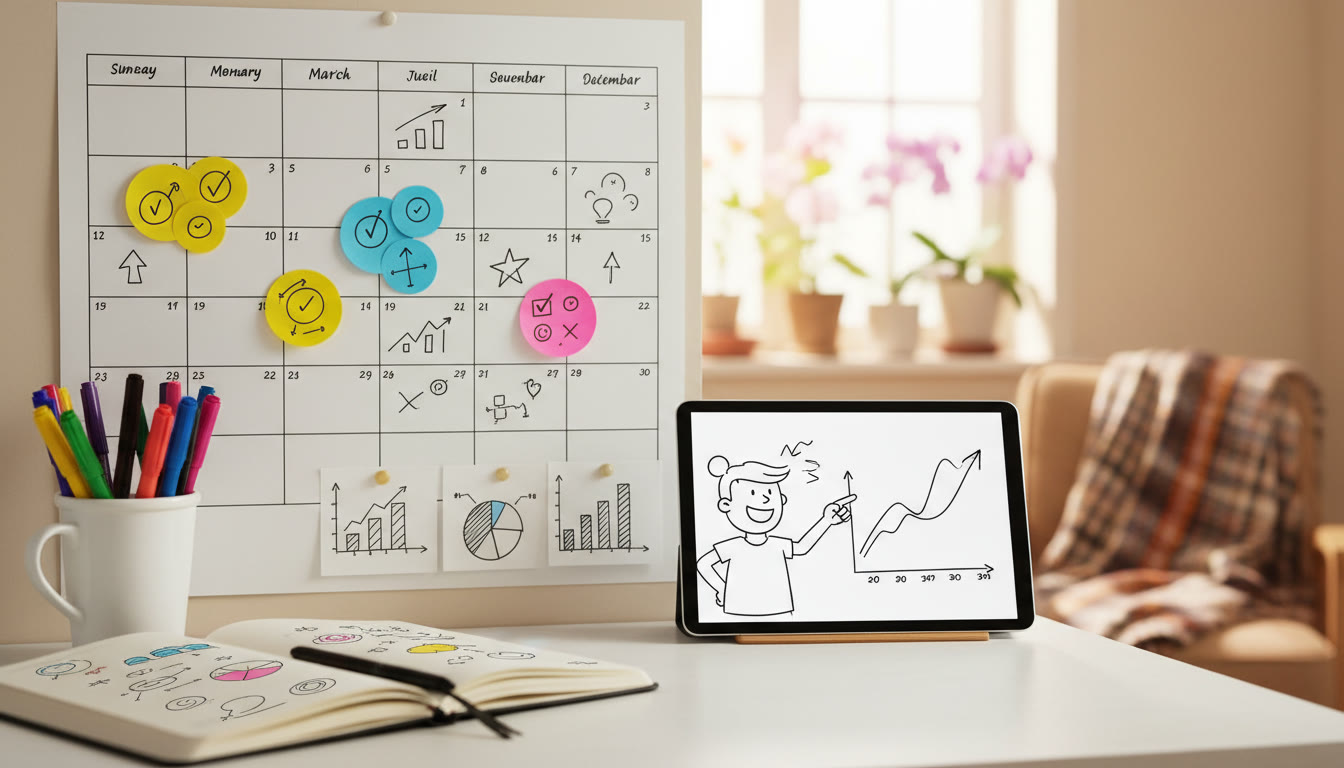
Build your two-year plan in four steady layers: Milestones, Monthly Themes, Weekly Routines, and Contingency Buffers. A roadmap turns a mock’s diagnostics into a living schedule that adapts as you improve.
Milestones should include: completion dates for IAs, EE milestones (proposal, first draft, final draft), TOK essay plan, major mocks and school assessments, and a final full-paper revision window. Monthly Themes focus each month on one or two syllabus areas per subject, or on a cross-cutting skill like essay structure or data interpretation. Weekly Routines allocate small consistent practice blocks — for example, two timed past-paper sections, one IA refinement session, and one reading/session for EE development. Contingency Buffers give you breathing room: extra revision time before and after major deadlines to absorb feedback.
| Roadmap phase | Focus | Actions | Checkpoints |
|---|---|---|---|
| Early DP year | Foundation and IA planning | Audit syllabus gaps, schedule IA timelines, choose EE topic | IA proposals submitted; EE outline complete |
| Mid DP year | Consolidation and first mock cycle | Targeted topic blocks, timed practice, first official mock | Mock review meeting; revised targets |
| Late DP year | Intensive exam technique, final IA tweaks, EE finalisation | Full past papers under timed conditions; peer review; teacher feedback loops | Final internal deadlines met; consistent timed practice scores |
| Final months | Polish and consolidation | Focus on weakest paper sections, exam strategies, physical and mental preparation | Stable performance in past papers and confidence in exam technique |
This is an adaptable scaffold: if a mock shows a big weakness in one subject, reorganize a monthly theme to address it rather than trying to work on everything at once. Concentrated, deliberate work on high-impact areas yields more improvement than spreading effort thinly.
Setting SMART targets from mock data
Translate mock outcomes into SMART targets: Specific, Measurable, Achievable, Relevant, Time-bound. Instead of “get better at Biology,” frame the goal as: “Increase my Grade prediction in Biology from X to Y by improving data interpretation and answering two past-data questions per week for the next eight weeks.” Keep targets at subject and question-type level: a target for essays, one for short answers, and one for timing. Smaller, measurable wins build momentum and make progress visible.
- Specific: name the topic or skill (e.g., “structure evaluation paragraphs”).
- Measurable: decide how you’ll measure (past-paper score, rubric checklist, teacher feedback).
- Achievable: half a grade or one grade improvement per mock cycle is reasonable with targeted work.
- Relevant: align the target with syllabus weight and final grade influence.
- Time-bound: set check-in dates tied to the next mock or assessment.
Personalised interventions and where to invest your time
Not all study is equally effective. If your mock shows conceptual gaps, spend time with structured revision resources, example problems, and teacher guidance. If your mock indicates technique problems — poor use of command terms, weak structure, or bad time allocation — practise exam-style answers and seek targeted feedback. A combination of self-study and personalised support is often the fastest route to progress.
For many students, focused one-to-one help accelerates improvement because it targets the exact error patterns identified in the mock. If you consider external support, choose tutors or programmes that offer tailored study plans, subject-matter expertise, and regular feedback loops. Sparkl‘s one-on-one guidance and AI-informed study plans are examples of how personalised learning can slot into your roadmap — offering expert tutors who help translate mock feedback into weekly practice and measurable improvements.
Quick triage: where to spend your next 10 hours
- Top priority (4 hours): Fix the one recurring error in your highest-weight subject.
- High return (3 hours): Do timed practice on question types that frequently cost you marks.
- Maintenance (2 hours): Keep another subject steady with review quizzes and flashcards.
- Reflection (1 hour): Review teacher comments and plan the next week based on the mock data.
Common pitfalls students fall into — and how to avoid them
- Overgeneralising a single mock: respond to patterns, not to panic.
- Chasing perfection: small, consistent improvements beat last-minute cramming.
- Ignoring teacher comments: rubrics and marginal notes point exactly where to improve.
- Neglecting IAs and EE early on: these are high-value tasks that are often best done incrementally.
- Skipping timed practice: content without timed execution often fails at exam time.
Mini-case studies: turning mock results into action
Scenario A — “Ana”: strong in content, weak in timed essays. Her mock: high marks on short questions, low on 30-mark essays. Action: switch Month 1–2 to essay structure drills, answer one past 30-mark question per week under timed conditions, and submit two draft essays for teacher feedback before the next mock. Expectation: consistent structure and timing should convert knowledge into higher essay marks.
Scenario B — “Ben”: uneven across topics in Physics, correct answers on mechanics but failing in electricity. His mock shows conceptual gaps. Action: dedicate weekly topic blocks (two evenings) to electricity fundamentals, use concept-check quizzes, and book targeted one-to-one sessions for tricky topics. For practical skills, do past questions tied to electricity every two weeks until performance stabilises.
Scenario C — “Chloe”: mid-range scores across subjects, overwhelmed by workload. Action: reorganise the roadmap to include a weekly rotation: two intensive subject nights, one lighter maintenance night, and a weekend IA/EE hour. Build a revision sprint four weeks before the next mock that simulates exam conditions. This balances workload and prevents burnout.
Tracking progress and iterating your plan
Build a simple tracker: subject, mock score, key errors, weekly actions, and a short reflection line. Update it after every timed practice and mock. Review trends rather than one-off scores: improving consistency across practice sessions matters more than an outlier high mark. Meet with your teacher or mentor after each mock to update milestones and adjust monthly themes.
| Review cadence | Focus | What to update |
|---|---|---|
| Weekly | Practice results and small tasks | Adjust weekly routines; tweak immediate tasks |
| Monthly | Themes and larger blocks | Reassign time to subjects based on progress |
| After each mock | Big-picture targets and milestones | Reset SMART targets and roadmap phases |
Exam-day strategies informed by mocks
Mocks teach you how you behave under timed conditions: whether you skim, rush, or spend too long on low-yield questions. Use that intel to craft an exam-day execution plan. Practice three routines: (1) the warm-up — quick content review and breathing to settle nerves; (2) the micro-plan — a 2–3 minute scan of the paper to allocate time per section; (3) the check — leave 10–15% of time for revision. If your mock revealed a tendency to lose marks on command-term prompts, annotate sample questions during revision with explicit command-term responses until it becomes instinctive.
Finally, take care of the non-academic side: sleep, nutrition, and short mental breaks matter. Mocks are not just academic drills — they’re also rehearsal for managing energy across a multi-hour exam day.
Mock exams, when used as diagnostic tools, let you design a two-year roadmap that is realistic, adaptable, and centred on meaningful improvement. Start with honest interpretation, create SMART targets, prioritise high-impact interventions, and iterate your plan after each mock. With thoughtful pacing and focused practice, mock results become the scaffolding that supports your final performance.





















No Comments
Leave a comment Cancel