
How to Balance Practical Exams with JEE Preparation
There are weeks when lab practicals seem to multiply overnight: an apparatus to set up, a report to finish, and a practical exam that eats whole afternoons. At the same time, JEE mock tests and problem practice don’t pause. If that sounds familiar, you’re not alone — and you can handle it. This article walks you through clear, practical strategies to keep both your practical-exam grades and your JEE score on track without burning out.
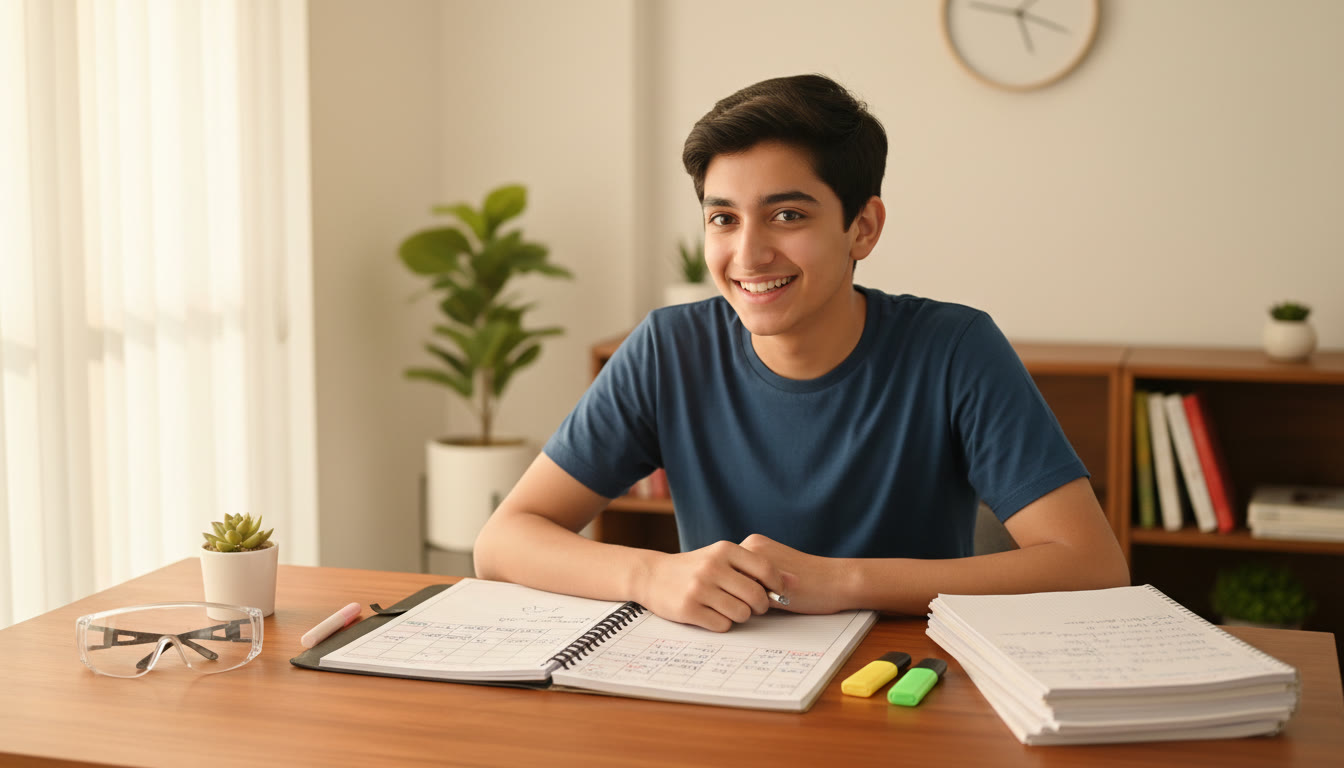
Why practical exams deserve attention — and how they can help JEE prep
Practical exams at school have two important roles: they contribute to your overall academic record and they reinforce conceptual understanding in ways that theory alone often cannot. A well-run practical can make abstract concepts tangible — a titration shows stoichiometry in action, a circuit experiment clarifies current and potential differences, and a biology dissection (where applicable) brings structure and function to life. Those vivid mental models can cut down the time you need to internalize tricky JEE concepts.
Keep this idea in mind: practical exams are not an interruption; they are an asset. If you plan for them, you can use practical learning to strengthen the foundation that JEE-style MCQs test. Remember the JEE context: MCQ-based testing, full-length 3-hour mock practice sessions, negative marking, and careful answer discipline in test environments (practice OMR or CBT habits). Do not assume any descriptive partial-marking will rescue a guess — accuracy matters.
Understand the formats and constraints: what to practice for
Before you design your schedule, be crystal clear about the exams you’re balancing:
- JEE-style assessment: MCQ-heavy, timed, often practiced through 3-hour full-length mock tests that mimic the pressure of the real exam. Negative marking penalizes careless guesses; strategy matters.
- Mock tests and practice sessions: even if your official JEE is computer-based, many school exams and practice sessions use OMR-style answer marking; practicing OMR discipline (careful marking, time checks, and no over-marking) improves accuracy and focus.
- Practical exams: typically hands-on, timed, and requiring a lab report or viva. These may cover Physics, Chemistry, and, where applicable in your school cycle, Biology; treat them as separate, scheduled commitments.
Make one promise to yourself: don’t assume partial credit will cover a messy answer. Whether it’s a numerical JEE question or a practical report, clarity and correctness are what earn marks.
Principles for building a workable schedule
Good time management starts with simple principles. Use these as guardrails when you design daily and weekly plans.
- Audit first: spend a week tracking how you currently use time — classes, labs, study, commute, meals, sleep. You’ll find pockets to reclaim.
- Prioritize by impact: allocate more time to high-yield activities (full-length mock tests, problem-solving, lab-report clarity) rather than low-focus tasks.
- Time-block: create fixed windows for practicals, focused JEE problem sessions, and mock-test practice. Defend these blocks like appointments.
- Chunk work: break large tasks into 25–60 minute focused sessions (Pomodoro-style) followed by short breaks.
- Build transitions: add short, structured transitions between practicals and JEE work — a 10-minute active review helps switch gears and retain momentum.
- Plan buffer time: practical exams and lab reports can overrun. Keep a buffer slot each week to avoid cascading delays.
Sample weekly allocation (principles applied)
| Activity | Hours per week (sample) | Why it matters |
|---|---|---|
| Full-length mock test + analysis (1 test) | 4.5 | Simulates 3-hour exam + focused 1.5-hour review, identifies weak topics |
| Physics (theory & problem practice) | 8 | Core JEE subject; deep problem practice builds speed and accuracy |
| Chemistry (theory + numerical/organic practice) | 7 | Balance between conceptual and reaction-based practice |
| Mathematics (problem sets & revision) | 8 | Consistent practice required for speed and method clarity |
| Practical preparation & execution (labs + reports) | 6 | Hands-on practice, pre-lab revision, and consolidated reports |
| Revision (short active recall sessions) | 4 | Spaced repetition for formula retention and concept maps |
| Rest, exercise, and buffer | 7 | Prevents burnout and improves concentration |
Daily routines: micro-plans that survive chaos
Micro-plans are the gearshifts of a productive day. On practical days, your flow is different than on pure study days — plan accordingly.
Routine for a practical exam day
- Morning (60–90 minutes): quick formula/flowchart review for the practical’s subject and a short JEE-focused 30-minute problem set to keep momentum.
- Pre-lab checklist (15 minutes): read the experiment objective, list reagents/apparatus, note safety steps, and sketch expected graphs/tables.
- During the practical: maintain a tidy, time-aware approach — mark time for each section and keep your lab record neat. That clarity helps in viva and report writing.
- Post-lab (30–60 minutes): immediately write—or at least outline—the report. Fresh memory reduces report time later.
- Evening (90–120 minutes): high-quality JEE practice: one timed set or focused revision on a topic connected to the day’s practical.
Routine for a heavy JEE study day
- Start with a 10-minute active recall of yesterday’s problems and key formulas.
- Two focused problem sessions (60–90 minutes each) with a 20–30 minute break in between.
- A short conceptual review tied to laboratory intuition — e.g., revisit the practical that clarified the same concept.
- End with 30–45 minutes of light revision or flashcards to lock retention.
How to use practicals to improve JEE performance
Deliberately connect practical work to JEE learning. Here are practical-to-theory moves that pay off:
- Turn a lab procedure into a concept map. If you performed a titration, map the stoichiometry steps and common error sources — this improves chemical reasoning under time pressure.
- Turn experimental graphs into variable relationships. Plotting raw data in physics labs is the same practice of translating information into insights — a skill JEE questions love.
- Use the viva as a rapid-fire conceptual quiz: prepare 5 core conceptual answers from each practical and practice them aloud for clarity.
- Repurpose lab mistakes as lessons: a mismeasured volume becomes a set of quick error-analysis notes you can review before mocks.
Mock tests, OMR discipline, and negative-marking tactics
Your weekly mock is the compass. Treat it like the real thing: timed, quiet, and with a disciplined post-test analysis.
- 3-hour mock practice: simulate full-stakes conditions. Time management across sections is as important as solving the right questions.
- Negative marking: adopt a decision rule for guesses (for example, skip low-confidence questions and flag medium-confidence ones for review). Don’t indulge random guessing.
- OMR and CBT habits: if you practice on paper or OMR in school, mimic careful marking: fill bubbles fully, avoid multiple marks, and keep an eye on question numbers. For CBT, practice fast navigation and accuracy in marking answers on the interface.
- Post-test review: spend at least 1.5 times the test duration analyzing errors — categorize them as careless, concept, or speed-related and create a mini-action plan.
When practicals clash with JEE milestones: three smart strategies
Sometimes two important things happen at once: a set of practical exams and a scheduled mock. Use these strategies to prevent one from wrecking the other.
- Shift intensity, not presence. If practicals cluster, keep your JEE rhythm but dial down volume. Maintain at least one full-length mock in the cycle and shorter timed practice sessions on other days.
- Front-load pre-lab prep. Complete reports and conceptual summaries before the practicals week; this buys time for mock-review afterward.
- Combine study modes. Use waiting time in labs or gaps between sessions for micro-revision (flashcards, formula recall, or a 20-minute problem warm-up).
Common pitfalls and how to fix them
Students fall into the same traps. Recognize these and apply the fixes quickly.
- Pitfall: Doing long, unfocused study sessions after a tiring practical. Fix: Schedule a short, high-value study block (30–45 minutes of focused problem solving) instead of lingering for hours.
- Pitfall: Letting lab reports pile up. Fix: Immediately record results and a concise report outline after each lab — a 30-minute write-up is much cheaper than an all-night marathon.
- Pitfall: Ignoring mock analysis. Fix: Make the post-mock review mandatory — it’s the fastest route to improvement.
- Pitfall: Treating practicals only as pass/fail. Fix: Use them to build mental models that shorten your JEE learning curve.
Practical checklists you can use
Carry short checklists — they reduce friction and decision fatigue.
- Pre-practical checklist: objective, apparatus list, key precautions, expected observations, time allocation per task.
- Post-practical checklist: raw data logged, immediate observations written, report outline drafted, top 3 conceptual takeaways noted.
- Mock test checklist: study plan for the day before, items to carry (admit card where applicable, watch, stationery), test-start routine, and post-test analysis template.
Sample focused timetable (daily snapshot)
| Time | Activity | Focus |
|---|---|---|
| 06:00 – 07:00 | Wake-up, light exercise, formula flashcards | Activation |
| 07:00 – 08:30 | Deep problem session (JEE subject) | High cognitive load |
| 09:00 – 12:00 | School / Practical exam slot | Hands-on & reporting |
| 13:30 – 15:00 | Post-lab report + short rest | Consolidation |
| 16:00 – 18:00 | Mock-focused practice or class | Speed & accuracy |
| 19:00 – 21:00 | Revision + light problem set | Retention |
| 21:30 | Plan next day & sleep | Recovery |
When to ask for help — and how personalized support shortens the road
If you repeatedly see the same weak spots after mock analysis, or if practical scheduling chronically disrupts focused study, it’s time to bring in targeted support. Personalized help can do three things quickly: prioritize your weak topics, create a study plan that fits real-world practical commitments, and provide accountability.
For example, Sparkl offers one-on-one guidance, tailored study plans, expert tutors, and AI-driven insights that can map your practical calendar into a workable JEE strategy. If you choose a personalized route, make sure it includes timed mock simulations, focused review sessions, and concrete advice on integrating practical learning into problem-solving.
Small habits that compound into big gains
Consistency beats occasional heroics. A few small habits to adopt:
- Record one clear takeaway after every practical — a sentence that you can review later.
- Do a 10-minute formula/definition crawl before any practical or mock test.
- After every mock, write three targeted tasks to address before the next test.
- Protect sleep and short exercise — your brain consolidates problem-solving skills while you rest.
Real-world context: a short vignette
Imagine Anika, who had two chemistry practicals and a mock test in the same week. She prepared by pre-reading experimental objectives on Sunday, scheduled a single focused mock on Wednesday morning, and used the evening after practicals for short problem practice. She wrote concise lab reports immediately after the sessions and used flagged mock mistakes to drive two targeted tutoring sessions. A month later her mock score improved because lab insights had clarified several concepts and the structured review fixed recurring errors.
Final checklist: day-before and day-of
- Day-before practical: finalize report skeletons, pack apparatus list, review key formulas, and set a short, calming evening routine.
- Day-of practical: quick warm-up review, pre-lab checklist, time checkpoints during the practical, and immediate report outline post-session.
- Day-before mock: light review of formulae and solved examples, early sleep, and mock-simulation items ready.
- Day-of mock: follow your timed plan, avoid random guessing, and keep a disciplined marking routine whether via OMR or CBT interface.
Conclusion
Balancing practical exams with JEE preparation is a challenge of scheduling, deliberate practice, and small daily habits. Treat practicals as opportunities to deepen conceptual clarity, protect your mock-test routine for realistic time-management practice, and use focused post-test analysis to close gaps. With consistent time-blocking, buffer planning, and targeted review, you can keep practical grades strong while steadily improving performance in timed, negative-marking MCQ environments.






















No Comments
Leave a comment Cancel