
Complete Guide to CBSE Exam Preparation Strategy
Preparing for CBSE board-style exams can feel like standing at the foot of a mountain: exciting, a little daunting, and very climbable if you pick the right route. This guide is written for students who want a practical, human plan — not a list of buzzwords. You’ll get clear steps to map the syllabus to a study plan, smart ways to practice (including full-length mock practice), how to write answers with marking in mind, and daily rhythms that build progress — all explained in a friendly, no-frills way.
Throughout this guide you’ll see examples, sample schedules, and small experiments you can try immediately. The aim is to make your preparation efficient and calm: more about steady progress than last-minute panic. Wherever the word ‘latest updates’ or ‘current cycle’ shows up, treat it as a reminder to check your school or official noticeboard for any small changes to formats or weightages.

1. Know the terrain: Syllabus, exam pattern and marking
Map the syllabus (don’t memorize the map — use it)
Start by splitting the official syllabus into three lists: must-master (high weightage or foundational), must-practice (application or problem-heavy chapters), and must-review (less weightage but frequently tested facts). This simple triage helps prioritize time. Align every study block to a specific chapter or sub-topic. A study session with a named target (“Complete 2 proofs in Coordinate Geometry and summarize formulas”) beats a vague session like “study maths.”
Understand the exam pattern
CBSE-style papers often mix objective, short-answer and long-answer questions. There is usually a time-bound written paper, sometimes complemented by internal assessments or practicals for certain subjects. Make sure each mock you take reflects the same balance of question types and the same total time as the actual paper: that’s how you build stamina and realistic pacing.
Marking matters — write for marks, not mystery
Examiner rubrics matter more than clever language. Always learn how marks are allocated: how many marks for a numerical step, how many for final answers, and how long an ideal answer should be. Do not assume partial marking will cover missing logical steps — present the correct, essential steps clearly. When you practice answers, use the marking style: number your steps, underline final answers, and keep diagrams neat and labelled. This clarity helps examiners award marks unambiguously.
2. Build a realistic study plan
Set clear, measured goals
Daily goals should be small and measurable (finish a set of problems, memorize three definitions, complete one experiment report). Weekly goals should be about mastery: finish two chapters with a practice set and one revision. Monthly goals are broader: finish half of the syllabus for a subject or complete three full-length mock tests.
Design daily and weekly blocks
- Use focused blocks of 50–90 minutes with 10–15 minute breaks (Pomodoro-style works well for many students).
- Alternate subjects to avoid fatigue: pair a concept-heavy subject (like Physics) with a language or creative subject (like English) in the next block.
- Reserve short daily slots for quick drills: 20 minutes of formula revision, 20 minutes of vocabulary or map practice.
Balance depth and breadth
Don’t over-commit to perfecting one chapter while ignoring others. A steady, even coverage with periodic deep-dives (where you resolve conceptual gaps) pays off. Use the triaged syllabus lists from earlier to guide depth allocation.
3. Sample weekly timetable (practical template)
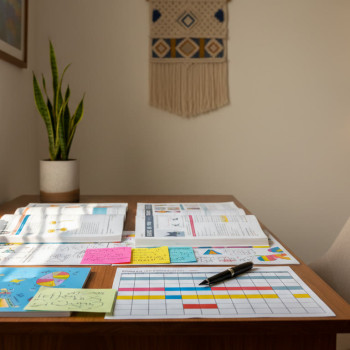
This is a flexible, example table you can adapt to your school timetable and energy pattern. Swap subjects, move breaks, and keep weekends lighter for consolidation.
| Day | Morning (2 hrs) | Afternoon (2 hrs) | Evening (2 hrs) | Night (1 hr) |
|---|---|---|---|---|
| Monday | Maths: Concept + 4 problems | English: Comprehension + Writing practice | Science: Theory + short practical write-up | Quick review: Formulas (15 mins) |
| Tuesday | Social Science: Chapter read + map practice | Maths: Practice set (timed) | Language: Grammar drills + summary writing | Flashcards: Key dates & concepts (20 mins) |
| Wednesday | Science: Numerical problems (Physics) | Optional: Project/practical work | Maths: Revision of weak topics | Notes clean-up (15–30 mins) |
| Thursday | English: Literature text + question practice | Social Science: Practice answer writing | Science: Chemistry reactions + practice | Light reading or rest |
| Friday | Maths: Mock section (45 min) | Review: Mark & analyze mock | Language: Listening/Comprehension drills | Formula flash (10 mins) |
| Saturday | Full-length mock (timed) one subject | Mock correction & doubt list | Group study / Doubt-clearing | Relax & light revision |
| Sunday | Catch-up: finish pending tasks | Revision: 2 chapters quick review | Plan next week’s blocks | Early sleep |
4. Subject-wise strategies
Mathematics
Maths is practice-heavy. Build muscle memory by doing a mix of routine problems and novel problems. Timed practice is essential: once you learn a method, set a timer and solve a set under exam conditions. Maintain a “mistake log” — when you make a mistake, write down the reason and a clear correction. Revisiting that log weekly prevents repeat errors.
Sciences (Physics, Chemistry, Biology)
Clear concepts and neat presentation win marks. For numerical subjects, always show key steps; for theory, use labelled diagrams and precise terms. Treat diagrams and derivations as study tools — they help you internalize ideas — but write concise, exam-ready answers during practice. For practicals and lab work, keep accurate records and practice writing concise procedure-and-observation answers aligned with marking guidelines.

Social Science
Combine chronological understanding with cause-and-effect clarity. Practice source-based questions, map labels, and timed answers for long-answer history or geography questions. Use timelines and mind maps to consolidate events and relationships.
Languages (English and other languages)
For language papers, work on comprehension speed, structured paragraphing, and varied vocabulary. Practice one timed composition per week and rewrite model answers to improve clarity and coherence.
5. Practice: the backbone of exam readiness
Full-length mock practice — make it sacred
Full-length mocks simulate stamina, time-management and exam temperament. Schedule at least one full-length mock per week in the run-up to the final exams, and more frequently as the exam approaches. After every mock, spend at least as much time marking and analyzing mistakes as you spent writing the paper. Learn to identify recurring gaps — topics you skip, careless errors, or timing issues — and adjust your next week’s plan accordingly.
Sectional tests and daily drills
Use sectional tests for targeted practice and quick wins. A 30–45 minute sectional for one chapter helps reinforce learning and keeps momentum. Keep a balance between depth (full mocks) and focused drills (sectionals).
Self-assessment and error analysis
- Mark objectively using the official marking approach.
- Classify errors: conceptual, procedural, careless, or time management.
- Create a corrective plan: if a concept is weak, allocate two focused sessions to rebuild it, then test immediately.
6. Smart revision techniques
Active recall and spaced repetition
Memory is durable when you retrieve knowledge repeatedly over spaced intervals. Convert notes into flashcards or quick prompts and test yourself at increasing intervals. Pull a shuffled deck of formula cards and write out proofs or derivations from memory.
One-page notes and formula sheets
Condense each chapter into a one-page sheet: key formulas, definition snippets, common pitfalls, and one example problem. In the last weeks, these one-pagers become a powerful quick-review tool.
Mind-maps and concept-chaining
Map related topics visually: link Newton’s laws to energy conservation, or link a historical event to its political consequences. Concept maps help during revision to quickly restore a subject’s architecture in your head.
7. Last-week and exam-day tactics
The final week
- Avoid learning large new topics; focus on consolidation, quick-revision sheets, and correcting recurring errors.
- Do 2–3 shortened mocks in exam conditions; one full-length if energy permits.
- Sleep well — short-term memory and problem-solving are fragile under sleep debt.
On exam day
Read the entire paper first. Allocate time proportional to marks: if a question is worth 10 marks, plan how many minutes you’ll spend. Attempt easy questions first to secure marks, but ensure you return to long, structured answers with enough time. Present steps clearly, label diagrams, and write final answers or conclusions distinctly so they’re easy to spot for an examiner.
8. Health, mindset and motivation
Small rituals that stabilize performance
Regular sleep, short exercise, and planned breaks boost focus. Build small rituals before study sessions: a five-minute review of yesterday’s notes, a fixed playlist, or a warm-up problem. These cues reduce procrastination and make beginning a session easier.
Stress management
When anxiety spikes, switch to a low-stress task (flashcards or light revision) for a short period and return to tougher tasks when calm. Deep breaths, brief walks, and short social check-ins with family help reset perspective.
9. How personalized support fits in
Not every student needs the same help. Some benefit from periodic doubt-clearing; others need a structured revision calendar and regular mock analysis. Sparkl‘s personalized tutoring can complement your plan with one-on-one guidance, tailored study plans, and expert feedback on mocks. Use personalized help to resolve specific, recurring gaps rather than replace daily disciplined practice.
10. Tools, materials and smart use of technology
Choose tools that save time: digital flashcards, a central notes app, and a single place for solved mock papers. Resist the temptation to chase too many resources — one carefully worked textbook, your class notes, and a set of past papers are more effective than scattering attention across dozens of sources.
11. Common mistakes students make (and how to avoid them)
- Ignoring the official syllabus or question pattern — align every study session to the syllabus.
- Only passive reading — convert reading into retrieval and written practice.
- Skipping mark-aware answer practice — practice with marking in mind.
- Poor error analysis — fix the root cause after every mock.
- Late-night cramming in the final days — consolidate with short, active revision instead.
12. Sample 8-week ramp-up (high-level)
This is a flexible outline for an 8-week focused period before the final exam window. Adjust subject blocks depending on your own syllabus gaps and school calendar.
| Week | Primary focus | Practice target | Revision goal |
|---|---|---|---|
| Week 1–2 | Finish outstanding chapters (must-master) | Sectional tests for each chapter | Create one-page notes for each completed chapter |
| Week 3–4 | Deep practice on weak areas + timed problem sets | One full-length mock per subject | Update formula sheets & fix recurring mistakes |
| Week 5–6 | Mixed revision and mock analysis | Two full-length mocks per week | Revise all one-page notes twice |
| Week 7–8 | Consolidation and confidence-building | Targeted short mocks and quick drills | Light review; rest and focus on sleep hygiene |
13. Practical examples and mini-experiments
- Micro-test: Try a 30-minute focused test on one topic, analyze errors in 30 minutes, then reattempt similar questions the next day — this cements learning faster than re-reading notes.
- Swap study partners for a week: explain a complex concept to a peer — teaching is one of the fastest ways to reveal gaps.
- Time-slicing: For a 10-mark question, practice writing a perfect answer in the exact number of minutes you’ll allot in the exam; then compare with the marking style.
14. Final checklist before you close a study day
- Have I done one active recall exercise today?
- Did I correct at least one recurring mistake?
- Is tomorrow’s plan ready and specific?
Conclusion
Preparing for CBSE-style board exams is a mix of clear planning, honest practice, and steady revision. Focus on syllabus alignment, do regular full-length mock practice, write answers with marking logic in mind, and protect your sleep and wellbeing. With deliberate effort and a study rhythm tuned to your strengths and gaps, consistent progress is not only possible but predictable.




















No Comments
Leave a comment Cancel