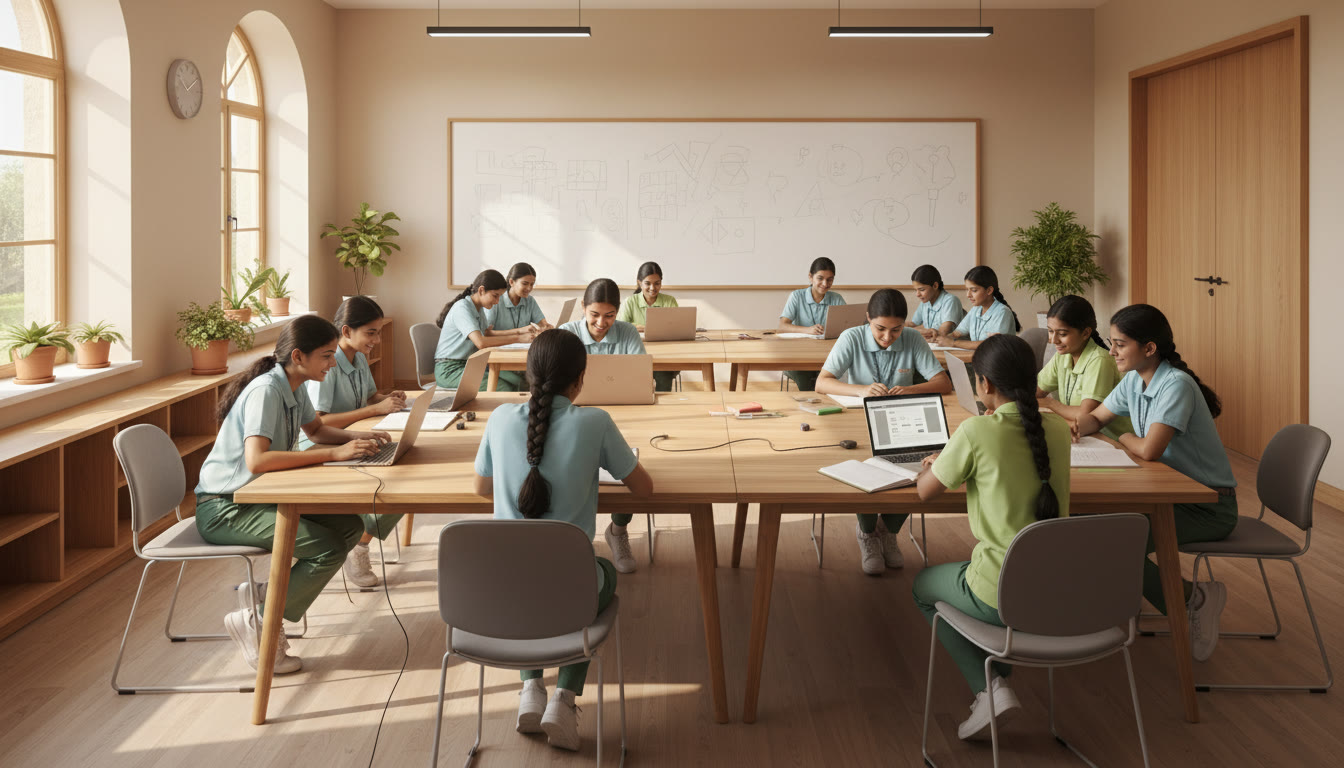

ICSE vs CBSE: Which Board Builds Better Skills?
Choosing a board is more than picking a logo on your school report — it shapes the way you learn, express ideas, solve problems and get ready for life beyond exams. Students and parents often ask whether ICSE or CBSE ‘builds better skills.’ The honest, useful answer is: both can — but they tend to build different blends of skills. This guide walks you through those differences, explains which kinds of strengths each board naturally fosters, and gives a practical, skill-focused CBSE study plan that helps any student turn board years into long-term advantage.
Quick snapshot: how the two boards shape learning
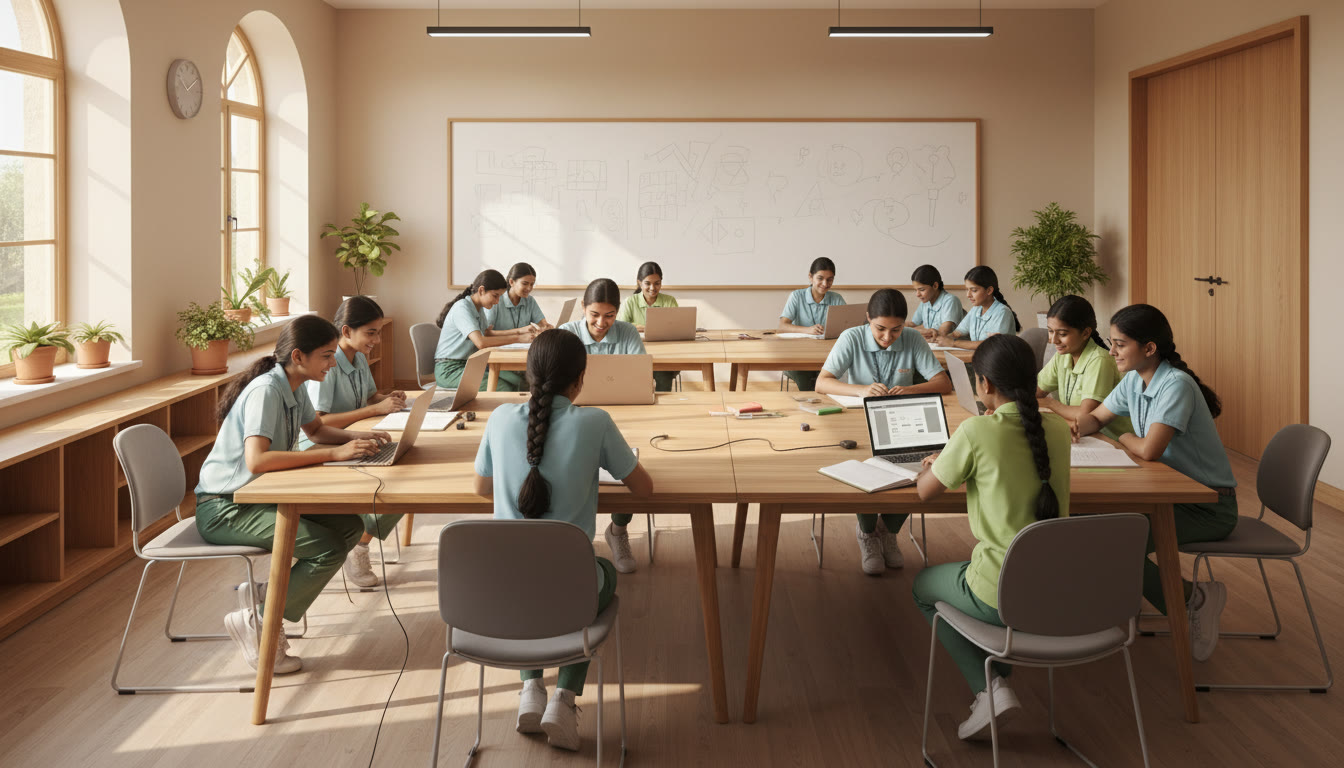
At a glance, ICSE and CBSE have distinct philosophies that steer classroom time, homework and assessments. One leans toward breadth of content and language-rich study; the other emphasizes streamlined concepts, application and exam-readiness. Neither path is inherently superior — what matters is how a student uses the structure to practice key skills: thinking, reasoning, communication, analysis and synthesis.
Curriculum and classroom experience — what changes day to day
- CBSE-style classrooms: Often focused on clarity, core concepts and practice problems that reinforce application. Lessons are frequently designed to align with national-level assessment patterns, giving students steady practice with objective and structured subjective questions.
- ICSE-style classrooms: Typically place heavier weight on detailed explanations, English-language skills, extended reading and written expression, and projects that demand research and presentation.
Assessment and marking — how skill development is measured
Both boards evaluate through written exams, internal assessments, and practicals where applicable. CBSE’s assessment methods tend to emphasize time-managed problem solving and objective-to-short-answer formats alongside long answers. ICSE often emphasizes descriptive answers, vocabulary, and extended writing. Importantly, CBSE’s marking approach in board-style papers is explicit: each question has a fixed mark allocation and model answers or marking schemes are used to guide scoring. Practicing with those mark allocations is a skill in itself — it trains students to allocate time and structure answers so they earn full marks.
Which skills does each board typically build?
Below I break down the major transferable skills each board tends to cultivate. Remember: overlap is large, and committed study habits can generate the same outcomes across either board.
CBSE: speed, application and exam dexterity
- Rapid problem-solving: Regular practice with concise questions strengthens quick reasoning — crucial for time-bound exams and many competitive tests.
- Structured writing for answers: The mark-wise format teaches students to present steps clearly and efficiently so each step is graded.
- Analytical practice: Repeated exposure to application-based questions (numerical problems, experiments with clear procedures) builds procedural fluency.
ICSE: depth in language, expression and project work
- Language and communication: A large emphasis on literature and composition builds vocabulary, precision in expression and essay craft.
- Research and project skills: Longer projects, assignments and internal assessments teach sourcing, citing and presenting information.
- Descriptive learning: Students often learn to expand answers with context, which supports creative thinking and contextual explanation.
Shared skills
Both boards teach core subject knowledge, laboratory skills, map and data interpretation in social sciences, and study discipline. The difference is emphasis: one favors compact, high-frequency practice; the other rewards detailed exposition and writing stamina.
Designing a CBSE study plan that builds skills (not just marks)
If your goal is durable skills — clear thinking, problem solving, articulate expression and exam strategy — treat your CBSE years as training ground. Below is a practical plan you can adapt to your class, pace and subject choices.
Principles to build into every study plan
- Work backwards: Start from exam-style outcomes and practice the skills those outcomes require (timed answers, structured explanations, lab reports, map skills).
- Active practice over passive reading: Solve problems, write full answers, speak aloud summaries, and create quick tests for yourself.
- Spaced repetition: Revisit topics at increasing intervals so understanding moves to long-term memory.
- Use the marking scheme: When practicing, allocate time exactly as marks suggest. This trains management and shows you how to earn partial/step marks appropriately.
- Balance depth and breadth: CBSE’s streamlined syllabus lets you cover the breadth — use that to achieve deep practice in core concepts.
Suggested weekly study-hours by subject (CBSE-focused)
| Subject | Weekly Hours (Minimum) | Weekly Hours (Target) | Primary Focus |
|---|---|---|---|
| Mathematics | 6 | 10 | Problem sets, timed practice, concept maps |
| Science (Physics/Chemistry/Biology) | 6 | 10 | Conceptual clarity, numerical problems, practical write-ups |
| English (Language & Literature) | 4 | 6 | Comprehension, writing practice, précis and paragraph skills |
| Social Science | 4 | 6 | Timeline building, maps, structured answers |
| Second Language | 3 | 5 | Grammar practice, composition, oral practice |
| Optional / Practical / Projects | 3 | 6 | Lab work, project reports, portfolio |
| Revision & Mock Feedback | 5 | 8 | Past papers, error logs, timed full-paper practice |
Note: Totals vary with class level and subject load — these figures are flexible ranges that prioritise balanced skill-building and sustainable effort.
Mock tests: schedule and how to extract maximum value
| Time Before Board | Test Type | Frequency | Primary Focus |
|---|---|---|---|
| 6+ months | Full-length diagnostic | 1–2 | Identify weaknesses and pacing issues |
| 3–4 months | Timed sectional tests + 1 full paper/month | Monthly | Build stamina, mark-wise time allocation |
| 1 month | Weekly full-length mocks | Weekly | Sharpen accuracy, reduce silly mistakes, exam routine |
| Last week | Light revision, selective timed practice | Daily light sessions | Confidence, concept clarity, rest |
How to use each mock: simulate exam conditions, time each section as per marks, mark answers with the scheme, and then spend at least twice the test duration analyzing errors. Maintain a two-column error log: (1) Mistake, (2) Fix (how to avoid next time).
Subject-by-subject tactics that build practical skills
Mathematics
- Practice core problem types repeatedly — aim for accuracy first, then speed.
- Write step-wise answers with intermediate results; this secures step-marks even when the final answer slips.
- Maintain a formula sheet updated weekly; test yourself by deriving a formula once a month instead of memorising it.
Science
- Use diagrams and labelled sketches to visualise processes — they help recall during exams and show clarity of thought.
- Perform practical write-ups carefully and practise experimental reasoning questions that ask ‘why’ and ‘how’.
- Summarise key experiments in two lines: aim, observation, inference — repeat until concise and accurate.
English and Languages
- Write one short essay or composition a week and get it reviewed against the marking criteria (organization, coherence, vocabulary).
- Practice comprehension strategy: underline main idea, supporting facts, tone and author’s purpose.
- Build a daily reading habit (newspapers, short stories, science articles) to grow comprehension and vocabulary.
Social Sciences
- Create timelines and cause-effect maps for history topics; practise map and data interpretation regularly.
- Write structured answers using a one-line thesis followed by 2–3 supporting points — this aligns with mark allocations.
Practical learning tools: diagrams, derivations and notes
Use diagrams, derivations and structured notes as learning tools rather than decorative extras. A labelled diagram in Science or a step-by-step derivation in Maths helps you understand the process, which is more important than reproducing it verbatim in an answer. During practice, write answers exactly as the marking scheme suggests so your presentation becomes second nature. Treat notes as active tools: convert them into flashcards, explain them aloud, and teach a friend — teaching is a fast track to deep learning.

When and how to seek personalised help
There are moments when personalized attention accelerates skill growth: persistent conceptual gaps, recurring mistakes, or time-management issues that don’t improve with self-practice. A thoughtful coaching approach isn’t about spoon-feeding answers; it’s about personalised feedback and targeted drills that address your weak links.
For students who prefer guided, tailored support, Sparkl’s personalised tutoring can supplement school learning with one-on-one guidance, tailored study plans, expert tutors and AI-driven insights that highlight topics needing immediate attention. Used wisely, such support focuses your practice, improves exam strategy and helps convert weak areas into strengths.
Common myths — and the reality students should focus on
- Myth: One board guarantees success for any career. Reality: Success comes from skills and habits you build; the board shapes opportunities but doesn’t predetermine outcomes.
- Myth: CBSE only teaches to the test. Reality: CBSE’s structure helps practise applied skills quickly — and those skills can be repurposed for deeper learning when you choose to add breadth.
- Myth: ICSE is only for language lovers. Reality: ICSE emphasizes language and depth, but motivated students can develop strong scientific and quantitative skills in any board.
Putting it together: a 6-week practical sprint (skill-focused)
Use this sprint if you want concentrated skill development. It assumes you have regular classes and adds targeted practice on top.
- Week 1–2: Diagnostic & foundation — take one timed full paper per major subject, map weak areas, revise fundamentals for two weak topics per subject.
- Week 3–4: Targeted practice — use short, timed drills (30–60 minutes) every day on weak topics; do one full subject test every weekend; update error log daily.
- Week 5: Simulation & correction — take two full-length, timed mocks and a lab/practical simulation if applicable; spend three times the test duration analyzing errors.
- Week 6: Consolidation — light timed practice, revise formula/quick notes, maintain consistent sleep and nutrition to support performance.
A final checklist to make your board choice and study plan work for you
- Decide based on your learning style and long-term goals, not on myths or peer pressure.
- Use the board’s strengths: CBSE for application and exam-style practice; ICSE for expressive depth and projects — then intentionally practice any skill you feel is missing.
- Practice full-length mock tests under real exam conditions and use the marking scheme to guide answer structure and time allocation.
- Keep an error log and convert mistakes into targeted drills.
- Use diagrams and derivations as learning tools and practice presenting answers exactly as the marking scheme rewards.
- When needed, seek personalised, focused help to unblock recurring challenges; make sure that help gives clear feedback and measurable improvement.
Choosing ICSE or CBSE is the start of a learning journey, not the finish line. Each board offers strengths — CBSE trains rapid application and exam-readiness, while ICSE often encourages expressive depth and detailed projects. The true advantage comes from active practice: using marking schemes, taking full-length mock tests, analyzing errors, and building study habits that turn knowledge into reliable skills. With a clear plan, consistent practice and focused feedback, students can develop the analytical thinking, communication and problem-solving skills that truly matter beyond the mark-sheet.
This guide has focused strictly on academic and skill-related differences and practical study strategies for CBSE, leaving the final choice to fit with each learner’s strengths and goals.
























No Comments
Leave a comment Cancel