

IB DP Core Components: Plan IA + EE + TOK as a Single, Smart System
It’s easy to treat the IB’s three core pieces—Internal Assessment (IA), the Extended Essay (EE), and Theory of Knowledge (TOK)—as three separate, looming deadlines. But that separation is a missed opportunity. When you design them as parts of one integrated system, each piece supports the others: research for the EE deepens IA methods; TOK reflection sharpens how you interpret evidence; IA data provides concrete examples for TOK claims. The trick is planning with intention, not panic.
This guide walks you through a practical, student-friendly blueprint for making IA, EE, and TOK work together. Expect clear milestones, a sample timeline, tactical weekly routines, and real-world mini case studies that show how to turn overlap into advantage—without compromising originality or academic integrity. Along the way you’ll find tools for scaffolding your time, prompts to build stronger research questions, and suggestions for feedback loops that actually move your work forward. If you want extra structured support, consider pairing your plan with Sparkl‘s tailored 1-on-1 guidance and study plans to keep momentum steady.

Start with purpose: what each component is asking for
Before you combine them, be clear on what each part is for. Think of the IA, EE, and TOK as different test beds for the same core intellectual habits—questioning, evidence, argument, and reflection—applied at different scales.
- Internal Assessments (IA): Small-to-medium projects that ask you to apply subject-specific methods—laboratory work in sciences, performance in arts, fieldwork in geography—usually teacher-supervised and assessed against subject rubrics. They reward procedural clarity and honest reflection on method.
- Extended Essay (EE): A sustained, independent research project. It’s your chance to pursue an original question in depth, demonstrating research design, critical evaluation of sources, and coherent argument across an extended piece of writing.
- Theory of Knowledge (TOK): A conceptual space to reflect on knowledge itself—how knowledge is produced, the limits of methods, and the role of perspectives. TOK provides the meta-language that strengthens claims and citations in both IA and EE.
When you see these as complementary, planning becomes about timing and alignment rather than juggling separate crises.
Why integrate? Three practical benefits
- Efficiency: One literature search can seed both EE and IA bibliographies; a small experiment can generate IA data plus a case study for EE and a TOK real-life situation.
- Depth: Cross-pollination deepens argument: TOK reflection can add philosophical nuance to an EE introduction or a critical evaluation in an IA.
- Consistency: Using shared research logs and supervisor notes reduces duplication and keeps a clear trail of progress—handy for drafting reflections and final checklists.
Build an integrated timeline: a blueprint you can adapt
A great timeline shows when to start, when to pause for feedback, and when to polish. Below is a sample, adaptable schedule that spreads work evenly and leaves space for genuine revision rather than last-minute fixes.
| Phase | Main Focus | Suggested Weekly Hours | Milestones |
|---|---|---|---|
| Exploration & topic seeding | Find intersecting themes across IA, EE, TOK | 3–4 hrs | Research question drafts, supervisor meeting |
| Research & method setup | Data collection, source gathering, method trial | 6–8 hrs | Completed methods outline, initial data |
| Writing & reflection | Drafting sections, TOK reflections, integrating evidence | 5–7 hrs | First full drafts for IA/EE; TOK evidence notes |
| Feedback & revision | Teacher/supervisor feedback cycles; peer review | 3–5 hrs | Revised drafts, polished data presentation |
| Final checks & submission prep | Reference checks, word limits, formatting | 2–4 hrs | All final documents ready for submission |
Use this table to map your school calendar backwards from submission dates. Be conservative with time estimates: research always runs long, and supervision meetings sometimes require extra days to schedule.
Weekly workflow template: tiny rituals that scale
Micro-habits turn overwhelm into steady progress. The following weekly template keeps your three cores moving together without collapsing into frantic bursts.
- Monday: 60–90 minutes—Review reading notes (EE), update annotated bibliography.
- Tuesday: 60 minutes—IA method work: experiment, data entry, or field notes.
- Wednesday: 60–90 minutes—Drafting: one focused section for EE or IA report.
- Thursday: 45 minutes—TOK reflection: log a short connection between your week’s findings and a knowledge question.
- Friday: 30–60 minutes—Supervisor contact: share a 200–300 word update or a specific question.
- Weekend: 2–3 hours—Synthesis session: integrate feedback, tidy references, and plan next week.
This rhythm prevents the typical pattern of letting the EE fester while the IA becomes urgent. If you need a tailored weekly plan or accountability, Sparkl‘s tutors can help you design a realistic schedule that matches your life and learning preferences.
Use assessment criteria as scaffolding, not as a checklist
Rubrics are often misread as boxes to tick; instead, use them to design tasks that produce evidence for each criterion. When you know what assessors look for, you can plan deliberate work that generates the right kind of material.
- Map IA task steps to rubric strands: where will evidence for methodology, analysis, and evaluation appear?
- Draft EE chapter headings to make each assessment strand explicit—literature, methods, analysis, and conclusion—and allocate chapter-length goals.
- Turn TOK into a reflective lens: maintain a short log where each experimental or archival finding gets a TOK note connecting it to a knowledge question.
Below is a compact alignment table you can use as a template in your planner.
| Assessment Strand | Evidence Source | Where to Record |
|---|---|---|
| Methodology & Design | IA protocol, EE methods chapter | Research log; methods appendix |
| Data & Analysis | Raw data, coded transcripts, analytics | Data folder + analysis memo |
| Critical Evaluation | Limitations sections in both IA and EE | Draft sections + TOK reflection notes |
| Argument & Coherence | EE narrative and IA discussion | Outline + linking paragraphs |
Mini case studies: what integration looks like in practice
Two brief examples show how creative alignment plays out.
- Science student: A biology student explores microplastic effects in a small IA experiment. The same dataset seeds an EE comparing sampling methods across two sites. TOK reflections examine how laboratory evidence is interpreted and generalized. The student keeps a single research log, annotates each data table with TOK prompts, and writes an EE literature review that cites the IA method as a trial-run rather than a separate project.
- Humanities student: A history student does an IA oral-history mini-project for local community memories of a significant event. Those interviews form primary evidence for the EE, which asks a broader historiographical question. TOK entries interrogate memory as a knowledge source. Here, ethical clearances and permission letters are written once and archived to support both assessments.
These cases share a key habit: every time you produce something—data, transcript, or annotated source—you ask, “Where else could this live?” That simple question builds cross-component value.
Feedback loops: supervisors, peers, and self-review
Feedback is where planning meets progress. Create a short, consistent format for every check-in so supervisors know exactly what you want: a 300-word status, two specific questions, and a file with highlighted changes. That small ritual saves time and focuses advice.
- Keep a running change log: every supervisor comment and your response in one document.
- Schedule at least three meaningful supervisor interactions for the EE: proposal, mid-draft review, near-final check.
- Use peer review for clarity and coherence; use supervisor feedback for assessment alignment and academic honesty checks.
If you benefit from dedicated tutoring—targeted feedback on argument structure or research methods—consider enlisting expert help. Sparkl‘s tutors provide one-to-one sessions and tailored study plans that can slot into your integrated timeline.
Practical templates and tools to keep everything tidy
Organization beats inspiration when deadlines loom. Build a simple folder structure and a few lightweight templates.
- Research log (date, task, outcome, next step, TOK note).
- Annotated bibliography template (full citation, summary, relevance to EE/IA, TOK insight).
- Supervisor contact template (300-word update + 2 questions).
- Data archive (raw files, processed files, readme describing formats and code).
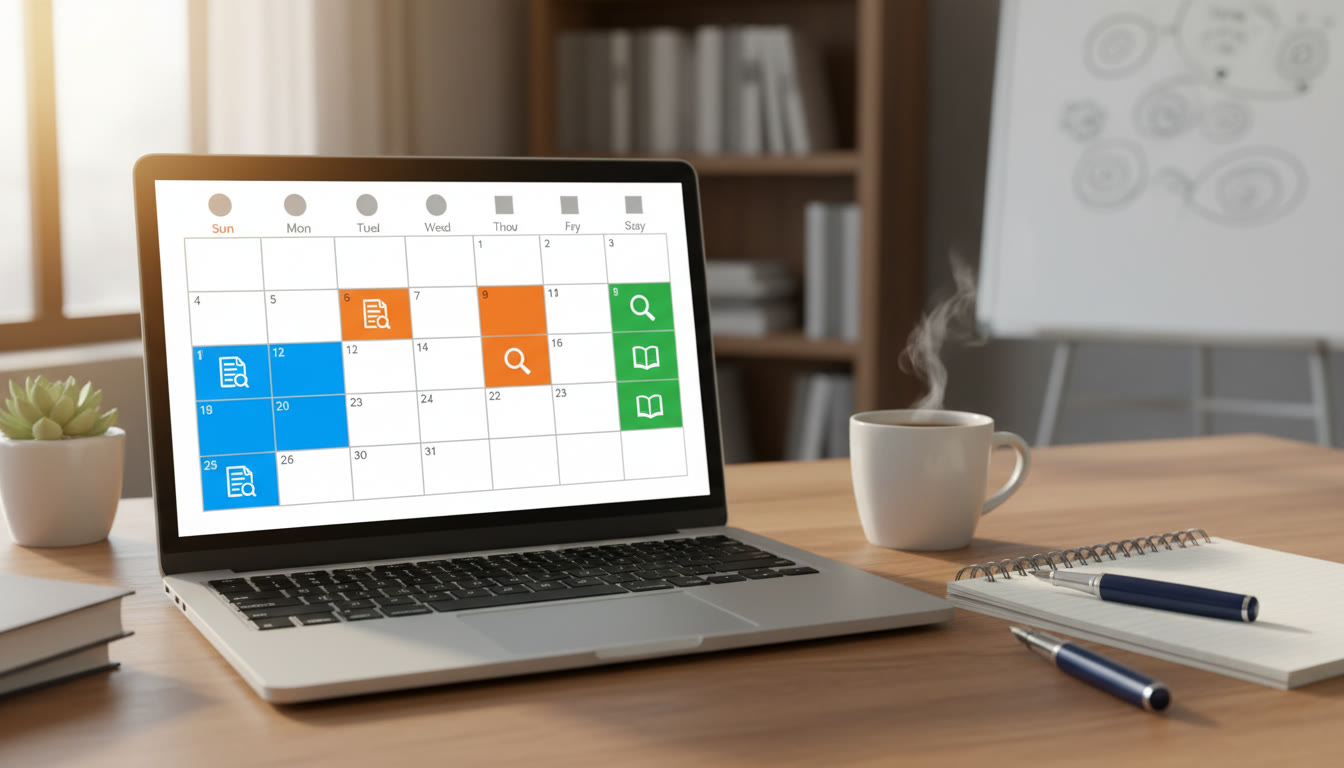
Automate calendar reminders for milestones and back-schedule your work from the submission date. Small automation—like a weekly reminder to update an annotated bibliography—keeps the project from ballooning.
Common pitfalls and how to avoid them
- Thinking of the EE as just a long essay: Treat it as a research project with discrete deliverables—proposal, lit review, methods, analysis, discussion, conclusion.
- Letting IA be the last-minute experiment: Pilot your method early and record failures as data; they’re often the best evidence of learning.
- Using TOK as an afterthought: A short, regular TOK log makes it trivial to find examples when you need them; don’t try to invent connections at the last minute.
- Poor version control: Date every file and keep a single ‘master’ folder; ambiguity over which file is final is where marks are lost.
Polishing and submission checks
In the final phase, focus on the visible cues examiners and moderators look for: explicit research question, transparent method, coherent argument, and tidy referencing. Use a final checklist that includes word counts, rubric cross-references, all required supervisor statements, and a verified reference list.
- Run a consistency check: Are key terms used consistently across IA, EE, and TOK notes?
- Cross-link evidence: If a figure in the IA helps an EE point, note that link in both places and in the TOK log.
- Final read aloud: A 15–20 minute read-aloud of your conclusion often surfaces gaps that silent reading misses.
Making it personal: tailoring the plan to your schedule
No plan survives contact with life unchanged. The most effective integrated systems are those you can live with. If you have extracurricular commitments, reduce weekly hours but increase frequency: shorter, consistent sessions beat irregular marathons. If you’re a procrastinator, front-load easier tasks—annotated bibliographies or TOK log entries—so you build a sense of momentum fast.
And remember, a plan is a contract with yourself. Revisit it every month and adjust time allocations. If you find you’re spending too many hours on polishing drafts and not enough on analysis, rebalance the week to protect analytical time.
Quick reference: a compact checklist to carry with you
- One research question bank that feeds both EE and IA.
- Shared annotated bibliography for both projects.
- Weekly TOK log with one clear link to current IA/EE work.
- Supervisor meeting notes filed and dated.
- Final rubric crosswalk showing where evidence for each strand lives.
Final thoughts
Planning IA, EE, and TOK as an integrated system turns duplication into reinforcement. When your research, methods, and reflections are connected, you work smarter: each task becomes evidence not just for itself but for a larger intellectual narrative. Use modest weekly rituals, clear supervisor interactions, and a single, well-organized research log to harvest that overlap. Careful scaffolding—aligned tasks, explicit links to assessment criteria, and scheduled feedback cycles—keeps your workload sustainable and your arguments robust. Integration is not about doing less; it’s about doing things that feed one another, so every hour of focused work multiplies its value across the DP core components.























No Comments
Leave a comment Cancel