
IB DP Mini-Guide: How to Set Up a Research Log for IA and EE
Think of a research log as the heartbeat of your IA and EE process: a chronological, honest, and vivid trail of thinking, experiments, reading, false starts, and small breakthroughs. It isn’t just paperwork for your supervisor to glance at — it’s the single clearest way to show your thinking in action. For examiners and supervisors alike, a research log turns invisible process into visible evidence.
Good news: a research log doesn’t have to be perfect, pretty, or intimidating. It needs to be consistent, reflective, and useful. This guide walks you through why the log matters, what to put in it, a ready-to-use template, and practical routines to keep it alive throughout the research cycle for both Internal Assessments and the Extended Essay.

Why a research log matters — more than bureaucracy
At first glance, the research log looks like administrative work. In practice it is a study tool that helps you make better decisions. Here’s how it quietly transforms the project:
- Evidence of process: Examiners want to see how you arrived at conclusions. The log records your path — questions, methods, setbacks, and resolutions.
- Memory insurance: When weeks pass between ideas, the log saves context. You won’t forget why a certain direction was abandoned.
- Improved planning: Small daily notes show patterns. If you’re spending hours on background reading but not on data, the log makes that visible and fixable.
- Supervisor efficiency: A clear log makes meetings focused; your supervisor can quickly identify what needs attention and what can wait.
- TOK connection: Reflections in your log are great raw material for Theory of Knowledge — they reveal how knowledge was constructed, interpreted, or limited.
IA vs EE — similar purpose, different rhythm
Both the Internal Assessment and the Extended Essay rely on documented research, but the scale and cadence differ:
- IA: Often shorter, with more frequent check-ins. Your log will capture quicker experiments, concise data points, and tight reflection notes after each session.
- EE: Longer arc, deeper literature tracking, and more sustained reflection. Expect more detailed entries on sources, methodology choices, and iterative refinement of the research question.
Adapt the same log structure to both: the EE may need longer entries and more extensive citation details, while IA entries can prioritize concise method-and-result notes.
Core elements of a great research log
Make each entry useful. A simple, consistent structure helps you and anyone else who reads the log understand what happened and why it matters. At minimum, include these fields for every entry:
- Date — be precise.
- Time spent — short estimate helps with planning.
- Activity type — reading, lab work, interview, data analysis, outline, supervisor meeting.
- Summary — two-to-four sentences that capture what you did and what you learned.
- Source(s) & reference notes — author, title, page, or URL snapshot and page number if printed.
- Methodological notes — decisions you made about procedure, sampling, or analysis.
- Next steps — a concrete, small task you can complete before the next log entry.
- Reflection / TOK link — a short note on why this matters epistemologically (how you know what you think you know).
- Supervisor initials / meeting confirmation — quick accountability marker after meetings.
Suggested template — single-row view for quick use
Below is a compact table you can copy into a notebook, spreadsheet, or note-taking app. Use it as a daily or session-based entry form.
| Date | Time Spent | Activity | Key Notes / Findings | Sources / Ref | Method / Materials | Next Steps | Supervisor |
|---|---|---|---|---|---|---|---|
| Day 1 | 1.5 hrs | Literature scan | Identified 3 relevant articles on sample bias; notes on definitions | Smith, “Sampling Errors”, pp. 12-19 | Search terms: “sample bias + education” | Summarise article A; extract key quotes | Initial meeting scheduled |
| Day 3 | 2 hrs | Pilot: survey | Pilot returned low response rate; question 4 ambiguous | Survey_v1.pdf | Online survey; n=12 pilot | Rewrite Q4; expand pilot sample | Supervisor: signed off |
| Day 7 | 1 hr | Data analysis | Descriptive stats suggest outliers in group B | Dataset_v2.csv | Excel: filter & clean | Investigate outliers; consider trimming rules | Discuss outliers next meeting |
How to write entries that actually help
Short, reflective entries beat long, unfocused paragraphs. Here’s how to craft entries that are useful later:
- Be concrete: say what you did and the result. Instead of “read article,” write “extracted three definitions of ‘sampling bias’ and noted conflicting uses on pages 4–7.”
- Capture uncertainties: if an idea feels shaky, record why. Examiners appreciate honest, critical thinking.
- Link to tasks: end each entry with a single actionable next step — small and achievable.
- Timestamp important changes: when you change methodology or the research question, note why and who approved it.
Digital vs analog: pick what you’ll stick with
Both paper notebooks and digital logs work. The best tool is the one you actually use every day.
- Analog benefits: ease of quick sketches, sketching experiment setups, tactile memory cues.
- Digital benefits: searchability, easy backups, copy-paste of references, attaching PDFs and screenshots.
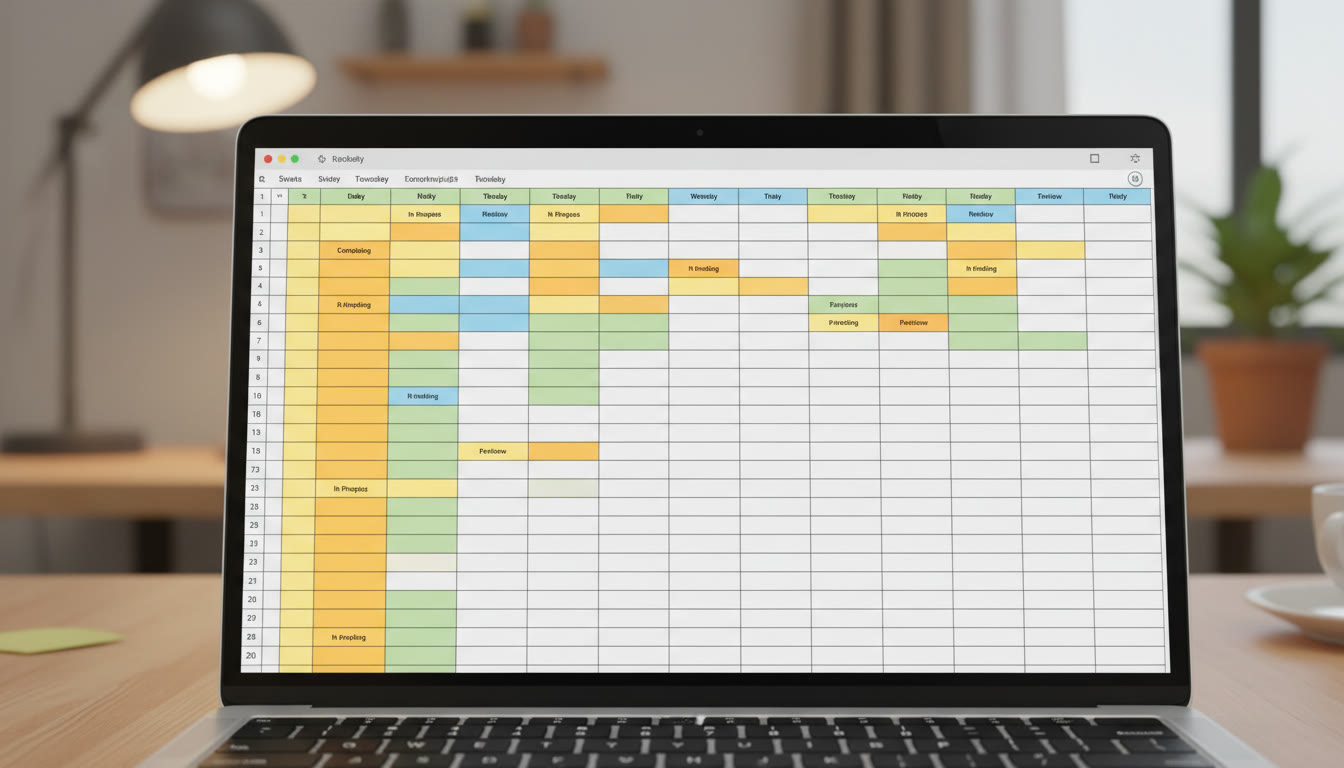
- Tip: if you prefer paper, take a quick photo of each page and store it in a dated folder. If you choose digital, create a daily or session template to save time.
Practical workflow: checkpoints and routines
Turn the log into a habit by building small, repeatable routines. Below is a simple weekly rhythm you can adapt to the demands of IA or EE.
- Daily (short sessions): 10–20 minutes of quick entries after reading or working.
- Weekly review: consolidate quick notes into polished summaries, update bibliography and tasks.
- Before supervisor meetings: prepare a one-page log summary of progress, problems, and decisions for discussion.
- Milestone checks: after data collection or major draft, create a summary entry explicitly labelled “Milestone: Data collection complete” with reflections on quality and limitations.
Making meetings productive
A research log transforms meetings from vague check-ins into targeted problem-solving sessions. Send a 1-paragraph log summary and three focused questions to your supervisor before the meeting. Use the log to record decisions, deadlines, and supervisor feedback — ideally in the same template so nothing is lost between conversations.
Recording sources and staying honest
Provenance matters. Good source records avoid accidental plagiarism and make the bibliography painless.
- Record full citation details at first sighting: author, title, page, publisher, URL, and access date where relevant.
- When you copy a quote, record it verbatim in quotation marks and note the page number immediately.
- Note whether you paraphrased an idea and which pages inspired it; this reduces the temptation to reuse phrasing improperly.
- Snapshot web pages or store PDFs. If a web page disappears later, a screenshot with the access date is evidence you consulted it in good faith.
Example: short vs. strong source note
Poor: “Read article on motivation.”
Good: “Deci & Ryan: Intrinsic motivation — key claim: autonomy increases persistence (pp. 45–47). Use as theoretical base for survey Q2. Saved PDF: Deci_Ryan_Motivation.pdf; accessed 2 sessions ago.”
Using the log for TOK connections
Your research log is a journal of knowing. TOK asks you to examine how knowledge is produced — the log is concrete evidence for those reflections. Use quick TOK prompts in entries:
- How did my method shape what I could know?
- What assumptions did I bring into the analysis?
- Which ways of knowing were most useful here (e.g., reason, perception, language), and why?
Small TOK-notes in the log can later be edited into formal TOK reflections or exhibition material.
Common pitfalls and how to fix them
- Inconsistency: If you stop logging, restart with retroactive summaries of major activities to recover continuity.
- Vagueness: Swap “worked on EE” for a short list of what specifically changed, even if imperfect.
- Over-detail: You don’t need to transcribe every thought. Prioritize decisions, results, and reflections.
- Lost files: Back up immediately. If a file goes missing, record its last known name and where it was stored in the log.
When to ask for help
If you’re unsure about methodology, citation practices, or the research question, book short, focused guidance. Targeted 1-on-1 help can get you unstuck and keep your log disciplined. If you are exploring organized tutoring options, Sparkl‘s tailored sessions and AI-driven insights are designed to complement supervisor feedback and strengthen your log practices.
Sample weekly schedule for maintaining your research log
| Day | Main focus | Log action (10–30 min) |
|---|---|---|
| Mon | Background reading | Summarise 2 articles; record citations |
| Wed | Data collection / experiment | Record methods, times, raw results; quick reflection |
| Fri | Analysis | Note initial findings; flag anomalies |
| Sun | Weekly review | Consolidate entries; create 3 next-step tasks |
Concise entry example
Poor entry: “Worked on IA today. Read things.”
Good entry: “Date: Tue — 1.25 hrs. Activity: Read two experimental papers on reaction time measurement. Key: Lab B used 30 ms smoothing which likely hides micro-variability; therefore smoothing will not be applied to our dataset. Sources: Perez et al. (pp. 12–15), Zhou (abstract). Next step: rerun preprocessing without smoothing and compare distributions. Supervisor: emailed note; will review results.”
Putting it all together — a short worked example
Imagine Mira, an IB student working on an EE in psychology. She begins with a broad question about memory retention. Her first log entries are simple: literature search, a short summary, and a list of potential methods. After a pilot test shows inconsistent results, she records what failed, hypothesises why (sample timing and distractions), and designs a tighter pilot schedule. Each decision — change in sample recruitment, adjustment of the task timing, the choice to exclude certain trials — is logged with a short reason and a reference to the experimental protocol. When Mira meets her supervisor, she sends a one-page summary drawn from the log. The supervisor suggests a tighter research question; Mira records that change and the justification in the log, and assigns a clear next step: “draft methods section with revised sample plan.” Weeks later, when Mira writes the final draft, the log helps her explain why she chose certain analyses, how she handled outliers, and how the research question evolved. Her TOK reflections, scattered as short notes in the log, become polished commentary about how methodological choices shaped knowledge claims.
That lived narrative — messy, step-by-step, and honest — is exactly what a research log should capture. It creates a chain of evidence from the first idea to the final argument.
Final checklist before submission
- Are dates, times, and signatures for major decisions recorded?
- Is each major change accompanied by a short justification in the log?
- Are source details complete where quotations or paraphrases were used?
- Does the log include a summary of methods and how they were chosen or adjusted?
- Have you consolidated short daily notes into weekly summaries so the examiner can follow the arc easily?
Keeping a research log is not extra busywork; it is evidence of disciplined inquiry. When kept honestly and consistently, it strengthens your IA and EE by making the intellectual journey visible, defensible, and reflective. End your project with a clear, well-organized log and you will have done more than document; you will have shown how you thought like a researcher.




















No Comments
Leave a comment Cancel