
ISC Practical Strategy for Students Who Feel Weak
If the thought of an ISC internal practical exam makes your heart race, you are far from alone — and far from out of options. Practical assessments reward clarity, steady technique and calm presentation as much as they reward perfect results. For many students who call themselves “weak,” the difference between anxiety and confidence comes down to preparation that’s small-step, intentional, and exam-aware. This guide is written in a friendly, practical voice: no jargon, no magic pills — just usable routines, empathy for how it feels, and clear actions you can start today.
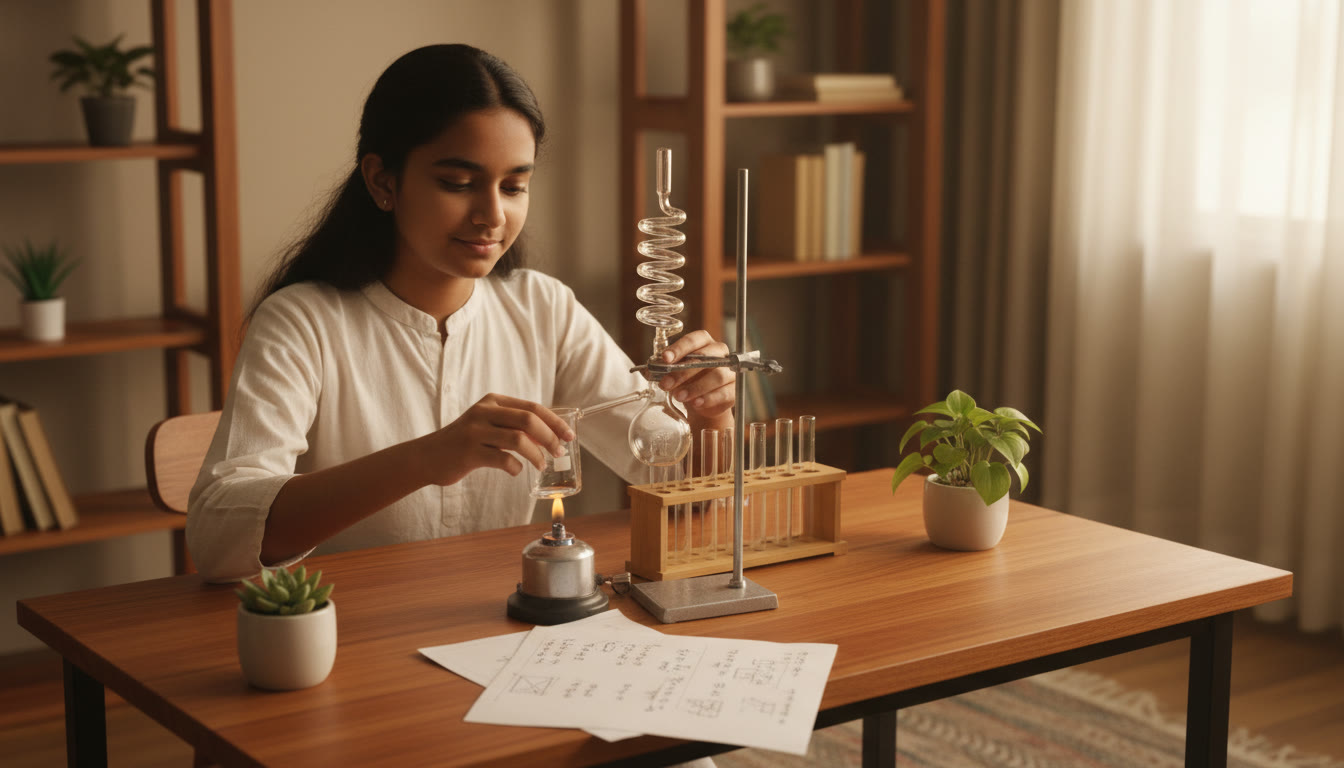
Why practicals are a different kind of exam
Unlike long written papers that test memory and essay flow, practical exams test demonstration: you show understanding through doing. That means examiners look for methodical setup, correct use of apparatus, careful observation, clear presentation of results, accurate recording, and the ability to explain what you did. The good news is that many of those things are skills you can practice and improve quickly — they don’t require you to suddenly become a different kind of learner.
What weak students often misunderstand
- “You must be perfect” — perfection is not required. Examiners look for safe, repeatable methods and clear thinking.
- Confusing revision with practice — rote revision of theory won’t help your hands or your timing.
- Under-estimating presentation — a neat, well-labelled file and clear handwriting can earn confidence from an examiner.
Breakdown of typical practical components and what matters
Different subjects and schools have slightly different formats, but practicals generally include a few common pieces: the actual experiment or procedure, observations and results, a lab file or record of work, and a short viva (oral questioning). Focus on what each piece is trying to show about your ability rather than on imagined tricks.
| Component | What the examiner looks for | How to improve |
|---|---|---|
| Practical procedure | Safe, logical sequence; correct handling of apparatus | Practice steps slowly until they become automatic; rehearse the sequence aloud |
| Observations & results | Accurate readings, clear presentation (tables/graphs), explanation of anomalies | Keep sample record sheets, practice plotting, and note common sources of error |
| Lab file / record book | Completeness, clarity, dates and brief commentary | Write clean entries after every practice; include short conclusions |
| Viva voce | Ability to explain steps, error sources, and basic theory | Prepare short, simple answers for likely questions and practice speaking calmly |
Key idea
Train the skills examiners actually grade: method, observation, presentation, and explanation. Small, repeated practice beats last-minute cramming.
Mindset: small wins, steady confidence
Confidence is built the same way muscles are: with repeated, manageable practice. If you feel weak, start with tasks you can complete and add one element at a time. Celebrate small wins: a clean table of results, a correct labelled diagram, a smooth setup without reminders. These are not trivial — they shift the examiner’s impression from scattered to competent.
Practical mindset checklist
- Begin each practice session with a single goal (e.g., set up Bunsen burner safely, or draw a circuit neatly).
- Keep practice short but frequent: 25–45 minutes focused work beats a 4-hour panic session.
- Write a one-line reflection after each practice: what went well and one thing to improve.
A focused, adaptable practice plan (how to structure your time)
Weak students often try to do everything at once. Instead, split preparation into building blocks: technique, recording, presentation and viva. Use a rotating schedule so every week you touch each block. Below is a sample eight-week pattern you can compress or stretch based on how much time you have.
| Phase | Focus | Practical tasks | Goal |
|---|---|---|---|
| Weeks 1–2 | Foundations | Simple procedures, safe handling, basic measurements | Comfort with equipment and basic measurements |
| Weeks 3–4 | Recording & Presentation | Neat tables, labels, basic graphing, handwriting practice | Readable, examiner-friendly records |
| Weeks 5–6 | Mock practicals | Timed, end-to-end mock practicals including viva | Build exam pacing and reduce surprises |
| Weeks 7–8 | Polish & Feedback | Fix recurring errors, review teacher feedback, sharpen verbal answers | Consistent accuracy and clear explanations |
Adjust the pattern to a shorter sprint if your internal practical is close: accelerate mock practicals so you practice under real conditions as soon as possible.
Daily micro-sessions
- 10 minutes: quick revision of a formula or safety rule.
- 20–30 minutes: hands-on practice of one step (e.g., titration endpoint detection, drawing circuit diagrams).
- 5 minutes: note one improvement for the next session.
How to run full-length mock practicals
Mock practicals are where you translate practice into exam-ready performance. The trick is to make mocks realistic: replicate time limits, use the same written format for records, and include a viva at the end. A mock that’s not realistic doesn’t build reliable habits — it builds overconfidence.
Mock practical checklist
- Simulate the exact conditions you expect: time, equipment, and sequence.
- Practice writing your file as you would during the exam; keep handwriting readable rather than perfect.
- Include a viva: get a friend, sibling or teacher to ask you five quick questions.
- After the mock, mark your own performance against a short rubric: method clarity, data accuracy, presentation neatness, and viva confidence.
Preparing your lab file and records
Your lab file is tangible evidence of steady work. For a weaker student, a well-organized file does more than store results — it signals reliability. Keep each entry short, dated, and complete: objective, materials, method (bullet points), observations, a neat table/graph, and a brief conclusion.
File formatting tips
- Use ruled pages or a template for uniform tables.
- Label diagrams clearly and practice a standard diagram style for each topic.
- Write short conclusions — one or two lines that link result to theory.
- If you made an error during practice, note it and write what you changed; examiners appreciate learning-oriented honesty.
Viva voce: say it simply, say it clearly
The viva is less about sounding brilliant and more about being clear. Prepare one-line answers for the most likely questions: why you chose a particular step, what a typical error source is, and how you verified results. Practice aloud so the answers come out naturally under pressure.
Common viva preparation steps
- Make a two-column sheet: Question | One-line Answer — practice until it’s conversational.
- Practice explaining a graph or table in one minute: headline, two supporting points, and a short reason.
- Use peers or family for mock viva sessions; the habit of answering aloud under informal pressure reduces exam nerves.
Techniques to recover from small mistakes in the exam
Mistakes happen. What examiners notice is how you respond. If a reading goes off, note it, explain briefly in the file what you observed, and continue calmly. If a setup fails, stop, mention the corrective step, and proceed. Showing thoughtful recovery often scores better than panicked perfectionism.
Quick recovery checklist
- Pause and breathe — a clear 10-second reset preserves focus.
- Write the error clearly in your record and describe the corrective action.
- If time is short, prioritize presenting one correct result with a brief explanation rather than attempting multiple rushed repeats.

Practical tips for handwriting, diagrams and presentation
Neatness matters. Examiners are human: tidy handwriting, clear labels, and well-drawn diagrams are easier to read and leave a positive impression. Weak students can gain outsized benefit here because many peers neglect presentation under pressure.
- Practice a standard layout for each experiment: title, objective, method (bullets), table, graph, conclusion.
- Use a ruler for tables and draft diagrams lightly in pencil before inking if allowed.
- Keep answers succinct: clarity beats length. A short, accurate explanation is stronger than a long, muddled one.
When to ask for help — and what to ask for
Help is most useful when it’s targeted. Rather than asking for “help with practicals” broadly, pick one or two weak points: timing, a specific technique, viva confidence, or file presentation. Ask for short, focused sessions where you demonstrate progress and receive precise feedback.
If you want guided support, consider structured personalized help. For many students, Sparkl‘s personalized tutoring can provide 1-on-1 guidance, tailored study plans, expert tutors and AI-driven insights to identify the smallest changes that give the biggest score improvements. Book short, focused sessions aimed at exam routines rather than endless generalities.
What to request from a tutor or teacher
- Watch one full mock practical and give three specific corrections.
- Ask for viva practice with immediate feedback on clarity and brevity.
- Request a lab-file review: one session to tidy and standardize entries.
Simple, repeatable checklists you can use in the exam room
Checklists remove panic. Use short, actionable lists you can follow without thinking.
- Before starting: read instructions, check apparatus list, and set a timer for key checkpoints.
- During: follow method bullets, note readings clearly, mark uncertain readings with asterisk and explain in file.
- At end: label everything, draw one neat diagram if asked, and rehearse one-line answers for likely viva questions.
Common mistakes weaker students make — and how to avoid them
- Panic and rush: slow your hands for the first five minutes; steady work beats frantic speed.
- Messy records: start each experiment with a neat heading and table template to avoid scrambled data.
- Ignoring teacher feedback: act on even small corrections immediately so they become habits.
- Skipping viva practice: short spoken answers are a separate skill — practice them aloud.
Putting it all together: a final checklist in the week before
- Three full mock practicals under realistic timing, with at least one including a mock viva.
- Two tidy lab-file entries reviewed and corrected.
- One session focused purely on presentation: handwriting, tables and diagrams.
- Short daily micro-sessions for quick revision of formulas and safety rules.
How sustained small improvements translate into exam day calm
When you practice deliberately — focusing on the steps examiners grade and rehearsing the exact format you’ll face — you replace surprise with habit. Weak students who adopt small, consistent routines often show the biggest gains because their baseline had more room to improve: a neater table, a calmer viva, or a quicker setup can move an entire practical from below-par to comfortably competent.
If you use external support, make it targeted and measurable. A short tutor-led session to tighten a single technique or to run a mock practical can create momentum — and momentum is what turns nervous students into steady performers.
Final academic takeaway
Pursue practical exam readiness with small, focused habits: practice technique, standardize records, run realistic mock exams, and rehearse brief viva answers. Build one reliable routine at a time, measure progress with simple checklists, and use targeted help for the specific skills that slow you down. When you trade panic for preparation, the practical exam becomes an opportunity to demonstrate steady skill rather than an obstacle to fear.






















No Comments
Leave a comment Cancel