

ISC Study Strategy That Actually Works
If you’re aiming to improve your ISC score without burning out, you want a plan that’s sensible, exam-aware, and repeatable. This is not another checklist of motivational lines — it’s a practical roadmap built for the way ISC papers are actually set, marked, and answered. You’ll get a clear start-to-finish approach: map the syllabus, design focused practice, use full-length mocks effectively, sharpen answer technique, and keep your revisions lean and powerful.

1. Begin with the syllabus and a “marking map”
Before you schedule anything, get the current syllabus and examine the question paper pattern. Your aim is not to race through chapters mindlessly but to match what you study to how marks are awarded. Create a simple “marking map”: a topic-by-topic list where each entry notes whether the topic is high-, medium- or low-weight in the exam and what kind of questions usually appear (short, long, numerical, diagram-based).
How to build a useful marking map
- List all chapters for a subject and mark their relative weight (High / Medium / Low).
- Next to each chapter, note the typical question type and time required to practice it (e.g., derivation-heavy, objective questions, long-answer analysis).
- Assign a realistic weekly practice time based on weight and your comfort level.
That map becomes the foundation for prioritising study blocks, not a crushing to-do list.
2. Plan backward from exam week (the reverse calendar)
Working backward from exam week clears confusion. Start by deciding how many full-length mock tests you can realistically do before the exams and where you will place milestone revisions. The reverse calendar forces decisions (what to finish by when) instead of vague intentions.
Sample reverse timeline (conceptual)
- Weeks out: Triage topics (finish high-weight topics first).
- Month block: Consolidate mid-weight topics and begin mixed practice.
- Final weeks: Exclusive mock tests, targeted reviews, and formula/points sheets.
Do not try to cram new concepts in the final week. Final weeks are for making existing knowledge exam-ready.
3. Build a weekly routine that respects your energy cycles
Study smarter by aligning content with when your brain is sharp. For many students, mornings are best for conceptual study (derivations, new problems) and afternoons or evenings for practice and revision. Keep sessions short and intense — quality beats quantity.
Principles to design your week
- Block deep work: 60–90 minutes for difficult topics, followed by a 15–20 minute active break.
- Interleave subjects: Switch subject families (e.g., Maths to English) to keep retrieval strong and reduce fatigue.
- Reserve fixed time for mock review — the learning from marking a mock is more valuable than the mock itself.
4. Make full-length mocks your practice backbone
The ISC exam rewards coherent answers written under time pressure. Full-length mocks teach pacing, stress management, and the discipline of completing papers. But a mock is only as useful as the feedback loop you put around it.
How to run a productive mock cycle
- Simulate exam conditions: same time limit, no phone, strict breaks.
- Mark the paper honestly using the marking map; record time spent per question and where marks were lost.
- After marking, write a short action plan: three things to fix before the next mock (e.g., clarity in derivations, diagram labelling, time spent on long questions).
| Week Stage | Focus | Mock Practice | Target Outcome |
|---|---|---|---|
| Early Preparation | Finish high-weight topics, build concept maps | 1 short timed paper per week | Solidify fundamentals; identify gaps |
| Mid Preparation | Mixed practice and problem sets | 1 full-length mock every 7–10 days | Improve time allocation and technique |
| Final Phase | Polish answers, final revisions, memorise key points | 2 full-length mocks per week | Exam-ready speed and accuracy |
Use the table as a template — adjust mock frequency based on how many weeks are left and how many subjects you juggle.
5. Feedback: the single most important loop
Practice without feedback is repetition, not improvement. After each mock or practice set, spend time marking and analysing mistakes. Ask: Was it a gap in knowledge, a careless error, a time-management failure, or poor answer presentation? Your remedy must match the cause.
Example feedback routine
- Step 1: Identify top three mistake types from the mock.
- Step 2: Create targeted drills (e.g., five 10-minute drills on one type of calculation).
- Step 3: Re-test that skill in the next mock or practice slot.
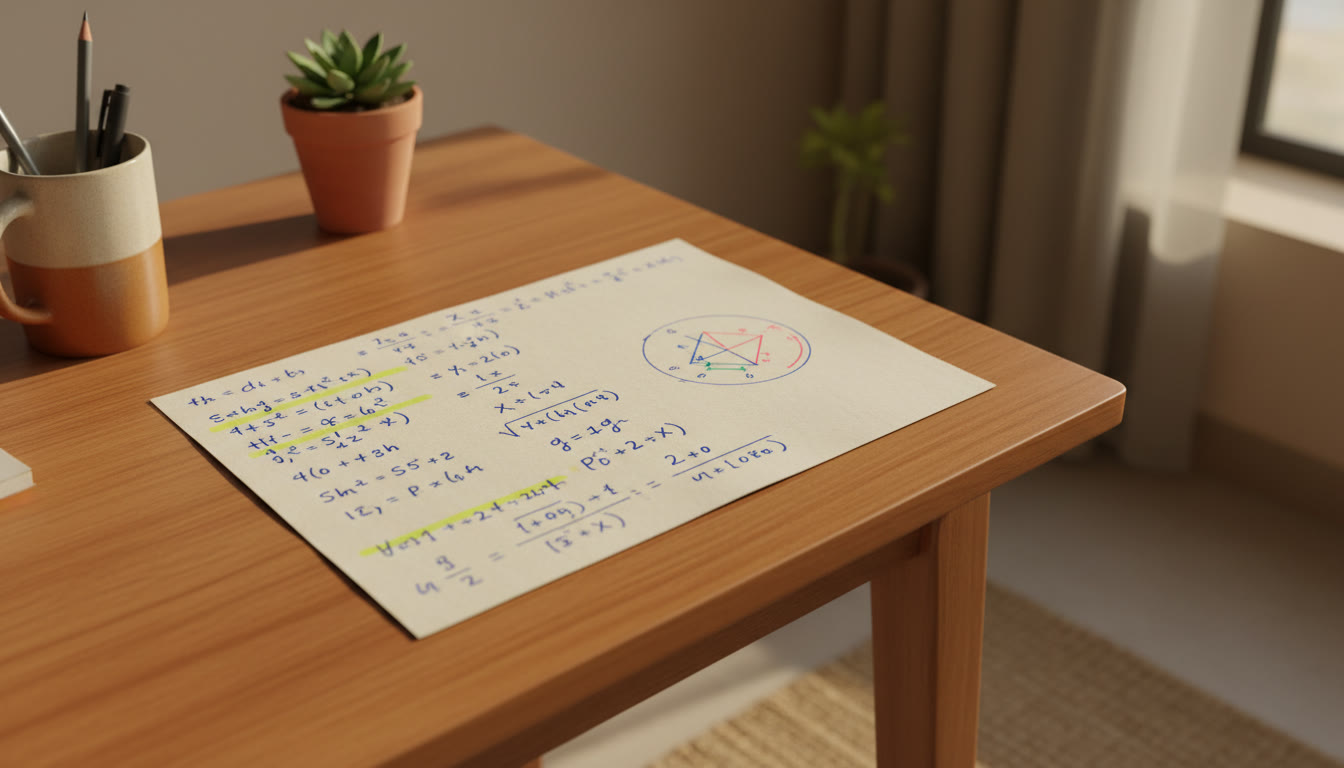
6. Notes, diagrams and derivations: make them exam-friendly
One-page summaries, labelled diagrams and clearly structured derivations are worth their weight in marks. The aim is not to produce beautiful notebooks, but to have a quick recall tool that maps to how answers are evaluated in ISC papers.
What exam-friendly notes look like
- One-pagers per chapter with formulas, exceptions and a short worked example.
- Diagrams with labels and a three-line caption that explains the key point.
- Derivation templates: keep the essential steps and the concluding statement that the examiner looks for.
When practising, treat diagrams and derivations as full marks opportunities: a clear diagram can win marks quickly and efficiently.
7. Subject-specific hacks that actually help
Different subjects demand different routines. Below are practical, no-fluff tips you can start applying immediately.
English (Language & Literature)
- Practice concise answers for literature: a short point, evidence (quote), explanation, and link-back — that structure reads well to examiners.
- For composition, practise planning for 5 minutes and writing for the remainder; check tone, register, and paragraph flow.
- Keep a short vocabulary and stylistic devices list to use in compositions and answers.
Mathematics
- Clarity of method matters: write one line per step and box the final answer with units where applicable.
- Time yourself solving past long questions to learn the exact point where you slow down.
- Use error logs: maintain a two-column table of mistake type vs corrective habit to avoid repeating the same slip.
Physics
- Practice deriving results from first principles; examiners award clear working.
- Annotate diagrams with directions, units and standard symbols; a neat diagram often carries marks.
- Memorise common equation forms but focus on when and why to use them.
Chemistry
- Balance and write chemical equations carefully; neat presentation reduces avoidable errors.
- For organic chemistry, practise mechanism steps and name key reagents succinctly.
- Physical chemistry: practise calculation steps and record units at every stage.
Biology
- For diagrams, learn the standard labels and a short caption that explains function.
- Answer application questions by linking structure to function clearly and briefly.
- Use quick fact sheets for hormones, processes and cycles to speed revision.
Accountancy & Commerce
- Keep working papers tidy: ledgers, trial balances and final statements should be easy to follow.
- Practice common practical formats until they become routine, so you avoid formatting mistakes under time pressure.
- Memorise formulae and key journal entries but practise interpretation questions as well.
8. Small habits that compound into big gains
Consistency is more important than intensity. Small, repeatable habits — a nightly 20-minute review, weekly mock analysis, and a one-page formula sheet per chapter — add up quickly.
Daily and weekly micro-habits
- End each study day by writing three quick things learned and one question to revisit.
- Reserve a weekly 45–60 minute session to review the past week’s errors only.
- Keep a visible progress tracker for motivation: ticks on a calendar or a simple spreadsheet work well.
9. Use technology and targeted help wisely
Digital tools can be powerful: timed digital mocks, question banks and spaced-revision apps save time. If you need personalised feedback or a structured plan to follow, pairing self-study with focused tutoring can accelerate results. Many students find that blending independent practice with occasional 1-on-1 review sessions helps them correct mistakes faster.
If you choose to use a tutoring partner, look for features that genuinely support your practice loop: 1-on-1 guidance, tailored study plans, expert tutors who understand ISC marking expectations, and data-driven insights that show where marks are being lost. Sparkl‘s combination of personalised attention and practice tracking is an example of how targeted support fits into a disciplined study routine.
10. Common mistakes and how to avoid them
- Trying to learn everything equally — instead, prioritise based on the marking map.
- Skipping past papers because they feel intimidating — they are the single best mirror of exam reality.
- Doing mocks without analysing them — every mock must end with a short action plan.
- Rote memorisation without understanding — ISC answers reward clarity and reasoning as much as facts.
11. Tracking improvement with a simple mock test log
Keep a short log after each full-length mock. Record total score, time taken, three recurring mistakes, and the focused drill you will do before the next mock. Over a series of mocks you will be able to see trends and measurable improvement rather than relying on feeling alone.
What to put in your mock log
- Paper name, date, raw score and time spent per section.
- Top 3 errors and whether they are conceptual, careless, or time-related.
- One action item with a deadline (e.g., ‘‘Fix question wording comprehension — do 10 targeted questions in 3 days’’).
12. The exam hall: pacing and presentation
On the day, clarity beats speed. Follow a simple exam-hall algorithm: scan the paper (5–7 minutes), allocate time by marks, start with the questions you can answer well, keep answers structured, and leave a short time for quick review. Presentation matters: neat headings, numbered sub-points, and boxed final answers make it easier for examiners to award marks.
Quick checklist for answer presentation
- Read the question fully; underline command words (define, explain, compare).
- Write a mini-plan for long answers (2–3 points) before expanding.
- Label and scale diagrams; show units and final values clearly in numerical answers.
Final checklist before you close a study session
- Did you practice exam-style questions today?
- Did you note and schedule fixes for any mistakes you made?
- Is one one-page summary sheet updated for tomorrow’s quick revision?
Conclusion
Improving ISC scores is less about sudden bursts and more about steady, exam-aligned practice: map the syllabus, use full-length mocks with honest feedback, sharpen presentation, and focus revisions where marks are won. Combine disciplined self-study with targeted support when needed, and track progress with a simple mock log to turn effort into measurable improvement.























No Comments
Leave a comment Cancel