

JEE Main PYQ Score Improvement Strategy
If you’ve been working through past-year questions (PYQs) and wondered why the score on your mock tests doesn’t reflect that effort, you’re not alone. PYQs are gold — they reveal recurring concepts, common traps, and the exam’s rhythm — but simply solving them isn’t enough. The bridge between doing PYQs and raising your full-length mock score is a repeatable process: realistic simulation, disciplined analysis, targeted practice, and smarter revision.
This guide walks you through a step-by-step, mock-focused strategy that treats PYQs as diagnostic tools and mock tests as the training ground. The advice fits the current exam format: MCQ-heavy papers, full 3-hour mock practices, negative marking for incorrect options, strict OMR discipline, and a syllabus centered on Physics, Chemistry, and Mathematics. Read it like a coach giving a precise game plan — actionable, test-aware, and suited for steady score gains.

Why PYQs Matter — and Where Students Often Stop
Past-year questions do three important jobs: they expose topic frequency, show common question phrasing, and teach exam-style time pressure. But many students stop at solving: they don’t analyze the questions deeply, they fail to categorize mistakes, and they don’t simulate exam conditions when doing PYQs. That’s why PYQs need to become the input to a mock-driven feedback loop, not the end goal.
- Pattern recognition: PYQs reveal concepts that reappear across cycles.
- Trap awareness: recurring distractors and wording choices become familiar.
- Time cues: PYQs calibrated into timed sets teach pacing for similar question types.
Step 1 — Establish a Real Baseline with a Full 3-Hour Mock
Before you plan improvement, know where you truly stand. Take two full-length, strictly-timed mocks under exam-like conditions (3 hours, MCQ format, OMR practice). Treat them like the real day: no phones, real rough sheets, and strict timing. The first mock is a warm-up; the second is your baseline. Record sectional scores and how many questions you left or guessed.
Step 2 — Immediate and Deep Mock Review: The 30/24/7 Rule
Reviewing a mock is where improvement is won or lost. Use the 30/24/7 rule:
- Within 30 minutes: do a quick pass to mark which questions were guessed, which were obvious mistakes, and which you could have solved with one more minute.
- Within 24 hours: redo each incorrect or skipped question without looking at the solution. If you still can’t, then read a solution and write a one-line note why you missed it.
- Within 7 days: revisit grouped mistakes (same concept, same trap) and design a one-week drill to plug that gap.
Immediate correction locks in memory; the next-day rework reveals deep gaps; the weekly follow-up ensures you break recurring error loops.
Anatomy of Mistakes — Categorize Like a Scientist
When you analyze PYQs and mocks, label each mistake by root cause. This is simple but transformational.
- Conceptual gap — you didn’t know the underlying idea.
- Application gap — you know the idea but failed to apply it to this twist.
- Calculation/careless error — algebra slips, arithmetic mistakes, sign errors.
- Reading error or misinterpretation — rushed reading or missing a condition.
- OMR/transfer error — answered correctly but bubbled wrong or late transfer mistakes.
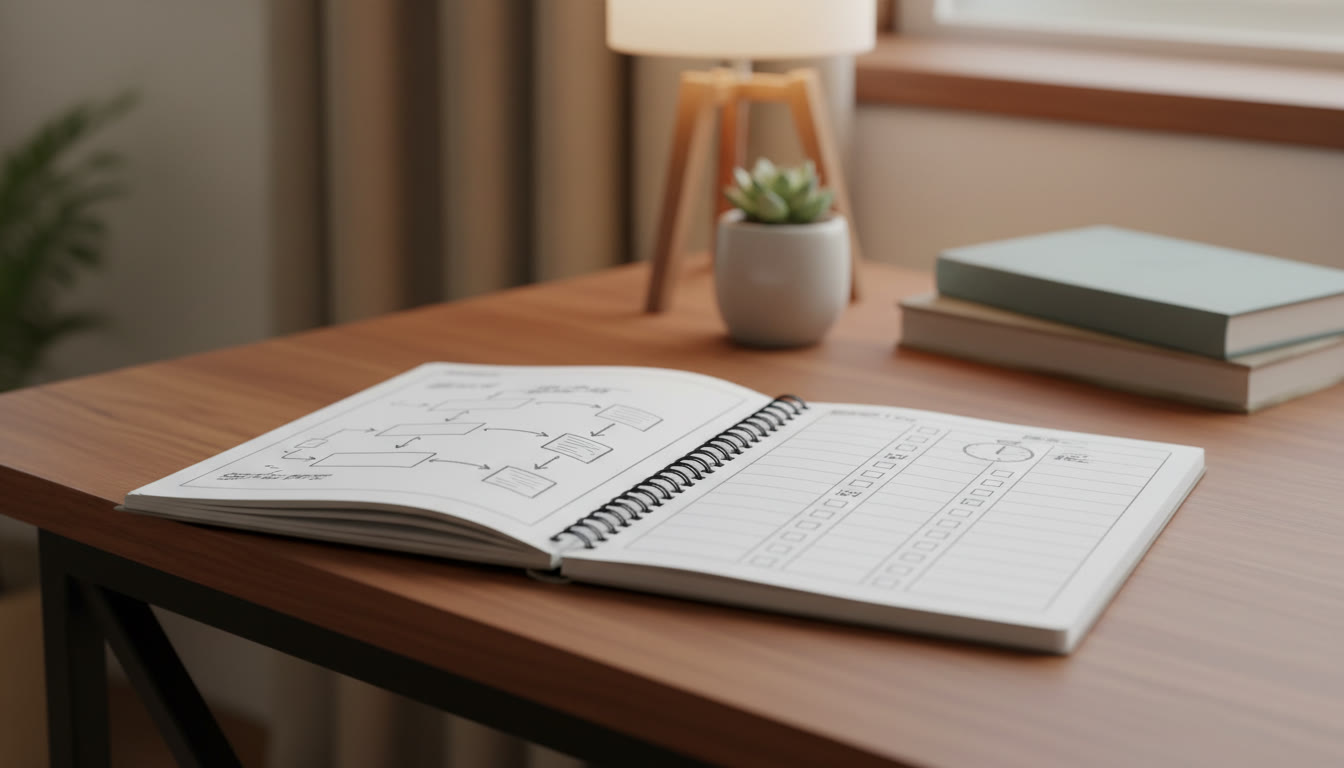
Create an error log (spreadsheet or notebook) with columns: Question ID, Topic, Mistake Category, Why it happened, Fix planned, When to test again. This log becomes your master revision checklist.
Mock Test Tracker — A Practical Table Template
| Mock # | Raw Score | Physics | Chemistry | Mathematics | Accuracy % | Top 3 Mistakes | Next Focus |
|---|---|---|---|---|---|---|---|
| 1 (Baseline) | — | — | — | — | — | Reading, Algebra slips | Timed algebra drills |
| 2 | — | — | — | — | — | Mechanics concepts | Concept map + PYQ set |
| 3 | — | — | — | — | — | Speed in Math | Shortcut practice |
Use this table after each mock to track progress objectively. Over time you should see not just raw scores but accuracy and mistake types improve.
Step 3 — Turn PYQs Into Targeted Drills
Solving PYQs is useful; extracting the theme and building micro-drills from them is transformative. For example:
- If three PYQs test projectile components in unusual frames, make a 10-question drill on vector decomposition and time-of-flight corners.
- If two PYQ chemistry problems use the same reaction mechanism with a twist, prepare 8 variations that change only one parameter at a time.
- From math PYQs that require creative substitutions, design timed problems that train you to spot substitution cues in 30 seconds or less.
These micro-drills sharpen pattern recognition and convert passive exposure to active skill-building.
Time Management and Section Strategy
Pacing is a mock’s heartbeat. A few concrete rules to practice:
- Begin with the section you’re strongest in to build momentum; alternate sections across mocks so your comfort zone expands.
- Use a two-pass approach in every section: first pass — quick solve all questions you can do in under 2–3 minutes; second pass — spend focused time on tougher ones.
- Keep a visible timer: mark question numbers on your rough sheet each 30 minutes to ensure you’re on schedule for a full 3-hour test.
Practice this order in all your full-length mocks so the rhythm becomes automatic on exam day.
OMR Discipline — Practice the Transfer Ritual
Many students lose marks not because they chose wrong answers, but because they bubbled them incorrectly. Make OMR practice non-negotiable:
- Simulate the OMR: bubble answers on a mock OMR sheet under timed pressure at least once a week.
- Decide a consistent policy: either bubble immediately for the first pass (if you can do it without losing time) or bubble at fixed intervals — but practice that policy until it’s automatic.
- Include a final 5–7 minute buffer at the end of each mock specifically to transfer and re-check bubbling.
OMR discipline reduces silly losses and lets your preparation show up in the score.
Spaced Revision: Make Error Logs Work for You
Once mistakes are categorized and recorded, schedule them into a spaced-repetition loop. A practical rhythm:
- Daily: 10–15 minutes reviewing yesterday’s mistakes (quick fixes).
- Weekly: 1–2 focused sessions on clusters of mistakes (e.g., trigonometry identities, organic reaction mechanisms).
- Monthly: Full mock that deliberately includes at least 10 questions drawn from your past error clusters.
This rotational revision prevents regression and forces your brain to apply fixes under pressure.
Metrics That Tell the Real Story
Don’t obsess over one raw score. Track metrics that indicate sustainable improvement:
- Accuracy % (correct attempts / total attempts).
- Average time per question (overall and section-wise).
- Frequency of each mistake type (how often does the same concept bite you?).
- OMR errors per mock (should trend to zero).
| Metric | Why it matters | Target direction |
|---|---|---|
| Accuracy % | Shows quality of attempts | Increase |
| Avg time/question | Indicates pacing and time-wasting | Decrease (up to optimal pace) |
| Repeat mistake frequency | Measures fix effectiveness | Decrease to near-zero |
When Personalized Feedback Helps — and What to Look For
After several cycles of self-analysis, you may hit a plateau. That’s where targeted mentorship can accelerate gains by shortening the analysis loop. Look for support that offers:
- One-on-one coaching that reviews your error log and tailors drills.
- Customized study plans that slot into your mock calendar.
- Actionable, short feedback loops — not long lecture-style corrections.
If you explore external support, consider options that explicitly use your mock data for personalized plans; for example, Sparkl’s personalized tutoring emphasizes 1-on-1 guidance, tailored study plans, expert tutors, and AI-driven insights to convert weak areas into strengths. That kind of targeted feedback should feed directly into your error log and mock schedule, not replace your daily work.
Weekly Routine Example — A Practical Template
Here’s a weekly micro-plan that connects PYQs to mocks and drills without burning you out:
- Monday: Full-length mock under 3-hour conditions (alternate full mocks with sectional mocks every other week).
- Tuesday: 30/24/7 review of mock mistakes + 45-minute micro-drill on top mistake cluster.
- Wednesday: Topic patch-up (2 focused sessions of 50 minutes) using PYQs as practice problems.
- Thursday: Timed mini-set (20 questions in 60 minutes) focusing on speed & accuracy.
- Friday: Concept consolidation — clean notes, one-page cheatsheet per topic, and one PYQ reattempt.
- Saturday: Peer discussion or mentor review (walk a tutor or friend through 3 tough questions aloud).
- Sunday: Light revision and recovery — revisit error log for 20 minutes and plan the next week.
This rhythm balances practice with review and keeps your mock performance steadily improving.
Common Pitfalls and How to Avoid Them
Watch out for these traps that block mock gains despite PYQ effort:
- Only solving PYQs without timed practice — context matters: PYQs solved slowly don’t translate to faster mock performance.
- Re-solving solved questions without changing variables — you need variations and deliberate difficulty increments.
- Ignoring OMR practice — transferring answers under time pressure is a skill, not luck.
- Skipping post-mock analysis when tired — the highest return on time is in careful review, not in another mock.
Illustrative Example: How a Small Fix Yields Big Gains
Imagine you consistently miss 5–7 algebra-based math PYQs in every mock due to small algebra slips. By isolating the slip type and assigning three 30-minute micro-sessions per week focused on speedier algebra manipulation (and integrating 10 PYQ-style variations each week), you gradually cut those slips by half within 3–4 mocks. The net effect? Higher accuracy, fewer wasted attempts, and a meaningful bump in raw score — all from a tightly targeted, PYQ-originated drill.
Checklist Before Every Mock
- Clear test environment: phone off, timer set, rough sheet ready.
- Pre-decided section order and bubbling policy practiced.
- One-page cheat-sheets for quick pre-test review (concept maps, key formulas).
- Warm-up: 15 minutes of short PYQ drills to activate problem-solving muscles.
- Post-mock plan: schedule the 30/24/7 review windows before you start the test.
Final Notes on Consistency and Mindset
Improvement from PYQs to mock scores isn’t linear — it’s compounding. Tiny, consistent changes in how you analyze mistakes, how you drill targeted variations, and how you practice OMR discipline add up. Make the error log your most trusted tool. Treat each mock as a controlled experiment: change one variable at a time, measure, and iterate. Over weeks, the gains compound because skills replace guesses and accuracy replaces frantic attempts.
Conclusion
Methodically converting PYQ insights into a disciplined mock-and-review routine — anchored by categorised error logs, timed PYQ-derived drills, OMR practice, and spaced revision — builds measurable and durable score improvements on full-length tests.




















No Comments
Leave a comment Cancel