
Why a Solid Foundation Beats Shortcuts
If you ask ten toppers for their secret, more than half will tell you the same thing: a strong foundation. Not flashy last-minute tricks. Not memorized answer banks. Foundation means understanding why an idea is true, seeing how it connects across Physics, Chemistry, and Biology, and being able to reproduce that reasoning under a ticking clock and on an OMR sheet.
The NEET-style exam is MCQ-based, runs for three hours when you take a full-length mock, and follows strict OMR discipline with negative marking. That reality rewards clarity over confusion, and durable learning over brittle cramming. This article gives a conversational, practical blueprint to build that durability: the study rhythms, active techniques, mock-test hygiene, and revision architecture that high-rank aspirants use.

Start with a Clear Blueprint: Syllabus, Strengths, and Gaps
Before you open any chapter, map the terrain. The syllabus for the exam covers three core streams: Physics, Chemistry, and Biology. Treat this mapping as a project plan, not a to-do list. Ask three simple questions: what topics are in the syllabus, which topics you feel comfortable with, and which topics consistently trip you up during practice.
How to diagnose honestly
- Take a short diagnostic test that covers basics across the three subjects; keep it time-boxed to simulate exam pressure.
- Create a two-column tracker: “Comfort” vs “Confusions” — mark specific concepts, not entire chapters.
- Be specific: instead of “Mechanics weak,” write “Kinematics vectors and relative motion cause errors.”
When you know exactly where the gaps are, planning moves from guesswork to surgical focus.
Design a Weekly Study Structure That Builds Layers
High-rank preparation is layered: concept-building, application, testing, and revision. Rotate these layers each week so nothing is permanently neglected. Below is a sample weekly allocation that you can adapt to your personal pace and available hours.
| Study Component | Hours/Week (example) | Primary Purpose | Typical Activities |
|---|---|---|---|
| Concept Building | 12–15 | Deep understanding | Careful reading, solved examples, derivations, labeled diagrams |
| Problem Solving | 8–10 | Apply concepts | Medium- and high-difficulty MCQs, mixed-topic problem sets |
| Mock/Timed Practice | 4–6 | Exam temperament | Mini-mocks, timed sections, full-length every few weeks |
| Revision & Notes | 6–8 | Retention | Flashcards, mistake diary, rapid concept tests |
| Rest / Buffer | 3–5 | Mental reset | Short breaks, light exercise, sleep hygiene |
Why weekly rotation works
Rotation avoids the “one-subject-for-every-day” trap that leads to boredom and shallow recall. You want a subject to revisit multiple times within a week so consolidation happens in short, frequent bursts. The human brain remembers patterns better when exposure is spaced and varied.
Active Learning Techniques That Give High ROI
Passive reading is comfortable but low-yield. Replace it with active methods that force retrieval and application.
- Ask and answer: After reading a concept, close the book and teach it aloud for two minutes. If you stumble, you found the weak link.
- Make problem maps: For each chapter, list the typical question styles it spawns and attach 2–3 representative problems to practice.
- Handwritten concept cards: Writing consolidates memory better than typing. Keep one small A5 sheet per important formula or biological pathway.
- Diagram-first learning in Biology: Reproduce labeled diagrams from memory—this is not just art, it’s precision recall.
- Derive, don’t memorize: In Physics and Physical Chemistry, derivations are tools. Learn the logic; memorize only the final compact forms if needed.
Mock Tests, OMR Discipline, and the Three-Hour Habit
Mocks are not just assessments—they are your training ground for the three-hour exam. Treat every full-length mock as a simulation: strict timing, identical breaks, and a dedicated OMR sheet practice. This conditions not only knowledge recall but emotional stamina and OMR accuracy.
How to simulate exam conditions
- Use a silent room and set a strict three-hour timer.
- Practice marking answers on an OMR-style sheet. Train the hand-eye coordination for filling bubbles without smudges or stray marks.
- Practice negative-marking decisions—deliberately decide whether to attempt, eliminate, or skip questions.
- After each mock, spend twice as much time on analysis as the test itself: review every wrong answer and every guess.
How to Use Mistake Analysis to Convert Weakness into Strength
Mistake analysis is not punishment; it’s data. Build a mistake diary and record the following for every error: topic, reason (concept gap, careless error, calculation slip, or time pressure), corrective action, and final verification problem.
- Tag repeated mistakes and schedule a focused mini-session to fix them.
- Turn careless errors into checklists—simple things like “units, significant figures, read options fully”—and run the checklist before submitting a mock.
Smart Revision: Spaced Repetition and Micro-Revision
Revision works best when it’s timed to how memory fades. Use short, fixed review slots multiple times rather than marathon rereads. A practical revision cadence looks like this:
| Revision Type | When | Goal |
|---|---|---|
| Micro Revision | Daily | Keep formulas, definitions, and flashcards fresh |
| Weekly Consolidation | Weekly | Rework mistakes and mixed-topic question sets |
| Full-Length Mock | Every 2–3 weeks (or more frequently closer to the exam) | Test stamina and integrate learning |
| Cumulative Review | Monthly | Ensure old topics are retained |
Balancing Speed and Accuracy: Practical Tips for MCQs
Speed without accuracy is a trap because of negative marking; accuracy without speed leaves questions unattempted. Blend both by training four specific skills: quick elimination, option-comparison, time estimation per question, and controlled guessing.
- Set bench-times per question: for example, a medium-difficulty question should not absorb more than a fixed minute threshold during initial pass.
- Use elimination heuristics—often two options can be eliminated quickly, turning a four-choice MCQ into a 50/50 decision.
- Reserve a defined number of questions for a second pass. Don’t chase a single question for too long on the first read-through.
Practical Time Management and Well-Being
Studying is a marathon. Your brain needs fuel and rest to absorb complex interlinked ideas.
Daily rhythm
- Block study into 60–90 minute focused sessions with 10–15 minute active breaks.
- Include physical movement between blocks to refresh concentration and memory encoding.
- Sleep is an active revision tool—memory consolidation happens during deep sleep.
Personalized Guidance: When and How to Use 1-on-1 Tutoring
Personalized tutoring becomes valuable when it accelerates your weakest link. One-on-one guidance helps by tailoring explanations to your mental model, adjusting pace, and providing targeted practice. If you consider external support, look for tutoring that focuses on diagnosis, bespoke study plans, and regular progress checks rather than generic lesson lists.
For students who choose a guided path, Sparkl‘s model of one-on-one attention and tailored study plans can fit naturally into a foundation-first strategy because it aims to align practice with personal gaps. Many students find value when tutors help convert a mistake diary into concrete tasks and when AI-driven insights point to the most efficient practice problems.
Materials and Tools That Actually Help
Keep your desk lean and functional. Quality beats quantity. Prioritize:
- A reliable set of core textbooks and chapter-wise question banks (choose materials that focus on concept-based MCQs).
- Notebook for derivations and labeled diagrams. Make this your “one source” for consolidating tough topics.
- Mock OMR sheets, a stopwatch, and a visible timer to train pace under pressure.
- Flashcards (digital or paper) for rapid recall of key facts and reactions.
What Success Looks Like: Milestones and Metrics
Instead of vague goals, set measurable milestones that reflect both learning and exam readiness. Use a mix of qualitative and quantitative markers.
| Milestone | How to Measure | Why It Matters |
|---|---|---|
| Concept Clearance | Explain key topics aloud and solve representative problems unaided | Shows depth of understanding |
| Consistent Mock Scores | Stable improvement in full-length mock trend | Indicates exam temperament and integrated knowledge |
| Error Reduction | Fewer repeated mistakes in the mistake diary over 4–6 weeks | Shows that targeted remediation is effective |
| Speed-Accuracy Balance | Time-per-question benchmarks + lower careless errors | Essential due to negative marking and OMR discipline |
Common Pitfalls and How to Dodge Them
- Over-reliance on short tricks: Tricks can help with a single question type but collapse when variations appear. Use them sparingly and always back them with conceptual checks.
- Ignoring OMR practice: A student who knows the answers but misfills the OMR sheet loses scores—practice OMR under timed conditions.
- Shallow note collection: Too many scattered notes are less useful than a single well-organized notebook of core ideas and frequent mistakes.
- Skipping revisions: If you only study new content and never revisit, retention drops fast. Plan micro-revisions daily.
Mini-Stories: Concrete Examples of Foundation Work
Imagine a student who couldn’t get past mixed optics problems in Physics. Instead of longer reading, they rewrote every relevant derivation on one page, highlighted the small assumptions (thin lens, small-angle, sign conventions), and solved ten progressively harder MCQs that changed only one variable each time. After two weeks, the problem type became routine. That is exactly how layered, active learning converts weakness into strength.
Another student turned biology diagrams into testable flashcards: front of the card had an unlabeled schematic, back had targeted prompts (“What is A? What is the function of B?”). Repeated, timed recall made diagrams exam-ready rather than notebook ornaments.
Final Practical Checklist Before Any Mock or Exam
- Warm up with 20–30 minutes of light revision (formulas, quick flashcards).
- Set a three-hour timer and simulate the exact OMR routine.
- Keep a short calm checklist for each question: units, sign, quick elimination, and if unsure—flag and move on.
- Post-mock: record every mistake, classify it, and schedule a dedicated fix session within 48 hours.
Bringing It Together: A Practical Week for Foundation Building
This is a sample micro-plan for one week that integrates all the pieces above. Tweak the specifics to match your available hours and identified weaknesses.
- Monday–Tuesday: Concept building (Physics focus) + 30-minute micro-revision daily.
- Wednesday: Problem-solving stretch (mixed Physics and Physical Chemistry). Evening: review mistakes.
- Thursday: Biology deep-dive (diagrams and pathways) + short flashcard session.
- Friday: Timed sectional practice (60–90 minutes each for two subjects).
- Saturday: Full or half mock and detailed analysis session.
- Sunday: Light consolidation, planning for next week, and recovery.
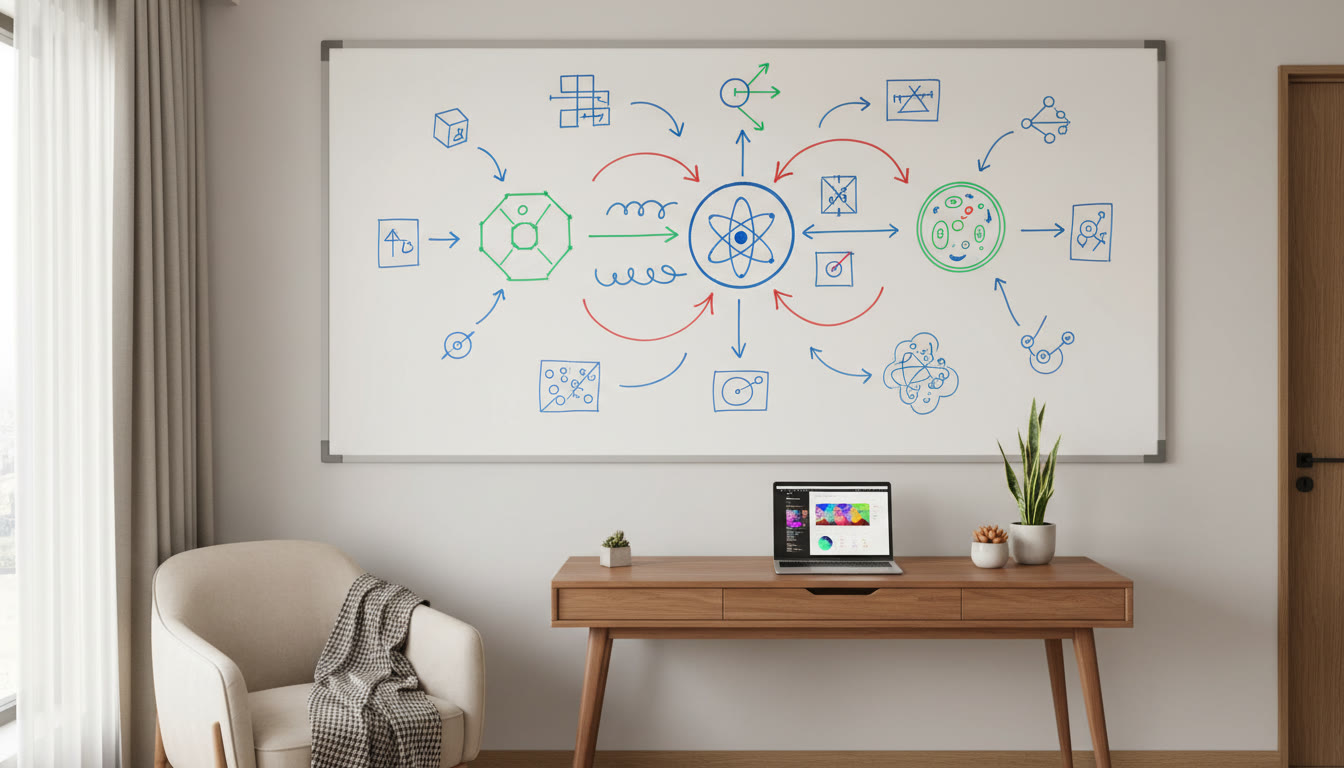
Occasional, well-timed personalized coaching can be folded into this plan. If you use a one-on-one tutor, make sure sessions aim to solve your highest-impact weaknesses—turning repeated mistakes into reliable routines. When personalization includes tailored study plans, expert tutors, and targeted practice suggestions driven by diagnostic data, it accelerates the process of moving from “I almost know this” to “I can answer this confidently in exam conditions.” For those who pair guided help with disciplined practice, the gains are often multiplicative rather than additive.
Parting Thought
High rank is not built overnight; it’s the result of layered learning, disciplined mock practice, honest mistake analysis, and consistent revision. Build your foundation like you would a house—strong beams of concept work, carefully placed bricks of practice, and a maintenance plan in the form of frequent mocks and revision. Keep the three-hour mock sacred, treat OMR discipline as a skill, and let targeted practice close the gaps you find in your mistake diary.
Focus on clarity and consistency; with concept-first study, strategic mocks, and reflective revision, you create a foundation that supports high performance under exam conditions.




















No Comments
Leave a comment Cancel