
Case Study: From Average Student to 99 Percentile
There’s a familiar voice in classrooms and WhatsApp groups: “I’m average — can I reach the 99 percentile?” This case study walks you through a realistic, human story of an average student who made that leap. It’s not magic. It’s steady choices, deliberate practice, and smart reflection.

The starting point: honest baseline, not drama
Meet Aarav (a composite student based on many real journeys). He was bright but inconsistent: steady 40–60% scores in school tests, patchy problem practice, and a habit of getting stuck on a single hard question for too long. He felt two things most students feel — time pressure and comparison anxiety. That’s the honest baseline: talent and motivation, plus avoidable gaps.
Why this matters: the nature of the test
Approach matters because the exam is MCQ-style, full-length practice sessions are three hours, and there is negative marking for incorrect answers. Answers are either correct or not — don’t bank on partial credit. Whether the final exam is computer-based or requires OMR discipline in practice, simulating the real test environment is non-negotiable. Aarav built his plan around these facts.
Step-by-step transformation — the strategy blueprint
1) Diagnose precisely
The first week was purely diagnostic. Aarav took two full-length mock tests under real conditions. One test revealed a weakness in algebra and calculation speed; the other exposed careless errors in Chemistry’s physical calculations. Rather than panic, he logged mistakes and categorized them: conceptual gaps, speed errors, calculation slips, and misreading questions.
- Action: keep a single error-log notebook (or spreadsheet) with columns for topic, error type, time spent, and corrective action.
- Why: you can’t fix what you don’t measure.
2) Build a weekly micro-plan tied to measurable goals
Aarav broke the calendar into repeating four-week cycles. Each cycle had three clear goals: concept coverage, problem practice, and test performance. Weekly goals were precise — e.g., finish two chapters of calculus, solve 60 past-type problems, and take a full mock on Sunday. Hours were scheduled but flexible: quality beats arbitrary hours.
3) Subject tactics — focused, not frantic
Every subject got a different treatment based on its demand and Aarav’s strengths.
- Physics: Concept-first. For each chapter, Aarav wrote a one-page summary of laws, typical assumptions, key approximations, and a list of 10 representative problems. He practiced variable-approach problems (visualize, equation-based, energy/momentum shortcuts).
- Chemistry: Split into physical, inorganic, and organic. Physical chemistry got numerical-drill time; inorganic was memorization anchored by trends and short-form revision notes; organic used mechanism sketches and reagent maps.
- Mathematics: Drill and pattern recognition. Algebra and calculus problems were practiced in groups (10 of one type — e.g., limits or definite integrals) to build pattern memory and speed.
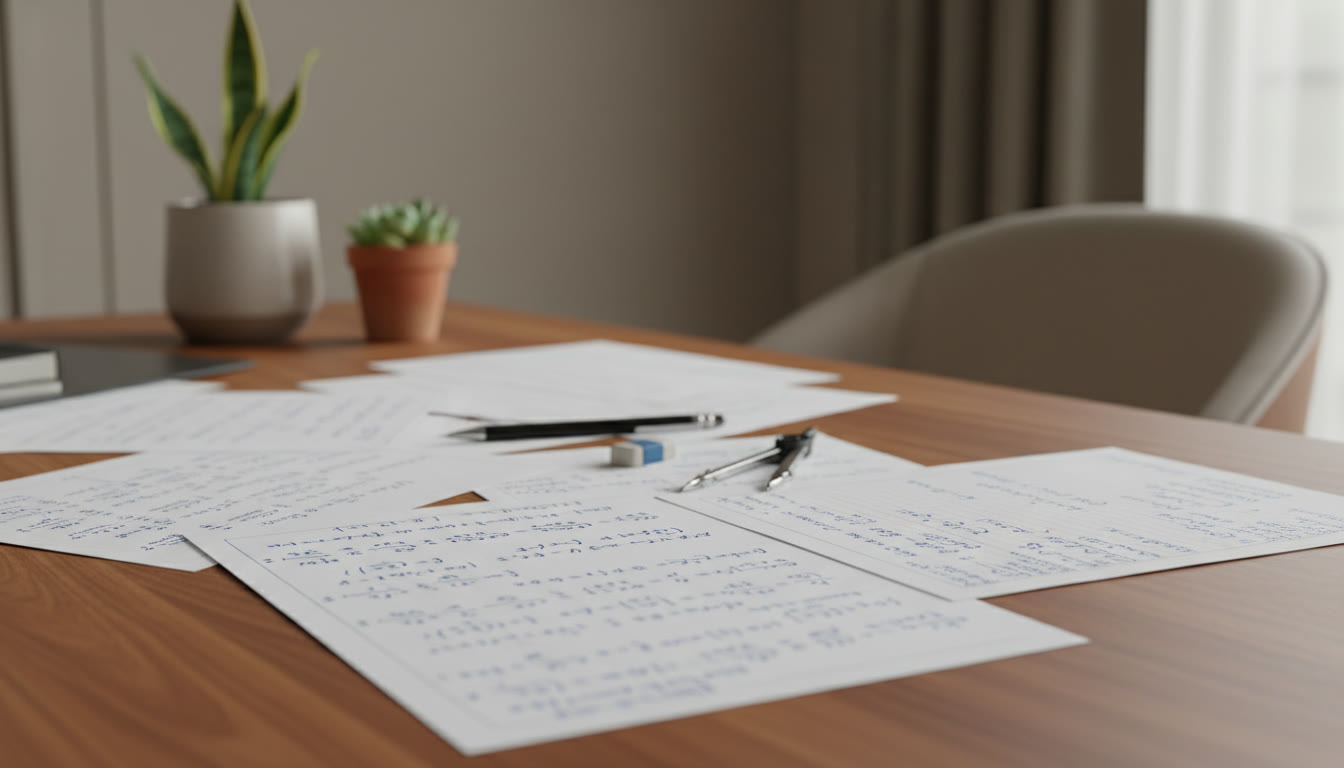
4) Mock strategy — frequency, environment, and feedback
Mocks were the backbone. Aarav followed a stepped plan:
- Early phase: one full-length mock per week to build stamina and identify recurring errors.
- Mid phase: increase to two per week, with focused mini-sessions solving missed problem types and timed section practice.
- Peak phase: three to four mocks per week while maintaining targeted revision. Each mock was taken in exam-like conditions: fixed three-hour block, no phone, and a quiet room.
Crucially, after every mock he did a disciplined two-hour analysis session — not just score-checking but error-root-cause work (Why did I make this mistake? Was it concept, speed, or misreading?).
Practical progress table (illustrative)
The following table shows an example of Aarav’s progression across mock cycles. This is an illustrative snapshot — numbers are representative of the change a focused plan can bring.
| Phase | Duration | Avg Weekly Hours | Mock Score (out of 300) | Approx Percentile (illustrative) | Notes |
|---|---|---|---|---|---|
| Baseline | 2 weeks | 18–22 | 95 | ~40–50 | Concept gaps, slow speed |
| Focused Repair | 8 weeks | 30–35 | 150 | ~65–75 | Targeted weak-topic drills |
| Consolidation | 10 weeks | 35–40 | 210 | ~90+ | Regular mocks and timed practice |
| Peak | 4 weeks | 25–30 | 250+ | 99+ | Refined attempt strategy and stability |
5) Error analysis: turn mistakes into assets
Aarav adopted a “triage” approach to errors:
- Conceptual errors → re-learn theory + do 5 concept puzzles.
- Calculation slips → add a quick self-check routine (units, sign, order-of-magnitude) and slower first 2 minutes on each problem for complex algebra.
- Time-management misses → simulate stricter time constraints in practice and practice sectional splits.
- Misreads and silly mistakes → slow down for the last 10 seconds per question to re-check the asked quantity.
He didn’t just log “I did X wrong.” He wrote “I did X wrong because Y” and recorded the corrective action he would apply next time.
6) Time allocation during a three-hour paper
The three-hour mock is a single block: Aarav practiced this pattern until it became automatic.
- First 10 minutes: quick sweep — identify 15–20 high-confidence questions to attempt first.
- Next 120–140 minutes: work in focused slots (e.g., 30–40 minutes per subject, or mix by comfort). Prioritize strength-first if that secures early marks.
- Last 20–30 minutes: re-check marked questions and verify calculations on high-value attempts.
The golden rule: don’t anchor on equal time for each question. Allocate time by expected return and personal strengths.
Daily and weekly routines that actually stick
Sample day (for a busy student balancing school)
Here’s a practical, repeatable day that helped Aarav keep momentum without burning out:
- Early morning (1 hour): quick revision of key formulas or flashcards.
- School hours: active listening — record one tricky concept per subject in short notes.
- Afternoon (2–3 hours): focused study block — deep practice on problem sets (single topic focus).
- Evening (1–1.5 hours): lighter work — theory reading or revision and organic chemistry reactions memorization.
- Night (45–60 minutes): error-log review and a short mock (timed 30–45 minute session) or past-problem practice.
- Weekly: one full-length mock and two sectional timed sessions, plus one rest/recovery evening.
Why this rhythm works
It balances focused deep work with lighter memory-reinforcement blocks. Consistency beats cramming: small daily wins compound into dramatic percentile shifts.
Mindset, recovery, and exam-day discipline
Sleep and recovery
High performance isn’t late-night cramming. Aarav protected sleep during peak months and scheduled lighter days after heavy mock cycles. A rested brain finds patterns faster and makes fewer careless mistakes.
Managing pressure
Pressure is normal. Aarav used three tactics: (a) focus on process metrics (hours of focused practice, number of error types fixed), not single test outcomes, (b) visual rehearsal for exam day to reduce novelty, and (c) brief breathing exercises before a mock to lower the cortisol spike.
The role of personalized help and intelligent feedback
Not every student needs the same support. Aarav combined peer study with targeted one-on-one guidance. He benefited from short, focused mentoring sessions that helped him reframe weak chapters into a manageable sequence of micro-goals. Where technology helped, AI-driven insights highlighted recurring weak topics and suggested targeted practice sets.
One natural fit in his journey was working with Sparkl‘s personalized approach, which offered 1-on-1 guidance, tailored study plans, expert tutors for tricky topics, and AI-driven insights that made his mock analysis more surgical. These supports were tools — not shortcuts — that made his time more effective.
How to choose one-on-one help wisely
- Look for focused mentors who set clear micro-goals rather than generic pep talks.
- Prefer short, regular check-ins that hold you accountable and evolve the study plan.
- Use AI-driven insights where they highlight patterns in your mistakes, not to replace judgment.
Top practical dos and don’ts — distilled
Dos
- Do simulate full three-hour papers regularly under exam conditions.
- Do maintain a single error-log and act on it after each mock.
- Do build a revision cheat-sheet for each chapter and review it weekly.
- Do practice OMR/answer-sheet discipline if you practice on paper, and practice the computer interface if the actual exam is CBT.
Don’ts
- Don’t chase every new shortcut or book. Depth in fewer sources is better than shallow breadth across many.
- Don’t assume partial marking; aim for full correctness in MCQs rather than hoping for fractional credit.
- Don’t sacrifice sleep for a single extra hour of low-quality study; tired practice locks in poor habits.
Mini checklists you can copy
Pre-mock checklist
- Quiet space, timer set for three hours, no phone in reach.
- Printed scratch sheets or note app ready (if CBT, practice with the given interface).
- Take the mock at the same time you plan for the exam to train circadian rhythm.
Post-mock checklist (two-hour analysis)
- Record total score and sectional scores.
- Tag each wrong answer: concept / calculation / misread / time-management.
- Pick two corrective actions and test them in the next mock (not ten — be focused).
Common mistakes students make — and quick fixes
- Random practice: Replace it with topic-focused blocks and progressively increase variety.
- Skipping analysis: If you skip post-mock work, the mock is an expensive rehearsal for repeating errors. Do the analysis.
- Over-reliance on one resource: Stick to a core resource set and use others only for targeted problems.
Final lessons from Aarav’s journey
Aarav’s climb to the 99 percentile was not a single heroic night but a series of micro-improvements: clear diagnosis, targeted cycles of practice, weekly full-length mocks, ruthless error analysis, and disciplined recovery. Personalized interventions — whether focused mentoring or targeted AI-based insights — accelerated his progress by making practice smarter, not longer. Most importantly, he learned to treat the test as an algorithm: inputs (practice quality) map to outputs (score) when feedback loops are tight and consistent.
Takeaway: build measurable routines, respect the three-hour test format, practice OMR/answer-sheet discipline, guard against negative-marking risks by improving accuracy, and turn mistakes into a repeatable improvement process.
This closes the educational case study and leaves you with the concrete pathways you can adapt to your own preparation.
















No Comments
Leave a comment Cancel