
How IIT Toppers Stay Consistent: The Quiet Architecture Behind Top Ranks
Consistency is less glamorous than genius, but it is the single most reliable currency that buys high rank in competitive exams. When you look at students who land the top ranks in IIT-related entrances, you rarely see a single flash of brilliance. What you see instead is an accumulation of focused days, repeated rituals, and tiny feedback loops that correct course quickly.
If you are navigating the stretch between today and the exam, this piece is a conversational, practical map — not a miracle cure. You will find how toppers think about practice, how they structure three-hour simulations, why they log mistakes, and how they keep their energy and attention sustainable. Small changes implemented consistently matter more than rare, dramatic bursts.

Consistency vs Intensity: Why steady beats sporadic
High intensity without a map burns out. Toppers convert intensity into repeatable routines. They trade random late-night binges for measured, focused sessions that are easy to repeat day after day. Think of consistency as compounding interest: 60 reliable minutes each day compounds into mastery over weeks.
Three practical mindshifts toppers use:
- Plan small wins: define 1–2 micro-goals per session (for example, solve 6 problems on rotational dynamics or finish a concept map on electrostatics).
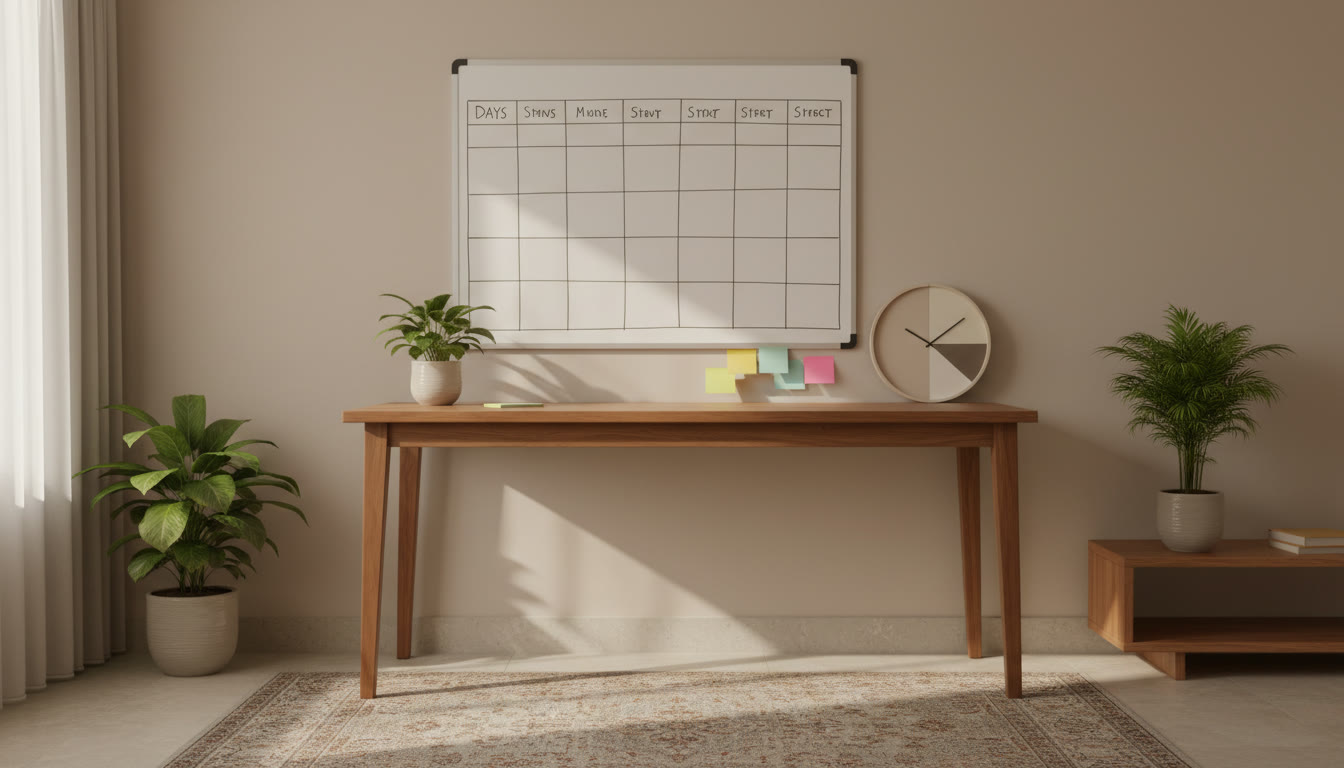
- Track progress visually: a simple calendar with checked boxes is more motivating than vague promises to study harder.
- Make practice test-like conditions non-negotiable at least once a week so your habit of focused attention becomes automatic.
Daily Architecture: A template you can adapt
Toppers build a daily architecture that protects core tasks: concept learning, problem practice, revision, and mock simulation. The exact hours vary by individual chronotype, but the structure is universal.
| Time Block | Primary Activity | Purpose |
|---|---|---|
| Early morning (60–90 mins) | Concept review and light problem solving | High-focus consolidation; new learning when mind is fresh |
| Midday (2–3 hrs) | Deep practice: problem sets, combined topic questions | Build technique and application speed |
| Late afternoon (45–60 mins) | Short revision: flashcards, formula checks | Spaced repetition to lock memory |
| Evening (90–120 mins) | Mock or timed practice / subject-specific drill | Simulate exam pressure and time management |
| Night (30–45 mins) | Reflection and planning | Note mistakes, schedule next session, restful wind-down |
That table is a skeleton. A topper layers in weekly priorities: one long scheduled mock, one full concept revision block, and one day for recovery or active rest every week.
Mock Tests: Why the three-hour habit matters
Top scorers treat full-length mock practice as sacred. They sit a strict three-hour simulation (or two papers when the format requires), because only realistic duration practices build exam stamina and time sense. These are not casual attempts; a mock is a learning event with pre- and post-work.
- Simulate test conditions: device settings, environment, allowed materials. If you practice on paper or take OMR-style sectional tests, maintain OMR discipline: careful marking, no stray marks, and neat scratch work.
- Time blocks: assign exact time to sections and stick to it. Toppers know average time per question ranges by topic and question type; they check this metric each mock.
- Negative marking: treat it as a constraint. Avoid wild guessing but use educated elimination when probability favors an attempt.
After the mock, the most valuable 40 minutes are spent analyzing — not just celebrating a good score but understanding why mistakes occurred.
Mock Analysis: A simple checklist toppers use
- Mark question types missed: conceptual gap, calculation error, careless mistake, time-pressure skip.
- Quantify time lost: how many minutes were wasted on a single problem? Could those minutes yield more marks elsewhere?
- Classify errors by topic: if you repeatedly miss electrostatics, schedule a focused week for that topic.
| Metric | Example | Action |
|---|---|---|
| Attempted / Correct | 70 / 50 | Improve accuracy by practicing selective attempt strategy |
| Avg time per correct | 3.5 min | Practice speed drills for faster reasoning |
| Careless errors | 8 | Create a checklist to verify units, signs, and options |
Error Logs: The private lab of improvement
Every topper keeps a mistake log. This is not a punitive diary; it is a precise diagnostic tool that converts mistakes into future practice tasks. The habit is simple: record errors immediately after analysis, tag them, and schedule a recheck.
- What to log: question, mistaken step, correct approach, root cause (conceptual/slip/strategy), and follow-up action.
- Review cadence: quick recheck next day, then in one week, then after one month. Spaced repetition defeats forgetting.
| Topic | Mistake Type | Root Cause | Fix |
|---|---|---|---|
| Rotational Dynamics | Conceptual | Confused torque vs moment of inertia | Redo derivation, 3 varied problems in next session |
| Organic Chemistry | Careless | Wrong reagent remembered | Create reagent flashcards and test daily |
Study Techniques the Toppers Rely On
Technique matters more than hours. Smart methods magnify retention and speed.
- Active recall over passive rereading: explain a concept aloud or write it from memory before checking notes.
- Interleaving practice: mix problems from different topics to train the brain to recognize problem class quickly.
- Worked examples followed by variation: solve one model problem fully, then solve three variants without hints.
- Spaced repetition: revisit ideas with strategic gaps rather than daily massed review.
One practical exercise: when you learn a derivation in physics, close the book and try to reproduce it on a blank sheet. Then solve a numerical that uses that derivation, and finally create a conceptual question that probes limits and assumptions.
The Role of Physical and Mental Habits
Top performers preserve cognitive resources. Sleep, movement, and simple rituals are treated like exam strategy because they materially affect concentration.
- Sleep: consistent schedule beats cramming; memory consolidation happens during uninterrupted sleep.
- Mini breaks: 5–10 minutes after 50–60 minutes of focused work to reset attention.
- Exercise and fresh air: even a 20-minute walk helps clarity and reduces stress hormones.
- Nutrition: steady blood glucose through balanced meals and snacks prevents afternoon crashes.
Time Management: When to Speed Up, When to Slow Down
Toppers are ruthless in allocating time. They ask a simple daily question: which activity will yield the largest expected marks gain per hour? If a weak chapter yields more return than a near-perfect one, it gets priority.
Use marginal gains to decide: if a focused hour on a missed topic reduces your expected mistake rate by 5% across similar questions, that hour is high value. This kind of expected-value thinking is why toppers often appear to study unevenly — they are optimizing score, not appearances.
How Personalized Help Fits In Naturally
Many top learners combine disciplined self-study with targeted external feedback. For example, tailored 1-on-1 guidance can surface hidden gaps faster than solo study. Sparkl‘s approach to personalized tutoring focuses on tailored study plans, expert tutors who diagnose conceptual weak points, and AI-driven insights that flag repeating errors. When used wisely, such support shortens feedback loops and helps maintain consistency.
Important note: external help is a multiplier, not a substitute. The student still needs daily grind and ownership. A good tutor or platform makes those days more efficient and focused.
Weekly and Monthly Cycles: Keep the Long View
Toppers layer cycles: daily micro-goals, weekly mock + focused revision, and monthly milestone checks. That structure prevents aimless repetition and keeps practice aligned with performance goals.
| Cycle | Focus | Typical Activities |
|---|---|---|
| Weekly | Mock + targeted fixes | One full mock, error log review, 3 focused topic sessions |
| Monthly | Milestone assessment | Aggregate mock performance, adjust study plan, simulate exam day |
Exam-day Practices: Rituals that reduce noise
On the day, toppers follow disciplined rituals to remove friction and avoid silly mistakes:
- Pre-exam checklist: ID, seating plan, required stationery, and clear instructions on allowed materials.
- Start routine: quick scan of the paper to allocate time, then attack high-confidence sections first.
- Flag and move: if a problem looks time-consuming, flag it and move on rather than get trapped. Return to flagged items in a planned sweep.
- Time checkpoints: know where you should be at 1 hour, 2 hours, and final 30 minutes, and adjust pace accordingly.
Examples and Small Experiments You Can Run
One low-cost experiment toppers use: run two versions of the same topic week. In week A, do massed practice (lots of problems back-to-back). In week B, interleave problems with other topics and apply spaced rechecks. Compare recall and speed after two weeks. Often, interleaving + spaced rechecks wins for retention and transfer.
Another experiment: time-block speed drills for calculation-heavy topics. Identify your average time per calculation question, then do short timed sets to shave off seconds. Small reductions add up hugely over a full paper.
Common Pitfalls and How Toppers Avoid Them
- Pitfall: Chasing new material over consolidating weak topics. Fix: schedule a repeating block for the weakest topic until error logs show steady improvement.
- Pitfall: Over-reliance on passive revision. Fix: convert passive reading into active tasks — problem creation, flashcards, or teaching a peer.
- Pitfall: Ignoring exam simulation. Fix: commit to at least one full-length timed mock every 5–7 days in the months closer to the exam.
Final Notes on Consistency
Consistency is not monotonous repetition; it is deliberate practice with feedback. Toppers do three things well: they make realistic routines, they test under true exam-like conditions, and they shorten feedback loops using error logs and targeted practice. Small habits sustained for months produce rank-level gains that look dramatic only in hindsight.
Be systematic about what you repeat, truthful about what you fail to do, and kind to the process. Over time, consistency builds a kind of exam intuition: knowing which problems to attempt, when to push, and when to preserve time for the bigger gains.
The quiet architecture of daily excellence is available to any student willing to trade dramatic one-off intensity for disciplined repetition. End of discussion on the academic techniques and frameworks that underpin consistent top performance.

















No Comments
Leave a comment Cancel