
Why revisit PYQs after Main? Turn past paper practice into future scoring
If you sat for Main and are now staring at a stack of previous years’ questions, you’re in the right place. PYQs are more than nostalgia — they are a diagnostic microscope. Done well after Main, they reveal exactly where reasoning, time management, and exam discipline need sharpening for the Advanced stage. This article gives you a human, step-by-step approach to extracting maximum learning from PYQs without burning out.

What PYQs tell you — and what they don’t
PYQs do three useful jobs: they show typical question framing, expose high-frequency topics, and force you to practice under pressure. What they don’t do is hand you a fixed script. JEE Advanced rewards adaptable thinking; the same question idea may appear in novel wrapping. Treat PYQs as training simulations that sharpen concept depth and exam habits.
Match practice to the exam context
Keep your practice rooted in realistic exam constraints: objective-style questions (including multiple-choice and objective formats), strict time pressure (3-hour full-length mock practice per paper), negative marking on certain question types, and disciplined answer entry. Approach PYQs knowing that the exam rewards clear reasoning and clean answer-entry behaviour — no reliance on partial descriptive credit.
Mindset first: quality, not just quantity
After Main, it’s tempting to sprint through every PYQ you can find. Instead, prioritize depth. One well-analysed PYQ can teach you more than five hurried attempts. Your goal is to convert each question into a compact lesson: what concept it tested, which shortcut or derivation works, where careless steps steal marks, and how to time it in a real exam.
Three mental rules to adopt
- Think like an examiner: Ask why each step is necessary — that prevents rote memorization of solutions.
- Time-control mindset: Practice with a stopwatch; note average time and aim to reduce it through methodology, not panic.
- Honest error analysis: If you get it wrong, record the exact reason — concept gap, careless sign error, algebra mistake, or misread question.
Step-by-step plan to practice PYQs effectively
The following progressive plan assumes you’ll alternate focused study with realistic mock practice. Each phase is actionable and time-bound so you can track progress without guesswork.
Step 1 — Collect and classify (do not hoard)
Gather PYQs by topic rather than by year. Make a short index: Topic → Difficulty → Concept tags (for example, Mechanics: impulsive collision; Conservation laws; Vector resolution). Classification helps when you later do topic-specific drills.
Step 2 — Attempt topic batches without time pressure
Choose a small batch (4–6 PYQs) on a single topic. Work them calmly, compare your approach to model solutions, and derive a short checklist for that topic — the cues you must spot in a question and the go-to equations or theorems. This builds conceptual fluency before speed becomes critical.
Step 3 — Timed, single-topic mock (3-hour discipline scaled down)
Now simulate time pressure. For a single-topic set reduce the time proportionally (example: if a full mock is 3 hours, give yourself 30–40 minutes for 6–8 topic questions). Practice answer-entry discipline: treat the interface like an OMR — one clean final click per answer, no stray marks, and double-check numeric entries.
Step 4 — Full mixed PYQ mock under real conditions
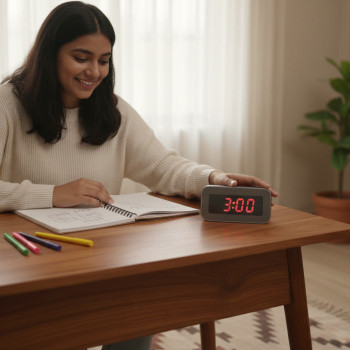
Assemble a full-length paper from PYQs across Physics, Chemistry, and Mathematics. Follow the exam’s timing, negative-marking awareness, and answer-entry behaviour. Sit in a quiet space, use a timer, and refuse interruptions. After the test, do not rush gratification — the real learning begins in the next stage.
Step 5 — Structured post-mock analysis
Don’t just grade. Analyse. For every question, note these fields: (1) Was the concept immediately clear? (2) Time spent. (3) Exact error if any. (4) A one-line improvement action. Collect these in an error log (template below).
Step 6 — Focused remediation and micro-drills
Use the error log to design micro-drills: 10–15 minute focused practice sessions that target the single weakest concept (e.g., integration techniques, stereochemistry, or oscillations). Revisit PYQs of the same type until you can solve them comfortably in the recommended time.
Step 7 — Repeat with increasing realism
Alternate topic drills with full-length PYQ mocks. Over time increase the percentage of time you spend on full-length mocks. This keeps your stamina and strategy sharp while your conceptual base solidifies.
Practical templates: what to record and how to use it
Error log template (compact)
| Question ID | Topic / Concept | Outcome (Correct/Incorrect) | Time Spent | Error Type | Fix / Action |
|---|---|---|---|---|---|
| PYQ-PH-23(III) | Kinematics — Relative motion | Incorrect | 12 min | Misread frame of reference | Rewrite relative velocities first; practice 5 different frames |
| PYQ-MA-08(II) | Calculus — Definite integrals | Correct | 7 min | — | Record as model solution for similar forms |
Suggested time allocation table for question types
Use these as starting guides — adjust based on your personal speed after a few mocks.
| Question Type | Suggested Time / Q | Strategy |
|---|---|---|
| Direct concept MCQ | 1.5–3 min | Apply one-line formula or simple derivation; don’t overwork |
| Multi-step reasoning / lengthy algebra | 4–8 min | Outline steps first; do algebra carefully; mark time checkpoints |
| Numerical / integer-type objective | 2–5 min | Check units, estimate to filter options, then compute |
| Experimental / data interpretation | 3–6 min | Read axes carefully; annotate diagrams; infer before calculating |
How to analyze mistakes (so they don’t recur)
Mistake analysis is where practice turns into performance. Be surgical: write one sentence that describes the true cause, then write a one-line remedy you will repeat next time.
Common error types and quick fixes
- Concept slip: Re-derive the basic formula from fundamentals once, jot it down on a concept card, and solve two micro-problems immediately after.
- Algebra/careless arithmetic: Use a two-step computation (estimate → compute), and write intermediate values; avoid mental-only multi-step arithmetic during timed practice.
- Time pressure panic: Build checkpoint habits — check your clock every 30 minutes and have a middle-time review to adjust pacing.
- Reading error: Underline qualifiers and units; rewrite complex stems into short equations before solving.
Topic-wise PYQ tactics: Physics, Chemistry, Mathematics
Physics — focus on modelling and boundary conditions
PYQs in Physics often test modelling choices and boundary/initial conditions. When you see a mechanics or E&M question, take a breath and spend 20–30 seconds framing the system: list knowns, choose the coordinate system, and decide conserved quantities. A typical mistake is jumping into algebra without a crisp model. Use PYQs to build a mental checklist for each sub-topic: what do you always check first (energy, symmetry, limiting cases)?
Chemistry — link fundamentals with quick heuristics
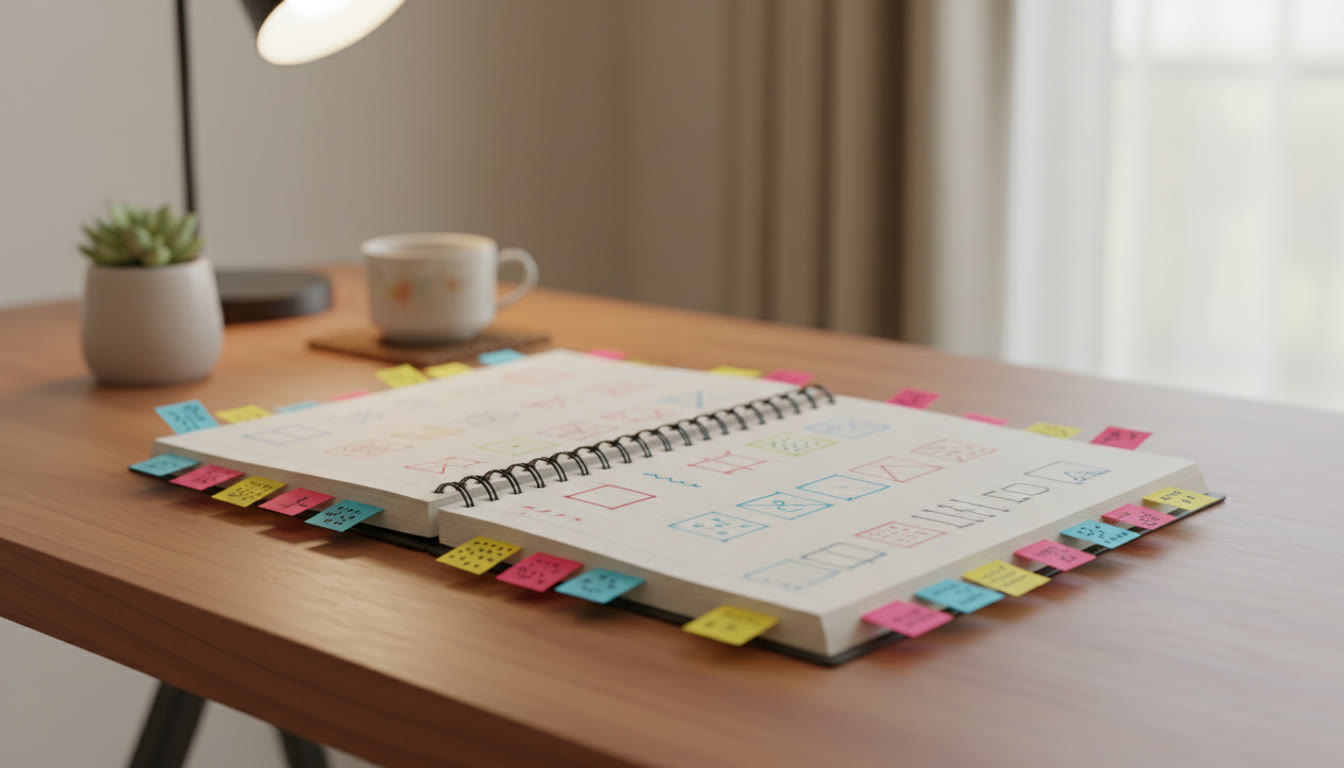
Chemistry PYQs reward pattern recognition anchored in fundamentals. For physical chemistry, practice unit checks and approximations (order of magnitude estimations). For organic and inorganic, keep concise reaction templates and characteristic exceptions at hand. PYQs help you encode those exceptions: when you encounter an odd reaction repeatedly in PYQs, make it a sticky note and attach a 2–3 word mnemonic.
Mathematics — prioritize methods over memorization
Math PYQs are often about choosing the right path quickly: substitution, transformation, inequality tricks, or clever constructions. Use PYQs to internalize which methods yield speed and which ones trap you in long algebra. When a PYQ yields a short, elegant method, record that as a model solution; when it requires long computation, practice an estimate-first approach to decide whether it’s worth attempting under time pressure.
Building exam temperament with PYQs
Temperament is the quiet skill of staying calm when a problem looks unfamiliar. PYQs help build this because they force you to encounter the same trick in multiple guises. Create a small ritual during practice: deep breath, read twice, annotate, decide. Repeating this ritual in PYQ mocks trains your nervous system to respond steadily on exam day.
Practice ritual checklist
- Read stem carefully; underline crucial words and units.
- Rephrase in one line: what is being asked?
- Identify the immediate concept/s or theorem/s.
- Decide: solve fully, approximate, or skip and mark for review.
Using PYQs to design better mocks
Instead of always using pre-made mocks, curate your own from PYQs: pick questions that mimic the balance you expect in the exam — a blend of quick concept checks, mid-level reasoning, and one or two time-consuming ones. Rotating PYQs as building blocks ensures that your mock papers are both realistic and rooted in proven exam patterns.
Sample 6-week rolling plan (high level)
| Week | Focus | Activities |
|---|---|---|
| 1–2 | Topic rehabilitation | Topic-wise PYQs, micro-drills, error-log setup |
| 3–4 | Mixed PYQ practice + 2 full mocks | Timed PYQ sets, mock under exam conditions, detailed analysis |
| 5–6 | Speed & stamina | More full mocks, quick-revision cards, focus on weakest topics |
Where personalized support can fit — realistic, targeted help
Not everyone needs a tutor for everything. The best use of targeted support is for two things: (a) when you repeatedly make the same conceptual error despite self-study, and (b) when you need a tailored schedule that fits your specific strengths and time constraints. That’s where Sparkl’s personalized tutoring can be helpful — for example, 1-on-1 guidance to reframe a stubborn topic, a tailored study plan that slots PYQ practice into your calendar, expert tutors who review your error log, and AI-driven insights that spot patterns in your mistakes. Use such support sparingly and strategically so it amplifies independent practice rather than replacing it.
Practical tips and mini-habits for steady improvement
- Daily 30-minute PYQ habit: One focused PYQ, analysis, and one-line action before sleep — consistency compounds rapidly.
- Keep a one-page concept sheet: For each topic, one page with definitions, key formulas, signposts, and 3 model PYQs.
- Group review: Once a week explain one tough PYQ to a peer or aloud to yourself; teaching clarifies gaps.
- Simulate bad scenarios: Practice a mock with a deliberate noisy environment or one disrupted by an unexpected break to build recovery skills.
Common pitfalls and how to avoid them
- Hoarding papers: Collecting many PYQs is fine — hoarding them without a plan is not. Organize and act.
- Speed at the cost of understanding: Don’t train your hand to answer faster than your brain understands. Slow down to master, then speed up.
- Ignoring negative marking strategy: Some PYQs are traps. If you cannot eliminate options confidently, it’s often better to skip and return later.
- Relying on memory of past solutions: Re-derive rather than rote-copy solutions; the exam will present new wrappers.
Example walkthrough (how to convert one PYQ into a lesson)
Take a representative mechanics question: you are given a two-body collision scenario in a non-inertial frame with friction. Instead of immediately computing, do this:
- Step 1: Re-draw in the lab frame and then in the center-of-mass frame — decide which is simpler.
- Step 2: List conserved quantities and note where friction breaks conservation.
- Step 3: Estimate limiting cases — zero friction and very large friction — to sanity-check signs and magnitude.
- Step 4: Compute compactly, annotate intermediate values, and check units at the end.
From this single question you extract a mini-checklist that applies to future PYQs: frame choice, conservation checks, limiting-case sanity, and unit checks.
Final notes on pacing your practice
Regularly review your error log and change the ratio of topic drills to full mocks based on results. If your error log shows repeated conceptual slips, increase focused topic work. If you’re losing time on mixed sets, increase full-length PYQ mocks to build stamina and strategy. This dynamic adjustment is what separates steady improvers from frantic last-minute crammers.
Closing thought
Practicing PYQs after Main is not about exhausting every paper; it’s about turning each question into a micro-lesson, building a reliable rhythm of timed practice, calm analysis, and targeted remediation. With clear logs, realistic mocks, and occasional targeted help when repeated mistakes persist, PYQs become a precision tool that sharpens both competence and confidence for the Advanced stage.















No Comments
Leave a comment Cancel