
How to Use PYQs for Revision: Turn Past Papers into Your Smartest Mock-Test Strategy
When mock-test season arrives, the difference between steady performers and the overwhelmed often comes down to one simple habit: how they use PYQs — previous year questions — to plan revision. PYQs are not just old questions; they are a condensed map of what examiners value, how time is spent during a three-hour paper, and where small improvements can turn into big rank gains. This guide turns that map into a clear revision GPS: practical, human, and immediately applicable for every mock you take.
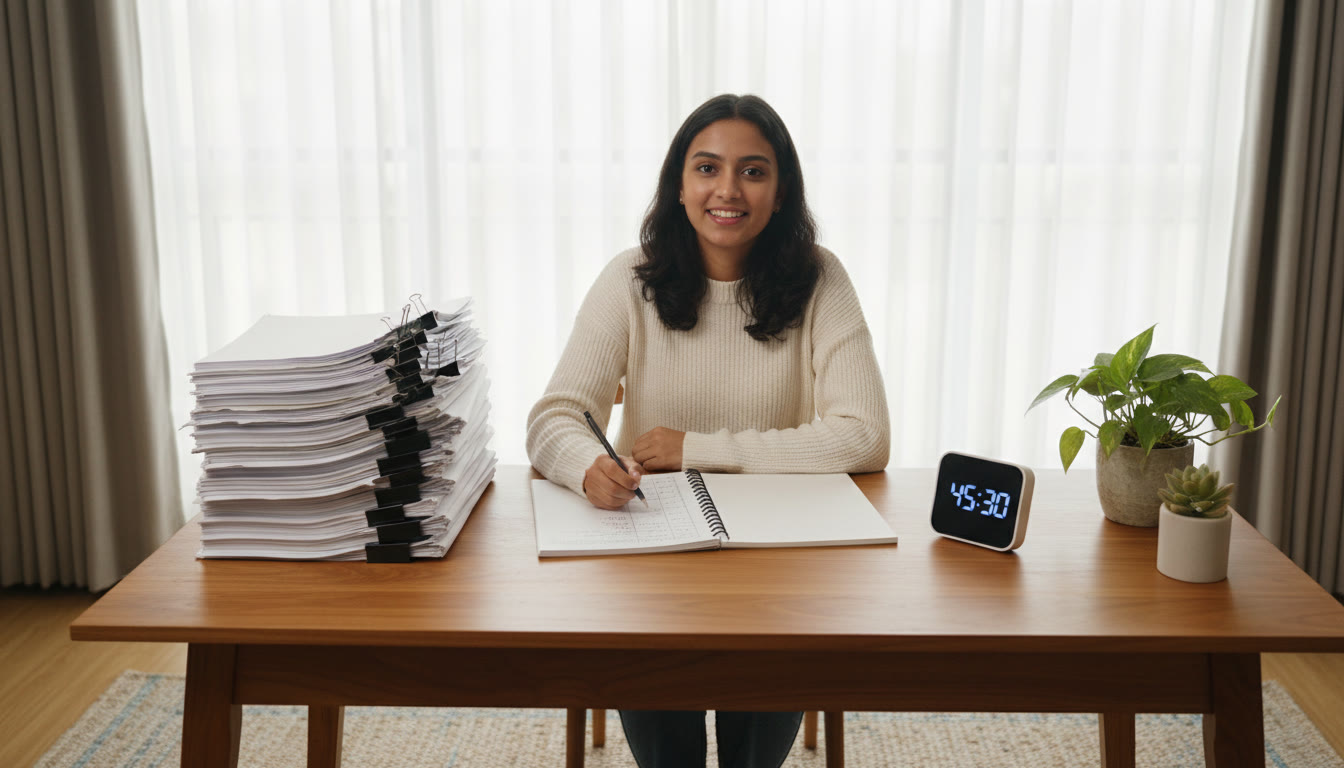
What I mean by PYQs (and why they matter)
PYQs are the raw material of real exam-style thinking. They help you recognize patterns in topics, question framing, and complication levels. When used intelligently, PYQs improve concept clarity, sharpen time management, and teach you the mindset of the paper: what to attempt first, what to flag, and how to avoid impulse mistakes that cost marks under negative marking and OMR discipline.
How PYQs align with the mock-test reality
- MCQ-based testing — PYQs mimic the exact thought process required to read quickly and eliminate carefully.
- Full-length, 3-hour practice — doing PYQs under timed conditions builds stamina and helps you practice pacing across subjects.
- Negative marking & OMR discipline — PYQs teach the crucial balance between attempting enough questions and keeping careless errors to a minimum.
- Syllabus alignment — use PYQs to map topics and subtopics across Physics, Chemistry, and Mathematics so every revision pass has purpose.
Step-by-step: Turning PYQs into a revision engine
1. Gather and curate — quality over quantity
Start by collecting PYQs from official cycles and reliable compilations you already trust. Don’t hoard everything; curate. Pick past papers that match the current pattern and mock difficulty. Create a single folder (digital or physical) for the PYQs you will actively use — a working library, not an archive.
2. Build a simple PYQ analysis log
Every time you solve a PYQ or a set, record the essentials. This turns reactive practice into data-driven revision. Make the log compact so you can maintain it daily.
| Cycle | Topic / Subtopic | Question Type | Difficulty | Why I missed it | Action |
|---|---|---|---|---|---|
| Cycle A | Physics • Kinematics | Numerical MCQ | Medium | Formula confusion under time pressure | Do 5 timed numericals + formula flashcards |
| Cycle B | Chemistry • Equilibrium | Conceptual MCQ | Easy | Quick concept lapse | Write 3 one-line concept checks and solve 10 related PYQs |
This table is an example template — adapt the columns and naming to what you’ll actually maintain. The act of writing down a focused reason and an action item is the single most effective step for converting mistakes into durable learning.
3. Tag and prioritize by impact
Not every PYQ should be treated equally. Tag each logged item with one of three priorities:
- High impact: Topics that repeat often or carry heavy weight in papers.
- Medium impact: Good practice items that build fluency.
- Low impact: Rare edge cases you’ll review briefly once.
Prioritisation helps you use time more efficiently: when you’re short on revision time, focus on high-impact tags first. Over time, the distribution of tags will show you where to spend your next two to three weeks of focused work.
4. Use the three-pass approach for every PYQ set
Work through PYQs in three distinct passes to extract maximum value:
- Pass 1 — First attempt: Solve under timed conditions; simulate the exam, obey OMR habits: mark answers cleanly, fill in your answer sheet carefully, and avoid changing answers unless absolutely necessary.
- Pass 2 — Analysis: For every wrong or unsure answer, write the root cause (concept, calculation slip, time pressure). Re-solve those problems with a stop-watch until you can complete them without hesitation.
- Pass 3 — Consolidation: Create micro-notes (one-liners or 30-second mental scripts) for the trickiest types and add them to a spaced-revision schedule.
Designing mocks from PYQs: realistic, targeted practice
How to build a 3-hour mock using PYQs
When you build mocks from PYQs, aim to replicate the real paper’s balance: mix conceptual questions, quick application items, and a few time-consuming puzzles. Shuffle questions so you avoid predictable sequences (easy-easy-hard). Always time the paper and respect OMR habits — practice filling multiple OMR bubbles consecutively to replicate the slight mental load of the real exam environment.
Sample mock composition checklist
- Include at least 30–40% high-priority PYQs (frequently repeated topics).
- Add 30–40% medium-priority items to maintain speed and confidence.
- Reserve 20–30% for challenging, high-value problems that test depth.
- Simulate negative-marking decisions: before guessing, use elimination and probability judgment, not random selection.
Scoring and self-review (structured)
After each mock, don’t just check the score. Use a review template that captures timing patterns and question-level mistakes. The aim is not to chase a single percentage but to convert errors into a repeatable process for correction.
| Section | Time Spent | Correct / Attempted | Major Mistake Type | Next Action |
|---|---|---|---|---|
| Physics | 70 minutes | 18 / 30 | Calculation errors under time | Daily timed numericals + speed drills |
| Chemistry | 55 minutes | 22 / 30 | Misread data in statements | Practice comprehension + highlight data |
| Mathematics | 65 minutes | 20 / 30 | Overlooked simpler approaches | Work on alternative solution trees |
Practical schedules: PYQs as your revision backbone
Weekly routine with PYQs
Consistency beats intensity. A weekly plan that cycles through focused PYQ practice, concept repair, and simulated mocks will produce steady improvement.
| Day | Main Focus | PYQ Task | Outcome |
|---|---|---|---|
| Day 1 | Topic deep-dive (Physics) | Solve 8 PYQs + log mistakes | Concept clarity + error list |
| Day 2 | Topic deep-dive (Chemistry) | Solve 8 PYQs + create micro-notes | Faster recall |
| Day 3 | Topic deep-dive (Mathematics) | Attempt 6 PYQs + timed practice | Technique polishing |
| Day 4 | Mixed quick revision | 30-min speed PYQ set across subjects | Speed endurance |
| Day 5 | Mock simulation | Part-length mock (1.5–3 hours) built from PYQs | Exam temperament |
| Day 6 | Review & remediate | Fix all logged errors | Reduced repeat mistakes |
| Day 7 | Light active recall | Flashcards + one sheet of micro-notes | Consolidation |
Repeat the weekly cycle, raising the ratio of full-length mocks as the upcoming entry cycle approaches. The beauty of PYQs is that each pass makes your weekly plan more efficient because the log tells you exactly where time yields the highest returns.
Smart tactics when working with PYQs
Turn mistakes into mini-lessons
For every error, ask three crisp questions: What ruled out the right answer? Was the slip conceptual, computational, or careless? What one practice item will eliminate that mistake? Your action must be linked to the mistake: a practice sheet, a short explanation you write in your own words, or a 2-minute audio note you record and replay before mock tests.
Don’t overfit to pattern hunting
Pattern recognition is useful, but dangerous if you start assuming the next paper will be a copy of the last. Use pattern knowledge to prioritize topics and anticipation, not to guess exact questions. Train flexible thinking: always practice variations of PYQs so new twists don’t throw you off on mock day.
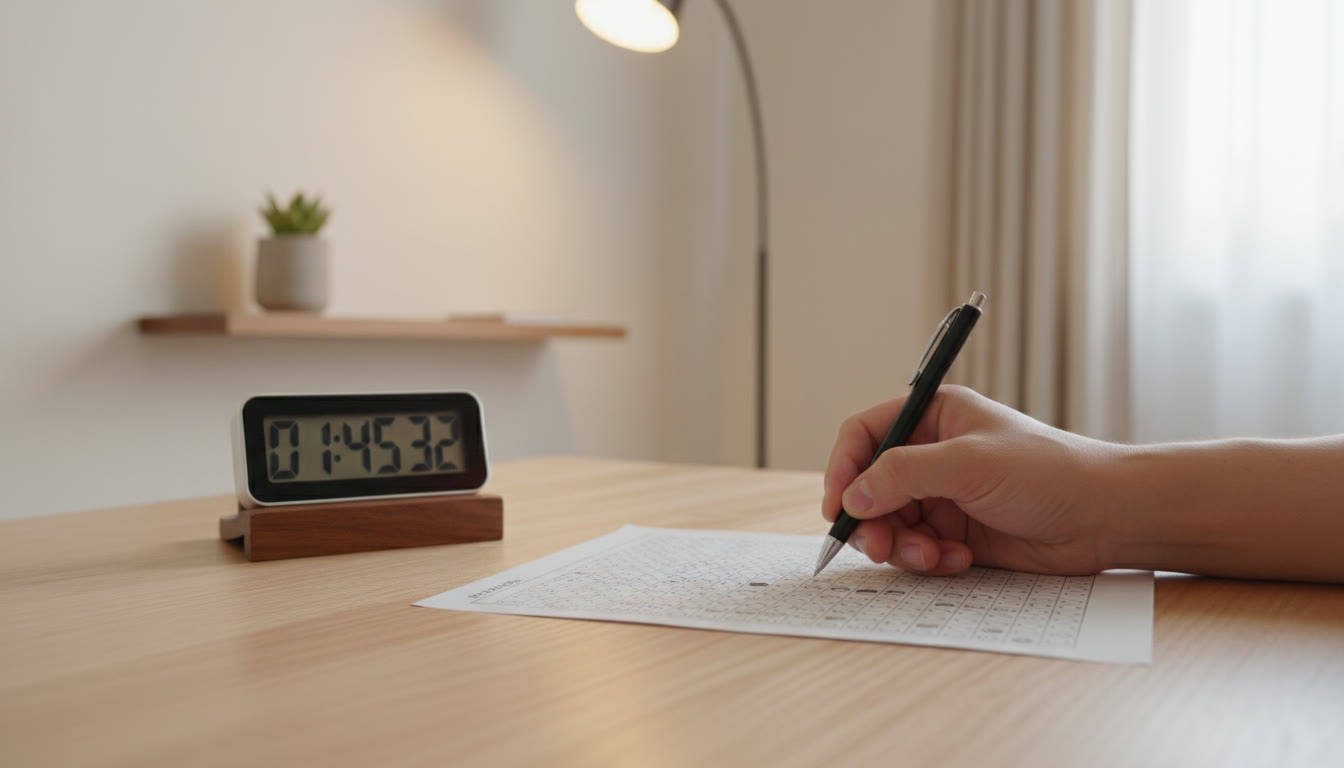
Practice OMR and answer-book discipline
- Simulate filling answer bubbles under timed conditions.
- Get into the habit of transferring answers with a clear method: finish a block, transfer carefully, double-check filled bubbles for alignment.
- Practice writing only what is required — no long derivations on the OMR sheet — and keep a clean scratch area for calculations.
Common pitfalls students fall into and how PYQs fix them
Pitfall: Practicing without analysis
Many students solve large volumes of PYQs but never analyze WHY they missed questions. Analysis is the multiplier; it turns a 10-question practice session into 100 questions’ worth of learning if you extract the principle behind each mistake.
Pitfall: Skipping weak-topic review
Another common error is leaving weak topics for the end. Use PYQ logs to identify persistent weak spots and schedule short, intense repairs — five focused PYQs plus two targeted concept notes — rather than all-night cramming.
Pitfall: Ignoring time-management data
Time logs matter. If you always take 30 minutes on a Physics passage, that’s a pattern to fix. Use timed PYQ batches and keep a simple time-sheet: topic → time taken → normal time target. Small daily shrinkage of time per problem compounds into a big advantage during full-length mocks.
Scaling PYQ practice with tutor help and analytics
When personalized guidance speeds the loop
Timely, focused feedback accelerates the PYQ learning loop. Personalized tutoring that uses your PYQ logs to craft the next set of drills boosts efficiency: instead of random assignments, you get 1-on-1 guidance, tailored study plans, and targeted problem sequences that attack your highest-leverage weaknesses.
If you choose to combine coaching with self-practice, look for arrangements that translate your PYQ analytics into practice drills and spaced repetition schedules. For example, a tutor can convert your weekly error list into the next week’s drills, keeping the practice tightly aligned with what’s actually holding you back.
How an AI-driven insight helps (where useful)
Automated analysis tools can summarize large PYQ logs and highlight surprising trends (e.g., repeated algebra slips across Physics and Maths). Use those insights to design micro-sessions: 15 minutes of targeted drill on exactly the algebraic moves that caused mistakes. But don’t outsource judgment — combine analytics with your own reflective notes.
For students who pair one-on-one guidance with tech, the combination often becomes a feedback multiplier — guided practice, analytics-led prioritisation, and regular mock simulation form a tight, effective cycle.
Quick templates you can copy
One-page PYQ revision checklist (morning of a mock)
- Sleep and hydration: aim for steady focus, not last-minute cramming.
- Skim one micro-note sheet (high-yield formulas and traps).
- Do 10 minutes of mental math warm-ups — quick calculations, approximation drills.
- Check your OMR-writing habit: practice three bubbles cleanly to reset muscle memory.
- Remind yourself of your time plan: how long for first pass, how much to reserve for review.
Post-mock 30-minute review
- Mark every wrong or unsure question in your log with a one-line “why” and immediate action.
- Do not relearn entire chapters — target the exact micro-skill that failed.
- Plan the next 48 hours: two short drills that attack the logged mistakes.
Final practical example: a typical PYQ-to-mock workflow
1) Choose a set of 30 PYQs covering the three subjects, with 40% high-impact items.
2) Simulate a 3-hour window (or a portion if you’re doing a part-length mock), obey OMR and time rules.
3) Log results using the simple table shown earlier, tag priority, and pick two high-impact corrections for the next two days.
4) After two cycles of this workflow, measure change not just in raw scores but in two things: repeat-mistake rate and average time per question on previously missed topics. Those two metrics tell you whether practice is turning into exam-ready competence.
Conclusion
PYQs, when treated as disciplined data rather than a pile of practice papers, become a rich feedback engine: they reveal recurring themes, expose timing weaknesses, and provide the perfect templates for targeted, mock-like practice. Build a compact PYQ log, prioritize high-impact items, simulate realistic 3-hour conditions with proper OMR discipline and negative-marking awareness, and convert each mistake into a tiny, actionable repair. Over time, this process sharpens speed, reduces careless errors, and makes mock-test performance a predictable outcome of steady work.















No Comments
Leave a comment Cancel